
To Be Continued…

The local church of which I’m a member – I dare not call it “my” church since it certainly doesn’t belong to me – called a new pastor today. Our previous pastor left suddenly 17 months ago and our congregation is strong enough to carry on with interim leadership and a good staff. But today, after an excellent send up by the search committee, Tyler Tankersly stood behind the pulpit and claimed the hearts and minds of a pretty sophisticated group of Christians.

He’s 33 years old and this church is of a stature that more typically requires its new pastor to have acquired a few gray hairs of age, wisdom and experience. Tyler demonstrated those qualities without the adornment of any gray.

We’ve grown past the traditional Baptist “trial sermon” process of selecting a pastor based on his sugar stick sermon. But we’re still Baptist enough to appreciate good preaching. And we received a message based on origins – the origin of Batman, the origin of Marvel comic book characters and the origins of the Church and the practices of early Christians.

Like the best sermons, this one engaged us, enlightened and informed us, made us laugh and want more. He turned the mirror of scripture toward us so we could see ourselves reflected among the first Christians who studied together, prayed, worshiped, shared everything until genuine koinonia flourished. While translated “fellowship,”koinonia in this case was achieved, as Tyler said, “when friends become family.”

When we looked at our watches, it wasn’t to see if we could still beat the Methodists to the restaurant, it was to wonder, “Is he done already?”

Stepping out from behind the pulpit he said three implied words hung over both the early Christians’ experience and our unfinished story. Those words are, “to be continued,” he said, and then closed in prayer.

To explain a bit how this is done, Tyler and his wife, Jess, left the sanctuary to wait, while the church was called into business meeting. The chairman of the search committee moved that Tyler Tankersly be elected as our next pastor. A chorus of “seconds” resounded, and deacons distributed ballots.

Probably 500 members mingled and visited while music played and the ballots were counted. Although there was no doubt that Tyler would be “called,” we needed to go through the motions, follow the bylaws and hang around to give him and Jess a resounding, standing round of applause when they were ushered, humbled, back into the room with Tyler as “our new pastor.”

The vote total wasn’t announced. I knew it would be positive, and I also knew it wouldn’t be unanimous. We have enough members for our tribe to include at least one who would feel it his duty to make sure it wasn’t unanimous, just out of principle. I’m not sure what principle that is, but some feel unanimity has no part in holiness. I learned later that we have three such folks.

As endearing as he seems, and as seasoned as is his preaching, two things stand out from the day.

First, on Tyler’s first secret visit to our church, the search committee chair gave him a tour of the splendid facilities in which we function and worship. Our sanctuary truly is striking and when the chair turned on the lights, Tyler walked halfway down the center aisle and paused, absorbing the imagery of the stained glass and magnificent modern architecture.

The committee chair invited Tyler to stand behind the pulpit, to get a feel of it, to look out over the large room and imagine himself preaching to a full house.

“It’s not the right time,” Tyler told. On a second visit, this time with his wife, he was again invited to stand behind the pulpit and again he demurred, saying “It’s not the right moment.”

This morning, when the chairman introduced Tyler, he told that story, wrapped his arm around Tyler’s shoulder, pointed to the pulpit and said, “Now is the time!”

Second, when the vote had been counted, the invitation extended and Tyler and Jess welcomed to our church, he said the past months had been bathed in prayer and he asked for prayer for his family’s transition. Then he choked up a bit, and asked that his new church pray for the church he is leaving because he truly loves those people and he knows his leaving will hurt.

That’s when I saw his heart laid bare and when I thanked Holy Spirit for leading him to Ardmore Baptist Church. And that’s when I knew we could say the positive contribution of this church and its people in its community is “to be continued.”

Caught from behind

Basketball shot

We trailed the Fall River Pirates by 14 points with just six minutes left in the fourth quarter of a high school basketball game. Everybody beats this team, and we had too, earlier in the season.

Yet, we were getting creamed. Their fans were rocking. Ours were bewildered. My team finally put together a little rally to unveil a glimmer of hope. I was a starter, but not a star. I could shoot the ball, but as my coach told me, “You may not be tall, but you’re slow.”

The ball bounced off the opponent’s rim and I had a clear path to the rebound. I took it on the run and dribbled as hard and fast as I could the length of the floor toward our basket. Somehow a defender was there, between me and the basket. I should have slowed, faked left and gone right to the rim for a layup.

But, I didn’t dare slow down to make a move, because I was terrified of being caught from behind.

Our senior point guard could catch people from behind and knock the ball out of their hands and I always thought the guy who lost the ball must have been totally humiliated. Caught from behind. How awful. How embarrassing.

Instead, I dribbled right at the defender, and elevated to the apex of my 4-inch vertical, and shot the ball in his face. As any athlete can tell you, certain moments burn themselves into memory like a hot poker writing script on your belly, and you can recall them as if they happened after breakfast this morning.

I remember that shot because when I went up, the only thing I saw was a floating rim: no backboard, no bleachers, no lights, no ceiling, no defender. Just a big rim floating independently above me. I released the ball and fell down. I didn’t even know if I’d made the shot.

That moment returned to me last weekend during a mandatory quiet period at a four-day men’s retreat. The overall theme of the retreat – a “basic” event through Ransomed Heart ministries – was recovering a man’s masculine heart.

Speakers assumed every man carries with him at some level a wound inflicted by his father, a wound we must identify and forgive before we can be whole. After another thoughtful presentation, we were sent out to find a quiet spot at our expansive, wooded conference center to contemplate several questions relating to both our earthly and heavenly fathers, and our own willingness to grow into sons.

We were to consider the questions, “Where do you feel unfathered?” and “Where and how is your Father inviting you to become a son?”

“Since we are the sons of God, we must become the sons of God,” according to George McDonald.

I don’t know how those questions prompted the spirit of God to impress upon me the 48 year-old-memory of that rebound, race and shot moment, but the ultimate revelation for me is that I’ve lived my life afraid of being caught from behind.

It’s why I worked so hard, so long, at so many tasks, in so many places. It’s why I bit my tongue and choked down insights, information or contradictions I should have offered, rather than risking the opprobrium of my bosses, or peers.

It’s why I actually told W.C. Fields, my first and best boss in denominational life, that I was too busy to accept his invitation to ride with him in his glide plane on a beautiful spring afternoon. Dumb. One of my few regrets.

I had not learned to live into my position as a son of God, bold and free with a warrior spirit.

John Eldredge, author of Wild at Heart and the amazing Beautiful Outlaw, says a man’s greatest need is validation. I was too afraid someone was going to catch me from behind and expose me as insufficient, not enough, inadequate. If so, from where would come my validation?

Of course, the point is that all the validation a man or woman needs is to recognize we are children of God. No one can catch me from behind when the Father is reaching for my hand to pull me over the finish line.

I made that shot by the way. And we went on to win in double overtime.

Sometimes you hit a wall

beach tideWhen the ocean is warm, I like to wade toward the waves from the shallow edge of the beach, my feet scratching a hold into the sandy bottom, feeling the water slide around my ankles, then shins, then knees. About the point when it gets really sensitive, I have to decide whether to keep walking toward London, or jump in headfirst and get soaked all at once.
If I dive in, I come up sputtering and shaking the water from my eyes. If I decide to keep walking, I lift my shoulders as if I can tiptoe past the sensitive and somehow get soaked without getting wet.

When I’ve reached water about waist depth, I can pause and enjoy, feeling the ebb and flow of the ocean, rolling to the beach to fill the little sand castle moats built by kids with red plastic shovels, and then drag them flat. When I turn to do a little body surfing, or at least to challenge the waves a little further out, I fight the water’s resistance, plodding resolutely forward where the surf breaks.

That is where the short walls of water curl up, spitting little white caps, and burst over me, whacking me backward and I have to retrace a couple steps just to get back to where I was.

In a windy spring season like this one, cycling sometimes feels like those days in the waves. Invisible walls of wind roll out from the horizon and buffet me. Side winds are most dangerous as they can make me wobble and lean the wrong direction at a most inopportune time.

Leaning over the handlebars, trying to carve a lane through the curtain of steady wind, a sudden burst hits me with every bit the force of a wave of water. It doesn’t knock me backward, but it feels like my wheels suddenly rolled into a vat of mush and I have to grind on the pedals to regain momentum.

Sometimes my daily news feed hits me like that.

Learning this week about the suicides of two young people who had survived the Stoneman Douglas High School massacre in February 2018 hit me like that blast of wind. In the same day, I learned the father of a child who had been slaughtered at Newtown had taken his own life after six years of dealing with his awful pain. Combine that with news of a dear friend whose life is suddenly upside down and my typically stoic countenance flipped onto its back, as well.

How much can we feel? How wide an opening should we tear in our hearts to absorb the world’s pain, in the vain belief that by doing so, we can somehow soothe it?

Much, if not most, of the information that hurts, enrages, mystifies, baffles and saddens would have passed unknown to us a half generation ago. But now, we know. With how much of what we know, can we engage? I don’t have the capacity to empathize with all the sadness of which I’m aware.

Yet, I want to share the pain of those I love because sharing is a salve that hurries the healing of open wounds. I want my ears to absorb their sorrows and my shoulders to offer pillows of comfort.

But, a hurting world is too much. Its pain is a flood. If I allow each swell of sorrow to whack me like a wave of wind or water, I’ll never move forward.

Each of us has capacity to care. None of us can carry the burdens of the world. Nor should we feel we must.

Because social media and news outlets pour into our senses a steady stream of pain, theologian and ethicist Stanley Hauerwas, says too many pastors –those called to care –are “a quivering mass of availability.”

What to do? I’ll not cloak myself in a curtain of despair because I know that God loves His creation – so much so that He took on the form of man to help us understand the depth of that love.

Rather than be paralyzed by any tide of tears, I will try to let myself be moved only by those things about which I can do something.

And then, I will do something.


Play the music, not the notes

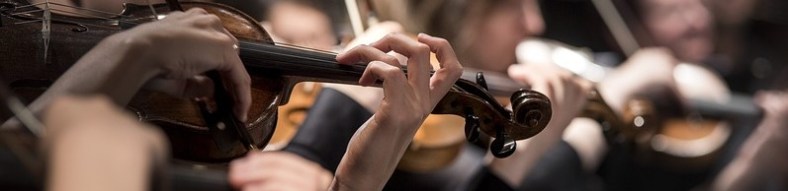
classical-music-1838390_960_720 (2)We enjoyed an orchestra at church Sunday, to accompany our choir and lift our spirits with the resounding crescendo that instruments provide. I noticed that orchestra members get involved with the music at different levels.

The first chair violinist sat on the edge of his seat, one foot behind him, leaning toward the music stand. Every stroke of his bow pulled his body left and right. His head moved up and down, his mouth close to the instrument as if whispering, coaxing it to produce glory like a jockey leaning over a horse’s neck, urging it to go faster, harder.

Fingers on his left hand pressed the strings in various combinations against the instrument’s neck and his hand shimmied to draw forth a plaintive vibrato.

Two rows behind him another violinist played, a young man not yet as accomplished, not yet as sure. He sat stiffly in his chair, leaning toward the music stand as if he couldn’t quite make out the notes. The bow was more an implement in his hand, rather than an extension of his own fingers. Nothing moved as he played except his arm and the bow.

He was just playing the notes. The first violinist played the music.

When I played baritone in the high school band I practiced hard for the annual competition at which a judge would listen, grade us and grant an appropriately colored ribbon – blue for A, red for B, white for C. White was kind of a “thanks for coming” award.

Eager and ready when my time came to play, I pressed the mouthpiece to my lips and ran through those notes perfectly. Didn’t skip or misplay a single note. Hit them all in tune and on time. And got a white ribbon for the effort.

Shocked, I looked at the judge, my face begging a reason. “Anyone who practices can play the notes,” she said. “I’m looking for someone to interpret the music.”

I just played the notes. I missed the music.

An old story tells of a curious lad coming to the site of an enormous construction project in his medieval village. He wandered from workman to workman, each busy with his various tasks, and asked them what they were doing.

The first wiped his brow, grunted impatiently and said, “I’m sawing timbers for cross beams.”

The second didn’t pause from his work pouring mud into forms, scraping off the excess and lifting heavy weights onto a trailer. “I’m making bricks,” he said with a scowl.

The third, when asked, paused, looked over the construction site with exposed beams and holes for windows and the nascent beginnings of a spire reaching into the sky and told the boy, “I’m building a cathedral.”

Our Bible study class was in Romans 7. There, the Apostle Paul encourages the new church in Rome to realize the law is no longer their standard for living. They have died to the law, as Jesus died to free them from it. Instead, they are to live in freedom, under grace.

That is our charge, to live under grace. To live in freedom. Ours is not a check box religion: Don’t smoke. Check. Don’t lust. Check. Don’t cheat on your taxes. Check. And on and on and on, each box a note, each check mark a note played.

The goal of Christian living is not to check the boxes, to just play the notes.

To live under grace is to play the music.


Evangelicals sell authority for a pot of stew and a photo op

On the night of my deepest misery eight weeks after I’d been conscripted as one of America’s last draftees, I walked through Fort Sam Houston to a bank of phones and called my dad, 1,300 miles away. I tried to relate to him how miserable I was – a conscientious objector in medic training with a whole platoon of men fresh out of basic, fired up and ready to go “kill some Charlie Cong.”

I related this as well as I could to dad, who never understood my stance against war, but nothing helped. I hung up the phone and started walking back toward another toss-and-turn night in the barracks, when I passed a post chapel. There was nothing special about the modest, white, steepled box, except on this night it was lit up and pulsing with happy sounds. Drawn by the light and the sound, I walked in.

On the platform was a group of bright, attractive young people presenting some kind of musical. I was enchanted. The music was good and the girls were pretty. Afterwards they invited us to church – Baptist Temple in San Antonio. They offered to come get us in a bus.

Several of us went. There, I heard probably my first “come to Jesus” sermon, outside of a televised Billy Graham crusade. It was convicting and I was almost persuaded. They served us lunch after church and I tasted my first iced tea. We drank milk in Wisconsin. They embraced us, welcomed us, served us. Made us feel at home.

That was my introduction to evangelicals.

I learned that “evangelical” referred to a Christian who felt strongly enough about Jesus declaring the kingdom of God was at hand, and that Jesus holds the key to that kingdom, that he or she felt compelled to tell others about it. You know, to “evangelize,” like the young people from Baptist Temple had done for me. An evangelical took Jesus’ example to heart, reached out and served “the least of these” through selfless acts.

An evangelical took seriously biblical truths as guidelines for living so that to an evangelical, “There is neither Jew nor Gentile, neither slave nor free, nor is there male and female, for you are all one in Christ Jesus.” (Gal. 3:28). By definition evangelicals loved their enemies, spoke truth to power, were slow to rush to judgement and willingly accepted slights rather than instigate fights…or war.

Evangelical was a theological term that described a body of Good News telling believers.

Today “evangelical” is a political term that describes a voting block who want government to legislate their spiritual worldview. And sadly, that worldview has somehow dropped over a horizon that does not reflect Jesus’ character.

Rather than loving the foreigner among us, “the other” is demonized, drawn as a caricature we then are to fear – or to deport.

Political evangelicals appear to love guns more than children; privilege for their own, more than opportunity for all; unborn children more than desperate mothers; their narrow perspective more than tolerance that facilitates a peaceful society.

Rather than an aura of love there seems to be a halo of hate in the way “evangelicals” rejoice in the dismantling of environmental protections; the rejection of science; deification of business; deportation of ethnics who have lived in this country for decades and who are parents and spouses of American citizens, and in how they resist the idea of health care access for all, as if someone has to earn the right to see a doctor.

These political evangelicals shout obscenities at news media covering public events. They succumb to manufactured displays of patriotism and denigrate others who don’t. Their leaders don formal dress for a state dinner at the White House, sacrificing their prophetic voice to rub shoulders with empire.

One of the earliest biblical stories explains that Esau sold his birthright to his brother Jacob for a bowl of red stew. (Genesis 25:33) It seemed logical at the time, Esau was desperately hungry and what good was his birthright if he starved to death?

Voting block evangelicals today sell their prophetic birthright to Caesar, for the tinsel and spice of the arm of empire draped over their shoulder in a photo op – a photo that cost $10,000 at a Charlotte fundraiser Aug. 30, by the way.

In Second Samuel in the Old Testament, the prophet Nathan set forth a scenario before King David to secure David’s ruling. In the scenario, a very rich man took the only lamb of his poor neighbor to feed a traveler. David “burned with anger” and told Nathan “the man who did this must die!”

“You are the man,” Nathan told David in no uncertain terms. Because of his courage, and because he did not keep house in the court of David, Nathan was positioned to speak truth to power, and power repented.

Evangelicals today have sold that position for a cot in the court, and a photo op.


Pressler-Patterson linked again as storm approaches

I don’t know if Paige Patterson is a fan of poet Dylan Thomas. But he seems to be taking to heart Thomas’ admonition not to “go gentle into that good night.”

Patterson, the “theo” half of the theo-political takeover of the Southern Baptist Convention in the 1980s, has been fired from the presidency of Southwestern Baptist Theological Seminary, at one time the world’s largest preacher prep academy –now shrunken to one-third of its student full time equivalent of 1979, the year the Pressler-Patterson combine achieved its goal to elect a fundamentalist SBC president.

Pressler was the “political” half of the theo-political maneuvering. A Texas judge whose membership was nominally at Second Baptist Church of Houston for purposes of identity with the SBC, Pressler teamed with Patterson in symbiosis until their names were seldom spoken in isolation one from the other. Any reference to the leaders of the internecine war they incited was always “Pressler-Patterson” or “Patterson-Pressler,” as if one was the given name and the second was the family name.

And now their names are linked again in ignominy, to which the victims of their outrageous acts can only shake their heads. Victims’ intense emotions already are burned out, leaving the ash of acknowledgement that others finally see what they’ve seen for decades.

For most of those they despoiled by casting aspersions – killing careers, plummeting godly servants into poverty, denying them their calling because they refused to use certain words to describe the Bible or because they were denominational employees and therefore suspect or because their genitalia was innie instead of outie – I suspect the rage, anger, revenge, frustration, fear and disgust that once might have roiled their guts have simply, and thankfully, dissipated over time.

And now Pressler is fighting charges in court about his long rumored and finally charged predilection for the company of young men. And Patterson has been cut loose from the seminary position he coveted even while leading a different seminary. His cronies orchestrated the departure of a fine man at Southwestern just to make a place for him. Ironically, that ousted president, Ken Hemphill, is one of two candidates being considered as the next SBC president.

Although both men are so ego centric it’s unlikely they’ll ever make this connection, dozens, if not hundreds, of people around the globe in the past few days have nodded, with maybe a hint of justifiable satisfaction, and thought, “Now they know how it feels.”

Patterson feels like he’s been done wrong, and his lawyer has issued statements that indicate Patterson is not going to go quietly into the good night of his good riddance. And he is still scheduled to bring the annual sermon at the Southern Baptist Convention annual meeting at 9:55 a.m. June 13.

He’s not clueless. He knows that when he steps up behind the pulpit in the grand convention hall, messengers (delegates) will shift and squirm uncomfortably in their seats as they consider whether to applaud his audacity, or whether to walk out. (Update: Citing requests from SBC president Steve Gaines and other SBC leaders, Patterson has decided not to preach the convention sermon.)

The residue of the Pressler-Patterson “battle for the Bible” continues to coat the SBC like acid rain. As predicted by those outside the shrinking circle drawn by the Pressler-Patterson coalition, all the measureable indicators of denominational health are down since their ilk waved the Bible aloft and declared that anyone who didn’t use their terms to describe it were anathema.

When questioned about that irony, current leaderships’ response is, “But think how bad it would have been if we hadn’t done it.”

How bad, indeed, as even their primary flag waver, Al Mohler, president of the oldest SBC seminary, has declared: “Judgment has now come to the house of the Southern Baptist Convention.”

There is no satisfaction here. Full disclosure, I am one of those whose motives and faith and certainly “loyalty” was questioned, who was eased out from a job and calling which I did well and for which God prepared me my entire career. In fact, I was told by a state convention administrator in the midst of my wondering why I received no cooperation from his office, “You were set up to fail.”

Instead, what remains for me is a feeling similar to that which gurgles through my veins when I drive down County B in Wisconsin past the old farm where I grew up. When I lived there, we kept the buildings painted, the grass mowed and edged, the driveway graded. The current owners do none of that and to see the pending collapse in that disrepair leaves my heart sore.

Atop the barn was a cupola with a weather vane, that swung with the wind and told us from which way a storm was approaching.

Now even that is gone.


My not good, very bad, horrible day

Last week I had a not good, very bad, horrible day.

Driving on my way to see a donor, from whom I was expecting a significant commitment, I phoned a pastor friend to catch up. We exchanged the usual professional and family information that makes men feel they are staying in rhythm with the heartbeat of their buddies. And I learned that his wife had left him. I’ve not been so shocked in a long time. They seemed to be thriving.

Fortunately, he handled the situation immediately and professionally with his church, and they demonstrated the love and commitment that he has earned there. The leadership unanimously wants him to stay.

Later, while waiting in the lobby of my donor friend, I received a phone call from the son-in-law of my high school buddy from Wisconsin who for the past several years has lived within 80 miles of me. I knew Don’s cancer was back, and he likely wouldn’t make it through the summer.

In fact, I had just checked the map to learn where his house was in relation to my meeting to see if I could run over there that day. I was still wavering between going that day, or waiting until next week when the son-in-law called. Next week would be too late, Chris said. In fact, that afternoon might be too late, as Don was leaving us today, he said in a broken voice. Could I come?

I promised him I would come as soon as I finished my meeting.

Over lunch with my donor prospect I learned his business was off by 35 percent and he would not be able to do for the foundation for which I work what he had hoped and planned to do. He’s a fine man, supportive, and encouraged me to stay in touch.

Pulling away, I called Chris from my car and said I’d be there to see Don in an hour. “Don has passed,” Chris said through his tears. I went anyway to be with the family. We shared hugs, tears, coffee and cookies and some laughs and memories.

The body that once held Don remained in the recliner, dogs in his lap. It would remain there until his son in California and daughter from Seattle arrived and said their farewells.

No matter how much time you have to prepare for a loved one’s passing, you’re never ready when that final breath rattles through the pipes and then falls silent. Don’s illness was terminal and this moment was inevitable. Just, as always, too soon.

That night my friend Steve in Omaha texted that he’d lost control when his bike hit a bump, and he’d broken six ribs and partially deflated a lung.

It was overwhelming really, this day of bad news, and I felt like a patch of dry grass in the path of the lava flowing down from Hawaii’s Kilauea volcano.

I was overwhelmed and yet strangely detached. Is it because these tragedies happened to someone else and I remained untouched? Or is it because I’m basically a stoic and consider these events – as painful as they were to those to dear to me – as merely ebbs and flows of the human experience?

Stuff happens. Nobody promised us a rose garden, yadda yadda.

I’d hate to think that absorbing the stings and arrows of those who sought my undoing in past days hardened my heart to such an extent that I had no soft spot left from which to squeeze a tear.

Or is it because the faith in God’s providence to which I cling truly is sufficient? I’ve often said during difficult periods, “These are not the times that try our faith. These are the times that prove our faith.”

Unfortunately, the opportunity for proving presents itself in trial.

Fortunately, faith is sufficient and trials prove it.

Climb a tree

Farm winter

The uppermost pine tree provided a new perspective on a familiar world to a boy willing to take a risk and climb to the top.

A newly enhanced, freshly framed aerial photo of the Wisconsin farm on which I grew up now adorns a bookshelf in easy view. Of course, every time I look over at it, I’m struck with an indistinct nostalgia.

Aerial photos are nothing now, with the advent of drones making common what once was a rare perspective. But this winter view of the farmhouse and out buildings where I roamed, explored, risked and discovered was unusual in the 1970s.

Entrepreneurial pilots provided such shots. They got them by leaning out windows with their cameras, and then taking the pictures to the farms they’d photographed to try and sell them to the farmer. Judging from the aerial photos I saw hanging in the kitchens of my friends, the pilot/photographers were adept at making the sale.

One of the features in the aerial photo of my home place is a row of very tall pine trees, forming a windbreak on the west side of the buildings. They were very, very tall trees when I was a kid. Now, they’re just tall.

Limbs on one of these trees grew almost like a spiral ladder, making it easy to climb. I scurried up that tree often and each ascent lifted me to a new perspective. Oh, not as dramatic as the aerial photographer provided, but still, a new look at a familiar world.

As I got older and braver, and my experiences at lower heights confirmed my ability to climb higher, I ventured onto the thinner limbs above me. These limbs were not as strong or secure. I didn’t feel supported and when the wind blew, the top part of the tree to which I clung swayed.

I wondered if it could support my weight, or if the thin trunk here would snap under me. I actually wondered sometimes if the lower branches would break my fall or even stop me from hitting the ground, or if they would break under my accelerating body mass should I plummet toward the ground.

I was nervous, yes, because I was clinging to an uncertainty. Yet the certainty learned from previous experience lay beneath me, just a step away.

Of course, mom and dad didn’t know I was climbing this high in the old pine tree. They did know I climbed it to a “safe” height. I built a tree house in it that I proudly showed them. But if they knew I was climbing so high, they would have been very nervous, and might even have forbidden me to do it. Or, they might have encouraged it.

That’s how we learn, isn’t it? By how we stretch the boundaries of what we know, of what we can be certain? By taking a risk?

It’s safe to learn to ride a bike when dad is running beside you with his hand on the seat. But you’re never actually riding a bike until he lets go.

It’s safe to learn to swim in deep water with mom’s hand under your belly. But you’re never actually swimming, until she lets go and you kick and paddle your way to the side, discovering on the way, that you no longer need to fear water.

You learn it’s safe to jump across the creek because wading at the edge taught you it’s not very deep anyway, and if you fall in, you’ll only get wet.

You learned to climb a ladder because you climbed a stepstool. You learned to pull yourself up on the monkey bars because daddy held you up at first. You take risks based on confidence achieved at a lower level.

We need to let our kids take risks.

I know, danger lurks around every corner in a parent’s mind. To let them risk climbing a tree might result in a broken arm. To risk learning to ride can result in a scraped knee.

But the alternative is a clinging, insecure child who will not venture out of sight of his parents. Translated to an insecure adult who will never reach for opportunities the next limb higher.

Let’em ride fast down the hill, jump the creek, camp in the back yard, run ahead of you on the hiking trail, attend the college out of state. You can’t protect them from every risk. You don’t want to.

Let’em climb a tree.


Have you ‘settled?’

Because Abraham figures prominently in the origins of the world’s three major religions most of the world knows the story of how he responded without protest to God telling him to “leave your country, your people and your father’s household and go to the land I will show you.” (Gen. 12:1, NIV)

His unquestioning action – while he was yet named Abram – is held up as an example of how we should respond to God’s calling: immediately, unquestioningly, without reservation. Much is made of the implication that he did not know his destination when he started his journey. “Go to the land I will show you,” says the verse.

We know from further reading that the target land was Canaan.

As God is laying out the challenge, God promises to make childless Abram, age 75, “into a great nation,” and to make him a blessing for “all peoples on earth.” Chapter 12, verse 4 says, “So Abram left, as the Lord had told him.”

One reason Christians argue so much about points made in the Bible is that such points and quotations are read out of context. Reading Abram’s story a little further back, into chapter 11, we see that as a younger man, he had set out for Canaan with his father, Terah, but when the clan got to Haran, the Bible says in Gen. 11:31, “they settled there.” (NIV)

Haran is coincidently a region with the same name as Abram’s deceased brother.

How often have you started on a journey, toward a goal, but you got part way down the road, found good grass and water, and you “settled,” far short of your goal? Maybe you looked back to what you were leaving and halfway was so much better that you were content to plop right there.

Are you living a “settled” life?

If Abram had stayed in Haran, only part way to Canaan, we wouldn’t even know his name today. It’s easy to lose sight of the dream destination. Haran was close enough, good enough, until God said, “Go.”

Going meant leaving behind familiarity, comfort and security. Going meant forging ahead to the unknown. It also indicated belief in God’s ridiculous promise that a childless 75-year-old man would become father to a great nation, and be a blessing to all nations.

Haran was good. “Go” was far better than he ever could have guessed. Haran was three square meals and a warm bed every night. “Go,” was nomadic and uncertain.

Haran was settled. “Go,” was claiming a ridiculous promise, the outcome of which was unknown. Haran was safe. “Go” was fraught with danger, hardship, moral dilemmas and previous occupants in the land Abram was promised.

I don’t know why Abram’s father Terah settled in Haran, without continuing on to Canaan. I suspect he found good grass and water. But a settled life – when God has bigger plans for you – will never bring you deep satisfaction.

Possess the New Year

How are things going for you so far in this new year?

Lots of bad things are going on in the world. No need to enumerate them. You have your own definition and awareness of those things that makes you feel threatened.

And yet: the economy is showing slow, steady growth, unemployment is at its lowest rate in many years, the stock market is near record highs, building cranes mark the skylines of many cities, the U.S. is making a peaceful transition of leadership and optimism seems on the increase.

So if things aren’t nearly as bad as they seem, why do they seem so bad?

Uncertainty and insecurity are the biggest wet towels draped over our plans for 2017. It is tough to act in the face of uncertainty.

My sister was a nurse in a major veterans hospital and she says when most cancer patients in remission suffer a reoccurrence of their disease they are not frightened, but are almost “relieved” because they expected it to come back eventually. They dreaded it of course, worried about, feared it…but now they don’t have to worry about it showing up any more. It’s here, and they can deal with it.

Doing a story in Houston once, I met a former New York actress who fled an abusive relationship. She huddled each night in the closet with her baby, listening to her boyfriend’s footsteps up the stairs, knowing that if he doesn’t beat her tonight, he will eventually. Still, she told me that the certain knowledge of a beating was better than running out the door with her baby in her arms into an uncertain future.

In the second year after the ancient Hebrews fled centuries of slavery in Egypt they arrived at the land God promised them. The barrier, of course, is that the land wasn’t gift wrapped. Other tribes occupied it, and the Hebrews would have to deal with those tribes before they could possess the land.

Moses wanted to know what his people were up against, so he assigned 12 men to scout the land, including Caleb and Joshua.

For 40 days the 12 explored, skulking around the desert, checking out crops, cities and people. They found a land flowing with milk and honey, rich in fruit and cropland. The grape cluster they brought back as evidence of the land’s bounty had to be carried on a pole between two men!

But they also saw those people who occupied the land, and it was scary. To the scouts, according to the story in the book of Numbers, chapter 13, “We seemed like grasshoppers in our own eyes, and we looked the same to them.”

Yikes. How often is your self-image determined by comparison to others? As someone said long ago, “Comparison is the thief of joy.”

The scouts saw the occupants as giants compared to themselves. Their fear was not misplaced. Those guys were big. Taking that land would be tough sledding. Ten scouts thought it would be too tall of a task and they recommended slinking away.

This is what happens when we compare our situation to someone else’s without taking into account the promises of God.

Human nature dreads an uncertain future. We dread it even more than we hate a horrible past. We’d rather live in a paralyzed present.

Joshua and Caleb, on the other hand, considered the promise and said, “Let us certainly go up – and we have possessed it; for we are thoroughly able for it.” (From Young’s Literal Translation) As far as they were concerned, the job was as good as accomplished.

It is only when we see ourselves as God sees us that we are empowered, encouraged, and enabled.

Three things to remember from this story as you race toward December:

  1. To gain a more accurate view of yourself and of your possibilities, raise your eyes. Don’t compare yourself to your friends or colleagues or neighbors. Don’t hold your successes up to theirs and find yours to be less. See in yourself the giant God sees.
  2. The past you cling to wasn’t all that great.

The 10 fearful scouts tried to persuade the people to go back to Egypt, where a king “who knew not Joseph” had enslaved the Hebrews, cut their food rations, increased their quota for brick making and ordered midwives to kill any male child at birth.

  1. Don’t paralyze your present by preferring the past.

In Caleb’s mind the land was already theirs. It sat like a great, unopened present under the Christmas tree.

The new year stretches before you. I know it’s just a quirk of a calendar page, but Januarys give us a chance to reset our emotional clock; to clear our desk, empty our inbox and embrace possibilities.

What has God promised you? “What?” God told Moses, “Are my arms too short to do what I promised?”

Can we say with Caleb at the start of this year, “Let us go up and possess the land?”