The day I turned old

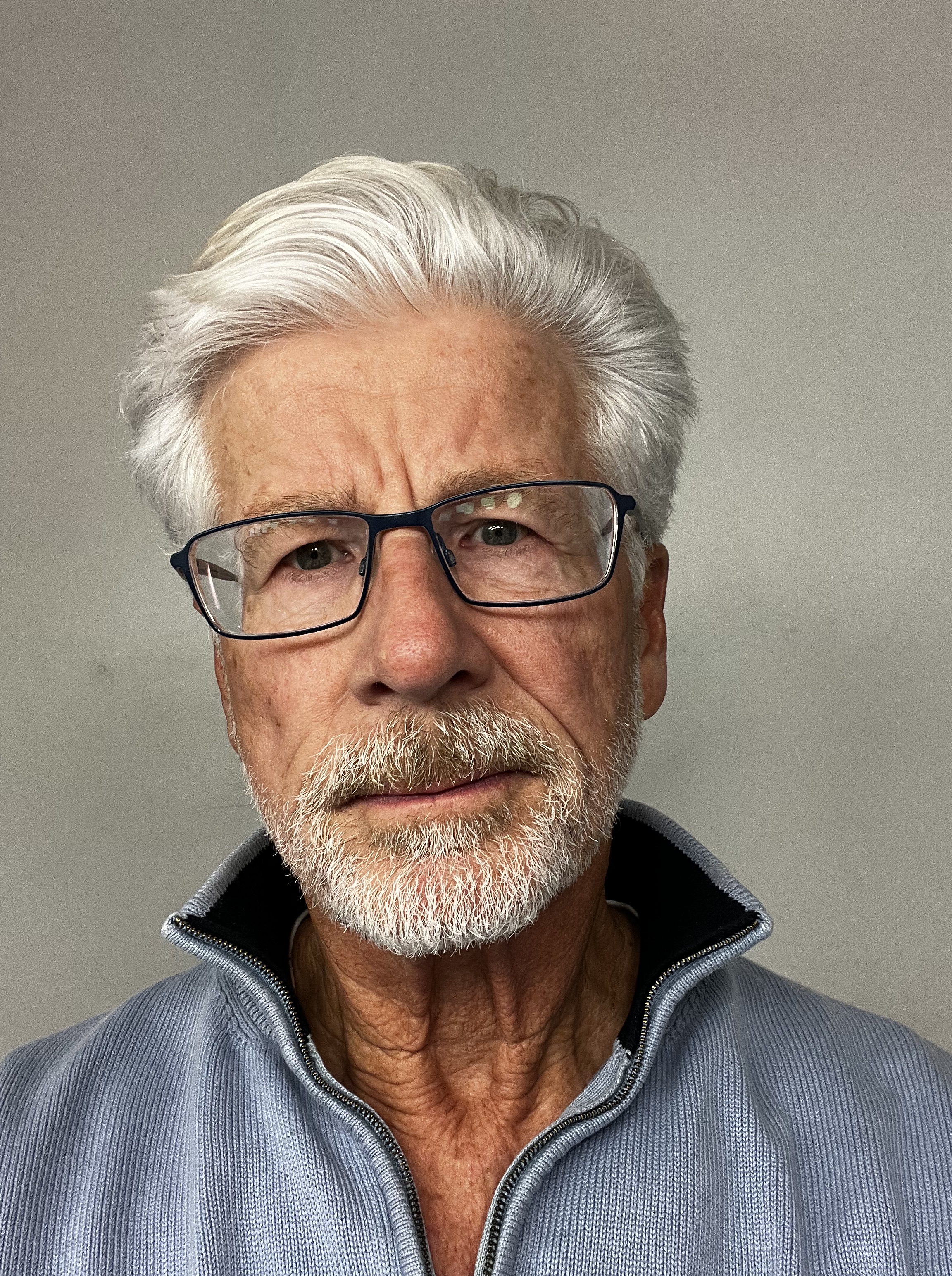
I turned old on August 30, 2025. I know the day. And the hour. And the moment.

No wonder the young lady stood to offer me her seat.

For much of my life, I looked younger than my age. I was a husband, father, and owned my second house before I shaved every day.

About age 26, I was in the barber chair with my hair wet and glasses off and my wife walked in, ready to take me home when I was finished, since we managed with one car. The barber noticed that she caught my eye, and asked, “Is that your mother?”

Later we listed some furniture for sale, some of our original “we-need-something-and-this-will-do-until-we-have-money,” pieces. A college girl called, said it would be perfect for her dorm, and arranged a time to come pick it up.

When I answered the door, she looked at me and asked, “Is your mother home?”

To say I was devastated is to say the Johnstown Flood was a trickle. I was floored. It took me days to get over it. Evidently, I still haven’t.

I was a college graduate, Army veteran, working a professional job with national connections and a college girl sees me in my Saturday morning T-shirt and jeans and asks if my mother is home.

I told her my mother lives in Wisconsin, 640 miles away, but if she’s here for the furniture, I can help. And then my wife picked me up off the floor.

Eventually, the sirocco winds of life aged my face, bleached my hair to arctic blonde and added enough wrinkles that I didn’t have to say, “No, really” anymore when my age came up.

My oldest son shares some of my facial features and when I’m introduced as his father, his friends invariably say, “I could’ve guessed.” I keep hoping one day someone will mistake me for his older brother.

Which brings me to the fateful day when the harsh reality of simple observation by a stranger shattered the mistaken impression that all the mirrors in my house are broken. I walk past a mirror, see the image it reflects, and I know that grizzled face can’t be me.

And yet.

In Budapest, Hungary at the beginning of a Danube River cruise taken to celebrate the 50th anniversary of marriage to a beautiful woman I had bamboozled long enough to convince her to marry me, the curtain came down on my illusion.

I stepped onto a tram car and a young woman stood to offer me her seat.

Glass shattered. Ego crumbled. Humility fallen over my shoulders like a granite yoke.

I implored the innocent to return to her seat. Over a language barrier, my pleading eyes, exasperated face and arm motions made my intention clear. “Please. No. Take your seat. ARRGGG.”

She politely declined, and I resolutely remained standing, amid the laughter of our traveling colleagues.

The insult of reality was exacerbated the next day when on a similar tram, my wife was warned that a conductor was on board and was checking tickets. In Budapest persons over age 65 ride public transportation free.  The local was kindly warning my wife that she needed a ticket.

Sue Ellen graciously informed her that she didn’t need a ticket, because she was 70. To which the kind commuter expressed astonishment, of course.

She then looked at me, seeing I was with Sue Ellen, and I swear I heard her ask, “Is that your father?”


‘/

‘Nothing lasts like it used to’

I once took it as irrefutable truth that “Nothing lasts like it used to.”

For the most part, I agreed that manufacturers were “building in obsolescence” so you’ll have to replace that refrigerator you’ve had for 25 years with a new one you can expect to last only 10 at best.

It’s easier and cheaper to replace appliances than it is to repair them. Good for the manufacturers, bad for service repairmen.

Credit that brief functional life to plastic parts. While it may take 10,000 years to decay in the landfill, plastic in the essential workings of everyday products seem to decay in 10 months. Plastic is so pervasive that we don’t even realize how many items that once were made were made with metal or wood and were strong enough to become heirlooms are now made with plastic and won’t get your kid through kindergarten.

To start a list of all things plastic would require more capacity than my computer has. You may be reading this through lenses held to your nose with plastic frames. You bring home groceries in plastic bags, or get fast food through your car window in plastic containers. Plastic is often useful but nothing plastic can be expected to last long enough for your child to use it as an adult.

Yet, I’m still using an electric grinder my dad used to sharpen the ax he handed me to split firewood. A brass lawn sprinkler I finally sprung for has outlasted a dozen plastic sprinklers.

So yes, I agreed for the most part that “Nothing is built to last” anymore. But then I thought of shoelaces.

Remember when you had to replace shoelaces? When you had to keep extras on hand because they always broke just when you were hurriedly tying a knot to catch the bus for school? Or when you’re trying to get your gym shoes on for phys ed?

And weren’t the only shoelaces available in the catch-all drawer never the color or length you needed? Lots of white laces in the draw when you needed black and vice versa. Don’t even talk to me about brown.

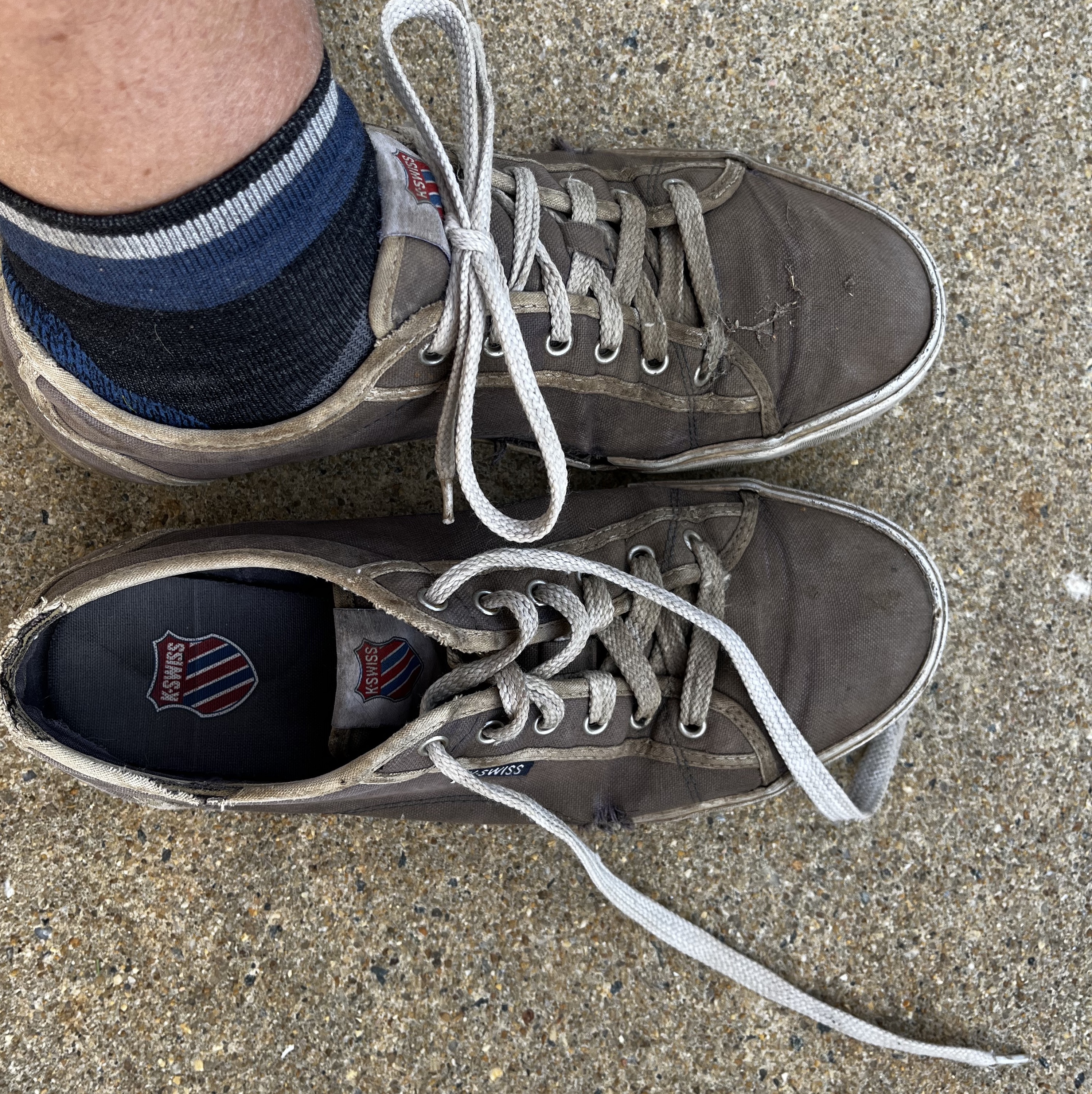
Now the laces in my shoes, from court shoes, to hiking boots to dress shoes outlast the shoes themselves. My sole was falling off my 35-year old Vasque Sundowner hiking boots, but the laces are unfrayed. How DO they do that?

And cars.

Car buffs wax nostalgic about the autos of our youth, but our love affair with those massive, ungainly hunks of American steel was more about style than quality or agility. They burned gas like the sun burns hydrogen.

I became a writer because I couldn’t fix cars. All my buddies, it seemed, knew how to adjust a carburetor, or set the gap on a spark plug, or adjust the timing belt. I knew where the gas went. And I could change a tire.

But, what future awaited in my rural Wisconsin community if I knew nothing about cars and didn’t have a farm to inherit? Cars are another thing better today than a generation ago. Even Car and Driver magazine says, “Cars these days are made to last much longer than those produced even a few decades ago.” Reason being, “car parts are now constructed to withstand more wear than in the past.”

New cars are basically computers on wheels. Electronic eyes can keep a safe distance between you and the car ahead; can keep your vehicle centered in the lane; go 5,000-7000 miles between oil changes; are just getting warmed up at 100,000 miles on the odometer.

Of course, people are driving more today. Commutes of 45 minutes each way are common and longer distances are not unheard of. But no one had 100,000 miles on a car when I was a kid. A guy would hesitate to buy a used car with half that mileage.

 And then there is the elastic that holds up my socks, and keeps my boxer briefs from falling off my hips. My socks never stayed up when I was a kid, and the elastic waistband in my underwear didn’t last many rounds through the wringer washer before they collapsed in their effort to stay aloft.

Today the elastic in my socks could cut off my circulation and that in my waistband could be a tourniquet for an elephant’s mangled leg.

So, it’s not true that nothing is as good or as long lasting as it once was. And if you argue about it, I’m going to throw my Walkman at you and tie you to the broken fridge in my garage.

Going to need extra chairs

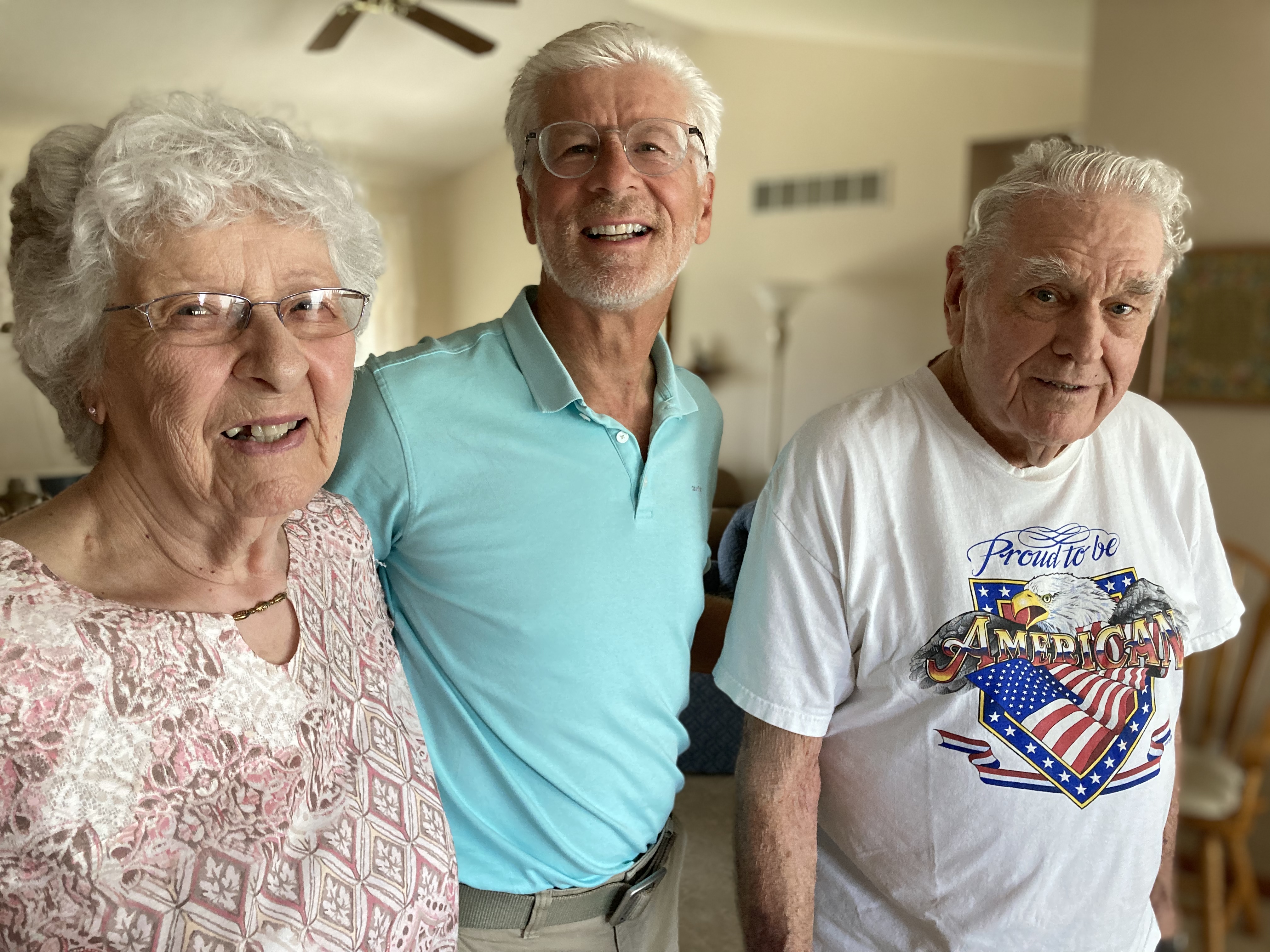
Me in the middle, with Janet and Bill in 2021.

When my grandmother died in 1979, I drove my young wife and one-month old son from our home in Nashville, TN to the funeral in Wisconsin. Grandma was young enough to have a large funeral, just 72 years old. My age.

Of course, in Rio, WI, population 788, funerals were as big a social event as Friday night football at the field in Fireman’s Park. I didn’t play football. I ran cross country instead, which I convinced myself was harder.

But I was at the football games, either running the sideline keeping stats, or in the stands playing “CHARGE” on my trombone.

After grandma’s funeral service at Redeemer Lutheran, one of six churches in town – equal to the number of bars – everyone gathered in the church basement for a lunch prepared by women of the church. Because the meal was free, and there wasn’t much else happening in town that day, the room was crowded.

My wife was most concerned with the one-month old son not accustomed to the noise and crowd and whose only real concern was keeping his tummy full and his diaper dry. So, he started fussing and wailing and that’s not the sound you want to hear piercing the din of chattery family members chowing down on store bought dinner rolls filled with a slice of ham and a slab of butter, potato salad and red Jell-O with marshmallows.

Suddenly, from across the entire fellowship hall, packed hip to hip at the folding tables, my aunt Janet yelled, “Give that boy some titty!”

Now, in another context other than a rural Wisconsin farming community, that comment might have seemed out of place, even impolite. Certainly it caused all the blood in my wife’s body to flush to her toes and then recongregate in her face, making her flush a brighter red than the Rio High School Vikings mascot. But, it also gave her the freedom to excuse herself, find a quiet Sunday School classroom, and take care of our son’s immediate need.

Aunt Janet died this week, at age 91. She was my mother’s last surviving sibling and mom preceded her in death by 29 years. They were two of eight siblings, prompting my grandpa McFarlane to say he had “Two and a half-dozen children.” When grandma McFarlane died, petty sibling grievances broke familial bonds and later on, as one sibling after another died, obituaries did not list all surviving family members, as if they never existed.

But Aunt Janet was always a friend, in part due to the loquacious character of her husband, Bill, a former police officer and much longer a seed corn salesman who knew every farmer and what they needed most. Bill preceded her in death by three years.

I confess Janet’s was the first bare breast I ever saw, as I stood wide-eyed at age five while she fed her first born son, Mark, a man who grew up to be a Presbyterian pastor, nurtured as he was on the milk of human kindness. He could preach from I Peter 2, “Like newborn babies, crave pure spiritual milk, so that by it you may grow up in your salvation.”

Janet and Bill had five children and 10 grandchildren and money never flowed like water over Niagara. Janet always put her hand to the wheel to find additional resources, driving school bus for more than two decades and making wedding cakes for lucky brides and grooms.

She looked at driving bus as ministry, taking the opportunity to offer a bright, encouraging word to children with dour faces, lifting heavy, reluctant feet up the step on the way to school.

She was certain of opinion and ready with advice.

When Janet learned my cousin Allen smoked, she asked if he would rather kiss a girl or an ashtray. Allen, sarcastically defending his nasty habit, told me he responded “Ashtray.” He’s since grown beyond that – both in girls and habit.

 Janet and Bill built a house on a hill overlooking that of her mother Eva and she was diligent in looking after her mother to the end. Eva –my grandmother on my mother’s side – expressed concern that bad weather would limit the size of her funeral. She was mentally comparing her eventual celebration to the big crowd that showed up for her husband’s sendoff. In her mind, her funeral would suffer by comparison and somehow that would reflect negatively on her life.

Though such comparison is a false equivalency, if every person whose life Janet affected positively were to attend her funeral, ushers will need to bring in extra chairs.