
Give a cyclist some room

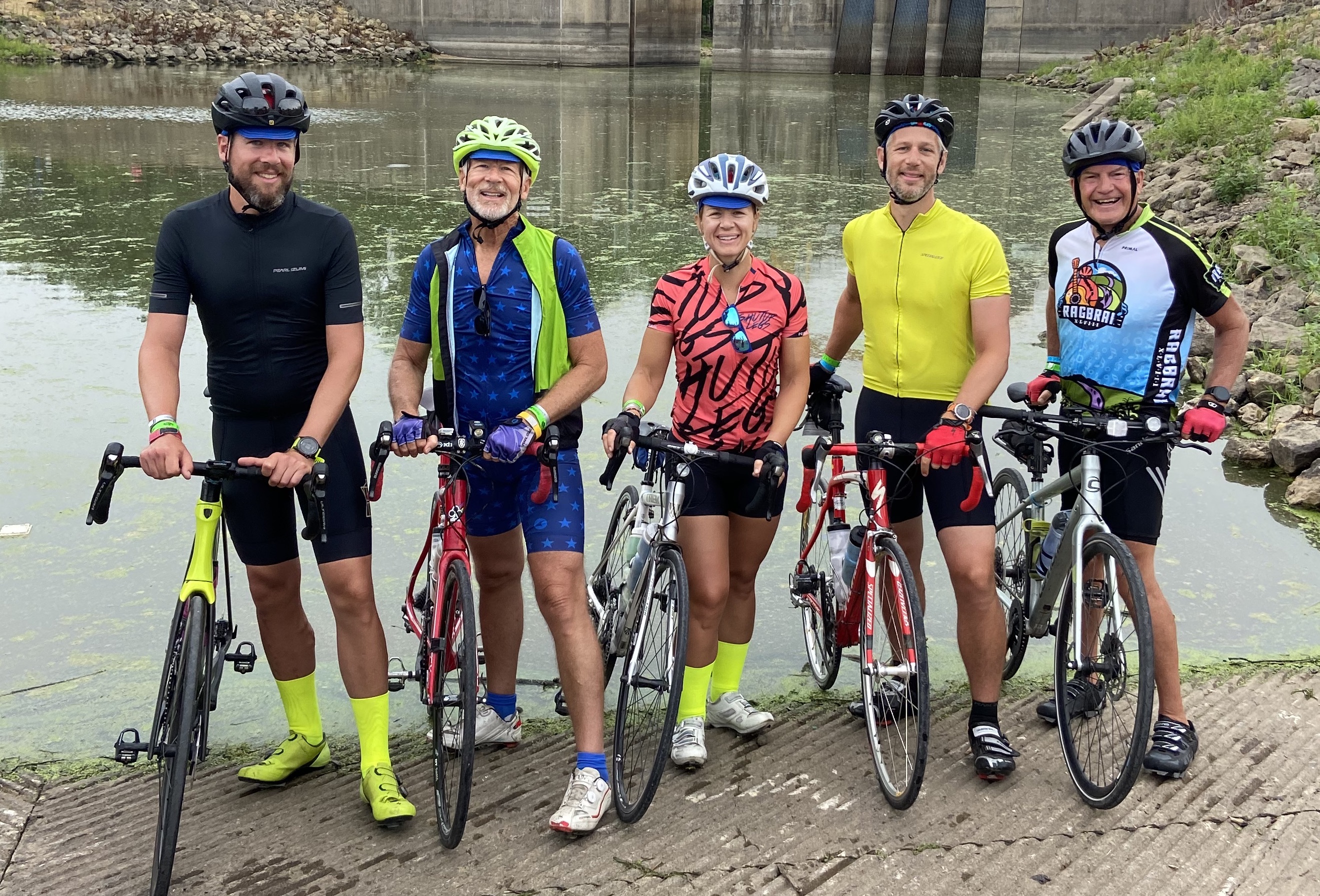
One of the greatest joys from a life of cycling was riding RAGBRAI in 2021 with my three children and best buddy from the Army. From left, dipping our wheels in the Mississippi River, are Austin Jameson, Norman Jameson, Erin Frank, Nathan Jameson and Steve Moorhouse.

While riding the bike lane on Longboat Key in Florida, a large SUV glided up beside me and slowed, matching my speed. Given the culture of animosity between cyclists and automobile drivers who think the road was laid for them personally and that any other user traveling five miles per hour slower than them is an impediment expressly forbidden in the Constitution, I kept my eye on it.

I’ve had doors opened to try to knock me off my bike, soda cans tossed at me and curses cast on the wind as cars pass that I can barely hear and never understand except for their volume and intent. I always laugh when people fly by me, shouting some insult that never registers because those idiots don’t realize their words dissipate in the wind like bubbles touching grass blades.

And there are the truck guys immobilized in lines of traffic driving onto the island who see me about to pass unimpeded in the bike lane so they turn their wheels and edge into my space, laughing all the way. I have the last laugh as I rap their truck with my knuckles and roll on, their being impotent – despite their big truck and heavy belt buckle – to bother me at all.

So, this creeping SUV concerns me until I notice its right directional signal blinking. He’s waiting for me to safely pass through the intersection before he turns right, behind me instead of in front of me, avoiding a collision.

May his tribe increase.

The summer of 1972 I took off on my bike from south central Wisconsin to ride 300 miles to Wayzata, MN to see a girl I’d grown close to during my one year at Luther College. I took off on my 10-speed Schwinn wearing cutoff shorts and tennis shoes. I carried a few cans of tuna fish, a few bucks, a water bottle and a sleeping bag.

I had no rain gear, no shelter, no tire repair kit, no helmet, no sunglasses. I’d bought the bike for ten bucks from a friend who’d left it outside all winter in the Iowa snow. And my route on Highway 16 was a major thoroughfare.

I rode 75 miles the first day, at least three times longer than any single ride I’d done before. I slept on the ground in some city park, uninterrupted except for the bug that crawled into my ear. It navigated deeper than I could reach with my finger and in my sleepy desperation I used the plastic tip of my shoe string to squish it so I could get back to sleep.

When I slung my leg over the saddle the next morning for the second leg of my trip, I was so tender I felt like I sat on the sharp edge of a sword.

During that trip, a car passed me just like the SUV on Longboat Key, but he turned right directly in front of me and I crashed into its side. I hit the pavement and the car stopped long enough for the driver to see that I was uninjured before it sped off.

That was on my mind as I watched the SUV beside me.

I’ve ridden across Wisconsin and North Carolina. I’ve ridden RAGBRAI across Iowa four times. My bike travels with me so I’ve ridden in many states and I’m always cognizant of the risk I’m at from inattentive drivers.

In 2023, 1,166 bicyclists were killed in crashes with motor vehicles, an 86 percent increase from 2010. Approximately 130,000 cyclists are injured annually on U.S. roads.

The common excuse of deadly drivers is “I didn’t see him.” That is NEVER an excuse. A driver is responsible to see everything in his path, from a pothole, to a stop sign, to a kid running into the street to chase a ball, to a cyclist in brightly colored clothes likely adorned with flashing lights.

I’m a little more nervous on the road now, at age 73, more aware of how close cars, trucks and landscaper trailers are to me when they pass; more aware of how distracted and careless drivers are generally.

And more appreciative of the rare auto driver who gives me a wide berth and slows to turn behind me, rather than in front.
‘Nothing lasts like it used to’

I once took it as irrefutable truth that “Nothing lasts like it used to.”

For the most part, I agreed that manufacturers were “building in obsolescence” so you’ll have to replace that refrigerator you’ve had for 25 years with a new one you can expect to last only 10 at best.

It’s easier and cheaper to replace appliances than it is to repair them. Good for the manufacturers, bad for service repairmen.

Credit that brief functional life to plastic parts. While it may take 10,000 years to decay in the landfill, plastic in the essential workings of everyday products seem to decay in 10 months. Plastic is so pervasive that we don’t even realize how many items that once were made were made with metal or wood and were strong enough to become heirlooms are now made with plastic and won’t get your kid through kindergarten.

To start a list of all things plastic would require more capacity than my computer has. You may be reading this through lenses held to your nose with plastic frames. You bring home groceries in plastic bags, or get fast food through your car window in plastic containers. Plastic is often useful but nothing plastic can be expected to last long enough for your child to use it as an adult.

Yet, I’m still using an electric grinder my dad used to sharpen the ax he handed me to split firewood. A brass lawn sprinkler I finally sprung for has outlasted a dozen plastic sprinklers.

So yes, I agreed for the most part that “Nothing is built to last” anymore. But then I thought of shoelaces.

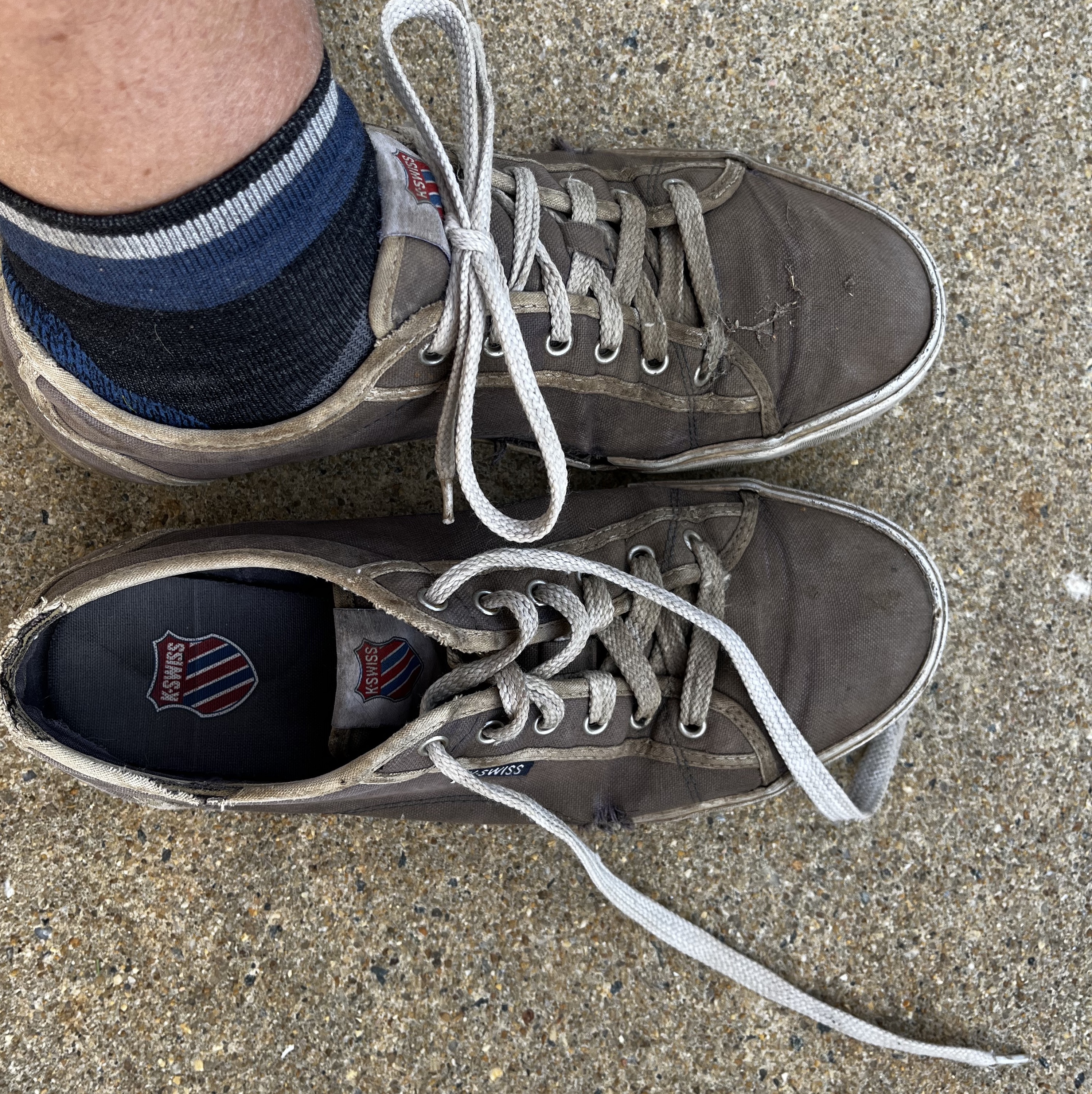
Remember when you had to replace shoelaces? When you had to keep extras on hand because they always broke just when you were hurriedly tying a knot to catch the bus for school? Or when you’re trying to get your gym shoes on for phys ed?

And weren’t the only shoelaces available in the catch-all drawer never the color or length you needed? Lots of white laces in the draw when you needed black and vice versa. Don’t even talk to me about brown.

Now the laces in my shoes, from court shoes, to hiking boots to dress shoes outlast the shoes themselves. My sole was falling off my 35-year old Vasque Sundowner hiking boots, but the laces are unfrayed. How DO they do that?

And cars.

Car buffs wax nostalgic about the autos of our youth, but our love affair with those massive, ungainly hunks of American steel was more about style than quality or agility. They burned gas like the sun burns hydrogen.

I became a writer because I couldn’t fix cars. All my buddies, it seemed, knew how to adjust a carburetor, or set the gap on a spark plug, or adjust the timing belt. I knew where the gas went. And I could change a tire.

But, what future awaited in my rural Wisconsin community if I knew nothing about cars and didn’t have a farm to inherit? Cars are another thing better today than a generation ago. Even Car and Driver magazine says, “Cars these days are made to last much longer than those produced even a few decades ago.” Reason being, “car parts are now constructed to withstand more wear than in the past.”

New cars are basically computers on wheels. Electronic eyes can keep a safe distance between you and the car ahead; can keep your vehicle centered in the lane; go 5,000-7000 miles between oil changes; are just getting warmed up at 100,000 miles on the odometer.

Of course, people are driving more today. Commutes of 45 minutes each way are common and longer distances are not unheard of. But no one had 100,000 miles on a car when I was a kid. A guy would hesitate to buy a used car with half that mileage.

 And then there is the elastic that holds up my socks, and keeps my boxer briefs from falling off my hips. My socks never stayed up when I was a kid, and the elastic waistband in my underwear didn’t last many rounds through the wringer washer before they collapsed in their effort to stay aloft.

Today the elastic in my socks could cut off my circulation and that in my waistband could be a tourniquet for an elephant’s mangled leg.

So, it’s not true that nothing is as good or as long lasting as it once was. And if you argue about it, I’m going to throw my Walkman at you and tie you to the broken fridge in my garage.