
Rod Stewart is 80! What does that make me?

I burst out laughing recently when I saw on the waiting room table the June/July issue of AARP magazine, the publication from what was once known as the American Association of Retired Persons.
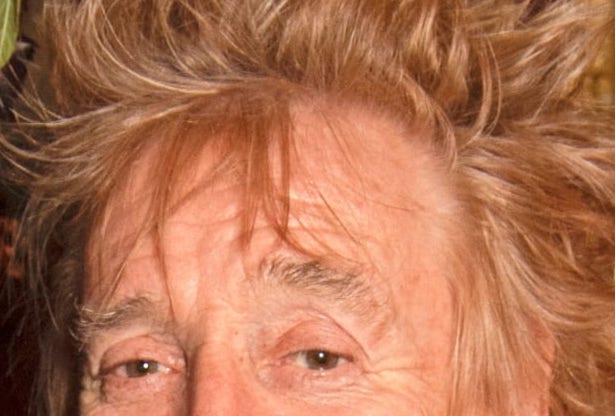
On the cover, reverberating in neon colors, a knowing smirk and dust mop hair was Rod Stewart, the English rocker whose music dominated the sound track of my freshman year at Luther College.

The perennial young superstar is now 80 years old. But his penetrating eyes and feline, ready to pounce stage pose triggered aural memories as if I was still having nightmares about missing a test for a class I never attended and wondering why in the world I enrolled in 8 a.m. speech. 

“Maggie May” was Stewart’s break out song, originally released on the “B” side of the single “Reason to Believe.” It was practically on loop at the local radio station. Or if you couldn’t wait for it to come on after the next commercial, you just needed to walk down Ylvisaker dorm hall to hear it emanating from behind a door. 

For a naïve college freshman, away from his little farming community home for the first time, the song’s lament of a young man trying to leave an older friend who became a lover struck a fantastical chord.

“You led me away from home, just to save you from being alone,” the song says. Here I was, away from home and feeling very alone. 

“It’s late September and I really should be back in school.” Hey, it’s September and there I was, in school.

I wasn’t a rock and roll fan. The Carpenters, James Taylor and Simon and Garfunkel were more my speed. And frankly, I didn’t and don’t like Stewart’s gravelly voice. But even while writing this piece, “Maggie May” is an ear worm I can’t stop humming. 

My problem with seeing Rod Stewart on the cover of AARP magazine at age 80 is that in 1971 he was just a few years older than me. And now, he’s 80. What does that make me?

We all have triggers that remind us of how we’re aging. I think of the story of a woman who looked into the window at a hair salon and saw one of her classmates from 30 years ago. She was shocked at how the woman had aged.

She went in to say hello, introduce herself and remind her they were in school at the same time. “Oh,” the woman said. “What did you teach?”

“The morning sun when it’s in your face really shows your age,” Stewart sang.

I laughed at that line in 1971, about the sun revealing age. I still didn’t shave every day and was aggravated that I looked so much younger than I actually was. People thought i was a kid. Other guys had sideburns I envied because I just knew a strip of beard down the side of my face was the key to getting girls. 

I’ve matured from that, to the fact that I’m replacing all the mirrors in my house because they don’t work. I don’t know if the batteries are spent or what. But I’m certain the image they reflect is not the image I present.

I check the obituaries for any familiar names. There I see brief summaries encapsulating lives lived and lost that ended at ages younger than me. Persons both famous and anonymous whose roads on this earth ran shorter than the path I trod are signing off. Bon voyage.

Fifty-year anniversaries are cropping up. First, high school graduation, then getting drafted, then college. My wedding. Friends’ weddings, friendships started, events I participated in a half century ago.

About the time Rod Stewart struck it big with Maggie May.
One is the loneliest number

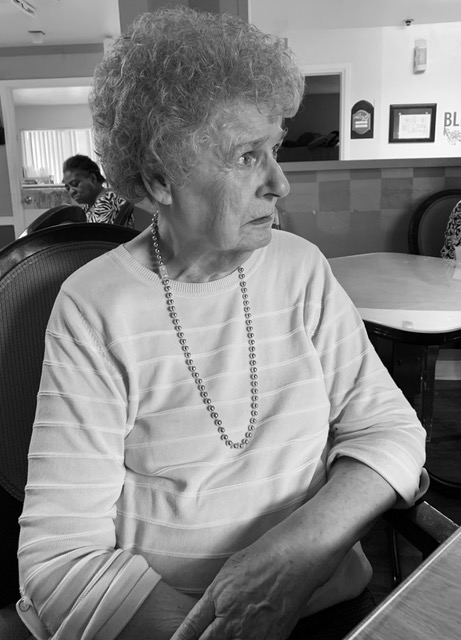
My mother-in-law, during last days in nursing care.

In August 1971 anonymous government functionaries conducted a lottery to determine the order in which 19-year-old boys would be drafted into the Army, thousands of them eventually to die in the politicians’ war in Viet Nam.

They drew my birthday first. No. 1. It was the only thing I’ve ever “won” except a case of beer at the Rio Fireman’s Picnic, and the hand of my wife. I was too young to claim the beer, and my wife was almost too young to marry.

From that day on, the musical hit “One” by Three Dog Night became the soundtrack of my life as I went off to college, hoping to get a semester in before I received my draft notice. It’s resounding assertion that “One is the loneliest number that you’ll ever do,” pounded time after time out of my reel-to-reel tape player, putting to music the angst of a life on hold.

“One is the loneliest number that you’ll ever do…

“It’s just no good anymore since you went away

“Now I spend my time just making rhymes of yesterday.”

Then the resounding, pounding refrain:

“One is the loneliest number

“One is the loneliest number

“One is the loneliest number that you’ll ever do.”

Every time that song surfaced on the radio or in sequence on my Three Dog Night album, I sank emotionally. No. 1 in the lottery. Draft certain. One is the loneliest number. The saddest experience.

Thoughts of “one” and being alone jumped at me recently while I stood in line for a table at southeastern America’s food oasis, Cracker Barrel. It hit me when the hostess asked the lady ahead of me, “How many?” and she responded, “One.” The loneliest number.

A sudden sadness for her and others being alone hit me like a gut punch through a curtain of memory.

One is the loneliest number that you’ll ever do.  And it’s a growing trend in America. We’re in an epidemic of loneliness. It’s not just aging widows and widowers. It’s younger people isolated by screens who possess no ability to communicate with real, live people.

Lacking meaningful, human to human connection can increase the risk for premature death to levels comparable to smoking 15 cigarettes a day, according to an advisory from U.S. Surgeon General Vivek Murthy.

We once called on a young man who visited our church to encourage him to become involved. He said he walks into his apartment on Friday night after work and doesn’t leave it until Monday morning. Week after week. Crawling out to visit the single adult class we led was a major effort.

The prevalence of single-person households is unprecedented historically,  rising from seven million to 38 million since 1960. 

I don’t equate “being alone” with loneliness or depression, but community involvement and social interaction is the leading indicator for health in senior adults. Of course many single adults lead vigorous, joyful, involved lives and God bless them.

It’s just that as I approach my 48th wedding anniversary I know the deep satisfaction life with a loving partner brings. I think of the shared joys, sorrows and triumphs of raising our three children, and of their loving spouses and our seven grandchildren. I would wish that common good for anyone.

Beyond that, what are the implications for a society in which so many of its members live as single, unaffiliated, isolated souls? Think – as I’m sure they are – of long term health, housing, community, end of life?

And yet, one out of four of today’s 50-year-olds will have been single their whole lives. Never married, never partnered.

Social isolation is associated with a higher risk of dementia and other serious health problems in older adults — while having positive social relationships can help people live longer, healthier lives.

In other parts of the world, nearly four in ten older adults live with extended family, an arrangement that mitigates aloneness. But older adults in the U.S. rarely live with family. 

Our culture almost demands we go it alone, that we not “need” anyone or anything. Yet that is not the preferred condition of most single adults I know.

And when the person ahead of me is asked, “How many?” her “One,” sounds like the saddest experience she’ll ever do.