
Over a breakfast of toast, fruit and eggs plucked moments earlier from the coop next to the house, my wife said I’d given her too much food. She was stirring her eggs about like a kid wishing lima beans to disappear.
“Just eat what you want, dear,” I said. “Don’t be like my dad.”
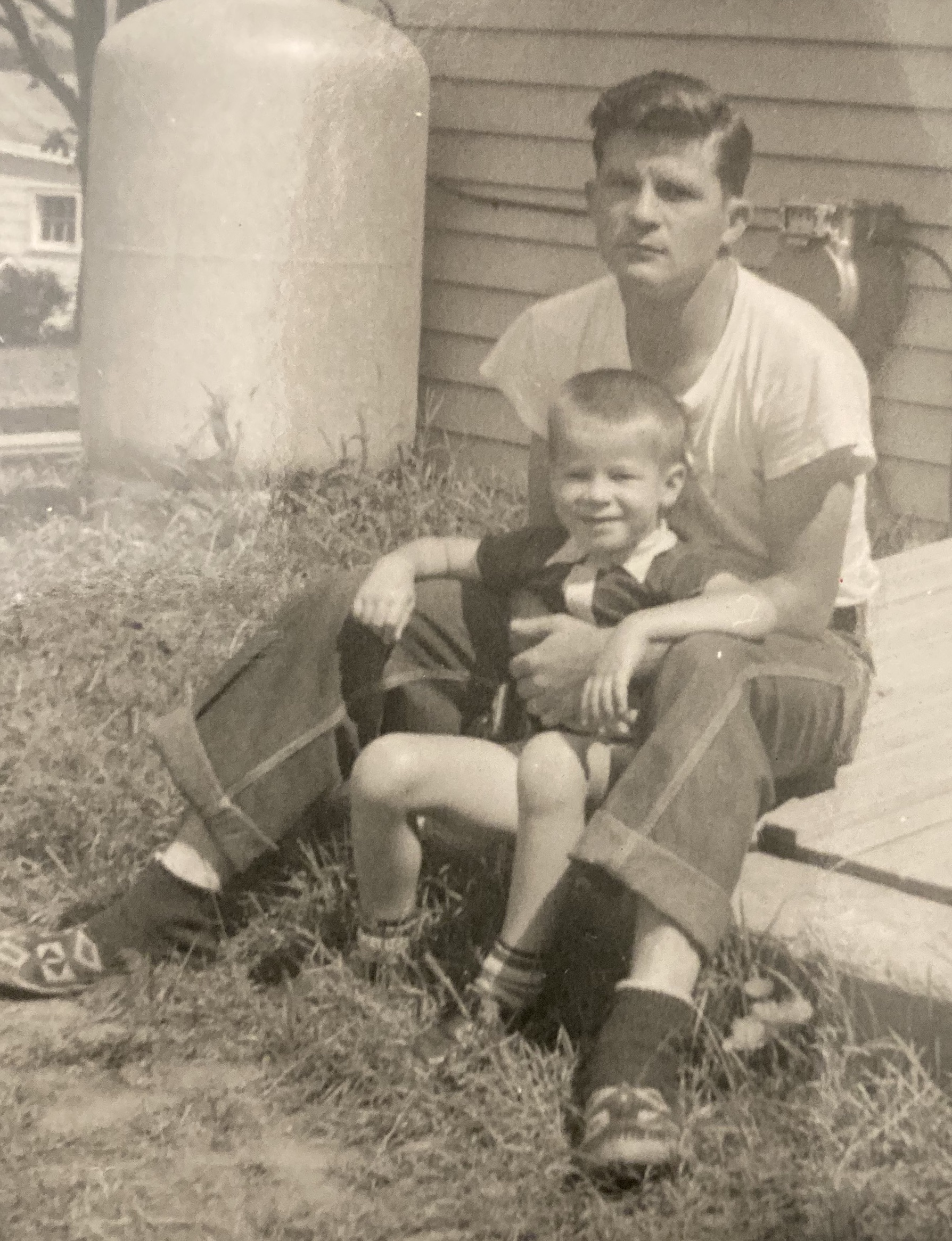
My dad, Marvin. Gone now for seven years. A child of the Depression, frugal to a fault. As a young man, he worked two and three jobs to buy groceries for his wife and three children, ages four to infant, living in a 19-foot trailer. He loathed the idea of “wasting” a single morsel of food well into his prosperous 80s.
Dad cleared his plate, no matter how miserable those last forkfuls made him feel later, especially if it was a restaurant meal for which he paid. I never understood it.
“Dad,” I’d say. “Don’t let some anonymous cook in the kitchen determine how much you’re going to eat, and how you’re going to feel afterward.”

But the thought of sending food back to the kitchen or down the disposal was anathema to dad.
Immediately after I told Sue Ellen, “Don’t be like my dad,” regarding his relationship with food, Newton’s third law of motion kicked in and brought an “equal and opposite reaction.” I thought of so many ways I would want my wife, my children, myself and anyone else to “be just like my dad.”
Dad was devoted to his family, teaching us to work by example, never complaining about his long hours. He stretched his finances to buy “the old Peterson place on County B” with 80 acres of farmland and an acre of lawn and outbuildings. On and off he tried raising steers, pigs and chickens to supplement his income driving a fuel truck among farms in four counties.
We mowed the grass, tended the large garden, fed the animals and picked stones from the fields that the annual freeze and thaw pulled to the surface. A big bellied wood burning furnace in the basement heated the old farm house so each Fall we gathered fuel from the woods.
He loved my mother in obvious ways, not afraid to hug, kiss and be silly with her in front of his children. My most poignant memory is of dad kissing his hand and laying it against the cold glass window as the ambulance carried her body away from the house, when she succumbed to cancer. He never got over her.
Dad’s reputation as an honest man was unassailable. He gave up the gas truck to manage the local farmers’ cooperative store, while also being treasurer of the local credit union, before computers. He had an amazing mind for numbers, though he never graduated high school.
He left home at 14, riding his bike to a neighboring town to live with his teacher aunt and attend school. But the lure of earning money to drive a dump truck for the county proved more attractive than another day in the classroom.
Yet, when i showed academic promise, dad instilled in me an assumption that i would become the family’s first college graduate.
Dad held opinions about things, but he easily relinquished defense of those opinions rather than stress a relationship.
I never heard him or mom exchange a cross word.
I could go on. Every Christmas I remember how he accidentally shattered my myth holding about Santa Claus. That fall he’d given me a football, just out of the blue. Dad never played organized sports, but we tossed the ball around a time or two.
That Christmas when i opened up my gift of a basketball, he took it, rolled it about in his hands, and said, “Do you remember the football I gave you?”
I nodded of course.
“I got this basketball at the same time.”
Fantasy fractured. St. Nick deconstructed.
But from that seed of myth, cracked open with the hammer of reality, grew over decades a sapling of hope, that one day, i could be like dad.


 wordsanddeeds.me