I love grass.
Not the kind you smoke, the kind you mow.
The kind you walk through barefoot, even better when it’s wet, that transmits through your toes memories of being five. The green carpet you admire from your porch, and your neighbors view with jealousy from across the street.
The kind little kids roll in when there is the least little tilt in the yard and they can flop down, twist their left hip over their right and roll toward the sidewalk, or the creek, or that pile of dog doo Fido left in your yard.
Lush, soft, green spring grass that’s an emerald mattress, teasing, welcoming you to drop to your back and identify cloud animals.
In the spring, squeeze a blade between your fingers, or gnaw it between your teeth and the cellulose blades give up a spot of juice. Then, it seems overnight, spring turns to summer and those luscious, virile, vibrant blades turn brown and brittle.
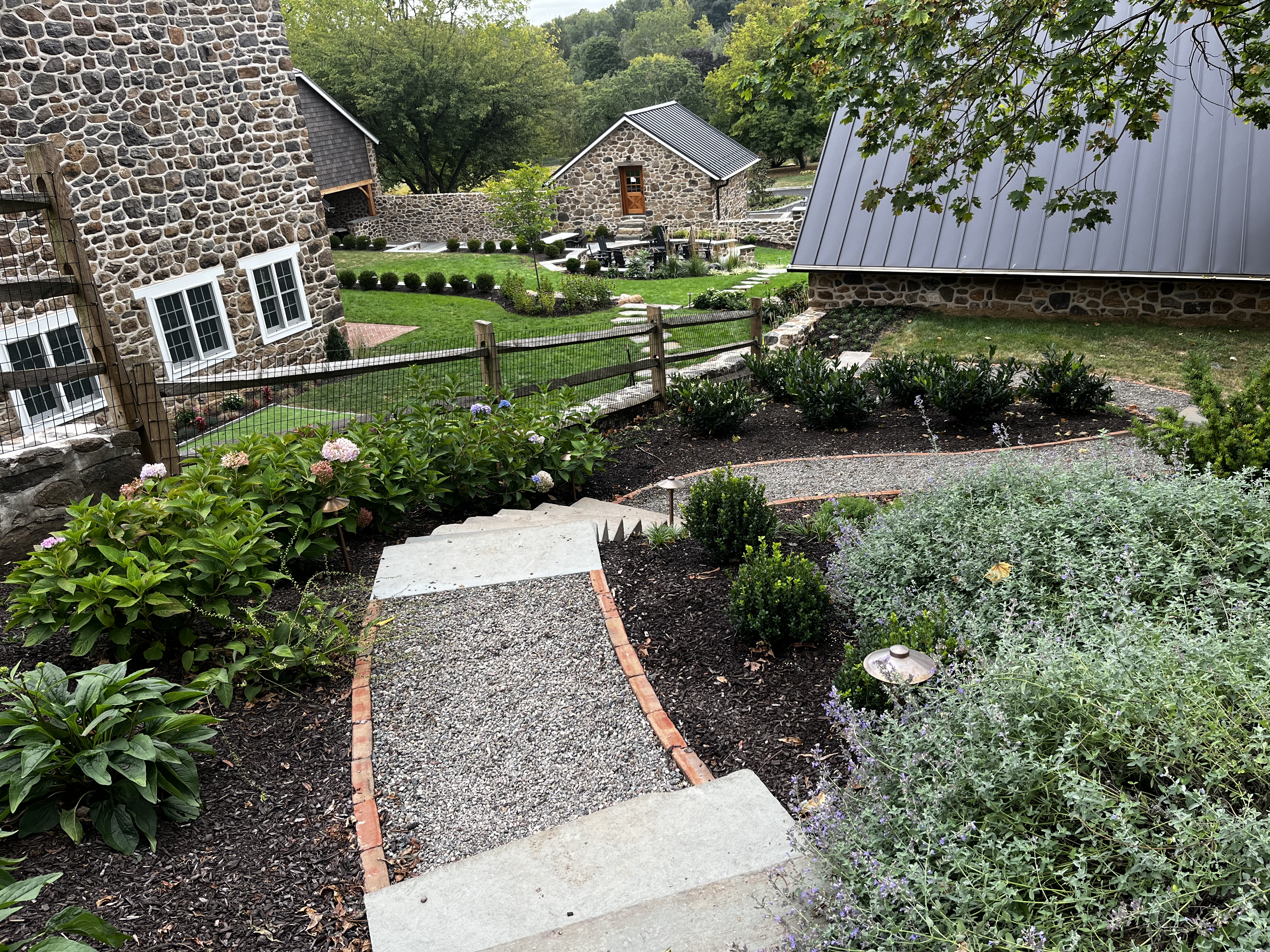
We’ve had a hot dry spell in Pennsylvania and since we put in hundreds of young flowers and other plants at White Horse Farm I was dragging hose from one spigot to the other to deliver life giving water and keep them alive. It is always a wonder of nature and the beauty of creation to see how a wilted, brown edged leaf lifts itself toward the sky after a good dousing.
But there is no amount of artificial watering with a hose over a large amount of lawn and landscaping that comes close to the benefit of a good rain shower. So, as I am dragging hose and hooking up sprinklers and spot watering with a nozzle, I’m hoping for rain.
The other day as I felt the life giving water pulse through the hose vein in my hand, I considered the weather forecast that predicted rain the next day. But it was hot and dry THIS day, and the plants were weaping, so I kept watering.
I hoped for rain. But there were no sign I could trust it would come. And I started thinking about the difference between hope and trust. Hope is a wish with no foundation of certainty. Trust is the strong handshake and steely eyed nod of a man you know is of impeccable reputation.
If hope is your team winning, trust is seeing the final score with them on top.
If hope is doing well on the final exam, trust is knowing you’ve put in the study time and have mastered the material.
If hope is that she’ll say “Yes,” trust is that look in her eye when you go down to one knee.
How often do you express the uncertainty of hope, rather than trust of achievement when questioned about something significant for your future?
“Are you going to Europe this summer?” Hope so.
“Are you going to get into Wake Forest University?” Hope so.
“Are you saving enough for a down payment on your first house?” Hope so.
“Have the doctors identified the problem?” Hope so.
What is the difference between hope and trust, between hope and knowing? The Bible in Hebrews 11:1 equates faith with knowing: “Now faith is being sure of what we hope for and certain of what we do not see.”
My distinction here, and maybe it’s minor, is that trust begets certainty because facts, history of reliability and science taught you to expect a result. Things will or will not line up. You do have enough gas or charge to get home. Your child is where she said she would be.
Hope focuses on positive anticipation for the future. I hoped for rain, but based on the vagaries of weather reporting, our recent history of drought, and a cloudless sky, I didn’t trust it would come,
Trust assumes a certainty. I trust your word. I trust the train will arrive on time. I trust your fidelity.
I had prayed for rain, but frankly, had no faith it would actually rain that day. I did not carry an umbrella when I went to check the mail.
On sports talk radio the other day the host said he hoped the Phillies would win. He prayed they would win. “But I don’t count on it,” he said.
As a castrate Congress continues to let a lying, bloviating, clueless, self- dealing fraud run roughshod over the Constitution and laws established to limit such behavior, I hope America can survive the current administration.
But I don’t trust that it will.