
Two Ways To Do It

I grew up working with and for my Norwegian bachelor farmer uncle Donnie, who made a living milking 19 cows on 80 sandy acres in southern Wisconsin. As a kid I tried to impress him with my strength by carrying 40 pound buckets of milk to the cooling tank when I didn’t weigh much more than twice that. I struggled to make it look easy, but he knew it took all I had.
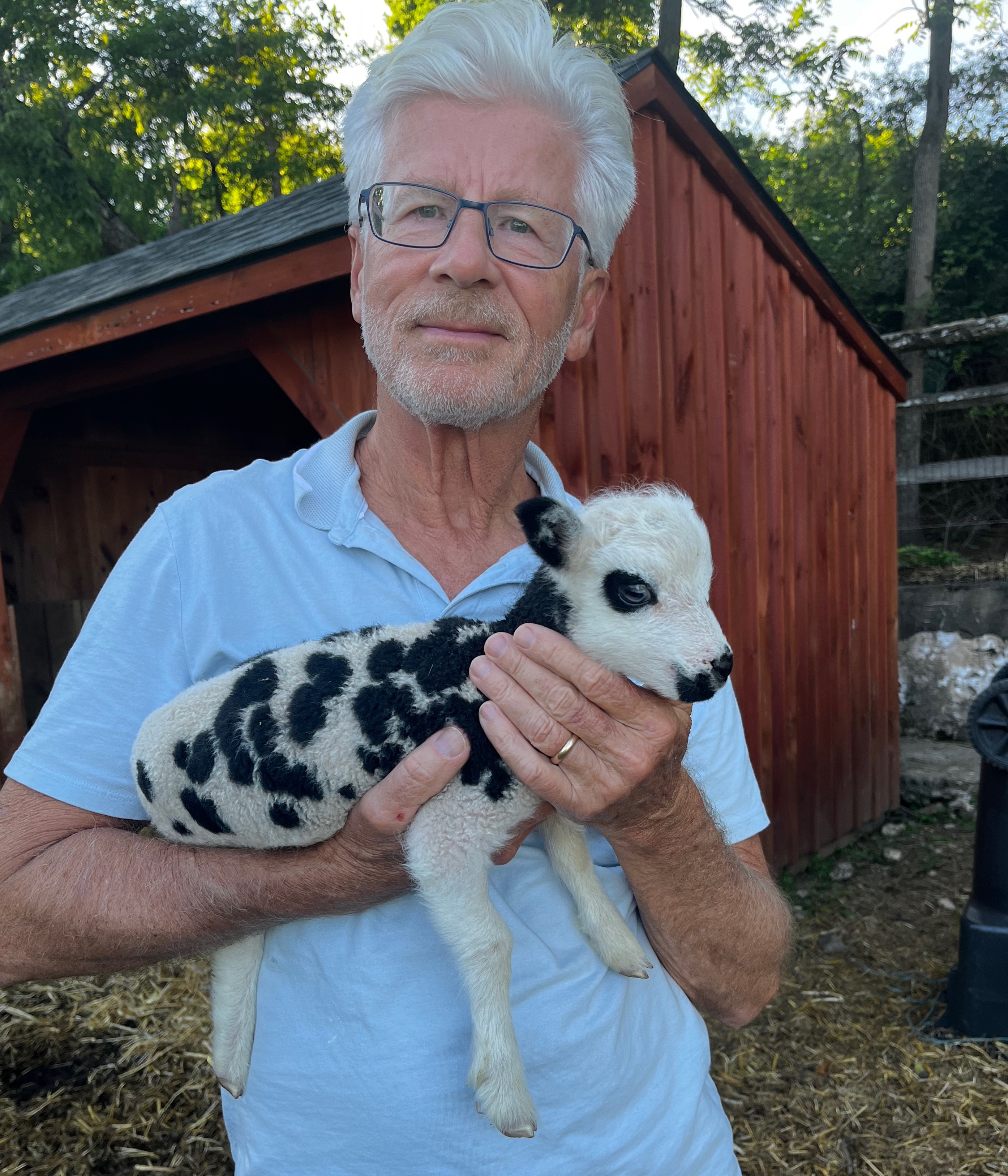
I get to practice what i learned while young at White Horse Farm in Pennsylvania, where my son’s family lives.

In the ‘60s corn had to be cultivated to keep the weeds down before “poison ready” genetically modified seed became the norm. So I’d sit on the tractor with Don as he drove the little plows through two rows at a time to dig out the weeds. If he hit a stone or lost concentration and the cultivator dug out some corn, I’d hop off, stick it back into the ground, and run to catch up.

Building or repairing barbed wire fence, learning how to drive tractor and truck, milk a cow and slop a pig, being rewarded with a chocolate milk and donut at the Midget Kitchen on Hwy. 16 all were part of my kinetic education – along with learning how to understand the punchline of coarse jokes.

Once I reached about age 13 my services were much in demand by local farmers who needed help detasseling corn, baling hay, picking stones or cleaning out stalls and stables. I was a tall, thin kid who was young Sheldon in the classroom and who saw Arnold Schwarzenegger in the mirror.

Our local farmers were basically one-man-and-a-son operations, and I replaced the boy who had grown and gone to the city. To make hay while the sun shined, we cut the alfalfa, let it dry for three days and hoped for no rain. Then we raked it into windrows, scooped it up and compacted it into 40-50 pound bales with a tractor pulling a baler pulling a wagon with a kid on the wagon stacking the bales.

Most generally it was me and the farmer – baling, loading, unloading onto an elevator and stacking in the barn. There were two kinds of farmers when it came to engaging my services on a hot summer day. One I’ll call Uncle Donnie’s way, on account of it’s about my Uncle Donnie. The other I could call “the efficient way,” on account of it’s the opposite of my Uncle Donnie.

When Uncle Don picked me up in the morning, we’d get to the farm and have to gas up the tractor, grease the baler and put in baling twine, hook the baler to the tractor, connect the power takeoff shaft and move the elevator into position to carry the bales up into the hay mow. It wasn’t unusual for us to have round up a wagon or two that a neighbor farmer had borrowed.

All the while I’m looking at all that hay, laying expectantly in windrows in the field, itching to get out there and get started, knowing it was going to be a long day. And it was threatening to rain.

Farmers committed to “the efficient way” and to getting all the work out of me they could, completed all the preliminaries before I got there. The baler was greased and hooked to the tractor, which was gassed and ready. The elevator was in place, all the necessary wagons were lined up, and mother had lunch in the oven.

We got twice as much done in half the time. And there are few things as satisfying as looking over a freshly harvested field, seeing it cut and clean and all the hay is in the barn before the rain comes.

That, and the fact that the more efficient farmers tended to pay $1.25 an hour, rather than $1.00.

Readiness makes the difference. Many of you work with non-profit organizations. Respect the time of your volunteers. Don’t let them show up on a work day or at a fund raising event and have to stand around and twiddle their thumbs. If they are volunteer tutors, have a student already selected and matched.

Then, let it rain.

We all find security in the coop we choose

We raise some chickens on the hobby farm in Pennsylvania where we spend time with our oldest son’s family. We got them when they were too old to be called chicks and too young to be called hens. They were teenagers at poultry puberty, eating and sleeping but not producing a darn thing.

After foxes, hawks and weasels decimated our first two flocks that ran free in a half-acre pasture, we started over with this new batch from a farm that raises chicks to this level of maturity before they start laying eggs. So, they’ve navigated their brief lives in the narrow confines of a large, dark shed.

From that shed they were pulled, dropped into a big box to transport home, and then set in a coop to protect them while acclimating to new digs. And we built a small run to provide some level of protection from predators that was more than the ungirdled range of grassland occupied by their unfortunate predecessors.

When it came time after a few days to let the young birds out of the coop the strangest thing happened – or didn’t happen. They were reluctant to leave the confines of that shelter.

I thought once I opened the door they would burst out into the brave new world of open space, green grass, bug buffet and blue sky because they’d been confined to dark, confined environs their whole lives.

Instead, I realized that it is precisely because they’ve been confined in dark spaces their whole lives that wide open spaces terrified them. It took long minutes for the first curious, brave beak to break beyond the coop threshold, and hours for a chicken body to follow that beak out the door, into the pasture.

Joined slowly, tentatively, cautiously by others, they hovered in the shadow of the coop for more long minutes, barely moving a body length into what to them must have been a vast, horizonless universe of undulating grassy waves.

When I consulted on a fund raising campaign for a Boy Scout campground I was surprised to learn that boys from the inner city were terrified by the animal and insect noises reverberating through the dark night outside their tents. These boys – familiar with gun fire, street racing, domestic violence and the cacophony of inner city life – shivered and huddled in their tents, sleepless at the sound of crickets and owls in the night.

A beautiful actress I interviewed in Houston, living with a physically abusive partner, told me it’s less frightening to hear him coming up the steps, knowing he’s going to hit her, than it is to considering fleeing with her child to the uncertain world beyond their apartment door.

We are anchored to our security, the blankets under which we find comfort and assurance, even if those blankets hinder us from moving past comfort into adventure and discovery.

Michael Easter wrote about it in his book “The Comfort Crisis.” For a month he eschewed the electronic conveniences and digital distractions of his life while camping and hunting in Alaska, enduring – then appreciating – hunger, boredom and uncertainty, the very things we work so hard to avoid.

He said challenging yourself to embrace a hardship and work through it, rather than avoiding it, will help you grow.

Being alone in nature actually will help you connect with yourself and help you feel less lonely.

And, he suggests consciously ditching unnecessary conveniences that make you lazy and, ultimately, unhappy. Rather than heading for the fridge at the first tingle of hunger, skip the snack, embrace the hunger and the next time you eat an actual meal you’ll appreciate it all the more. And be healthier for it.

The first sermon I ever preached was entitled “Comfort Kills” and I implored the congregation in Shawnee, OK to step outside their comfort zone to engage those persons who were not just like us.

Be brave, I said. Don’t be…chicken.