
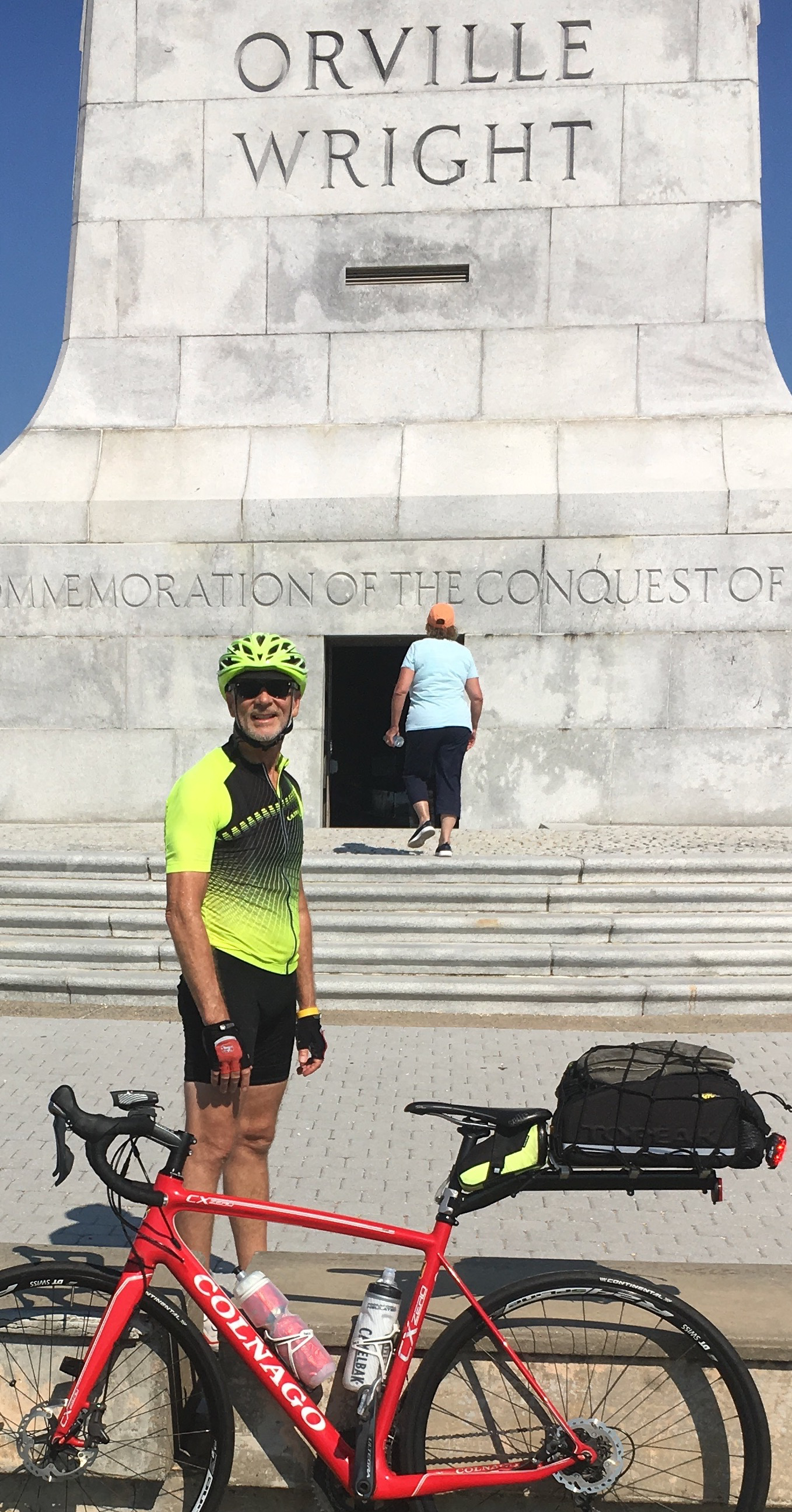
After growing up for 14 years in the same house, a mile outside of tiny town Wisconsin, population 788, Uncle Sam’s invitation during the waning months of the military draft started a lifelong journey that included 11 interstate moves and 23 residences.
After the Army, that nomadic lifestyle was encouraged by my career pursuit of “more and better.” We chased “God’s calling” from the plains of Oklahoma, to the mountains of Colorado, to the ocean of North Carolina.
But, stability was the hallmark of my early years. I was born at a very young age and when I came home from the hospital, it was to a 19-foot trailer I shared with my parents and older sister. And then a younger sister.
But my hardworking dad bought an 80-acre farm when I was five and I lived upstairs in a big farmhouse on the “old Peterson place” from age 5 to 19. I graduated high school in the same building where I started first grade. And, the 53 members of my graduating class were basically the ones I learned to read with, except for some transfers from a small elementary school nearby.
Almost everyone around me in rural, farm country Wisconsin was similarly stable. People didn’t come and go. They were born and stayed.
I left at age 18 for college in Iowa, then came home for the summer when I got my “Uncle Sam Wants You” invitation. I RSVP’d and that party took me to Missouri, Texas and Colorado in under two years.
When I got out, I went to New Mexico to serve in a Baptist mission, then to Oklahoma to resume my education at a different college when the school where I started declined to automatically renew the scholarships I had before I was drafted.
After graduation, I worked on a newspaper in Colorado, then for a Baptist news service in Tennessee. I followed that glistening road back to Texas for seminary, then back to Oklahoma for work and finally, maybe, to North Carolina where I live now, except when I’m on my son’s farm in Pennsylvania or fleeing winter’s chill in Florida.
Twenty-three home addresses. My daughter was six when we moved to North Carolina and it was her fourth state to live in.

My oldest son graduated from college, worked a year, then went to grad school. After grad school he found gainful employment, bought his first house, did well in his work and moved with the company to a nearby town where he bought his second house. When he had been there four years, he told me that was the longest he’d ever lived in one place.
Ouch.
I say all of the above to say that while enjoying a warm afternoon on the deck with my wife during a late winter warm spell, I realized I’d been living in this house 14 years, by far the longest I’ve lived at a single address since leaving home. It IS my sixth house and fourth city in North Carolina since I landed there when Baptist life in Oklahoma tilted far right and I rolled off in 1987.
Fourteen years is the same amount of time I lived in the house in which I grew up – 880 miles, a culture and a lifetime, away.
I started to try to wrap my head around the similarities – and dramatic differences – between the 14 years I spent in the farm house on County B and the 14 years in Winston-Salem.
The first 14 were literally a lifetime. First grade through high school. Learning to read, to write, to secure a toehold in the social hierarchy, athletics, school plays, band, first kiss and agonizing days wondering “does she like me?”
The 14 here have been so much shorter. We came here for one job, melded into another, then another, before easing into retirement. Then we started to travel and this house is home base but we’re in it less than we’re in other places. And while the first 14 years in Wisconsin were a literal lifetime, the 14 years here are a blip. An elongated blip, maybe, but they’ve passed in the same amount of time it takes a rising sun to find its nesting place in the west.
My dad was 14 when he rode his bicycle 25 miles from Lodi to Rio, WI so he could live with his aunts Vicki and Lillian and attend high school where Lillian taught. Five years later he was a dad and a few years later he planted his family at the farm for 40 years. He envied, but couldn’t quite comprehend, my nomadic journey.
And I just realized that I’m 14 years younger than my dad when he died.
 wordsanddeeds.me

