The day I turned old

I turned old on August 30, 2025. I know the day. And the hour. And the moment.
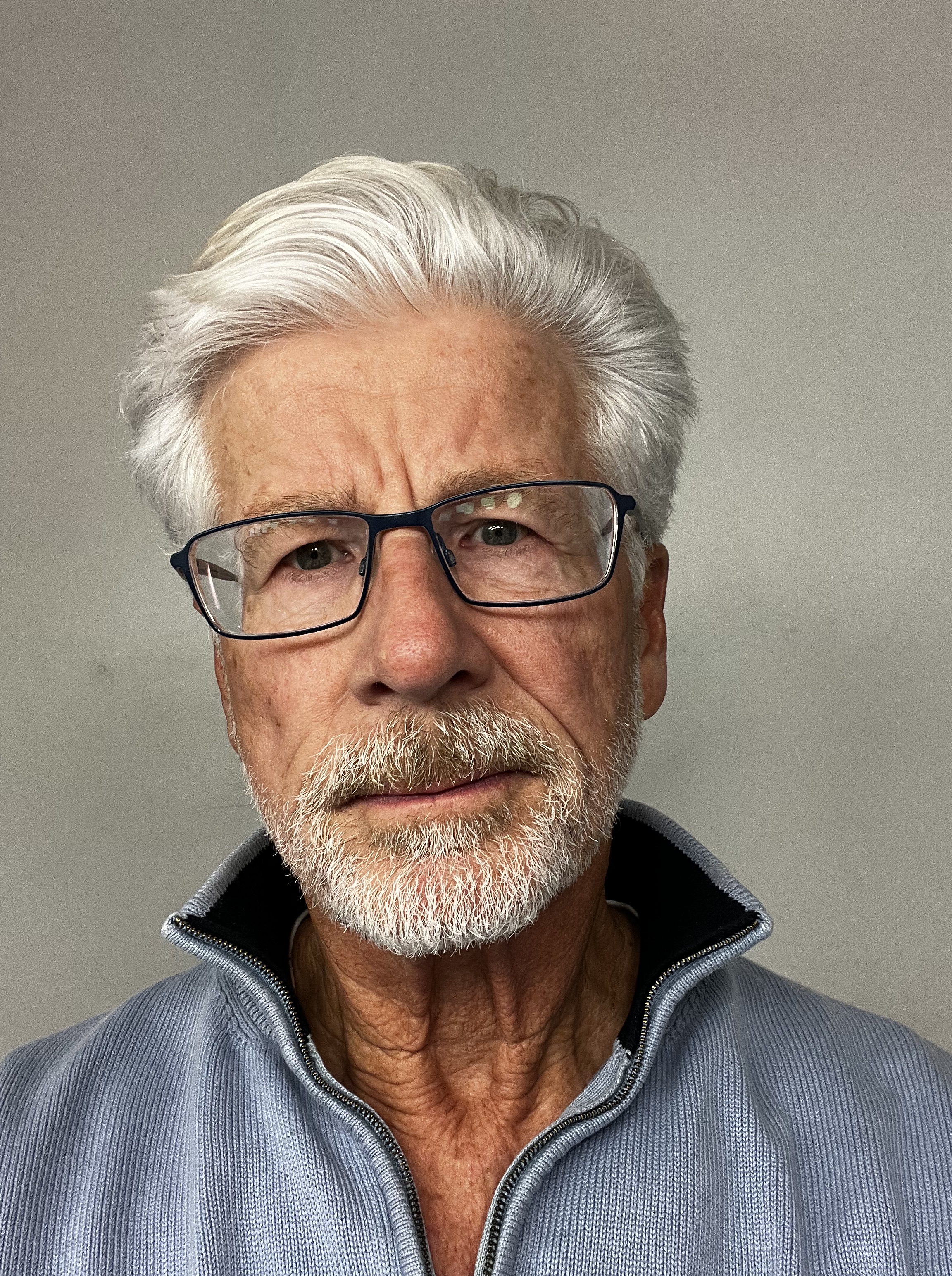
No wonder the young lady stood to offer me her seat.

For much of my life, I looked younger than my age. I was a husband, father, and owned my second house before I shaved every day.

About age 26, I was in the barber chair with my hair wet and glasses off and my wife walked in, ready to take me home when I was finished, since we managed with one car. The barber noticed that she caught my eye, and asked, “Is that your mother?”

Later we listed some furniture for sale, some of our original “we-need-something-and-this-will-do-until-we-have-money,” pieces. A college girl called, said it would be perfect for her dorm, and arranged a time to come pick it up.

When I answered the door, she looked at me and asked, “Is your mother home?”

To say I was devastated is to say the Johnstown Flood was a trickle. I was floored. It took me days to get over it. Evidently, I still haven’t.

I was a college graduate, Army veteran, working a professional job with national connections and a college girl sees me in my Saturday morning T-shirt and jeans and asks if my mother is home.

I told her my mother lives in Wisconsin, 640 miles away, but if she’s here for the furniture, I can help. And then my wife picked me up off the floor.

Eventually, the sirocco winds of life aged my face, bleached my hair to arctic blonde and added enough wrinkles that I didn’t have to say, “No, really” anymore when my age came up.

My oldest son shares some of my facial features and when I’m introduced as his father, his friends invariably say, “I could’ve guessed.” I keep hoping one day someone will mistake me for his older brother.

Which brings me to the fateful day when the harsh reality of simple observation by a stranger shattered the mistaken impression that all the mirrors in my house are broken. I walk past a mirror, see the image it reflects, and I know that grizzled face can’t be me.

And yet.

In Budapest, Hungary at the beginning of a Danube River cruise taken to celebrate the 50th anniversary of marriage to a beautiful woman I had bamboozled long enough to convince her to marry me, the curtain came down on my illusion.

I stepped onto a tram car and a young woman stood to offer me her seat.

Glass shattered. Ego crumbled. Humility fallen over my shoulders like a granite yoke.

I implored the innocent to return to her seat. Over a language barrier, my pleading eyes, exasperated face and arm motions made my intention clear. “Please. No. Take your seat. ARRGGG.”

She politely declined, and I resolutely remained standing, amid the laughter of our traveling colleagues.

The insult of reality was exacerbated the next day when on a similar tram, my wife was warned that a conductor was on board and was checking tickets. In Budapest persons over age 65 ride public transportation free.  The local was kindly warning my wife that she needed a ticket.

Sue Ellen graciously informed her that she didn’t need a ticket, because she was 70. To which the kind commuter expressed astonishment, of course.

She then looked at me, seeing I was with Sue Ellen, and I swear I heard her ask, “Is that your father?”


‘/
Rod Stewart is 80! What does that make me?

I burst out laughing recently when I saw on the waiting room table the June/July issue of AARP magazine, the publication from what was once known as the American Association of Retired Persons.

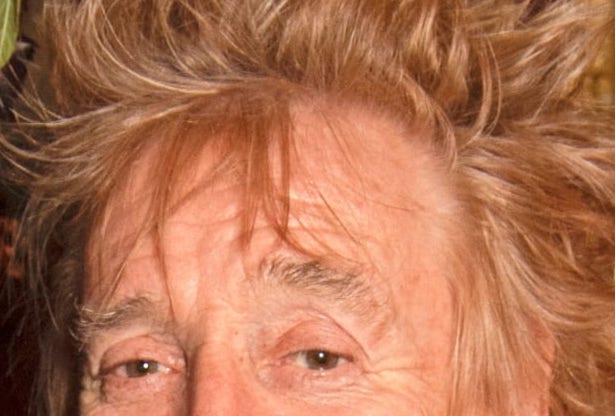
On the cover, reverberating in neon colors, a knowing smirk and dust mop hair was Rod Stewart, the English rocker whose music dominated the sound track of my freshman year at Luther College.

The perennial young superstar is now 80 years old. But his penetrating eyes and feline, ready to pounce stage pose triggered aural memories as if I was still having nightmares about missing a test for a class I never attended and wondering why in the world I enrolled in 8 a.m. speech. 

“Maggie May” was Stewart’s break out song, originally released on the “B” side of the single “Reason to Believe.” It was practically on loop at the local radio station. Or if you couldn’t wait for it to come on after the next commercial, you just needed to walk down Ylvisaker dorm hall to hear it emanating from behind a door. 

For a naïve college freshman, away from his little farming community home for the first time, the song’s lament of a young man trying to leave an older friend who became a lover struck a fantastical chord.

“You led me away from home, just to save you from being alone,” the song says. Here I was, away from home and feeling very alone. 

“It’s late September and I really should be back in school.” Hey, it’s September and there I was, in school.

I wasn’t a rock and roll fan. The Carpenters, James Taylor and Simon and Garfunkel were more my speed. And frankly, I didn’t and don’t like Stewart’s gravelly voice. But even while writing this piece, “Maggie May” is an ear worm I can’t stop humming. 

My problem with seeing Rod Stewart on the cover of AARP magazine at age 80 is that in 1971 he was just a few years older than me. And now, he’s 80. What does that make me?

We all have triggers that remind us of how we’re aging. I think of the story of a woman who looked into the window at a hair salon and saw one of her classmates from 30 years ago. She was shocked at how the woman had aged.

She went in to say hello, introduce herself and remind her they were in school at the same time. “Oh,” the woman said. “What did you teach?”

“The morning sun when it’s in your face really shows your age,” Stewart sang.

I laughed at that line in 1971, about the sun revealing age. I still didn’t shave every day and was aggravated that I looked so much younger than I actually was. People thought i was a kid. Other guys had sideburns I envied because I just knew a strip of beard down the side of my face was the key to getting girls. 

I’ve matured from that, to the fact that I’m replacing all the mirrors in my house because they don’t work. I don’t know if the batteries are spent or what. But I’m certain the image they reflect is not the image I present.

I check the obituaries for any familiar names. There I see brief summaries encapsulating lives lived and lost that ended at ages younger than me. Persons both famous and anonymous whose roads on this earth ran shorter than the path I trod are signing off. Bon voyage.

Fifty-year anniversaries are cropping up. First, high school graduation, then getting drafted, then college. My wedding. Friends’ weddings, friendships started, events I participated in a half century ago.

About the time Rod Stewart struck it big with Maggie May.

One is the loneliest number

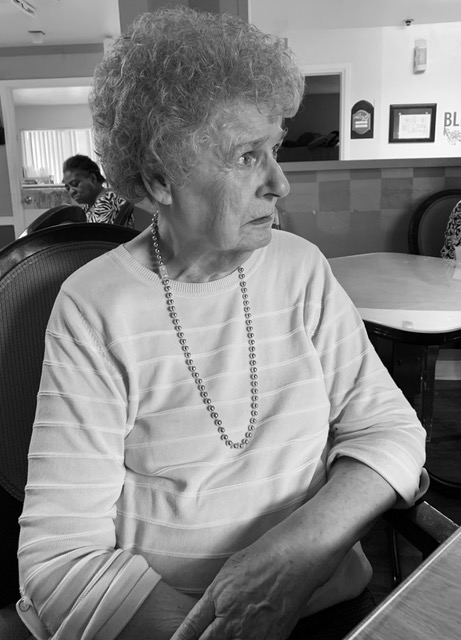
My mother-in-law, during last days in nursing care.

In August 1971 anonymous government functionaries conducted a lottery to determine the order in which 19-year-old boys would be drafted into the Army, thousands of them eventually to die in the politicians’ war in Viet Nam.

They drew my birthday first. No. 1. It was the only thing I’ve ever “won” except a case of beer at the Rio Fireman’s Picnic, and the hand of my wife. I was too young to claim the beer, and my wife was almost too young to marry.

From that day on, the musical hit “One” by Three Dog Night became the soundtrack of my life as I went off to college, hoping to get a semester in before I received my draft notice. It’s resounding assertion that “One is the loneliest number that you’ll ever do,” pounded time after time out of my reel-to-reel tape player, putting to music the angst of a life on hold.

“One is the loneliest number that you’ll ever do…

“It’s just no good anymore since you went away

“Now I spend my time just making rhymes of yesterday.”

Then the resounding, pounding refrain:

“One is the loneliest number

“One is the loneliest number

“One is the loneliest number that you’ll ever do.”

Every time that song surfaced on the radio or in sequence on my Three Dog Night album, I sank emotionally. No. 1 in the lottery. Draft certain. One is the loneliest number. The saddest experience.

Thoughts of “one” and being alone jumped at me recently while I stood in line for a table at southeastern America’s food oasis, Cracker Barrel. It hit me when the hostess asked the lady ahead of me, “How many?” and she responded, “One.” The loneliest number.

A sudden sadness for her and others being alone hit me like a gut punch through a curtain of memory.

One is the loneliest number that you’ll ever do.  And it’s a growing trend in America. We’re in an epidemic of loneliness. It’s not just aging widows and widowers. It’s younger people isolated by screens who possess no ability to communicate with real, live people.

Lacking meaningful, human to human connection can increase the risk for premature death to levels comparable to smoking 15 cigarettes a day, according to an advisory from U.S. Surgeon General Vivek Murthy.

We once called on a young man who visited our church to encourage him to become involved. He said he walks into his apartment on Friday night after work and doesn’t leave it until Monday morning. Week after week. Crawling out to visit the single adult class we led was a major effort.

The prevalence of single-person households is unprecedented historically,  rising from seven million to 38 million since 1960. 

I don’t equate “being alone” with loneliness or depression, but community involvement and social interaction is the leading indicator for health in senior adults. Of course many single adults lead vigorous, joyful, involved lives and God bless them.

It’s just that as I approach my 48th wedding anniversary I know the deep satisfaction life with a loving partner brings. I think of the shared joys, sorrows and triumphs of raising our three children, and of their loving spouses and our seven grandchildren. I would wish that common good for anyone.

Beyond that, what are the implications for a society in which so many of its members live as single, unaffiliated, isolated souls? Think – as I’m sure they are – of long term health, housing, community, end of life?

And yet, one out of four of today’s 50-year-olds will have been single their whole lives. Never married, never partnered.

Social isolation is associated with a higher risk of dementia and other serious health problems in older adults — while having positive social relationships can help people live longer, healthier lives.

In other parts of the world, nearly four in ten older adults live with extended family, an arrangement that mitigates aloneness. But older adults in the U.S. rarely live with family. 

Our culture almost demands we go it alone, that we not “need” anyone or anything. Yet that is not the preferred condition of most single adults I know.

And when the person ahead of me is asked, “How many?” her “One,” sounds like the saddest experience she’ll ever do.

Be a spark or get tossed

Sometimes we get into a cleaning, sorting, trashing, unloading kind of frenzy when we’re feeling burdened by stuff and stuff’s attraction, demands, care and maintenance. 

When Sue Ellen hits full frenzy fury, I chain myself to a post to make sure I’m not tossed into a box subconsciously labeled “of no further use,” or as an item that “no longer sparks joy,” in Marie Kondo’s terminology. 

Some few things have outlasted every purge in our 44 years together. Thankfully, I’m one of them. 

But this week Oskar died. 

Oskar was a small food chopper and came as a wedding gift in 1975. It endured several super glue fixes in recent years before finally throwing up its blades and sighing, “Please no more nuts, carrots, celery for salads, or styrofoam bars to make snowflakes for kids’ plays.”

When we think of “things” that have lasted the duration of our lives together, now that Oskar is gone, we can name three. 

First is a sleeping bag I bought when I got out of the Army. Mine was to be a wild and free life after the olive drab constraints Uncle Sam put upon me. That sleeping bag, and a tent that turned out to be a portable rain forest, so impermeable it turned my moist breath into morning showers, along with a 1964 International Scout that had a mind of its own, were my tickets to adventure. 

I still use the bag. 

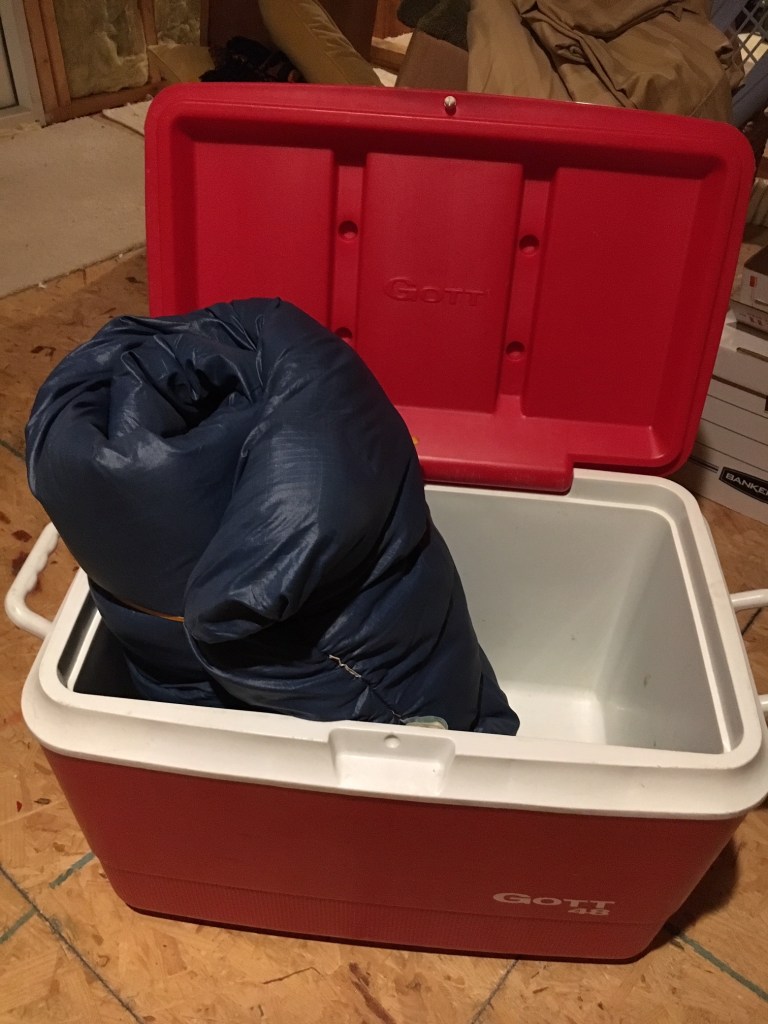
We married while I was still finishing my degree at Oklahoma Baptist University. Summers were stifling and neither our apartment nor our car had air conditioning, so we bought a Gott cooler and a bigger tent and spent many weekends at the lake. 

We still use the cooler

It often carries goodies as we travel to see our children, none of whom were conceived at the lake. Every time we pack it up, I marvel that it has been with us for so long. Yet, it still regulates the temperature of the items it contains, like the thermos I once gave a secretary. When I saw her using it the next day she told me she appreciated its capacity to keep hot things hot and cold things cold. 

I asked her what she had in it today. “Coffee and a popsicle,” she said. 

Sue Ellen was just 20 when we married. She worked at a bank and had her own apartment after moving out from a home with six siblings, and had neither time nor money to accumulate much of a trousseau. But she had started her dish collection of the then popular Yorktowne pattern from Pfaltzgraff. 

For 21 years, these were our “good” dishes, pulled out to impress company and only after the kids were old enough to know dishes were not suitable as heavy Frisbees. When my mom died we inherited her china, which became our company dishes, and the Pfaltzgraff became our everyday dishes. 

Funny how the exceptional loses its aura when pressed into common use. 

The Pfaltzgraff is heavy, and hard to spell. We can always peg the length of a friends’ marriage within a year or two if they feed us on Yorktown pattern Pfaltzgraff. 

Sometimes we look at new dishes, brightly colored, modern patterns, disposable. They might brighten up the kitchen table and provide a fresh perspective. But, they wouldn’t hold our food any better.

I confess I hold this feeling much more closely than does my wife, but there is something endearing and enduring about the consistency of an everyday implement that has been part of our lives together – every day. Not temporary, not disposable. Just consistent. Present. Available. Useful. Non-demanding. 

There is a fourth thing that we brought to our marriage, but it is more intangible. We each brought a part, insufficient of itself, but required for the whole – like the final spark plug required to make a dead engine roar to life. 

That, of course, is love. Our love for each other, a love we thought fuller and richer in the first blush of our infatuation than ever known by previous humans. Yet, it has grown with time into intimacy, interdependence, tolerance, forgiveness, adoration and the mystery of oneness into a force to overcome many an onslaught. 

When my mother died in 1996, my dad stood in the window as the hearse pulled away, kissed his hand and put it to the glass. I know our birth canal opens toward death, but dad’s slide toward the inevitable started in earnest that day. Losing mom wasn’t just grief for dad. It was an amputation. 

They had been married 47 years. I’m older than dad was at mom’s death and when I survey my environment, the accumulation of things around me and consider those few things that have been with Sue Ellen and me our entire lives together, it’s easy to dismiss the sleeping bag, the cooler and the dishes. 

The one constant that matters for 44 years has been my partner, my heart, my life. We’re closer now to the end than to the beginning, but every day still dawns a treasure. 

Happy anniversary, Sue Ellen.