
14 years both a lifetime and a blip

After growing up for 14 years in the same house, a mile outside of tiny town Wisconsin, population 788, Uncle Sam’s invitation during the waning months of the military draft started a lifelong journey that included 11 interstate moves and 23 residences.

After the Army, that nomadic lifestyle was encouraged by my career pursuit of “more and better.” We chased “God’s calling” from the plains of Oklahoma, to the mountains of Colorado, to the ocean of North Carolina.

But, stability was the hallmark of my early years. I was born at a very young age and when I came home from the hospital, it was to a 19-foot trailer I shared with my parents and older sister. And then a younger sister.

But my hardworking dad bought an 80-acre farm when I was five and I lived upstairs in a big farmhouse on the “old Peterson place” from age 5 to 19. I graduated high school in the same building where I started first grade. And, the 53 members of my graduating class were basically the ones I learned to read with, except for some transfers from a small elementary school nearby.

Almost everyone around me in rural, farm country Wisconsin was similarly stable. People didn’t come and go. They were born and stayed.

I left at age 18 for college in Iowa, then came home for the summer when I got my “Uncle Sam Wants You” invitation. I RSVP’d and that party took me to Missouri, Texas and Colorado in under two years.

When I got out, I went to New Mexico to serve in a Baptist mission, then to Oklahoma to resume my education at a different college when the school where I started declined to automatically renew the scholarships I had before I was drafted.

After graduation, I worked on a newspaper in Colorado, then for a Baptist news service in Tennessee. I followed that glistening road back to Texas for seminary, then back to Oklahoma for work and finally, maybe, to North Carolina where I live now, except when I’m on my son’s farm in Pennsylvania or fleeing winter’s chill in Florida.

Twenty-three home addresses. My daughter was six when we moved to North Carolina and it was her fourth state to live in.

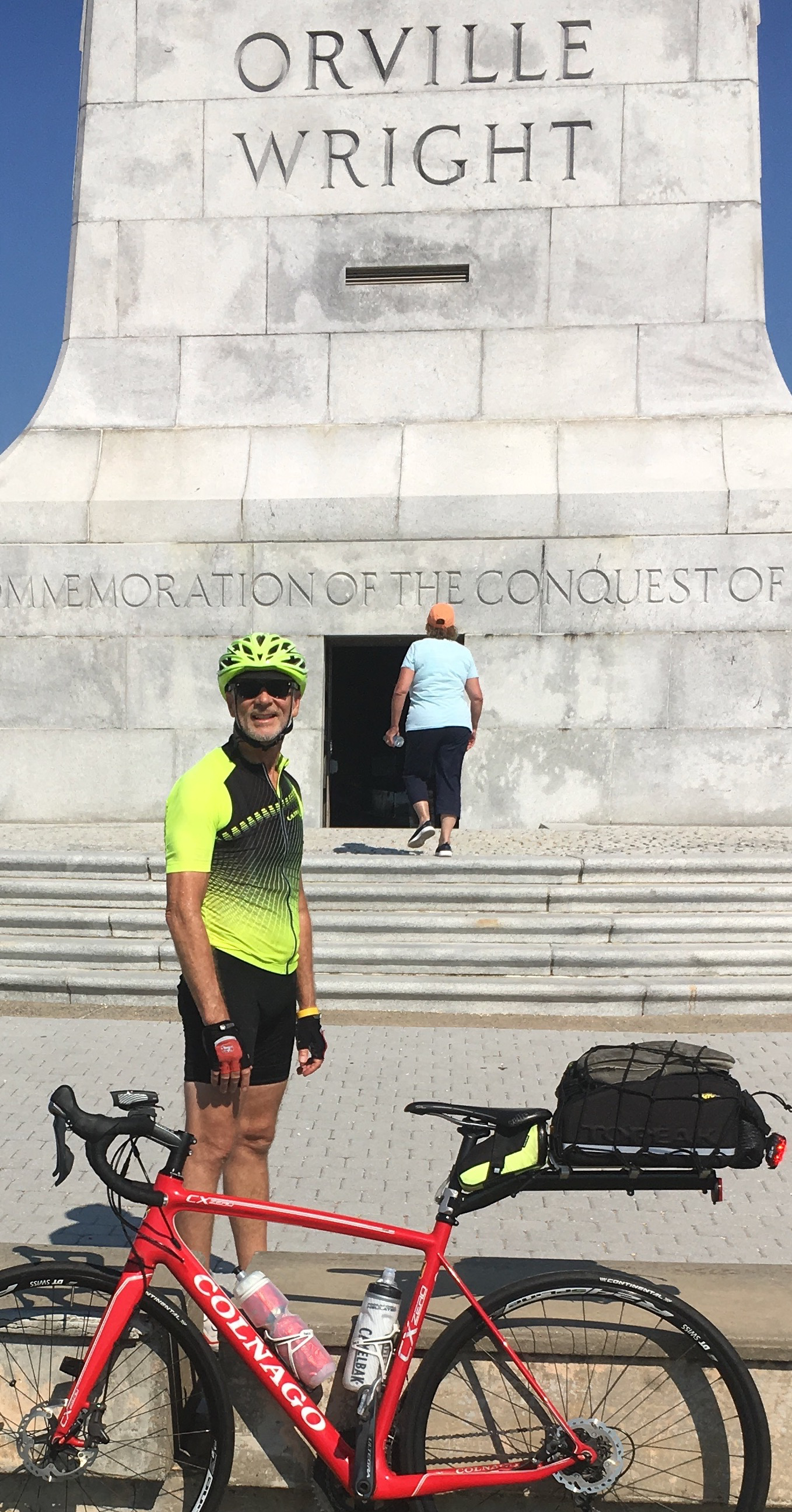
And, finding some riding buddies at my second home, in Pennsylvania.

My oldest son graduated from college, worked a year, then went to grad school. After grad school he found gainful employment, bought his first house, did well in his work and moved with the company to a nearby town where he bought his second house. When he had been there four years, he told me that was the longest he’d ever lived in one place.

Ouch.

I say all of the above to say that while enjoying a warm afternoon on the deck with my wife during a late winter warm spell, I realized I’d been living in this house 14 years, by far the longest I’ve lived at a single address since leaving home. It IS my sixth house and fourth city in North Carolina since I landed there when Baptist life in Oklahoma tilted far right and I rolled off in 1987.

Fourteen years is the same amount of time I lived in the house in which I grew up – 880 miles, a culture and a lifetime, away.

I started to try to wrap my head around the similarities – and dramatic differences – between the 14 years I spent in the farm house on County B and the 14 years in Winston-Salem.

The first 14 were literally a lifetime. First grade through high school. Learning to read, to write, to secure a toehold in the social hierarchy, athletics, school plays, band, first kiss and agonizing days wondering “does she like me?”

The 14 here have been so much shorter. We came here for one job, melded into another, then another, before easing into retirement. Then we started to travel and this house is home base but we’re in it less than we’re in other places. And while the first 14 years in Wisconsin were a literal lifetime, the 14 years here are a blip. An elongated blip, maybe, but they’ve passed in the same amount of time it takes a rising sun to find its nesting place in the west.

My dad was 14 when he rode his bicycle 25 miles from Lodi to Rio, WI so he could live with his aunts Vicki and Lillian and attend high school where Lillian taught. Five years later he was a dad and a few years later he planted his family at the farm for 40 years. He envied, but couldn’t quite comprehend, my nomadic journey.

And I just realized that I’m 14 years younger than my dad when he died.

The day I turned old

I turned old on August 30, 2025. I know the day. And the hour. And the moment.

No wonder the young lady stood to offer me her seat.

For much of my life, I looked younger than my age. I was a husband, father, and owned my second house before I shaved every day.

About age 26, I was in the barber chair with my hair wet and glasses off and my wife walked in, ready to take me home when I was finished, since we managed with one car. The barber noticed that she caught my eye, and asked, “Is that your mother?”

Later we listed some furniture for sale, some of our original “we-need-something-and-this-will-do-until-we-have-money,” pieces. A college girl called, said it would be perfect for her dorm, and arranged a time to come pick it up.

When I answered the door, she looked at me and asked, “Is your mother home?”

To say I was devastated is to say the Johnstown Flood was a trickle. I was floored. It took me days to get over it. Evidently, I still haven’t.

I was a college graduate, Army veteran, working a professional job with national connections and a college girl sees me in my Saturday morning T-shirt and jeans and asks if my mother is home.

I told her my mother lives in Wisconsin, 640 miles away, but if she’s here for the furniture, I can help. And then my wife picked me up off the floor.

Eventually, the sirocco winds of life aged my face, bleached my hair to arctic blonde and added enough wrinkles that I didn’t have to say, “No, really” anymore when my age came up.

My oldest son shares some of my facial features and when I’m introduced as his father, his friends invariably say, “I could’ve guessed.” I keep hoping one day someone will mistake me for his older brother.

Which brings me to the fateful day when the harsh reality of simple observation by a stranger shattered the mistaken impression that all the mirrors in my house are broken. I walk past a mirror, see the image it reflects, and I know that grizzled face can’t be me.

And yet.

In Budapest, Hungary at the beginning of a Danube River cruise taken to celebrate the 50th anniversary of marriage to a beautiful woman I had bamboozled long enough to convince her to marry me, the curtain came down on my illusion.

I stepped onto a tram car and a young woman stood to offer me her seat.

Glass shattered. Ego crumbled. Humility fallen over my shoulders like a granite yoke.

I implored the innocent to return to her seat. Over a language barrier, my pleading eyes, exasperated face and arm motions made my intention clear. “Please. No. Take your seat. ARRGGG.”

She politely declined, and I resolutely remained standing, amid the laughter of our traveling colleagues.

The insult of reality was exacerbated the next day when on a similar tram, my wife was warned that a conductor was on board and was checking tickets. In Budapest persons over age 65 ride public transportation free.  The local was kindly warning my wife that she needed a ticket.

Sue Ellen graciously informed her that she didn’t need a ticket, because she was 70. To which the kind commuter expressed astonishment, of course.

She then looked at me, seeing I was with Sue Ellen, and I swear I heard her ask, “Is that your father?”


‘/

Rod Stewart is 80! What does that make me?

I burst out laughing recently when I saw on the waiting room table the June/July issue of AARP magazine, the publication from what was once known as the American Association of Retired Persons.

On the cover, reverberating in neon colors, a knowing smirk and dust mop hair was Rod Stewart, the English rocker whose music dominated the sound track of my freshman year at Luther College.

The perennial young superstar is now 80 years old. But his penetrating eyes and feline, ready to pounce stage pose triggered aural memories as if I was still having nightmares about missing a test for a class I never attended and wondering why in the world I enrolled in 8 a.m. speech. 

“Maggie May” was Stewart’s break out song, originally released on the “B” side of the single “Reason to Believe.” It was practically on loop at the local radio station. Or if you couldn’t wait for it to come on after the next commercial, you just needed to walk down Ylvisaker dorm hall to hear it emanating from behind a door. 

For a naïve college freshman, away from his little farming community home for the first time, the song’s lament of a young man trying to leave an older friend who became a lover struck a fantastical chord.

“You led me away from home, just to save you from being alone,” the song says. Here I was, away from home and feeling very alone. 

“It’s late September and I really should be back in school.” Hey, it’s September and there I was, in school.

I wasn’t a rock and roll fan. The Carpenters, James Taylor and Simon and Garfunkel were more my speed. And frankly, I didn’t and don’t like Stewart’s gravelly voice. But even while writing this piece, “Maggie May” is an ear worm I can’t stop humming. 

My problem with seeing Rod Stewart on the cover of AARP magazine at age 80 is that in 1971 he was just a few years older than me. And now, he’s 80. What does that make me?

We all have triggers that remind us of how we’re aging. I think of the story of a woman who looked into the window at a hair salon and saw one of her classmates from 30 years ago. She was shocked at how the woman had aged.

She went in to say hello, introduce herself and remind her they were in school at the same time. “Oh,” the woman said. “What did you teach?”

“The morning sun when it’s in your face really shows your age,” Stewart sang.

I laughed at that line in 1971, about the sun revealing age. I still didn’t shave every day and was aggravated that I looked so much younger than I actually was. People thought i was a kid. Other guys had sideburns I envied because I just knew a strip of beard down the side of my face was the key to getting girls. 

I’ve matured from that, to the fact that I’m replacing all the mirrors in my house because they don’t work. I don’t know if the batteries are spent or what. But I’m certain the image they reflect is not the image I present.

I check the obituaries for any familiar names. There I see brief summaries encapsulating lives lived and lost that ended at ages younger than me. Persons both famous and anonymous whose roads on this earth ran shorter than the path I trod are signing off. Bon voyage.

Fifty-year anniversaries are cropping up. First, high school graduation, then getting drafted, then college. My wedding. Friends’ weddings, friendships started, events I participated in a half century ago.

About the time Rod Stewart struck it big with Maggie May.

You’re Faster with Mile Stones

Driving expeditiously through the mountains suddenly seemed dangerous to my wife. “You’re going awfully fast,” she said. I checked the speedometer and I was well within the limit.

I don’t like to zip too quickly through that beautiful section of I-40 where North Carolina melds into east Tennessee. The panorama of mountains, with curvy roads and old forests crowding the tarmac merits a pace that allows an appreciative glance.

On this day, with restraining fences guarding against rock slides, encroaching trees, road warning signs, curves racing toward us and big trucks sliding behind me on the right, it seemed we were going faster than we were.

I recalled opposite days in 1974 when the national maximum speed was 55 mph in an effort to conserve energy. We lived in northern New Mexico and driving south to Albuquerque through a featureless landscape at 55 felt like standing still.

No geographic feature came toward us, no tree, no hill, no building. Road signs were rare because there was nothing to announce, no blind curve to warn against, no upcoming attraction. Just a straight ribbon of tarmac and sand minute by agonizingly slow minute.

A featureless landscape makes a journey seem slow. When elements natural or manmade come zipping at you, those landmarks make it seem you’re traveling much faster because you have them to measure your progress against.

School years once were that for us. The year moved in cycles, sometimes scattering about during the summer, but it always gravitated back to center just before Labor Day when the new school year started. School events dictated our calendar: teacher work days, holidays, test days, athletic competitions, performances. Christmas arrived with a sense of relief, tempered by the overhanging dread of first semester finals coming in January.

Then spring semester, Easter, class trips and anticipation of summer vacation.

When the last kid graduated from high school and the dog died, we were empty nesters for sure, no longer having to pretend we were napping on Sunday afternoon. College calendars and laundry drop-off visits kept some semblance of school year cycle going, but faintly.

Now, with the youngest in his 40th year, the calendar meanders, notable less for school events than for Social Security deposits and planning for winters in Florida.

I asked my dad when he was about 80 if days seemed to drag at that age. He shook his head and said every day flies by faster than the one before it. That puzzled me. Now I realize he had landmarks speeding toward him that I’d not considered: Breakfast, a good bowel movement, lunch at Karen’s, the local diner, cards with friends or the wife, doctor visits, driving a widow to the grocery store, a leadership meeting at Redeemer Lutheran, maybe a call from his daughters or his favorite child, a show on TV and hopefully a good night’s sleep.

 Those aren’t the landmark anticipations of the young whose life careens toward them hard around every corner with ever increasing opportunities and expectations. But they are the elements that mark progress of a life traveling confidently toward a destination of which he is sure.