Are you as good as dead?

While collecting shellfish in Australia, Eric Nerhus was bitten almost in half and swallowed by a 10-foot shark.

Swimming 25 feet below the surface, Nerhus, 41, was grabbed over his head by the shark, which took half of Nerhus’ body into his mouth. He was as good as dead.

Thinking quickly, he reached up and poked the shark’s eyes with the chisel he used to collect abalone.  The shark open its mouth and Nehus wriggled out.

Nerhus estimates he spent two minutes inside the shark’s mouth and said his chest was protected from the shark’s sharp teeth by the lead-lined vest used to weight him down as he scoured the ocean floor. He swam to the surface in a cloud of his own blood, where his son helped him into the boat and rushed him to a hospital.

The 2010 movie “127 Hours” featured the dramatic story of Aron Ralston whose arm was pinned to a rock wall by a suddenly shifting boulder while he hiked Utah’s Blue John Canyon.

No matter what he tried to dislodge his arm, he was trapped. After four days his water ran out and he drank his urine. On the sixth day, Ralston realized he was as good as dead.

Then the 27-year-old mountain climber did what he’d always known he had to do, but could not bring himself to do when he thought there was an option. Using his own body weight for leverage, he broke both the bones in his forearm. Then, with his pocketknife Ralston cut off his arm below the elbow and applied a tourniquet. He then rappelled 60 feet to the canyon floor and started walking.

He walked seven miles before encountering two tourists who called for a rescue helicopter.  

What’s the point?

Neither Eric Nerhus nor Aron Ralston are dead. At that point in their lives when there was no prospect for more life – when they were as good as dead – they found a way.

Ever thought you were “as good as dead?”  Or wished you were?

  • In the midst of company chaos, your boss approaches you with a grim face;
  • A truck in the approaching lane veers into yours;
  • You discover your father’s debilitating illness is hereditary;
  • At a conference in his office, your docor leans forward and says, “I’m sorry.”
  • Your job loss has led to anxiety, depression and a mortgage foreclosure;
  • You face an impossible financial burden to make good for a child’s accident, illness or bad mistake;
  • A dark secret you’ve carried is suddenly revealed.

Jesus’ friend Lazarus was not only as good as dead. He WAS dead. Then Jesus exercised his power of life over death and he raised Lazarus, demonstrating to us though we be as good as dead, we still possess the life option.

The same is true for a host of other biblical characters. Young David could have killed King Saul (I Sam. 24) when Saul was relieving himself in a cave and David crept in behind him and cut off a piece of his robe. Saul was as good as dead and didn’t even know it.

Joseph had a coat of many colors (Genesis 37), and was his father’s favorite, when his jealous brothers threw him into a cistern to die. He was as good as dead.  

Shadrach Meshach and Abednego were thrown into the fiery furnace; Daniel was tossed to the lions; Jonah was swallowed by the great fish; the adulterous woman dragged for stoning by an angry mob.

Why did God rescue them? Because God had a higher purpose for their lives and something in that near death experience equipped them for that purpose like nothing else could!

Your faith isn’t feeble in the face of life threatening odds. It’s most flaccid when you operate only in the realm of your own abilities, when you’re deluded enough to think you can “do it yourself.”

My favorite traditional hymn is “A Mighty Fortress is Our God.” Verse two says, “Did we in our own strength confide, our striving would be losing.”

Remember, when your dreams and promises appear to be as good as dead – yet they breathe. Aron Ralston wandered out of the dessert after cutting off his own arm. Eric Nerhus fishes again. Childless Abraham, whose body the Bible says was as good as dead, became the father of a nation.

Senior adult groups have many adorable names. One of my favorites is the ADY – Ain’t Dead Yet – Club. Circumstances may conspire to make you feel you’re as good as dead, but guess what.

You Ain’t Dead Yet.

Two Ways To Do It

I grew up working with and for my Norwegian bachelor farmer uncle Donnie, who made a living milking 19 cows on 80 sandy acres in southern Wisconsin. As a kid I tried to impress him with my strength by carrying 40 pound buckets of milk to the cooling tank when I didn’t weigh much more than twice that. I struggled to make it look easy, but he knew it took all I had.

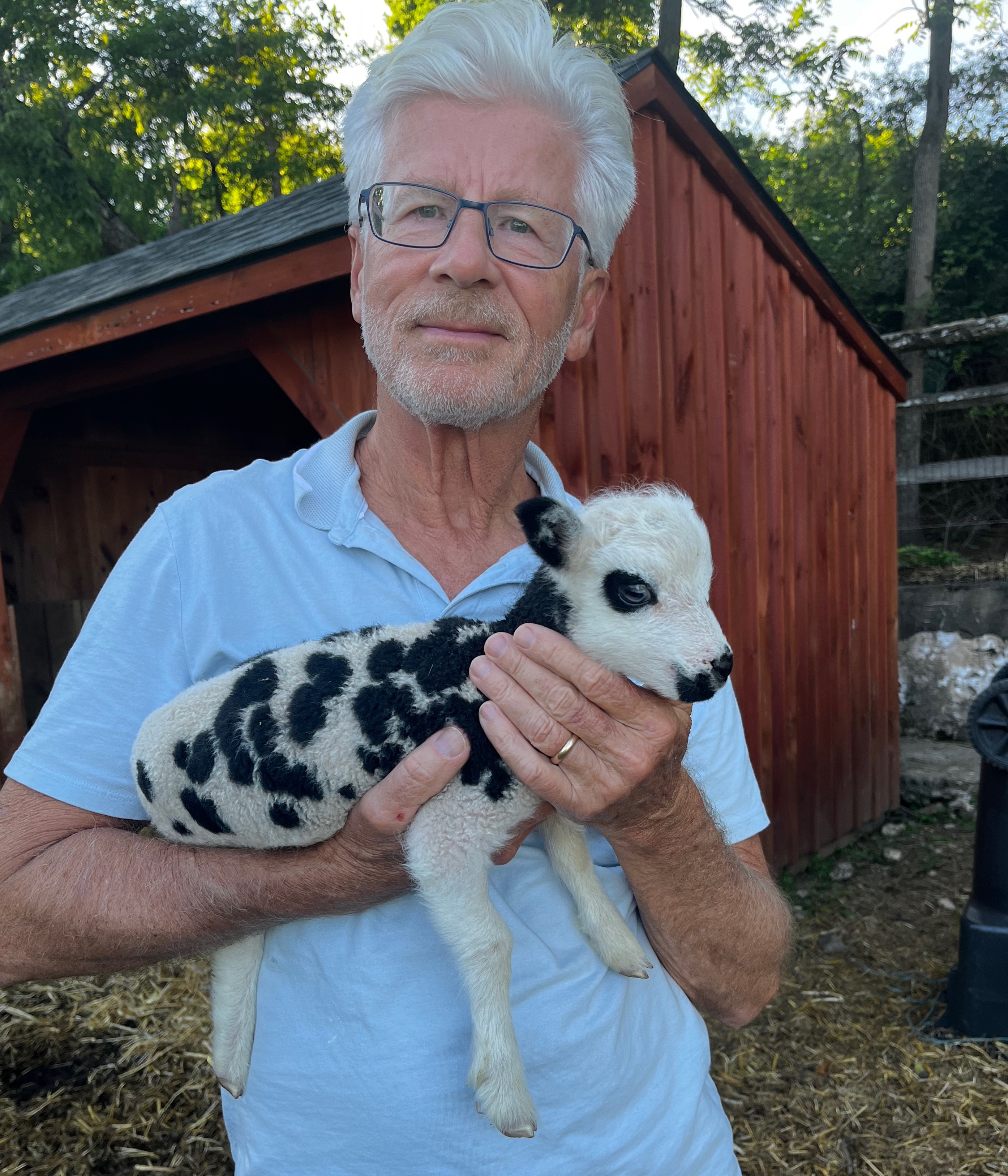
I get to practice what i learned while young at White Horse Farm in Pennsylvania, where my son’s family lives.

In the ‘60s corn had to be cultivated to keep the weeds down before “poison ready” genetically modified seed became the norm. So I’d sit on the tractor with Don as he drove the little plows through two rows at a time to dig out the weeds. If he hit a stone or lost concentration and the cultivator dug out some corn, I’d hop off, stick it back into the ground, and run to catch up.

Building or repairing barbed wire fence, learning how to drive tractor and truck, milk a cow and slop a pig, being rewarded with a chocolate milk and donut at the Midget Kitchen on Hwy. 16 all were part of my kinetic education – along with learning how to understand the punchline of coarse jokes.

Once I reached about age 13 my services were much in demand by local farmers who needed help detasseling corn, baling hay, picking stones or cleaning out stalls and stables. I was a tall, thin kid who was young Sheldon in the classroom and who saw Arnold Schwarzenegger in the mirror.

Our local farmers were basically one-man-and-a-son operations, and I replaced the boy who had grown and gone to the city. To make hay while the sun shined, we cut the alfalfa, let it dry for three days and hoped for no rain. Then we raked it into windrows, scooped it up and compacted it into 40-50 pound bales with a tractor pulling a baler pulling a wagon with a kid on the wagon stacking the bales.

Most generally it was me and the farmer – baling, loading, unloading onto an elevator and stacking in the barn. There were two kinds of farmers when it came to engaging my services on a hot summer day. One I’ll call Uncle Donnie’s way, on account of it’s about my Uncle Donnie. The other I could call “the efficient way,” on account of it’s the opposite of my Uncle Donnie.

When Uncle Don picked me up in the morning, we’d get to the farm and have to gas up the tractor, grease the baler and put in baling twine, hook the baler to the tractor, connect the power takeoff shaft and move the elevator into position to carry the bales up into the hay mow. It wasn’t unusual for us to have round up a wagon or two that a neighbor farmer had borrowed.

All the while I’m looking at all that hay, laying expectantly in windrows in the field, itching to get out there and get started, knowing it was going to be a long day. And it was threatening to rain.

Farmers committed to “the efficient way” and to getting all the work out of me they could, completed all the preliminaries before I got there. The baler was greased and hooked to the tractor, which was gassed and ready. The elevator was in place, all the necessary wagons were lined up, and mother had lunch in the oven.

We got twice as much done in half the time. And there are few things as satisfying as looking over a freshly harvested field, seeing it cut and clean and all the hay is in the barn before the rain comes.

That, and the fact that the more efficient farmers tended to pay $1.25 an hour, rather than $1.00.

Readiness makes the difference. Many of you work with non-profit organizations. Respect the time of your volunteers. Don’t let them show up on a work day or at a fund raising event and have to stand around and twiddle their thumbs. If they are volunteer tutors, have a student already selected and matched.

Then, let it rain.

“I never thought about it”

Much of the remodeling and landscape work on my son’s renovation of a 200-year-old house and barn in Pennsylvania is being done by Amish. Their work is exemplary, consistent and dependable.

Amish settled in southeastern Pennsylvania in the 1720s, leaving behind in Europe the persecution of their “strange” and separatist beliefs. Amish emphasize humility, family, community and separation from the non-Amish world, which includes a reluctance to adopt modern conveniences such as cars and electricity.

The Pennsylvania Amish community in Lancaster County is the largest in the United States, numbering about 30,000, double its size of 20 years ago. They’re distinctive for their simple dress, beards, bonnets and horse drawn buggies.

We wanted to give visiting relatives an authentic Amish experience, without being “ugly Americans” who gawk or get our legs caught in tourist traps that exploit this set apart people. So, who better to ask for advice than Aaron, a white bearded, retired farmer now working for his son’s landscaping company on our project.

To my delight, Aaron suggested simply that if we wanted to experience Amish life in Lancaster County, “Come to my farm. I’ll show you around.” We made a date two weeks hence.

I texted a couple days before the appointment and was concerned that I didn’t hear back. But on a beautiful fall afternoon we pulled into his manicured yard and Aaron and Barbie, his wife of 40 years, appeared immediately. Since they hadn’t heard from me, they wondered if we were coming.

I mentioned the text I sent earlier. Then we both laughed. Their telephone is in a building separate from the house, to be used for business purposes only, and of course, is not mobile.

We took seats in their recently constructed house, modern and perfect in every way except that there are no electrical outlets, nor lamps, nor counter appliances, nor overhead lights. Designed to let in lots of sunlight, a propane tank on wheels with a filament bulb on a tall rod provided light when darkness falls.

A propane powered refrigerator graced the kitchen. While electricity is considered a convenience too worldly, workarounds with generators for power are apparent in the barns. Rules and restrictions governing humility and simplicity vary by area bishop.

We asked Aaron why farm implements roll on bare steel wheels, with no rubber tires. He said it’s a bishop’s rule to keep people from going fast.

Daily life is guided by simplicity and a pace slow enough to appreciate the smell of freshly turned earth or cut grass or a grandson’s grasp of your leg as you walk the fields together. No doubt outsiders romanticize these things about Amish life, but the truth is starker. Anyone dependent on modern conveniences woven so completely and unconsciously into daily life that we don’t even realize our dependence, would find it very difficult to shed them in favor of a slower, harder, more deliberate life.

For that reason, Aaron said, they do not encourage people not born into the Amish community to “convert” to their faith and culture.

As a young sharecropper, my grandfather walked behind a mule pulling a plow. But when he gained access to a tractor, he embraced the innovation and convenience wholeheartedly. Amish farmers are content with their mules. Whether tractors, telephones, automobiles or microwave ovens, they recognize that innovations do not necessarily contribute to a better, fuller, deeper life.

Sitting together in a comfortable living room, a Bible and reading glasses atop a small table by their chairs, we asked this 62-year-old couple if they were granted permission to embrace any single modern convenience – the kind of utility they see every day as they live among “outsiders” – what might it be?

Silence.

After a while I suggested to Barbie that I thought she might say “electricity.” She smiled meekly and said, “I considered that.” When pressed for his answer, Aaron said, “I’ve never thought about it.”

Whoa.

Aaron farmed 50 acres with mules, raised eight children, six of whom have 33 children, raises dogs and tobacco for extra income, gave the farm to a son and now works another son’s landscaping business, is a stalwart in church and community, and he’s never thought about what mechanical, transportation, electrical, communication tool available to others he might like for himself?

All the while he lives among outsiders who think camping out overnight to be first in line for a new phone model is logical and that instant gratification is too slow. We’re bombarded by constant messages that we will be happier if we grasp, strive and reach for the next purchase, entertainment, or experience that will somehow endow us with the satisfaction Aaron has just by living a simple life in a caring community of like-minded folks.

“Content” is the only word to describe a man whose lifestyle barricades him against the onslaught of television and social media, who has never thought about embracing modern conveniences. He is content and committed to a way of life that is set apart, not conforming to the world. Romans 12:2 He evidently thinks about such things no more than a fish considers water.

Few modern Christians are consciously set apart from the world. Our most significant symbol – the cross – has been so co-opted and adulterated that it no longer retains significance as a Christian symbol.

Maybe that’s why we admire the simple, quiet, slow – contented – pace of Amish life.

Before I met Aaron, I’d never thought about it.

You’re Faster with Mile Stones

Driving expeditiously through the mountains suddenly seemed dangerous to my wife. “You’re going awfully fast,” she said. I checked the speedometer and I was well within the limit.

I don’t like to zip too quickly through that beautiful section of I-40 where North Carolina melds into east Tennessee. The panorama of mountains, with curvy roads and old forests crowding the tarmac merits a pace that allows an appreciative glance.

On this day, with restraining fences guarding against rock slides, encroaching trees, road warning signs, curves racing toward us and big trucks sliding behind me on the right, it seemed we were going faster than we were.

I recalled opposite days in 1974 when the national maximum speed was 55 mph in an effort to conserve energy. We lived in northern New Mexico and driving south to Albuquerque through a featureless landscape at 55 felt like standing still.

No geographic feature came toward us, no tree, no hill, no building. Road signs were rare because there was nothing to announce, no blind curve to warn against, no upcoming attraction. Just a straight ribbon of tarmac and sand minute by agonizingly slow minute.

A featureless landscape makes a journey seem slow. When elements natural or manmade come zipping at you, those landmarks make it seem you’re traveling much faster because you have them to measure your progress against.

School years once were that for us. The year moved in cycles, sometimes scattering about during the summer, but it always gravitated back to center just before Labor Day when the new school year started. School events dictated our calendar: teacher work days, holidays, test days, athletic competitions, performances. Christmas arrived with a sense of relief, tempered by the overhanging dread of first semester finals coming in January.

Then spring semester, Easter, class trips and anticipation of summer vacation.

When the last kid graduated from high school and the dog died, we were empty nesters for sure, no longer having to pretend we were napping on Sunday afternoon. College calendars and laundry drop-off visits kept some semblance of school year cycle going, but faintly.

Now, with the youngest in his 40th year, the calendar meanders, notable less for school events than for Social Security deposits and planning for winters in Florida.

I asked my dad when he was about 80 if days seemed to drag at that age. He shook his head and said every day flies by faster than the one before it. That puzzled me. Now I realize he had landmarks speeding toward him that I’d not considered: Breakfast, a good bowel movement, lunch at Karen’s, the local diner, cards with friends or the wife, doctor visits, driving a widow to the grocery store, a leadership meeting at Redeemer Lutheran, maybe a call from his daughters or his favorite child, a show on TV and hopefully a good night’s sleep.

 Those aren’t the landmark anticipations of the young whose life careens toward them hard around every corner with ever increasing opportunities and expectations. But they are the elements that mark progress of a life traveling confidently toward a destination of which he is sure.

We all find security in the coop we choose

We raise some chickens on the hobby farm in Pennsylvania where we spend time with our oldest son’s family. We got them when they were too old to be called chicks and too young to be called hens. They were teenagers at poultry puberty, eating and sleeping but not producing a darn thing.

After foxes, hawks and weasels decimated our first two flocks that ran free in a half-acre pasture, we started over with this new batch from a farm that raises chicks to this level of maturity before they start laying eggs. So, they’ve navigated their brief lives in the narrow confines of a large, dark shed.

From that shed they were pulled, dropped into a big box to transport home, and then set in a coop to protect them while acclimating to new digs. And we built a small run to provide some level of protection from predators that was more than the ungirdled range of grassland occupied by their unfortunate predecessors.

When it came time after a few days to let the young birds out of the coop the strangest thing happened – or didn’t happen. They were reluctant to leave the confines of that shelter.

I thought once I opened the door they would burst out into the brave new world of open space, green grass, bug buffet and blue sky because they’d been confined to dark, confined environs their whole lives.

Instead, I realized that it is precisely because they’ve been confined in dark spaces their whole lives that wide open spaces terrified them. It took long minutes for the first curious, brave beak to break beyond the coop threshold, and hours for a chicken body to follow that beak out the door, into the pasture.

Joined slowly, tentatively, cautiously by others, they hovered in the shadow of the coop for more long minutes, barely moving a body length into what to them must have been a vast, horizonless universe of undulating grassy waves.

When I consulted on a fund raising campaign for a Boy Scout campground I was surprised to learn that boys from the inner city were terrified by the animal and insect noises reverberating through the dark night outside their tents. These boys – familiar with gun fire, street racing, domestic violence and the cacophony of inner city life – shivered and huddled in their tents, sleepless at the sound of crickets and owls in the night.

A beautiful actress I interviewed in Houston, living with a physically abusive partner, told me it’s less frightening to hear him coming up the steps, knowing he’s going to hit her, than it is to considering fleeing with her child to the uncertain world beyond their apartment door.

We are anchored to our security, the blankets under which we find comfort and assurance, even if those blankets hinder us from moving past comfort into adventure and discovery.

Michael Easter wrote about it in his book “The Comfort Crisis.” For a month he eschewed the electronic conveniences and digital distractions of his life while camping and hunting in Alaska, enduring – then appreciating – hunger, boredom and uncertainty, the very things we work so hard to avoid.

He said challenging yourself to embrace a hardship and work through it, rather than avoiding it, will help you grow.

Being alone in nature actually will help you connect with yourself and help you feel less lonely.

And, he suggests consciously ditching unnecessary conveniences that make you lazy and, ultimately, unhappy. Rather than heading for the fridge at the first tingle of hunger, skip the snack, embrace the hunger and the next time you eat an actual meal you’ll appreciate it all the more. And be healthier for it.

The first sermon I ever preached was entitled “Comfort Kills” and I implored the congregation in Shawnee, OK to step outside their comfort zone to engage those persons who were not just like us.

Be brave, I said. Don’t be…chicken.

Creeper Challenge Builds Resilience

More than 150,000 people shuttle up crooked roads each year to White Top, VA, the apex of the Virginia Creeper Trail. From there, they ride rented bikes on a thrilling 17-mile descent beneath a forest canopy, cross a winding mountain stream over 47 trestles and bridges and arrive back to Damascus, VA.

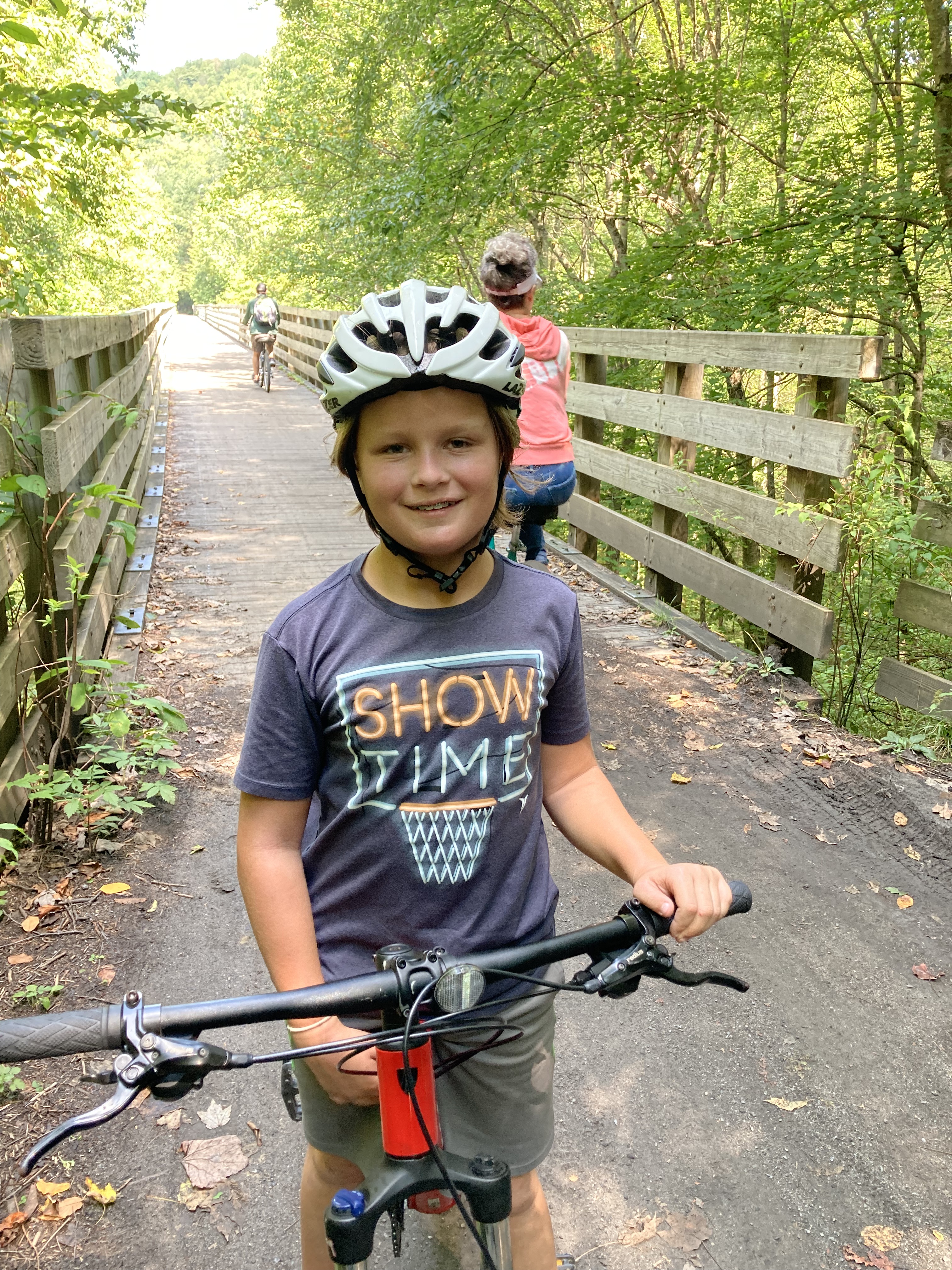
Colton, age 10, discovered a reservoir of resilience when he challenged the uphill climb on the Virginia Creeper with his grandpa.

I took my grandson, Colton, a few months shy of 11 years old, to ride the Creeper in September. But we weren’t going to shuttle to the top. We were going to ride up, then turn around and ride back down.

The Virginia Creeper follows the bed of a former railroad spur that carried a freight train uphill to White Top. Although the average grade is a manageable three percent, the heavy train creeped to the top, earning the nickname, Virginia Creeper. The trail is crushed gravel and cinders, rocky and often rutted from rainfall. The Appalachian Trail crosses it at one point, and riders are seldom out of sight or sound of a rushing stream.

Some adults suggested that surely I wasn’t going to make Colton ride UP the trail. “It’s 17 miles uphill,” they said. “He’s too young,” they said.

But his nickname is Wolf Cub, he climbs trees barefooted, he loves his bike and he loves a challenge. I knew that when he succeeded, the memory of his achievement would stick with him forever and verify in the future that yes, he can do more than people expect of him.

The generation of kids of which Colton is a part is not particularly resilient.  Part of the reason is that when they say, “I can’t,” or even “I don’t want to,” hovering parents who want to spare their kids any stress too willingly say, “OK.” In so doing, they strip their kids of opportunities to prove to themselves just what they can achieve, to see a challenge and overcome it.

Of course, that means we have to be willing to risk failure – a risk from which parents wrongly strive to protect their kids. Consequently, when the kids run into their first real life problem where crying won’t summon a helicopter parent and they don’t get a participation ribbon, they can’t bounce back.

Yes, they might fall out of that tree, but successfully climbing it builds confidence, strength, resilience.

Like any 10-year-old, Colton ignored my admonition to ride slow and steady as we started up the hill. He punched it hard, pulled wheelies, jumped every rock and root, raced ahead, drifted back then raced ahead again. We stopped for pictures and he finished his water bottle and asked how far we’d come. “Three miles,” I said.

“Oh.”

Downhill riders rolled toward us in waves, disembarking from shuttle vans at the top. Some were stopped to enjoy the scenery and they applauded Colton when they saw him riding up. That pumped him up, but even a 10-year-old can’t live on compliments alone.

At 14 miles there’s a little store called Green Cove Station that once was the last depot on the original Creeper line. Now volunteers sell refreshments and souvenirs there to support rangers on Mount Rogers. A candy bar and Gatorade reinvigorated Colton, along with the news that we were just three miles from the end, and he took off again. By now, even I was starting to yearn for the top.

We secured photographic proof that we made it to the top!

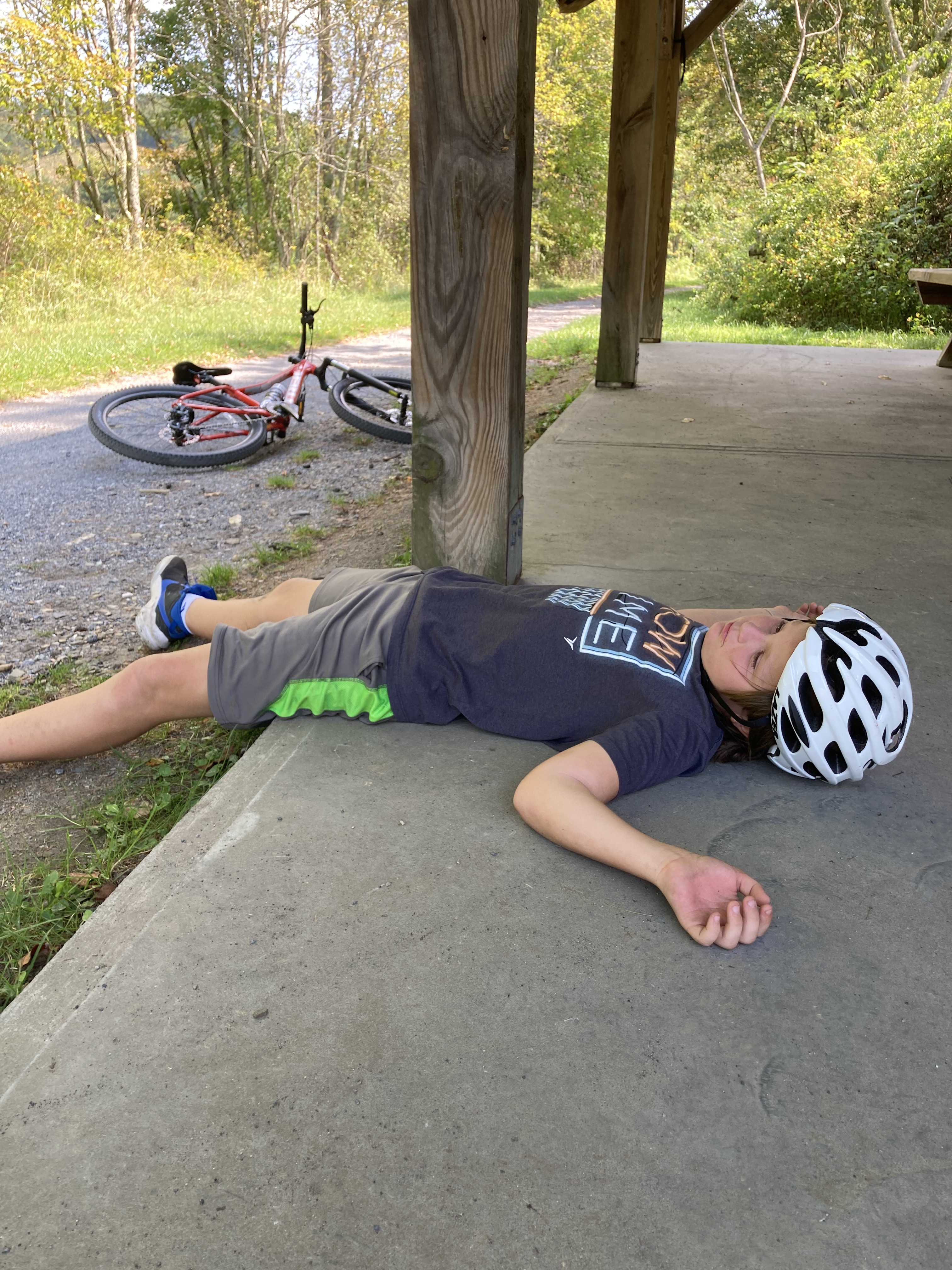
When we rounded the last turn and arrived at an anti-climactic flat spot with a shed and shelter, Colton flopped onto his back like he’d never straddle his saddle again. But, we needed to get back down and after securing photographic evidence of our achievement, we took off.

At the top, Colton took a moment to relish his victory, not sure if he’d every straddle his saddle again.

Two miles down, my back tire went BANG. Fifteen miles from the bottom, and of course, no spare in my seat bag – a huge oversight. I’m racking my brain trying to think of how to get off the mountain when Colton suggests Green Cove Station might have an inner tube.

Brillliant!

I gave him some money and he took off down the hill, empowered with a mission. In the meantime, I’m racking my brain to think of what to do if there is no tube. But in due time, Colton, once too weary to go another minute, is riding back up the hill in triumph, wearing a smile and waving a tire pump like it was a Sioux warrior lance.

The store had a tube, I had tire tools, Colton thought to bring the pump and we were back on our way toward ice cream.

I asked Colton later if there was any point on the ride up when he considered quitting, just turning around and coasting back down the hill. “At 11 miles,” he said. His butt was sore because he didn’t wear his biking shorts, his water was gone and six more miles seemed an impossibly hard distance.

But he didn’t quit.  

And when we faced a distinctly precarious position with a flat tire, 15 miles from our destination, it was Colton who suggested the Green Cove Station might have a tube and he could ride down there and find out. Not every person, let alone a 10-year-old, has the intuitive sense to conjure a solution, rather than be paralyzed by the problem.

Lots of people can be directed on how to fix a problem. Far fewer have the intuitive ability to imagine the solution even as they survey the circumstance.

If we hadn’t attempted the ride, and taken the risk, if it hadn’t been tough, if we hadn’t had a problem, Colton might not have learned about his reservoir of resilience for a long time.

Don’t be reckless, but for goodness sake, give your kids a chance to fail to prove to you and to themselves that they can be lions.

Be a spark or get tossed

Sometimes we get into a cleaning, sorting, trashing, unloading kind of frenzy when we’re feeling burdened by stuff and stuff’s attraction, demands, care and maintenance. 

When Sue Ellen hits full frenzy fury, I chain myself to a post to make sure I’m not tossed into a box subconsciously labeled “of no further use,” or as an item that “no longer sparks joy,” in Marie Kondo’s terminology. 

Some few things have outlasted every purge in our 44 years together. Thankfully, I’m one of them. 

But this week Oskar died. 

Oskar was a small food chopper and came as a wedding gift in 1975. It endured several super glue fixes in recent years before finally throwing up its blades and sighing, “Please no more nuts, carrots, celery for salads, or styrofoam bars to make snowflakes for kids’ plays.”

When we think of “things” that have lasted the duration of our lives together, now that Oskar is gone, we can name three. 

First is a sleeping bag I bought when I got out of the Army. Mine was to be a wild and free life after the olive drab constraints Uncle Sam put upon me. That sleeping bag, and a tent that turned out to be a portable rain forest, so impermeable it turned my moist breath into morning showers, along with a 1964 International Scout that had a mind of its own, were my tickets to adventure. 

I still use the bag. 

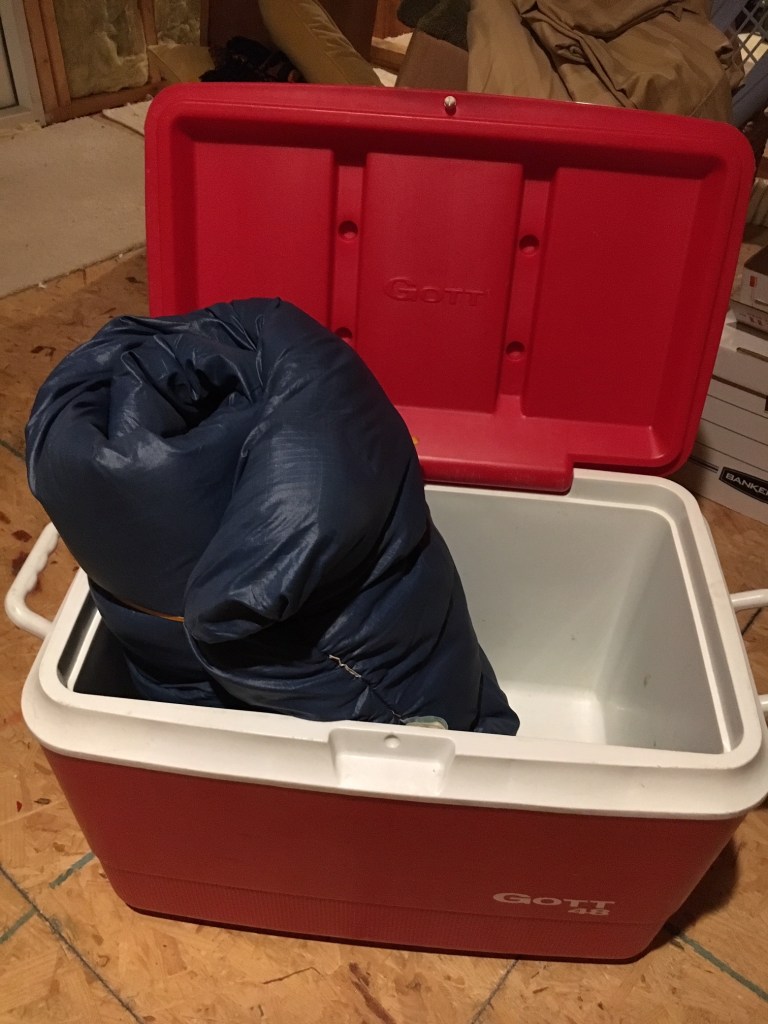
We married while I was still finishing my degree at Oklahoma Baptist University. Summers were stifling and neither our apartment nor our car had air conditioning, so we bought a Gott cooler and a bigger tent and spent many weekends at the lake. 

We still use the cooler

It often carries goodies as we travel to see our children, none of whom were conceived at the lake. Every time we pack it up, I marvel that it has been with us for so long. Yet, it still regulates the temperature of the items it contains, like the thermos I once gave a secretary. When I saw her using it the next day she told me she appreciated its capacity to keep hot things hot and cold things cold. 

I asked her what she had in it today. “Coffee and a popsicle,” she said. 

Sue Ellen was just 20 when we married. She worked at a bank and had her own apartment after moving out from a home with six siblings, and had neither time nor money to accumulate much of a trousseau. But she had started her dish collection of the then popular Yorktowne pattern from Pfaltzgraff. 

For 21 years, these were our “good” dishes, pulled out to impress company and only after the kids were old enough to know dishes were not suitable as heavy Frisbees. When my mom died we inherited her china, which became our company dishes, and the Pfaltzgraff became our everyday dishes. 

Funny how the exceptional loses its aura when pressed into common use. 

The Pfaltzgraff is heavy, and hard to spell. We can always peg the length of a friends’ marriage within a year or two if they feed us on Yorktown pattern Pfaltzgraff. 

Sometimes we look at new dishes, brightly colored, modern patterns, disposable. They might brighten up the kitchen table and provide a fresh perspective. But, they wouldn’t hold our food any better.

I confess I hold this feeling much more closely than does my wife, but there is something endearing and enduring about the consistency of an everyday implement that has been part of our lives together – every day. Not temporary, not disposable. Just consistent. Present. Available. Useful. Non-demanding. 

There is a fourth thing that we brought to our marriage, but it is more intangible. We each brought a part, insufficient of itself, but required for the whole – like the final spark plug required to make a dead engine roar to life. 

That, of course, is love. Our love for each other, a love we thought fuller and richer in the first blush of our infatuation than ever known by previous humans. Yet, it has grown with time into intimacy, interdependence, tolerance, forgiveness, adoration and the mystery of oneness into a force to overcome many an onslaught. 

When my mother died in 1996, my dad stood in the window as the hearse pulled away, kissed his hand and put it to the glass. I know our birth canal opens toward death, but dad’s slide toward the inevitable started in earnest that day. Losing mom wasn’t just grief for dad. It was an amputation. 

They had been married 47 years. I’m older than dad was at mom’s death and when I survey my environment, the accumulation of things around me and consider those few things that have been with Sue Ellen and me our entire lives together, it’s easy to dismiss the sleeping bag, the cooler and the dishes. 

The one constant that matters for 44 years has been my partner, my heart, my life. We’re closer now to the end than to the beginning, but every day still dawns a treasure. 

Happy anniversary, Sue Ellen.