
Spring Cleaning Dredges Up Old Anger

My wife is in declutter mode, a seasonal psychological disorder similar to photosynthesis. Warming weather and increased hours of sunshine renew her fear that we will die inconveniently for our children, who will be forced to sort mountains of detritus left over from a full and adventurous life.

In fact, we have empty closets, a barely used attic and we decorate in what might be generously called Scandinavian Frugal. I have enough empty space in my closet to lend sanctuary to a frightened roofer fleeing the masked hoodlums of ICE.

My ankle is chaffed from the cuff and chain with which I attach myself to the bedpost for fear of being thrown out in my sleep.

Despite my Spartan home office furnishings, Sue Ellen found excess in pockets of memory-inducing memorabilia. My bookshelf was too crowded, my closet held a a photographer’s vest and an unused shelf unit.

Personally, I share the opinion of Billy Crystal, who in his memoir “Still Foolin’ ‘Em, Where I’ve Been, Where I’m Going, and Where the Hell Are My Keys?” encouraged us as we age not to throw out objects that prompt a memory. So what if that tchotchke takes up a little space? When you pick it up, hold it, rub it and lift the molecules of its texture to be raised by the gravity of your own, you remember. You go back to that day, that moment in time and you live there again.

Your body may not jump as high, recover as quickly, digest that whateveritwas with as much alacrity as it did then, but in your memory you can. And it does. And you don’t need an antacid.

And that’s why, when Sue Ellen came across a box of her own memories, and brought them to me to ruffle through and share, the voice behind my barely concealed smile said silently, “Ah, I’m right again.”

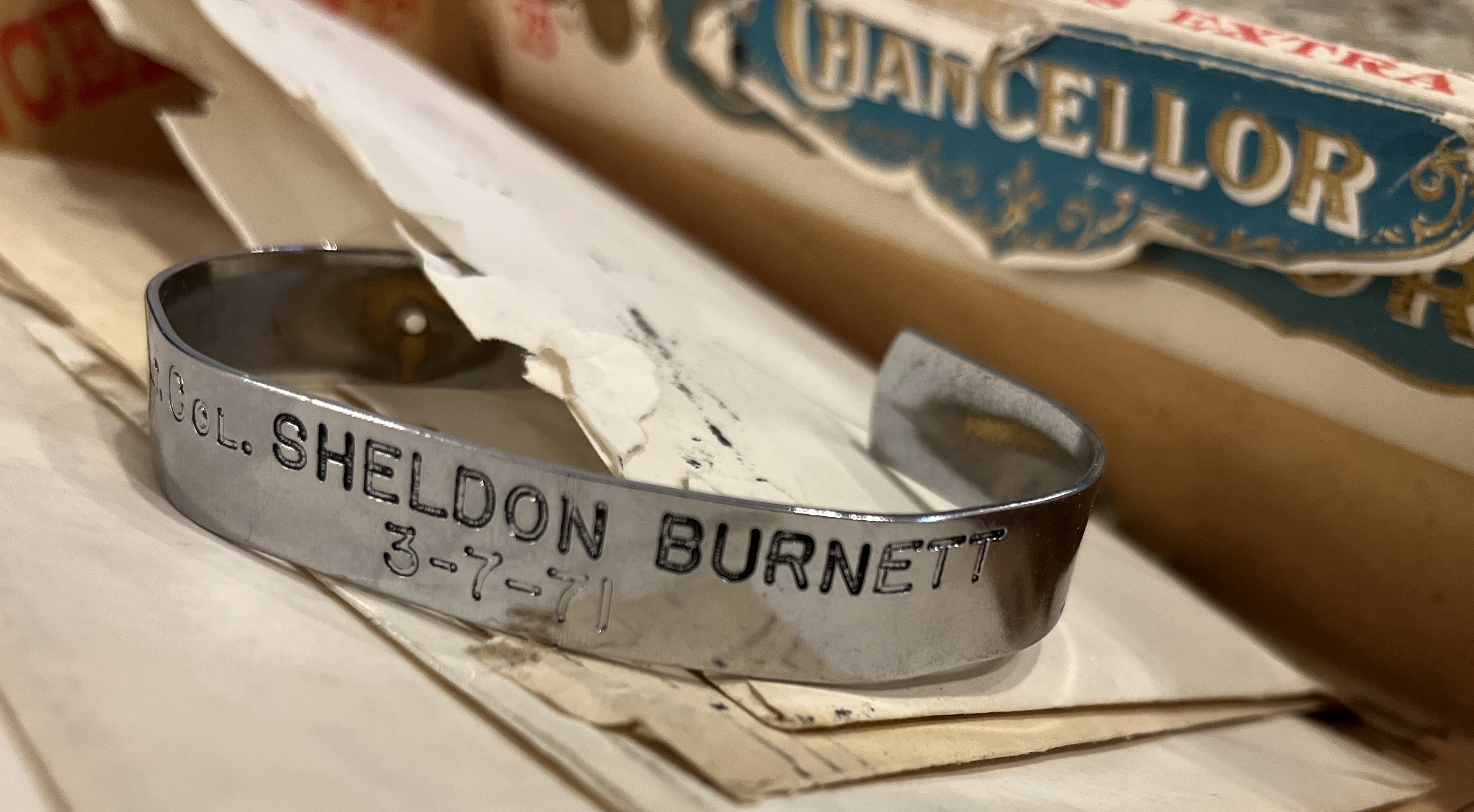
Included in her little box of memory inducing treasures were love letters from me during our brief engagement in 1975; a picture of her 1974 Korean mission team; some certificates of completion for various pursuits; and a nickel-plated bracelet on which was engraved the name of Colonel Sheldon John Burnett, and a date – March 7, 1971.

We reminisced about that bracelet, and wondered about the date. Sue Ellen remembered being one of millions who purchased for $2.50 and agreed to wear a bracelet bearing the name of an American soldier held as a prisoner of war or missing in action in Viet Nam, during what my Vietnamese friends call the American War.

Curious now, we looked up the origins of those bracelets, and what the date meant. They were conceived in 1969 by California State University, Northridge, students Carol Bates and Kay Hunter to raise awareness of missing soldiers. Bates chaired the bracelet campaign for VIVA (Voices in Vital America, originally, the Victory in Vietnam Association), a student organization that would go on to produce and distribute more than five million bracelets – as many as 40,000 a week at its peak interest.

The date, we learned, is the day the soldier whose name adorns the bracelet went missing.

Sue Ellen’s soldier went missing in March 1971, nearly three years after then Secretary of State Henry Kissinger sabotaged peace talks between North and South Vietnamese leaders to diminish the chances that Hubert Humphrey – President Lyndon Johnson’s VP – would win the presidency over Richard Nixon. Johnson had secured the peace talk agreement and the glow of that achievement would have shined on Humphrey.

Those peace talks were agreed to in 1968. A cease fire during the talks would have been likely, and the killing stopped.

The official death toll of American soldiers from that fruitless, misguided war is 58,220. Of those, 21,264 died after 1968. Including Colonel Sheldon John Burnett.

We learned Col. Burnett, from Pelham, N.H., was aboard a helicopter on a personnel transport mission to an area along the Laos/Vietnam border. The copter was shot down. Burnett did not survive the crash and his remains were not recovered at the time. On Dec. 9, 2004, the Joint POW/MIA Accounting Command identified his remains. Colonel Burnett’s name is inscribed with his fallen comrades on the Vietnam Veterans Memorial Wall in Washington, DC.

War is hell. In their quiet deliberations, even politicians know that. But when they nod, or acquiesce to the diabolical whimsy of a barely there commander in chief, they view war as some kind of video game and they watch the bombs falling on military installations, and hospitals, and schools via the onboard cameras of the planes that drop them. And somehow the fact that human beings below are vaporized, and the bombs sow seeds of hate in the next generation of sons and daughters toward those who dropped them.

The art and science of politics is to navigate the complicated landscape of differences between constituents, between nations. When negotiations “fail” or are abandoned for lack of time or commitment or personal self interest, war becomes the brutal evidence of politicians’ complete and utter failure.

“Every man has two deaths, when he is buried in the ground and the last time someone says his name,” according to a quote attributed to Ernest Hemingway Godspeed Col. Burnett and may your name, and that of untold thousands of American soldiers who politicians have sent to their deaths, be spoken of and remembered far into the future.
Fateful day half-century in the making

Sept. 13.

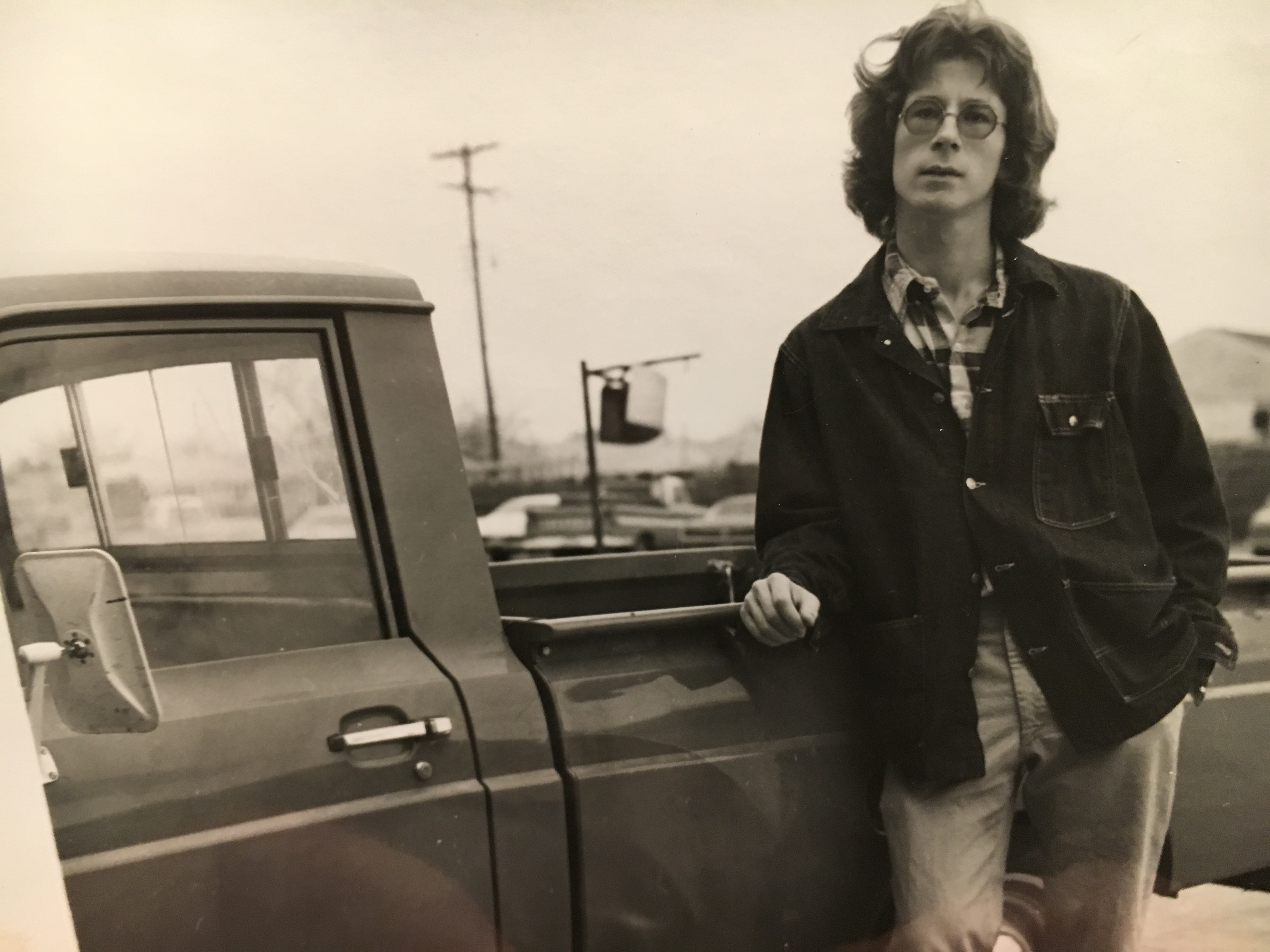
Fifty years ago today my dad wrapped his arms around me and said out loud for the first time I can recall, “I love you.” Then I turned toward the bus idling there to take me to Milwaukee where I was inducted into the U.S. Army.

With a draft lottery number of one, received a year earlier, this day was inevitable. But it arrived under a dark cloud of dread that wouldn’t lift for months.

I never doubted my dad loved me. I never asked myself if he did. I never wondered, pondered, considered, weighed or suspected his love. He showed me in many, non-verbal ways: working hard to provide for his family, being present, shooting baskets with me, including me with tasks we could do together, assigning me responsibilities like cleaning the barn or splitting the wood for our farmhouse furnace, then bragging about me to his friends when I worked beyond his expectations.

Primarily, my assurance of dad’s love and my subconscious security in my household growing up was how he loved my mother. Our dinner time was consistently 5:30, but no one sat down until dad arrived home from his gas route. He drove a fuel truck that serviced farmers in a four-county area, but he consistently arranged his days and route to be home for dinner on time.

Then mom would meet him at the door and the kids would have to sit at the table, waiting while they hugged and kissed and got all sloppy in the doorway.

Dad never fully grasped the implications of my lottery number. It didn’t penetrate his consciousness that radio announcing my birthday as No. 1 had changed the trajectory of my life. Nor did he comprehend my heart when I petitioned for and received status as a conscientious objector, willing to serve in the military, but not willing to bear arms.

To my surprise and delight, my basic training platoon at Fort Sam Houston consisted entirely of conscientious objectors of my same persuasion. We were all to be trained as medics. Logic was, I guess, if we weren’t going to carry a gun, we should run around with a target on our backs.

Religious belief was the overwhelming rationale for conscientious objection in my platoon. And not all represented religions were Christian. Consequently, our discussions were invigorating and affirming. Our attitudes were positive and our nascent friendships sincere.

Then, we graduated from basic. And our 40 men were divided among 10 other platoons of men who had just finished basic training that included weapons, and an indoctrination of “enemies” versus the right and righteous arm of the United States.

Suddenly, barracks were bellicose. An undercurrent of distrust and tensions ran through the room where long rows of bunks ran down both sides of the room, with lockers in the middle and footlockers at the end of each bunk. You never wanted to leave either open or unlocked.

One day I hung a pair of clean underwear on the hook while I showered. When I got out, mine had been taken and replaced by someone’s dirty underwear.

Discussions were not harmonious, but usually disintegrated into offensive and defensive positions on issues, especially religious and political. The most hard core guys could not wait to get to Viet Nam and “kill some Charlie Cong.”

Such was the atmosphere that debilitated my spirit one night when I walked to the bank of phones to call my dad for a word of encouragement. I know he loved me. But he still didn’t understand.

Depressed, I was walking back to the barracks to face another miserable night when my path took me past a base chapel. It was brightly lit and happy sounds were coming from it. I walked in. Why not?

There was a youth group on the platform getting ready to perform a musical. And I found a couple of my buddies from basic training there. After the musical, the youth offered to come pick up any soldiers who wanted to attend their church on Sunday.

Pretty girls populated the platform. I eventually dated one. My buddy Steve ended up marrying her sister.

Events of that night, and that group from Baptist Temple in San Antonio, opened the portal to the rest of my life which included a career among Baptists in communications, and marrying a girl I met at a Baptist church in my next station.

Fifty years ago. Today. As I’ve said many times since, it’s not something I wanted, nor would ever want to do again. But my life was set on course by having done it once.

The Abbotts defined dedication, and I got to play

John earned the shrapnel lodged in his legs, making them ache when the weather changed, when he labored in the fields. When he remembered.

As a battlefield chaplain during World War II, John Abbot worked among wounded and dying American soldiers in Europe fighting the scourge of Nazism. His was an active faith. He believed he incarnated Jesus as he walked, crawled and bled among soldiers who needed assurance that God loved them and that their destiny was assured.

Author as jack of all trades in Espanola, after the Army, before finishing college.

When he returned from the blood-soaked fields of Europe and as America shifted gears to embrace a new, wide open world of possibility, John applied to Southern Baptists’ missionary support agency responsible for “home” missions – or missions within the continental United States. He wanted to be a missionary in his native southwest, serving people, showing them the way of Jesus and leading them to faith.

He was a committed churchman in that denomination and after his service as a chaplain in the military, he assumed that he would be approved for support so he could turn his attention to the purposes of that agency: winning people to faith in Jesus.

Instead, he was denied support because he was deemed medically unsound, due to the shrapnel in his body, lodged there in battle. Disappointed, but undaunted and illuminated by his own vision, John secured support from some Texas Baptist churches where he was known. He bought farm equipment and set up shop in a converted dance hall in Espanola, New Mexico, a small town 25 miles north of Santé Fe.

The dance hall occupied a strategic corner on the main road between Espanola and Chimayo, a tiny town that houses one of only two places on earth that claim to contain healing elements. It’s the dirt in Chimayo, and the waters in Lourdes, France, to which pilgrims crawl. Discarded crutches, canes and bandages testify to the healing properties of the dirt in the Santuario de Chimayo. People have crawled from Santé Fe to Chimayo to do penance before applying the dirt to their injury or illness.

On the north side of the windy, two-lane road between the two towns perched a wooden church, little larger than a garden shed. It was the focal point of religious Penitentes, who marched in a single line, flagellating themselves, seeking forgiveness.

In that environment, John remodeled the dance hall into a church, office, classrooms and an apartment for him and his wife, Ethel, and he utilized the equipment to open doors among the small farmers in the dusty arroyos between Espanola and Chimayo. They could not afford individually field prep and harvest equipment that would increase their yields, and they welcomed the method and message of John Abbott to work among them, to share the work and to share his faith.

With hard work, ingenuity, faith and commitment, John and Ethel started and built a church which membership was primarily Spanish, descendants of Spanish invaders of the 16th century and Native American tribes.  They called it Templo Bautista – Baptist Temple.

Then one day in one of those freak accidents that make Christians wonder if God is paying attention, a piece of equipment that John was working under fell off its jack and crushed him. I guess he was medically unsound after all.

Ethel was suddenly a widow. Much of her livelihood disappeared because she could not run the equipment. John was the pastor, breadwinner, husband, visionary, guide, energy behind the entire effort. I don’t know how old Ethel was. She always seemed old to me, but I was just 20 when I met her. I’m sure I’m older now than she was then.

She promised God she would stay at Templo, would continue the work, if God would send her help. Because of her winsome spirit and compelling stories, Ethel received a fairly regular trickle of weekend or week-long helpers to lead special events and do repair work around the ancient facility. But she needed an everyday helper.

Her prayer and mine – what to do now that I’m getting out of the Army – clanged together in God’s ear and I became that first long-term helper. I was a pale, nerdy Scandihoovian from Wisconsin, knew zero Spanish and was new in evangelical faith. I’d been drafted into the Army after one year at Luther College and now I was out and at loose ends.

I started in November 1973 as a bus driver, youth minister, preacher, log splitter, painter, floor sander, week-night Bible study leader, and encourager. We called many of our members on Sunday morning to wake them in time to catch the bus I drove.

I brought them to church, preached at them and hauled them home. All this was done with sincere, naive spirit and within a profoundly knit community. The names “Ethel” or “John Abbot” opened any door in the county quicker than an electronic key.

I realize now the way we did church was paternalistic. We expected and required too little of members. There was an easy believe-ism in which membership at Templo eased seamlessly into whatever other influences they were weighing. Part of our motivation with activities was to “keep the kids out of trouble.”

But we slogged on. I went back to my home church in Colorado Springs to tell them of the work in New Mexico, and to raise money for Christmas goody baskets for the kids. One young lady was struck by the need, by the opportunity and by my wistful pleas. A few weeks later she arrived as a second helper, in the midst of a snow storm, as the children were trekking down the hallway in their angel and wise men costumes to present the Christmas story.

Her arrival on that snowy night declared that what I’d thought to be the first chapter of this story was merely prologue.

(First chapter to come)

Misusing military to defend corporate Interests

Charles Frazier’s novel “Varina” imagines a long conversation with the wife of Jefferson Davis, the traitorous former senator from Mississippi and former U.S. Secretary of War, who led the disastrous rebellion against the United States in 1860 as president of an “imaginary country.”

In the book, Frazier – also author of the immensely popular “Cold Mountain” – taught me a lot about the “property rights” perspective of southerners who thought slavery the perfect melding of capital and labor to assure economic prosperity. 

Growing up in Wisconsin, we studied the Civil War in fourth grade and never thought about it again. About 1990 I mentioned that fact while interviewing for a job in Georgia. The Colonel Sanders lookalike who chaired the interview committee said, “Down heah, we call that the wawh of nawth’n aggression. And we’re still fightin’ it.”

Americans love war. We must, we’ve been at war for 93 percent of our history.  We, among all nations, are the quickest to send our youth to other nations to kill their youth. In our minds, we’re always the good guys because we are “defending freedom.” “Freedom” is a malleable term with many definitions, depending on the perch from which you observe the march of time and of nations. 

Too often, our defense of freedom is really a defense of our corporate interests, the ability of American corporations to conduct business internationally without interference from local governments. And, that flag waving, slogan shouting defense is fueled by the whispers and checks of corporations who build the machines of war into the ears and accounts of politicians who buy them.

President Trump recently chastised military leaders for prolonging wars –we’re actively involved in seven  – to boost the profits of war machinery manufacturers. He is right in the fruit, but wrong in the root. It is politicians who prolong the wars, not the military. It is presidents Kennedy, Johnson and Nixon who thwarted peace attempts in Vietnam because they felt they would not be re-elected if they cut and ran from that hopeless quagmire. It is Bush and Obama and Trump who insert, left and leave fighters all over the world.

Back to Frazier and his Varina Davis. She is telling her conversation partner about a letter from General Lee to her husband Jeff, warning against an action that “would bring down the reproach of our consciences and posterity’s judgment.”

“But then, it was too late to apply Lee’s advice more widely,” Varina said, “because we were in the middle of trying to pull apart a country to protect the wealth of slave owners.” 

 She went on to say how the war wrecked the South and cast it into poverty. 

“But not for the north,” she said. “Plenty made fortunes off the war. Give a real Yankee one little dried pea and three thimbles and he can buy groceries. Give him a boxful of cheap, shiny pocketknives and pistols to trade and he will turn it into a career. But give him a war, and he’ll make a fortune to last centuries.”

F-22 fighter jet pushed by Pentagon that the Air Force doesn’t want.

And that is why we have been at war for most of our history. There are fortunes to be made! Our military defends the oil fields of Kuwait and the shipping channels of the high seas. It props up impotent and corrupt governments such as Afghanistan and keeps shipping lanes open for our oil companies to bring their products to market. It defends against the nationalization of U.S. companies that drain resources from other nations without proper recompense.   

Our military budget of $716 billion is equal to the military budgets of at least the next 12 biggest spending nations. 

The defense department says we have 4,800 “defense sites” in at least 160 countries. The U.S. military is the nation’s largest employer, paying 2.15 million service members and 72,000 civilians who work among them.

Under the gossamer thin patina of “protecting our freedom” the U.S. muscles into the business of other countries, on behalf of business. We’re the largest seller of weapons in the world. Five of the 10 largest weapons manufacturers in the world are U.S. companies. Once a company secures a contract for a new fighter jet or aircraft carrier or tank, it is virtually guaranteed acceptance of massive cost overruns and extended years of full employment for their employees. 

Sometimes the commercial interests in weapons manufacture push the politicians on their payrolls to buy expensive tools the military doesn’t even want, such as the F-22 fighter jet at $150 million per and the F-15x fighter, at more than $100 million each.   But it means jobs – tax payer funded. And the local senator is loathe to agree to kill the product, even when the military says it no longer wants it. 

 The pipeline of retiring generals to the boards and staffs of these companies is an incestuous, bacchanalian orgy of gorging at the federal trough.  

Some of oldest monied families in the country conceived their fortunes through the sperm and egg of gunpowder and war, birthing both deadly destructive force and their vast fortunes: the gunpowder of E.I. du Pont; the plastics and chemicals like Agent Orange of the Dow family; and the no bid contracts handed to the Haliburton Company to provide services to troops in Afghanistan,  a company led by Dick Cheney until he left to run George Bush… I mean until he left to run as vice president with George Bush. 

So yes, Varina, your husband allowed himself to be drafted by his fellow southern politicians to tear the country apart to protect their wealthy supporters, and to weigh an economic theory against the blood of 750,000  citizens.

But, fortunes were made! And, as discomforting as it is to consider, politicians still use our modern military to create and protect private fortunes. 

I’m a veteran, one of America’s last draftees. I’m neither anti-military, nor un-American. Quite the opposite. I just hurt inside when anything draped in a flag is considered patriotic or anyone draped in a uniform is called a hero, when too often both are symbol and substance of corporate manipulation of our national leadership for their own ends.