“I never thought about it”

Much of the remodeling and landscape work on my son’s renovation of a 200-year-old house and barn in Pennsylvania is being done by Amish. Their work is exemplary, consistent and dependable.

Amish settled in southeastern Pennsylvania in the 1720s, leaving behind in Europe the persecution of their “strange” and separatist beliefs. Amish emphasize humility, family, community and separation from the non-Amish world, which includes a reluctance to adopt modern conveniences such as cars and electricity.

The Pennsylvania Amish community in Lancaster County is the largest in the United States, numbering about 30,000, double its size of 20 years ago. They’re distinctive for their simple dress, beards, bonnets and horse drawn buggies.

We wanted to give visiting relatives an authentic Amish experience, without being “ugly Americans” who gawk or get our legs caught in tourist traps that exploit this set apart people. So, who better to ask for advice than Aaron, a white bearded, retired farmer now working for his son’s landscaping company on our project.

To my delight, Aaron suggested simply that if we wanted to experience Amish life in Lancaster County, “Come to my farm. I’ll show you around.” We made a date two weeks hence.

I texted a couple days before the appointment and was concerned that I didn’t hear back. But on a beautiful fall afternoon we pulled into his manicured yard and Aaron and Barbie, his wife of 40 years, appeared immediately. Since they hadn’t heard from me, they wondered if we were coming.

I mentioned the text I sent earlier. Then we both laughed. Their telephone is in a building separate from the house, to be used for business purposes only, and of course, is not mobile.

We took seats in their recently constructed house, modern and perfect in every way except that there are no electrical outlets, nor lamps, nor counter appliances, nor overhead lights. Designed to let in lots of sunlight, a propane tank on wheels with a filament bulb on a tall rod provided light when darkness falls.

A propane powered refrigerator graced the kitchen. While electricity is considered a convenience too worldly, workarounds with generators for power are apparent in the barns. Rules and restrictions governing humility and simplicity vary by area bishop.

We asked Aaron why farm implements roll on bare steel wheels, with no rubber tires. He said it’s a bishop’s rule to keep people from going fast.

Daily life is guided by simplicity and a pace slow enough to appreciate the smell of freshly turned earth or cut grass or a grandson’s grasp of your leg as you walk the fields together. No doubt outsiders romanticize these things about Amish life, but the truth is starker. Anyone dependent on modern conveniences woven so completely and unconsciously into daily life that we don’t even realize our dependence, would find it very difficult to shed them in favor of a slower, harder, more deliberate life.

For that reason, Aaron said, they do not encourage people not born into the Amish community to “convert” to their faith and culture.

As a young sharecropper, my grandfather walked behind a mule pulling a plow. But when he gained access to a tractor, he embraced the innovation and convenience wholeheartedly. Amish farmers are content with their mules. Whether tractors, telephones, automobiles or microwave ovens, they recognize that innovations do not necessarily contribute to a better, fuller, deeper life.

Sitting together in a comfortable living room, a Bible and reading glasses atop a small table by their chairs, we asked this 62-year-old couple if they were granted permission to embrace any single modern convenience – the kind of utility they see every day as they live among “outsiders” – what might it be?

Silence.

After a while I suggested to Barbie that I thought she might say “electricity.” She smiled meekly and said, “I considered that.” When pressed for his answer, Aaron said, “I’ve never thought about it.”

Whoa.

Aaron farmed 50 acres with mules, raised eight children, six of whom have 33 children, raises dogs and tobacco for extra income, gave the farm to a son and now works another son’s landscaping business, is a stalwart in church and community, and he’s never thought about what mechanical, transportation, electrical, communication tool available to others he might like for himself?

All the while he lives among outsiders who think camping out overnight to be first in line for a new phone model is logical and that instant gratification is too slow. We’re bombarded by constant messages that we will be happier if we grasp, strive and reach for the next purchase, entertainment, or experience that will somehow endow us with the satisfaction Aaron has just by living a simple life in a caring community of like-minded folks.

“Content” is the only word to describe a man whose lifestyle barricades him against the onslaught of television and social media, who has never thought about embracing modern conveniences. He is content and committed to a way of life that is set apart, not conforming to the world. Romans 12:2 He evidently thinks about such things no more than a fish considers water.

Few modern Christians are consciously set apart from the world. Our most significant symbol – the cross – has been so co-opted and adulterated that it no longer retains significance as a Christian symbol.

Maybe that’s why we admire the simple, quiet, slow – contented – pace of Amish life.

Before I met Aaron, I’d never thought about it.

What Color is Your Duck?

I was not a self-assured little kid. I lived in the country and wasn’t particularly athletic, didn’t know my way around the terminology of machinery as it seemed my friends did. I was reticent in a crowd of my peers. But I was an early, voracious reader and I felt confident in the classroom.

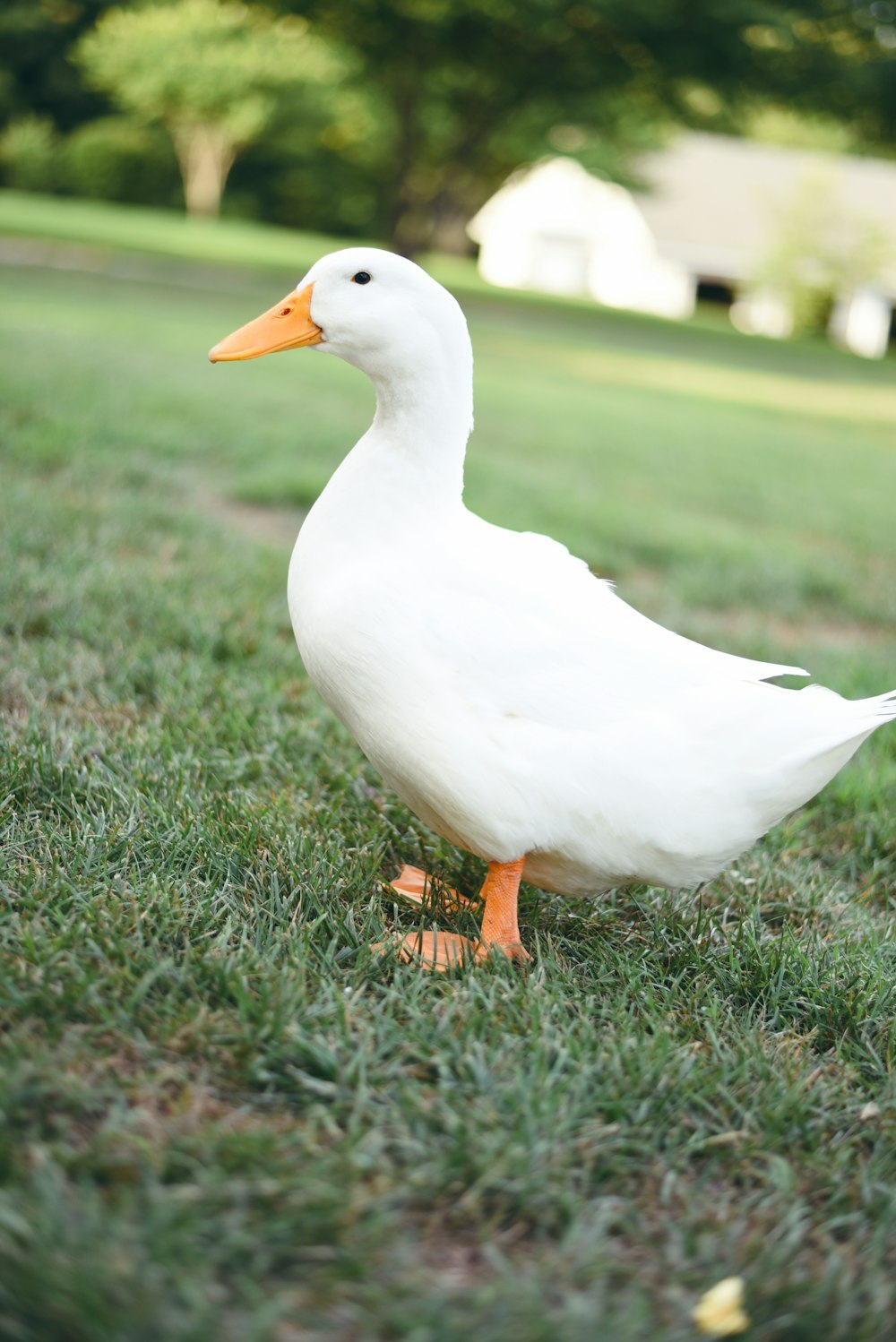
white duck on grass field

Photo by Christian Bowen on Unsplash

At least until Mrs. Roberts assigned a coloring project that I blew.

Louise Roberts was my first grade teacher. She was lovely, kind and patient. But my most vivid memory of my nine months with her (not the same nine months as each of her sons experienced) is the zero she gave me on a coloring assignment.

I’m quite certain it was she who delivered my first academic trauma. First grade seems right for that kind of project. I doubt it was second grade, because Mrs. McGowan never would have given me a zero.

Mrs. McGowan lived in the county seat of Portage, 14 miles and a half century from my little school in Rio, and possessed a sense of savoir faire. She loved her students enough to invite a select few one at a time to her house in Portage overnight to give them a taste of “city life.” Portage had 10,000 people, to Rio’s 788.

I was one of the lucky chosen for an evening in Portage with Mrs. McGowan and her husband, a local official. She made dinner, then they drove me around the city, and introduced me to city hall and the jail. Come to think of it, maybe she was trying to “scare me straight.” Anyway, she was sweet enough that she would have given me a second chance, not a zero that haunts me 64 years later.

Mrs. Roberts’ assignment simply was to color the animals pictured on the white sheet of paper she distributed. I forget what all the animals were, but the ducks… oh, the ducks.

What color are ducks? In all of my six years of limited exposure to Disney and storybooks in which ducks floated in ponds near where Snow White lay waiting for the kiss that would bring her back to life, or beneath the tower that held Rapunzel, the ducks were white. Pure, innocent, naïve images floating blissfully about the main story characters to remind us that even when things appear to be going smoothly, we need to paddle like crazy.

The ducks I was to color were presented to me on a sheet of white paper. So, very logically, I colored the other animals and left the ducks alone. White ducks on white paper. That’s the color of ducks.

When I got the assignment back with a big ZERO on it, I had the temerity to ask Mrs. Roberts why. She said I didn’t do the assignment because I didn’t color the ducks.  “But ducks are white,” I said, a nascent lawyer arguing for the defense.

“You should at least have colored the bills and feet,” she said. I could see her point, but how about a second chance? Maybe they were albino ducks.

Fortunately, I recovered from that initial academic setback and grew up avoiding drugs, thievery, rock and roll and mayhem.

Thank you Mrs. McGowan.

You’re Faster with Mile Stones

Driving expeditiously through the mountains suddenly seemed dangerous to my wife. “You’re going awfully fast,” she said. I checked the speedometer and I was well within the limit.

I don’t like to zip too quickly through that beautiful section of I-40 where North Carolina melds into east Tennessee. The panorama of mountains, with curvy roads and old forests crowding the tarmac merits a pace that allows an appreciative glance.

On this day, with restraining fences guarding against rock slides, encroaching trees, road warning signs, curves racing toward us and big trucks sliding behind me on the right, it seemed we were going faster than we were.

I recalled opposite days in 1974 when the national maximum speed was 55 mph in an effort to conserve energy. We lived in northern New Mexico and driving south to Albuquerque through a featureless landscape at 55 felt like standing still.

No geographic feature came toward us, no tree, no hill, no building. Road signs were rare because there was nothing to announce, no blind curve to warn against, no upcoming attraction. Just a straight ribbon of tarmac and sand minute by agonizingly slow minute.

A featureless landscape makes a journey seem slow. When elements natural or manmade come zipping at you, those landmarks make it seem you’re traveling much faster because you have them to measure your progress against.

School years once were that for us. The year moved in cycles, sometimes scattering about during the summer, but it always gravitated back to center just before Labor Day when the new school year started. School events dictated our calendar: teacher work days, holidays, test days, athletic competitions, performances. Christmas arrived with a sense of relief, tempered by the overhanging dread of first semester finals coming in January.

Then spring semester, Easter, class trips and anticipation of summer vacation.

When the last kid graduated from high school and the dog died, we were empty nesters for sure, no longer having to pretend we were napping on Sunday afternoon. College calendars and laundry drop-off visits kept some semblance of school year cycle going, but faintly.

Now, with the youngest in his 40th year, the calendar meanders, notable less for school events than for Social Security deposits and planning for winters in Florida.

I asked my dad when he was about 80 if days seemed to drag at that age. He shook his head and said every day flies by faster than the one before it. That puzzled me. Now I realize he had landmarks speeding toward him that I’d not considered: Breakfast, a good bowel movement, lunch at Karen’s, the local diner, cards with friends or the wife, doctor visits, driving a widow to the grocery store, a leadership meeting at Redeemer Lutheran, maybe a call from his daughters or his favorite child, a show on TV and hopefully a good night’s sleep.

 Those aren’t the landmark anticipations of the young whose life careens toward them hard around every corner with ever increasing opportunities and expectations. But they are the elements that mark progress of a life traveling confidently toward a destination of which he is sure.

We all find security in the coop we choose

We raise some chickens on the hobby farm in Pennsylvania where we spend time with our oldest son’s family. We got them when they were too old to be called chicks and too young to be called hens. They were teenagers at poultry puberty, eating and sleeping but not producing a darn thing.

After foxes, hawks and weasels decimated our first two flocks that ran free in a half-acre pasture, we started over with this new batch from a farm that raises chicks to this level of maturity before they start laying eggs. So, they’ve navigated their brief lives in the narrow confines of a large, dark shed.

From that shed they were pulled, dropped into a big box to transport home, and then set in a coop to protect them while acclimating to new digs. And we built a small run to provide some level of protection from predators that was more than the ungirdled range of grassland occupied by their unfortunate predecessors.

When it came time after a few days to let the young birds out of the coop the strangest thing happened – or didn’t happen. They were reluctant to leave the confines of that shelter.

I thought once I opened the door they would burst out into the brave new world of open space, green grass, bug buffet and blue sky because they’d been confined to dark, confined environs their whole lives.

Instead, I realized that it is precisely because they’ve been confined in dark spaces their whole lives that wide open spaces terrified them. It took long minutes for the first curious, brave beak to break beyond the coop threshold, and hours for a chicken body to follow that beak out the door, into the pasture.

Joined slowly, tentatively, cautiously by others, they hovered in the shadow of the coop for more long minutes, barely moving a body length into what to them must have been a vast, horizonless universe of undulating grassy waves.

When I consulted on a fund raising campaign for a Boy Scout campground I was surprised to learn that boys from the inner city were terrified by the animal and insect noises reverberating through the dark night outside their tents. These boys – familiar with gun fire, street racing, domestic violence and the cacophony of inner city life – shivered and huddled in their tents, sleepless at the sound of crickets and owls in the night.

A beautiful actress I interviewed in Houston, living with a physically abusive partner, told me it’s less frightening to hear him coming up the steps, knowing he’s going to hit her, than it is to considering fleeing with her child to the uncertain world beyond their apartment door.

We are anchored to our security, the blankets under which we find comfort and assurance, even if those blankets hinder us from moving past comfort into adventure and discovery.

Michael Easter wrote about it in his book “The Comfort Crisis.” For a month he eschewed the electronic conveniences and digital distractions of his life while camping and hunting in Alaska, enduring – then appreciating – hunger, boredom and uncertainty, the very things we work so hard to avoid.

He said challenging yourself to embrace a hardship and work through it, rather than avoiding it, will help you grow.

Being alone in nature actually will help you connect with yourself and help you feel less lonely.

And, he suggests consciously ditching unnecessary conveniences that make you lazy and, ultimately, unhappy. Rather than heading for the fridge at the first tingle of hunger, skip the snack, embrace the hunger and the next time you eat an actual meal you’ll appreciate it all the more. And be healthier for it.

The first sermon I ever preached was entitled “Comfort Kills” and I implored the congregation in Shawnee, OK to step outside their comfort zone to engage those persons who were not just like us.

Be brave, I said. Don’t be…chicken.

Committing Errors and Omissions

Oh good grief, will that lady please sit down so the rest of us can see?

I’m at the spring school concert for one of my grandchildren, who is dressed in white shirt and dark pants somewhere on the third row, right side, there, in the shadow, just beyond the edge of the light. Yeah, him. Take your finger out of your nose, buddy.

But the lady, and a dozen others, are making it hard to see my kid at all because they keep popping up, holding cameras, iPads, and phones at arm’s length to record their little darlings’ anonymous instant. Me, I’m trying to sit back, focus, and be in the moment so that the images and sounds in real time are seared into my memory.

I won’t need to pull up a grainy, dark, blurry picture to remember the grainy, dark, blurry image of the event I saw – through a viewfinder.

Studies show you will remember something better and appreciate it more if you concentrate on the moment with your own eyes, instead of looking at it through a viewfinder.

Elizabeth Loftus, a psychological science professor at the University of California, Irvine, says when our concentration at an event is to record it, it’s like we are offloading the responsibility of memory from our brain to our phones. Or, we’re so distracted by the photo taking process that we miss the moment altogether.

People upload 30,000 hours of content to YouTube – every hour.

I’m not sure if there is an exact parallel to the “losing the moment to a photo” idea, but I’ve discovered a strange phenomenon relating to journaling and memory. I’ve been transcribing my handwritten notes from journals of 50 years ago when I was in the army. Everything was new and not so wonderful for a young, pacifist country boy who grew up in a town of 788 people now thrust into a world of strangers being trained to kill people.

Still, there were friends, events, churches, girls and Kodak moments from those years that I’ve shared with people ever since. Special moments, meaningful events and forks in the pathway of my journey seared into my memory.

Yet, I’ve discovered that many of the most memorable, transformative, fulfilling moments of those days went completely unmentioned in my journals. Stories that made it through my memory dozens of times during the past half century never made it through my pen.

When I first realized the omissions, it struck me as strange. What I’ve come to believe, in a totally unscientific insight, is that I didn’t write down such significant things because I knew they were so memorable I’d never forget them. Things like:

  • My first ski trip when we encountered girls from church at the top of Monarch Mountain. It was my first day on skis and I’d done well and wanted to impress them. After we chatted a minute, we all turned to go down the hill and I immediately fell. Trying to catch up, I fell again and didn’t see them the rest of the day.
  • After wearing a full leg cast from a ski injury I had my buddy drive me to the base hospital to get it off, carrying my bike along with us so I could ride it home. Ha. My leg was useless until I’d rehabbed it.
  • A spur of the moment trip to Tacoma to see a girl I’d met through her cousin in Wisconsin.
  • After saving for a big ski trip to Vail, buddies Steve, Paul and I brought a fourth, Dennis, from Florida. He hadn’t skied, but said he was a surfer, so we thought if he could surf, he could ski. Wrong. After sleeping in the heatless van in the parking lot, waking to a quarter inch of frost inside the windows, we spent the morning at Vail, the premier ski area in Colorado, with him on the bunny slope. He never got it and we abandoned him.
  • Or, feeling compelled to back out of a trip to San Antonio to see a friend I’d met when stationed there, feeling I shouldn’t go. Hours after I was to leave, my mom called to say my cousin Dickie had died in a one-car accident. I went home to Wisconsin instead.

So, what prompts recollection of these events as I transcribe my journals? As I’ve gone through chronological entries, little butterflies flap around in my mind, whispering, “Didn’t this or that happen about this time?” We are an accumulation of our memories and each works in some kind of symbiotic relationship with others.

It’s kind of like how the things we eat work together in our bodies for nutrition and health. Who knows how an orange releases enzymes from a pork chop? Or how fish digests better with a glass of white wine?

I don’t. But thinking about why I wrote about fairly mundane things without recording events I considered very significant then and since makes me scratch my head.

Now, please scooch aside ma’am…I need to get this pic.

Don’t miss it: put those memories on PAPER

Other than seven months in our second year of marriage, my wife and I have never lived closer than 600 miles to either set of parents. I grew up in Wisconsin, she in Illinois, and then Colorado, where we met.

We were faithful to stay in touch with our parents as we moved from Oklahoma, to Colorado, to Tennessee, to Texas, back to Oklahoma and then to North Carolina. Long distance phone calls were expensive so I consistently wrote weekly letters to bridge the miles and months between visits.

Each letter recorded the previous week’s events, which at our stage of life always seemed many – certainly more fascinating, important and original to us than to our families. But mom and dad always hung on every word and my mother was good to write in return.

At first, I wrote the letters in long hand, which to today’s teens is like code. Around 1980 our office moved from an exotic, spinning ball electric typewriter to early computers. Wow. The monitor itself begged me to write as it seduced me with the string of little green letters corresponding to the keys I pressed.

By the time children started arriving computers were more common and it was easier to chronicle the many initial, unique, and unprecedented achievements of Nathan, Erin and Austin – first smile, first roll over, first word, first step. I’m sure I went into detail ad nauseum. Eventually, I realized these letters were a chronos record of my children’s lives – and mine – and I started keeping four copies of every letter.

I wrote on different computers, duplicated them on various printers, was not consistent in type face, margins or paper quality. But my intention was to keep a file of these letters for each child and present them as a bound volume for a high school graduation gift – their life in print.

The books were such a hit the kids never pressed me for that new car I never offered.

They’ve used the books to reaffirm memories, to share with spouses – and eventually their children – something of their lives growing up. The first born – trying to recall for his wife his foray into independence at about age seven – rifled through the pages to the specific time he was running away from home, pulling his wagon, when I drove into the neighborhood from work, saw him and encouraged him not to be late for dinner.

Boyfriends, girlfriends, grades, sports activities, family moves, home building, job changes, awards and disappointments all are recorded in black and white in a bound volume, a ready reference for those mystical days when a fireplace, rain, wine and melancholy need a tiny, tangible toehold to step full blown into nostalgia.

Is our self-identity anything more than an accumulation of our memories?

We’ve moved a lot so to keep things simple we never clung to things. One moving team looked around our empty attic and spartan walls and said, “Mrs. Jameson, you don’t do clutter, do you.” I struggle against the tide of my wife’s tidying to cling to pool noodles of memorabilia.

Comedian Billy Crystal, in his hilarious memoir written upon turning 65, Still Foolin’ ‘Em, believes we ought to keep mementos that take us back to happy moments. Remembering them helps us to relive them, and who doesn’t like to go back to mental images that bring a smile?

The letters I wrote to my parents were subject to time, travel, USPS sorting and handling machines, the vagaries of weather, transportation and distribution. But each was a package of joy upon arrival.

Great historical biographies have been written based solely on the written correspondence to and from the subject. I join the chorus of lament that this kind of communication no longer is in vogue. It’s a lost art; a neglected source of historical reference, of anchors to memory.

My children have asked me to write letters to their children celebrating certain occasions, passages into “adulthood,” or encouragement in their Christian lives – requests I eagerly fulfill.

Perhaps one day they’ll come across such letters in their files or boxes of childhood treasures, pause and reread them, and whisper to no one in particular, “Ahhh, Papa. I remember him.”

Picking the bones with buzzards

I walked among the buzzards at an estate sale today.

An estate sale is where a house filled with the relics of a life is picked over like road kill by vultures, tugging and pulling remnants of his memory off the skeleton and carting them off to cars.

Under marital duress, I joined the kettle of vultures who gathered well before the scheduled 9:30 a.m. viewing. Senior adults almost exclusively, none of whom needed anything being offered inside. All of us curious about what we’ll see, about how this man lived, what he’d considered important enough to collect, gather and keep through his final days.

Curious to see if anything in the house was a treasure his children didn’t know of, something we could “steal” for a few dollars and store in our own lockers for our children to offer in our future estate sale.

I chatted up other vultures, most of whom were in good humor, happy to spend a morning picking at the carcass of a deceased man none of us knew personally. We weren’t hungry, really. But if we found a morsel we’d happily chew on it.

And besides, in the cycle of nature – birth, life, death – weren’t we doing our part? Just like real vultures keep the highways clear of road kill carcasses?

I learned our guy was 95 and died after living in the house 30 years. His closets, cubbies and cupboards were filled as if he’d just stepped out for lunch, telling the house, “I’ll be right back.” But now, except for how the estate sale team had arranged and tagged everything, it stands as a cavernous crypt.

I wandered with the flock, poking, pecking and prodding. He loved Christmas music and books on history and architecture. His shirts were once expensive – but dammit, too large. The tools in his garage were well worn. His china cabinet held fine crystal too delicate for me even to want to examine.

It was the bathroom that arrested me. The sink counter was covered with personal care items that revealed an individual vanity, as would all of ours – how he cared for his teeth, his hair, his nails and skin.

Inside the tiled shower stood a collapsible walker, tight and forlorn against the wall. Available. Unused. The walker had wheels on the front two legs, so he could lift the back two legs and roll it along, dropping the back to the floor to rest or stand when he’d gotten to his destination in the house.  

The walker – alone among all the mementos of a long life – stood in mute testimony to the infirmities at the end of a long life. And it moved me from carnivore to compassion. I left silently.

Oh yeah, we got an Elizabeth Geisler basket. It was a steal.

Creeper Challenge Builds Resilience

More than 150,000 people shuttle up crooked roads each year to White Top, VA, the apex of the Virginia Creeper Trail. From there, they ride rented bikes on a thrilling 17-mile descent beneath a forest canopy, cross a winding mountain stream over 47 trestles and bridges and arrive back to Damascus, VA.

Colton, age 10, discovered a reservoir of resilience when he challenged the uphill climb on the Virginia Creeper with his grandpa.

I took my grandson, Colton, a few months shy of 11 years old, to ride the Creeper in September. But we weren’t going to shuttle to the top. We were going to ride up, then turn around and ride back down.

The Virginia Creeper follows the bed of a former railroad spur that carried a freight train uphill to White Top. Although the average grade is a manageable three percent, the heavy train creeped to the top, earning the nickname, Virginia Creeper. The trail is crushed gravel and cinders, rocky and often rutted from rainfall. The Appalachian Trail crosses it at one point, and riders are seldom out of sight or sound of a rushing stream.

Some adults suggested that surely I wasn’t going to make Colton ride UP the trail. “It’s 17 miles uphill,” they said. “He’s too young,” they said.

But his nickname is Wolf Cub, he climbs trees barefooted, he loves his bike and he loves a challenge. I knew that when he succeeded, the memory of his achievement would stick with him forever and verify in the future that yes, he can do more than people expect of him.

The generation of kids of which Colton is a part is not particularly resilient.  Part of the reason is that when they say, “I can’t,” or even “I don’t want to,” hovering parents who want to spare their kids any stress too willingly say, “OK.” In so doing, they strip their kids of opportunities to prove to themselves just what they can achieve, to see a challenge and overcome it.

Of course, that means we have to be willing to risk failure – a risk from which parents wrongly strive to protect their kids. Consequently, when the kids run into their first real life problem where crying won’t summon a helicopter parent and they don’t get a participation ribbon, they can’t bounce back.

Yes, they might fall out of that tree, but successfully climbing it builds confidence, strength, resilience.

Like any 10-year-old, Colton ignored my admonition to ride slow and steady as we started up the hill. He punched it hard, pulled wheelies, jumped every rock and root, raced ahead, drifted back then raced ahead again. We stopped for pictures and he finished his water bottle and asked how far we’d come. “Three miles,” I said.

“Oh.”

Downhill riders rolled toward us in waves, disembarking from shuttle vans at the top. Some were stopped to enjoy the scenery and they applauded Colton when they saw him riding up. That pumped him up, but even a 10-year-old can’t live on compliments alone.

At 14 miles there’s a little store called Green Cove Station that once was the last depot on the original Creeper line. Now volunteers sell refreshments and souvenirs there to support rangers on Mount Rogers. A candy bar and Gatorade reinvigorated Colton, along with the news that we were just three miles from the end, and he took off again. By now, even I was starting to yearn for the top.

We secured photographic proof that we made it to the top!

When we rounded the last turn and arrived at an anti-climactic flat spot with a shed and shelter, Colton flopped onto his back like he’d never straddle his saddle again. But, we needed to get back down and after securing photographic evidence of our achievement, we took off.

At the top, Colton took a moment to relish his victory, not sure if he’d every straddle his saddle again.

Two miles down, my back tire went BANG. Fifteen miles from the bottom, and of course, no spare in my seat bag – a huge oversight. I’m racking my brain trying to think of how to get off the mountain when Colton suggests Green Cove Station might have an inner tube.

Brillliant!

I gave him some money and he took off down the hill, empowered with a mission. In the meantime, I’m racking my brain to think of what to do if there is no tube. But in due time, Colton, once too weary to go another minute, is riding back up the hill in triumph, wearing a smile and waving a tire pump like it was a Sioux warrior lance.

The store had a tube, I had tire tools, Colton thought to bring the pump and we were back on our way toward ice cream.

I asked Colton later if there was any point on the ride up when he considered quitting, just turning around and coasting back down the hill. “At 11 miles,” he said. His butt was sore because he didn’t wear his biking shorts, his water was gone and six more miles seemed an impossibly hard distance.

But he didn’t quit.  

And when we faced a distinctly precarious position with a flat tire, 15 miles from our destination, it was Colton who suggested the Green Cove Station might have a tube and he could ride down there and find out. Not every person, let alone a 10-year-old, has the intuitive sense to conjure a solution, rather than be paralyzed by the problem.

Lots of people can be directed on how to fix a problem. Far fewer have the intuitive ability to imagine the solution even as they survey the circumstance.

If we hadn’t attempted the ride, and taken the risk, if it hadn’t been tough, if we hadn’t had a problem, Colton might not have learned about his reservoir of resilience for a long time.

Don’t be reckless, but for goodness sake, give your kids a chance to fail to prove to you and to themselves that they can be lions.

The Dirtiest Job

One of the fun TV shows of the previous decade was “Dirty Jobs,” in which host Mike Rowe identified some of the most unappealing, but essential, tasks in the country, and then – with the supervision of experts – did them. 

Just a few of those jobs included animal rendering, artificial insemination, diaper cleaning, goose down plucking, mattress recycling and spider venom milking.

Lurking among these innocent looking stalks are the weeds, bugs, pollen and sweat that make picking sweet corn the dirtiest job I’ve ever had. Photo by Katherine Volkovski on Unsplash

Growing up in farm country Wisconsin I was tasked with many dirty jobs: dairy barn gutter scooping, manure spreading, horse stall cleaning, pig feeding, garbage dumping, stone picking, chicken plucking, etc. But my dirtiest job ever was picking sweet corn for the local canning company. 

I’d driven a large combine to harvest peas before, and that was dirty enough. Long tines on my combine scooping tangled vines into the massive drum on wheels behind me. Inside the drum was a slightly smaller drum made of nylon screens, which turned one direction. A wooden beam with paddles rotating quickly in the opposite direction beat the vines senseless.

The brutal action burst the pea pods and the fresh, round peas tossed about in the melee until they fell through the screens and onto a conveyer belt, on which they were carried up to a bucket, while the vine trash fell out the back end.

But nothing was dirtier than picking sweet corn. 

A corn picker works like this: Metal “heads” alongside the tractor work like funnels to guide rows of tall standing corn stalks between two ribbed, solid steel rods that spin rapidly toward each other. The ribs interlock like gears so there is no space between them and they grab the tough stalks and yank them down through a narrow opening, where another band of steel – called a cutting bar – snaps off the cobs. 

The cobs drop into an auger that funnels them up the elevator behind the tractor which drops them into a two-wheeled wagon. That wagon rises on hydraulic hoists so it can dump four tons of corn into a waiting truck. That’s 8,000 pounds of corn.

Because the elevator would swing away from the wagon when we turned around at the end of the field, we’d have to shut it off until the wagon was directly behind us again when we completed the turn. Sometimes, we’d forget to turn the elevator back on, but the augers kept turning and would grind the corn that backed up into mush. We called that “creaming a batch.”

We harvested the corn at its prime, those hours the kernels are tender and sweet, and when fuzzy tassels at the top of the stalks are laden with pollen. These tassels sit atop the stalks, 7-8 feet above the ground, the same height as my head when I’m driving through the rows, jerking the stalks violently down through the rollers, shaking the pollen laden tassels over my head – all day long.  This is July and August in Wisconsin, the weeks of heat and humidity. 

So, the pollen is sticking to my sweaty skin, along with a colony of tiny bugs, no bigger than a speck of dirt, which bite like scorpions. If I was lucky enough to spot them before they bit, I’d just squish them in my shirt or pinch them between my fingers. 

Sometimes, during a dry season, the corn cobs would be low on the stalk and we’d have to lower the picker head to capture them. But that put the rollers low enough to accidently wind tightly around weeds and grind to a halt. 

That’s when I’d have to raise the heads and crawl on my back under them, dirt sliding under my collar, to slash at the weeds with my pocket knife, disentangling them from the rollers, while bugs crawled up my shirt and corn juice dripped in my eyes.

But hey, what wouldn’t you do for a buck eighty an hour?

The last thing we did each night before leaving the fields as darkness descended, was to pick our buckets full so at 6 a.m. the following morning, the trucks would have a ready load to cart to the canning factory. 

So, each morning we’d dump our 8,000 pounds of corn into a truck, steam rising with the pungent scent of boiled corn left too long in the pot so the marketing men could advertise “fresh from the field to your table.”

A word of advice learned at the 6 a.m. classroom: never buy creamed corn.  

This is “field corn” being picked. Sweet corn stalks are not dried out when picked and the heat and pollen is much heavier.

Beautiful killer

This morning I saw the most beautiful fox ever. Larger than typical, with bright red fur, tail long and bushy, not matted by thorns. It looked fresh from a spa: fluffed, puffed, tufted, shampooed and blow dried. Eyes intense, intelligent, confident and controlled. Lithe, nimbly athletic, light of foot like a dancer. 

And I wanted to kill it.

Coming back from her sunrise walk, my wife heard the terrorized shrieking of chickens in the open range pasture just behind the cottage where we stay on my son’s property. She stepped quickly to the pasture where she saw a fox with a chicken in its jaws. When she shouted and clapped, the fox sprinted away. The chicken didn’t.

Granddaughter helped to bury the first two victims of the carnage.

As Sue Ellen told me what happened, she asked what to do with the carcass. “Make nuggets” seemed an inappropriate suggestion. 

Before we could fully get our minds around what had just happened, we heard the terrified squawking again. I rushed to the door and this time I saw the fox…with another chicken in its mouth. I threw open the door and for an instant was shocked silent by the fox’s beauty.   

But my anger at its audacity quickly overcame my admiration and I stepped out the door and shouted. It understood my threat and I was pleased to see it run away, leaping the fence as if the rails were a padded obstacle in tumbling class.

I grabbed my shotgun and followed the fox’s trail, knowing it would never show its head to me while I stumbled and tripped through its habitat. I felt better somehow, though, knowing I was “doing” something, at least dropping some “man scent” around so the fox would know who it was messin’ with.

The second chicken was still breathing, its legs twitching, eyes registering a resigned acceptance of fate. I dispatched it, then tossed it into the garden while I went to get a shovel. 

My seven-year-old granddaughter watched wide eyed the entire proceedings, dressed in the “farmer girl” overalls we’d given her for an early Christmas present the day before. 

Uncowed, she helped me dig a hole, her sudden awareness of the life cycle presenting her a sad, but not devastating new insight. 

The life cycle as presented on a National Geographic special sees the fastest lion chasing down the slowest antelope, and it all seems natural and normal, almost pristine, except for the dust. Eating a hamburger never makes me think of the feed lot on which the donor was raised. 

Yet, somehow, because we fed and cared for these chickens, tucked them in at night and gave them special treats from our vegetable shavings, it became a personal insult. 

Yes, they’re free range and hawks circle constantly overhead. Yes, the fox has to eat and yes, the prey/predator cycle is natural. But, the fox invaded my space with impunity, looking at me as if I was an inconvenient interruption at his meal, like a waiter who informed him he had an urgent phone call and he had to leave the cordon bleu to cool.

It was a sad morning, but only a prelude. 

Worse, we came home after dark that night and I went out to check on the chickens, to make sure they had put themselves up in the coop, where safety lay behind a closed door. I looked inside and there was not a single chicken in the coop. 

With a sickening dread, I cast my light over the field and the beam fell on multiple carcasses, each with the head and neck gone. The goats huddled in their own shed, witness to the horror. I followed my flashlight beam around the pasture, accounting for all the chickens but one. 

I found her in the far corner, shaken and shivering. She didn’t protest a bit when I picked her up and put her in the coop, behind closed doors. I don’t know what killed the chickens and I don’t know how this one survived.

We named her Lucky.