Spring Cleaning Dredges Up Old Anger

My wife is in declutter mode, a seasonal psychological disorder similar to photosynthesis. Warming weather and increased hours of sunshine renew her fear that we will die inconveniently for our children, who will be forced to sort mountains of detritus left over from a full and adventurous life.

In fact, we have empty closets, a barely used attic and we decorate in what might be generously called Scandinavian Frugal. I have enough empty space in my closet to lend sanctuary to a frightened roofer fleeing the masked hoodlums of ICE.

My ankle is chaffed from the cuff and chain with which I attach myself to the bedpost for fear of being thrown out in my sleep.

Despite my Spartan home office furnishings, Sue Ellen found excess in pockets of memory-inducing memorabilia. My bookshelf was too crowded, my closet held a a photographer’s vest and an unused shelf unit.

Personally, I share the opinion of Billy Crystal, who in his memoir “Still Foolin’ ‘Em, Where I’ve Been, Where I’m Going, and Where the Hell Are My Keys?” encouraged us as we age not to throw out objects that prompt a memory. So what if that tchotchke takes up a little space? When you pick it up, hold it, rub it and lift the molecules of its texture to be raised by the gravity of your own, you remember. You go back to that day, that moment in time and you live there again.

Your body may not jump as high, recover as quickly, digest that whateveritwas with as much alacrity as it did then, but in your memory you can. And it does. And you don’t need an antacid.

And that’s why, when Sue Ellen came across a box of her own memories, and brought them to me to ruffle through and share, the voice behind my barely concealed smile said silently, “Ah, I’m right again.”

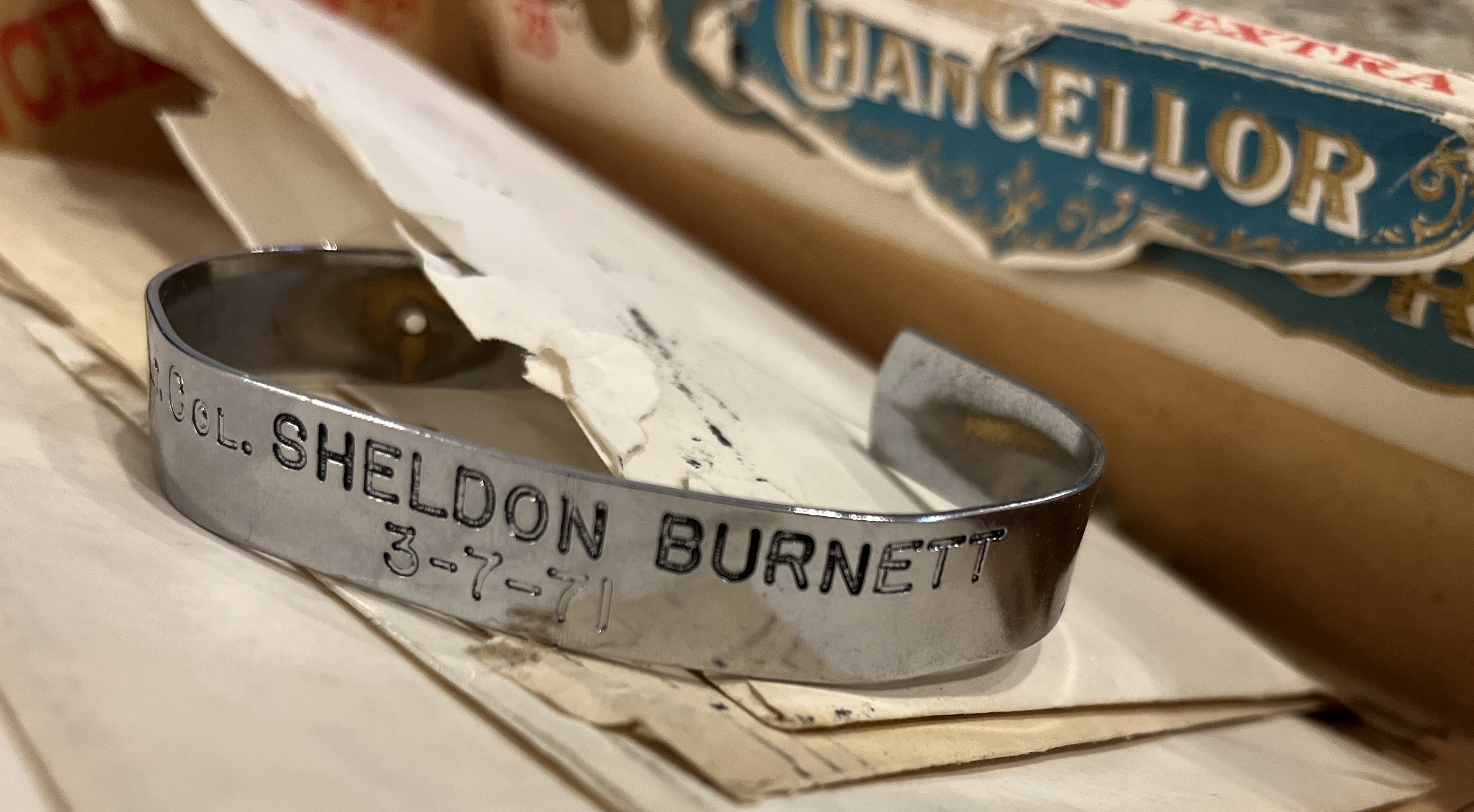
Included in her little box of memory inducing treasures were love letters from me during our brief engagement in 1975; a picture of her 1974 Korean mission team; some certificates of completion for various pursuits; and a nickel-plated bracelet on which was engraved the name of Colonel Sheldon John Burnett, and a date – March 7, 1971.

We reminisced about that bracelet, and wondered about the date. Sue Ellen remembered being one of millions who purchased for $2.50 and agreed to wear a bracelet bearing the name of an American soldier held as a prisoner of war or missing in action in Viet Nam, during what my Vietnamese friends call the American War.

Curious now, we looked up the origins of those bracelets, and what the date meant. They were conceived in 1969 by California State University, Northridge, students Carol Bates and Kay Hunter to raise awareness of missing soldiers. Bates chaired the bracelet campaign for VIVA (Voices in Vital America, originally, the Victory in Vietnam Association), a student organization that would go on to produce and distribute more than five million bracelets – as many as 40,000 a week at its peak interest.

The date, we learned, is the day the soldier whose name adorns the bracelet went missing.

Sue Ellen’s soldier went missing in March 1971, nearly three years after then Secretary of State Henry Kissinger sabotaged peace talks between North and South Vietnamese leaders to diminish the chances that Hubert Humphrey – President Lyndon Johnson’s VP – would win the presidency over Richard Nixon. Johnson had secured the peace talk agreement and the glow of that achievement would have shined on Humphrey.

Those peace talks were agreed to in 1968. A cease fire during the talks would have been likely, and the killing stopped.

The official death toll of American soldiers from that fruitless, misguided war is 58,220. Of those, 21,264 died after 1968. Including Colonel Sheldon John Burnett.

We learned Col. Burnett, from Pelham, N.H., was aboard a helicopter on a personnel transport mission to an area along the Laos/Vietnam border. The copter was shot down. Burnett did not survive the crash and his remains were not recovered at the time. On Dec. 9, 2004, the Joint POW/MIA Accounting Command identified his remains. Colonel Burnett’s name is inscribed with his fallen comrades on the Vietnam Veterans Memorial Wall in Washington, DC.

War is hell. In their quiet deliberations, even politicians know that. But when they nod, or acquiesce to the diabolical whimsy of a barely there commander in chief, they view war as some kind of video game and they watch the bombs falling on military installations, and hospitals, and schools via the onboard cameras of the planes that drop them. And somehow the fact that human beings below are vaporized, and the bombs sow seeds of hate in the next generation of sons and daughters toward those who dropped them.

The art and science of politics is to navigate the complicated landscape of differences between constituents, between nations. When negotiations “fail” or are abandoned for lack of time or commitment or personal self interest, war becomes the brutal evidence of politicians’ complete and utter failure.

“Every man has two deaths, when he is buried in the ground and the last time someone says his name,” according to a quote attributed to Ernest Hemingway Godspeed Col. Burnett and may your name, and that of untold thousands of American soldiers who politicians have sent to their deaths, be spoken of and remembered far into the future.

14 years both a lifetime and a blip

After growing up for 14 years in the same house, a mile outside of tiny town Wisconsin, population 788, Uncle Sam’s invitation during the waning months of the military draft started a lifelong journey that included 11 interstate moves and 23 residences.

After the Army, that nomadic lifestyle was encouraged by my career pursuit of “more and better.” We chased “God’s calling” from the plains of Oklahoma, to the mountains of Colorado, to the ocean of North Carolina.

But, stability was the hallmark of my early years. I was born at a very young age and when I came home from the hospital, it was to a 19-foot trailer I shared with my parents and older sister. And then a younger sister.

But my hardworking dad bought an 80-acre farm when I was five and I lived upstairs in a big farmhouse on the “old Peterson place” from age 5 to 19. I graduated high school in the same building where I started first grade. And, the 53 members of my graduating class were basically the ones I learned to read with, except for some transfers from a small elementary school nearby.

Almost everyone around me in rural, farm country Wisconsin was similarly stable. People didn’t come and go. They were born and stayed.

I left at age 18 for college in Iowa, then came home for the summer when I got my “Uncle Sam Wants You” invitation. I RSVP’d and that party took me to Missouri, Texas and Colorado in under two years.

When I got out, I went to New Mexico to serve in a Baptist mission, then to Oklahoma to resume my education at a different college when the school where I started declined to automatically renew the scholarships I had before I was drafted.

After graduation, I worked on a newspaper in Colorado, then for a Baptist news service in Tennessee. I followed that glistening road back to Texas for seminary, then back to Oklahoma for work and finally, maybe, to North Carolina where I live now, except when I’m on my son’s farm in Pennsylvania or fleeing winter’s chill in Florida.

Twenty-three home addresses. My daughter was six when we moved to North Carolina and it was her fourth state to live in.

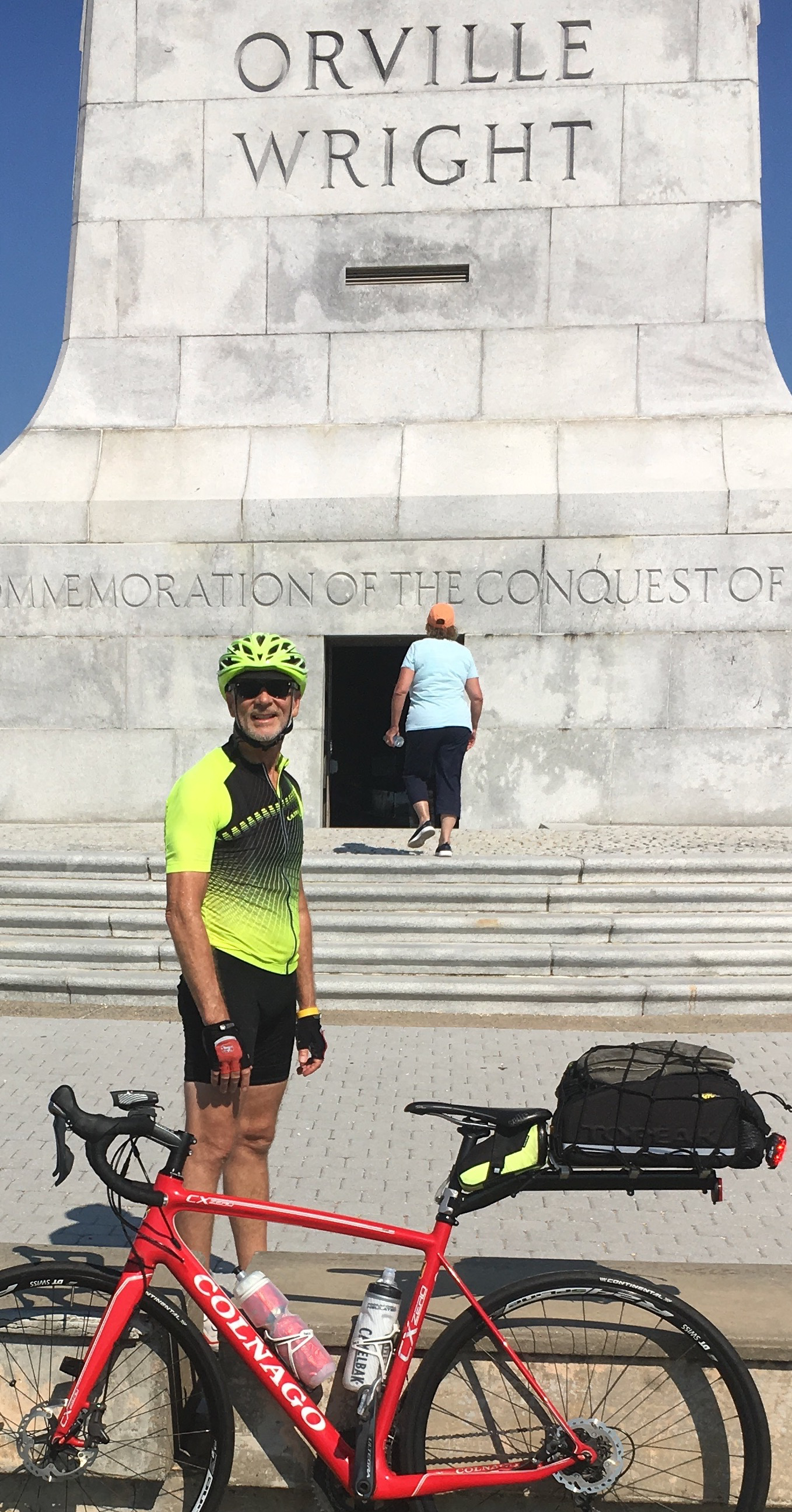
And, finding some riding buddies at my second home, in Pennsylvania.

My oldest son graduated from college, worked a year, then went to grad school. After grad school he found gainful employment, bought his first house, did well in his work and moved with the company to a nearby town where he bought his second house. When he had been there four years, he told me that was the longest he’d ever lived in one place.

Ouch.

I say all of the above to say that while enjoying a warm afternoon on the deck with my wife during a late winter warm spell, I realized I’d been living in this house 14 years, by far the longest I’ve lived at a single address since leaving home. It IS my sixth house and fourth city in North Carolina since I landed there when Baptist life in Oklahoma tilted far right and I rolled off in 1987.

Fourteen years is the same amount of time I lived in the house in which I grew up – 880 miles, a culture and a lifetime, away.

I started to try to wrap my head around the similarities – and dramatic differences – between the 14 years I spent in the farm house on County B and the 14 years in Winston-Salem.

The first 14 were literally a lifetime. First grade through high school. Learning to read, to write, to secure a toehold in the social hierarchy, athletics, school plays, band, first kiss and agonizing days wondering “does she like me?”

The 14 here have been so much shorter. We came here for one job, melded into another, then another, before easing into retirement. Then we started to travel and this house is home base but we’re in it less than we’re in other places. And while the first 14 years in Wisconsin were a literal lifetime, the 14 years here are a blip. An elongated blip, maybe, but they’ve passed in the same amount of time it takes a rising sun to find its nesting place in the west.

My dad was 14 when he rode his bicycle 25 miles from Lodi to Rio, WI so he could live with his aunts Vicki and Lillian and attend high school where Lillian taught. Five years later he was a dad and a few years later he planted his family at the farm for 40 years. He envied, but couldn’t quite comprehend, my nomadic journey.

And I just realized that I’m 14 years younger than my dad when he died.

Give a cyclist some room

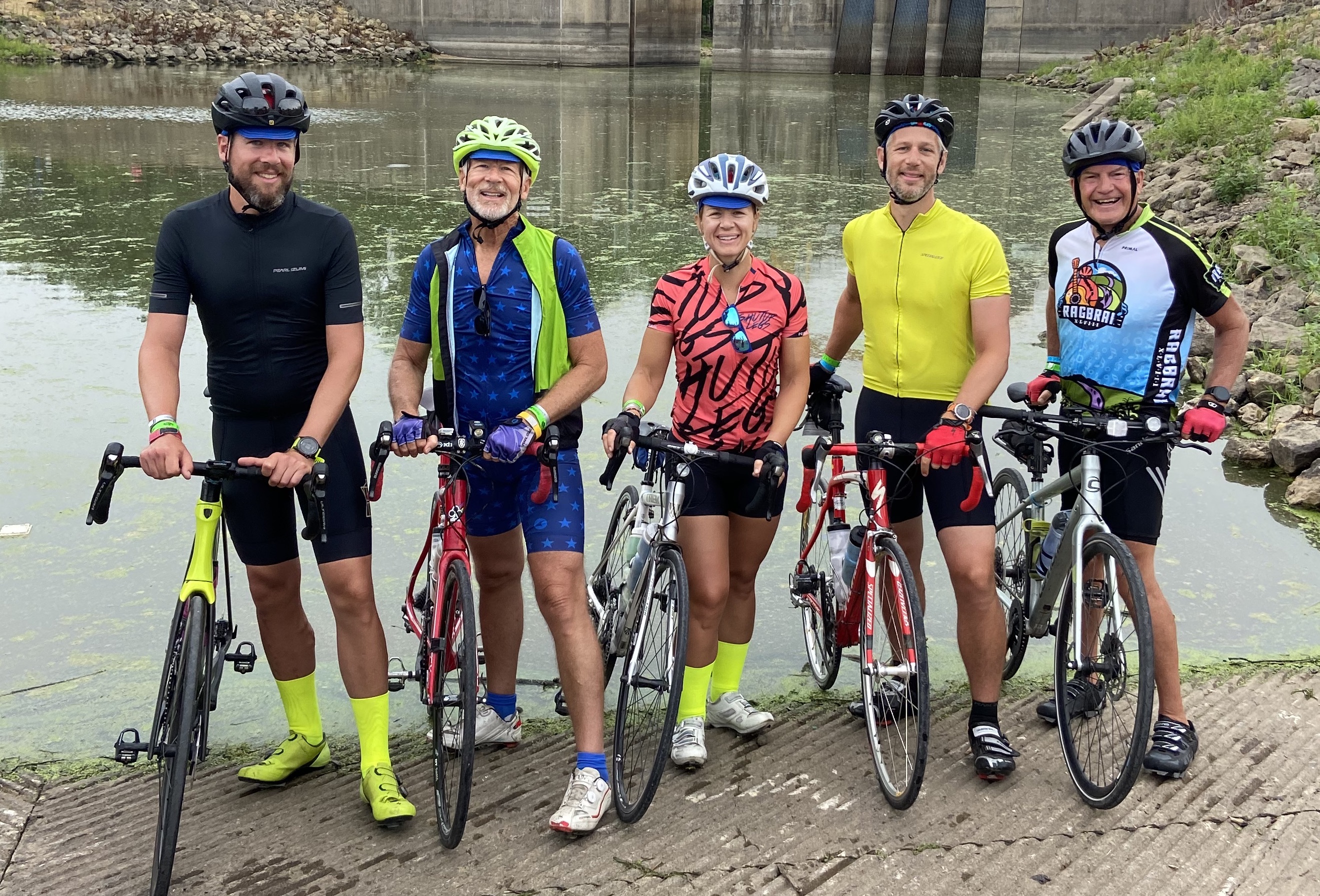
One of the greatest joys from a life of cycling was riding RAGBRAI in 2021 with my three children and best buddy from the Army. From left, dipping our wheels in the Mississippi River, are Austin Jameson, Norman Jameson, Erin Frank, Nathan Jameson and Steve Moorhouse.

While riding the bike lane on Longboat Key in Florida, a large SUV glided up beside me and slowed, matching my speed. Given the culture of animosity between cyclists and automobile drivers who think the road was laid for them personally and that any other user traveling five miles per hour slower than them is an impediment expressly forbidden in the Constitution, I kept my eye on it.

I’ve had doors opened to try to knock me off my bike, soda cans tossed at me and curses cast on the wind as cars pass that I can barely hear and never understand except for their volume and intent. I always laugh when people fly by me, shouting some insult that never registers because those idiots don’t realize their words dissipate in the wind like bubbles touching grass blades.

And there are the truck guys immobilized in lines of traffic driving onto the island who see me about to pass unimpeded in the bike lane so they turn their wheels and edge into my space, laughing all the way. I have the last laugh as I rap their truck with my knuckles and roll on, their being impotent – despite their big truck and heavy belt buckle – to bother me at all.

So, this creeping SUV concerns me until I notice its right directional signal blinking. He’s waiting for me to safely pass through the intersection before he turns right, behind me instead of in front of me, avoiding a collision.

May his tribe increase.

The summer of 1972 I took off on my bike from south central Wisconsin to ride 300 miles to Wayzata, MN to see a girl I’d grown close to during my one year at Luther College. I took off on my 10-speed Schwinn wearing cutoff shorts and tennis shoes. I carried a few cans of tuna fish, a few bucks, a water bottle and a sleeping bag.

I had no rain gear, no shelter, no tire repair kit, no helmet, no sunglasses. I’d bought the bike for ten bucks from a friend who’d left it outside all winter in the Iowa snow. And my route on Highway 16 was a major thoroughfare.

I rode 75 miles the first day, at least three times longer than any single ride I’d done before. I slept on the ground in some city park, uninterrupted except for the bug that crawled into my ear. It navigated deeper than I could reach with my finger and in my sleepy desperation I used the plastic tip of my shoe string to squish it so I could get back to sleep.

When I slung my leg over the saddle the next morning for the second leg of my trip, I was so tender I felt like I sat on the sharp edge of a sword.

During that trip, a car passed me just like the SUV on Longboat Key, but he turned right directly in front of me and I crashed into its side. I hit the pavement and the car stopped long enough for the driver to see that I was uninjured before it sped off.

That was on my mind as I watched the SUV beside me.

I’ve ridden across Wisconsin and North Carolina. I’ve ridden RAGBRAI across Iowa four times. My bike travels with me so I’ve ridden in many states and I’m always cognizant of the risk I’m at from inattentive drivers.

In 2023, 1,166 bicyclists were killed in crashes with motor vehicles, an 86 percent increase from 2010. Approximately 130,000 cyclists are injured annually on U.S. roads.

The common excuse of deadly drivers is “I didn’t see him.” That is NEVER an excuse. A driver is responsible to see everything in his path, from a pothole, to a stop sign, to a kid running into the street to chase a ball, to a cyclist in brightly colored clothes likely adorned with flashing lights.

I’m a little more nervous on the road now, at age 73, more aware of how close cars, trucks and landscaper trailers are to me when they pass; more aware of how distracted and careless drivers are generally.

And more appreciative of the rare auto driver who gives me a wide berth and slows to turn behind me, rather than in front.

The day I turned old

I turned old on August 30, 2025. I know the day. And the hour. And the moment.

No wonder the young lady stood to offer me her seat.

For much of my life, I looked younger than my age. I was a husband, father, and owned my second house before I shaved every day.

About age 26, I was in the barber chair with my hair wet and glasses off and my wife walked in, ready to take me home when I was finished, since we managed with one car. The barber noticed that she caught my eye, and asked, “Is that your mother?”

Later we listed some furniture for sale, some of our original “we-need-something-and-this-will-do-until-we-have-money,” pieces. A college girl called, said it would be perfect for her dorm, and arranged a time to come pick it up.

When I answered the door, she looked at me and asked, “Is your mother home?”

To say I was devastated is to say the Johnstown Flood was a trickle. I was floored. It took me days to get over it. Evidently, I still haven’t.

I was a college graduate, Army veteran, working a professional job with national connections and a college girl sees me in my Saturday morning T-shirt and jeans and asks if my mother is home.

I told her my mother lives in Wisconsin, 640 miles away, but if she’s here for the furniture, I can help. And then my wife picked me up off the floor.

Eventually, the sirocco winds of life aged my face, bleached my hair to arctic blonde and added enough wrinkles that I didn’t have to say, “No, really” anymore when my age came up.

My oldest son shares some of my facial features and when I’m introduced as his father, his friends invariably say, “I could’ve guessed.” I keep hoping one day someone will mistake me for his older brother.

Which brings me to the fateful day when the harsh reality of simple observation by a stranger shattered the mistaken impression that all the mirrors in my house are broken. I walk past a mirror, see the image it reflects, and I know that grizzled face can’t be me.

And yet.

In Budapest, Hungary at the beginning of a Danube River cruise taken to celebrate the 50th anniversary of marriage to a beautiful woman I had bamboozled long enough to convince her to marry me, the curtain came down on my illusion.

I stepped onto a tram car and a young woman stood to offer me her seat.

Glass shattered. Ego crumbled. Humility fallen over my shoulders like a granite yoke.

I implored the innocent to return to her seat. Over a language barrier, my pleading eyes, exasperated face and arm motions made my intention clear. “Please. No. Take your seat. ARRGGG.”

She politely declined, and I resolutely remained standing, amid the laughter of our traveling colleagues.

The insult of reality was exacerbated the next day when on a similar tram, my wife was warned that a conductor was on board and was checking tickets. In Budapest persons over age 65 ride public transportation free.  The local was kindly warning my wife that she needed a ticket.

Sue Ellen graciously informed her that she didn’t need a ticket, because she was 70. To which the kind commuter expressed astonishment, of course.

She then looked at me, seeing I was with Sue Ellen, and I swear I heard her ask, “Is that your father?”


‘/

‘Nothing lasts like it used to’

I once took it as irrefutable truth that “Nothing lasts like it used to.”

For the most part, I agreed that manufacturers were “building in obsolescence” so you’ll have to replace that refrigerator you’ve had for 25 years with a new one you can expect to last only 10 at best.

It’s easier and cheaper to replace appliances than it is to repair them. Good for the manufacturers, bad for service repairmen.

Credit that brief functional life to plastic parts. While it may take 10,000 years to decay in the landfill, plastic in the essential workings of everyday products seem to decay in 10 months. Plastic is so pervasive that we don’t even realize how many items that once were made were made with metal or wood and were strong enough to become heirlooms are now made with plastic and won’t get your kid through kindergarten.

To start a list of all things plastic would require more capacity than my computer has. You may be reading this through lenses held to your nose with plastic frames. You bring home groceries in plastic bags, or get fast food through your car window in plastic containers. Plastic is often useful but nothing plastic can be expected to last long enough for your child to use it as an adult.

Yet, I’m still using an electric grinder my dad used to sharpen the ax he handed me to split firewood. A brass lawn sprinkler I finally sprung for has outlasted a dozen plastic sprinklers.

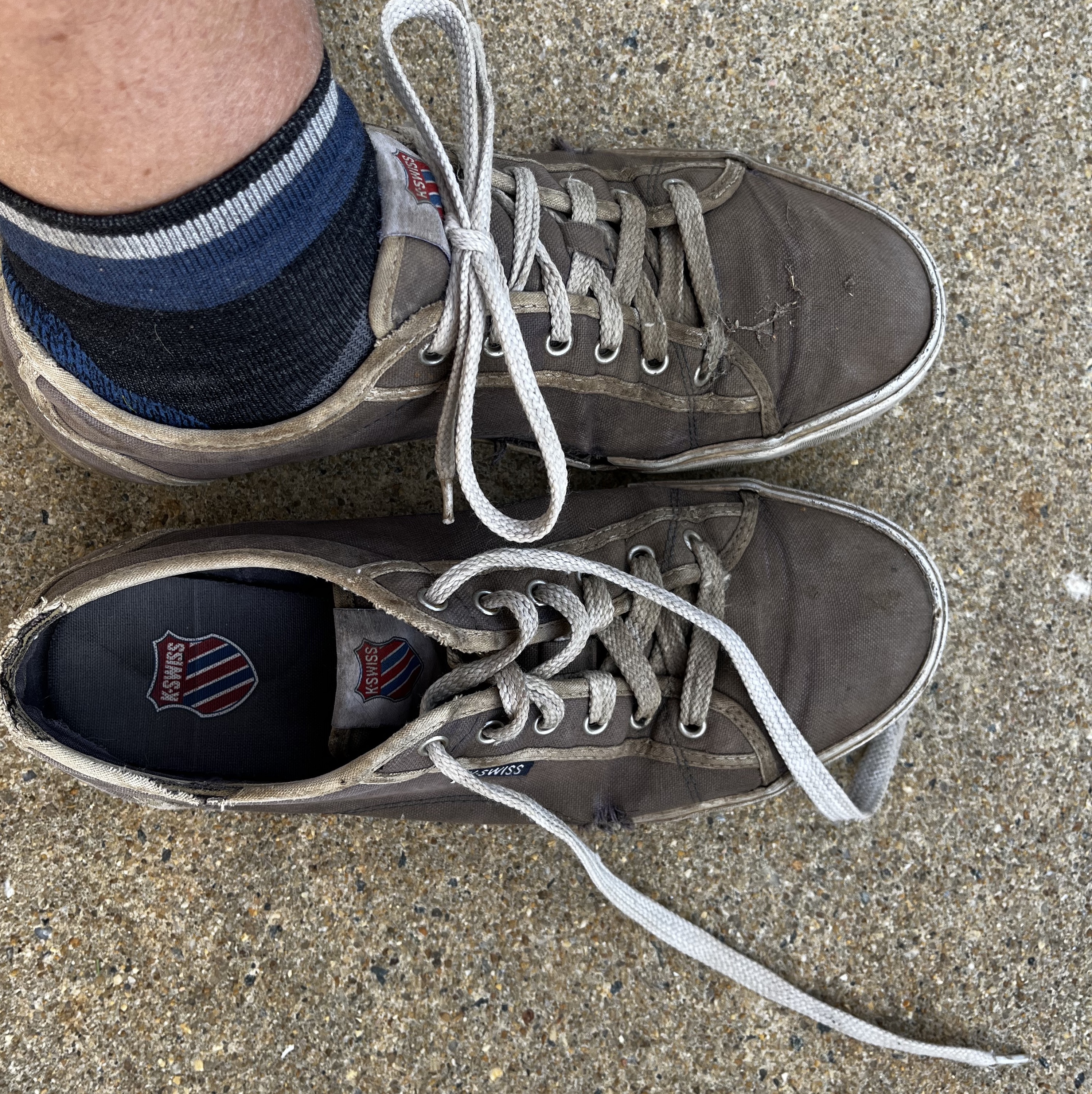
So yes, I agreed for the most part that “Nothing is built to last” anymore. But then I thought of shoelaces.

Remember when you had to replace shoelaces? When you had to keep extras on hand because they always broke just when you were hurriedly tying a knot to catch the bus for school? Or when you’re trying to get your gym shoes on for phys ed?

And weren’t the only shoelaces available in the catch-all drawer never the color or length you needed? Lots of white laces in the draw when you needed black and vice versa. Don’t even talk to me about brown.

Now the laces in my shoes, from court shoes, to hiking boots to dress shoes outlast the shoes themselves. My sole was falling off my 35-year old Vasque Sundowner hiking boots, but the laces are unfrayed. How DO they do that?

And cars.

Car buffs wax nostalgic about the autos of our youth, but our love affair with those massive, ungainly hunks of American steel was more about style than quality or agility. They burned gas like the sun burns hydrogen.

I became a writer because I couldn’t fix cars. All my buddies, it seemed, knew how to adjust a carburetor, or set the gap on a spark plug, or adjust the timing belt. I knew where the gas went. And I could change a tire.

But, what future awaited in my rural Wisconsin community if I knew nothing about cars and didn’t have a farm to inherit? Cars are another thing better today than a generation ago. Even Car and Driver magazine says, “Cars these days are made to last much longer than those produced even a few decades ago.” Reason being, “car parts are now constructed to withstand more wear than in the past.”

New cars are basically computers on wheels. Electronic eyes can keep a safe distance between you and the car ahead; can keep your vehicle centered in the lane; go 5,000-7000 miles between oil changes; are just getting warmed up at 100,000 miles on the odometer.

Of course, people are driving more today. Commutes of 45 minutes each way are common and longer distances are not unheard of. But no one had 100,000 miles on a car when I was a kid. A guy would hesitate to buy a used car with half that mileage.

 And then there is the elastic that holds up my socks, and keeps my boxer briefs from falling off my hips. My socks never stayed up when I was a kid, and the elastic waistband in my underwear didn’t last many rounds through the wringer washer before they collapsed in their effort to stay aloft.

Today the elastic in my socks could cut off my circulation and that in my waistband could be a tourniquet for an elephant’s mangled leg.

So, it’s not true that nothing is as good or as long lasting as it once was. And if you argue about it, I’m going to throw my Walkman at you and tie you to the broken fridge in my garage.

Going to need extra chairs

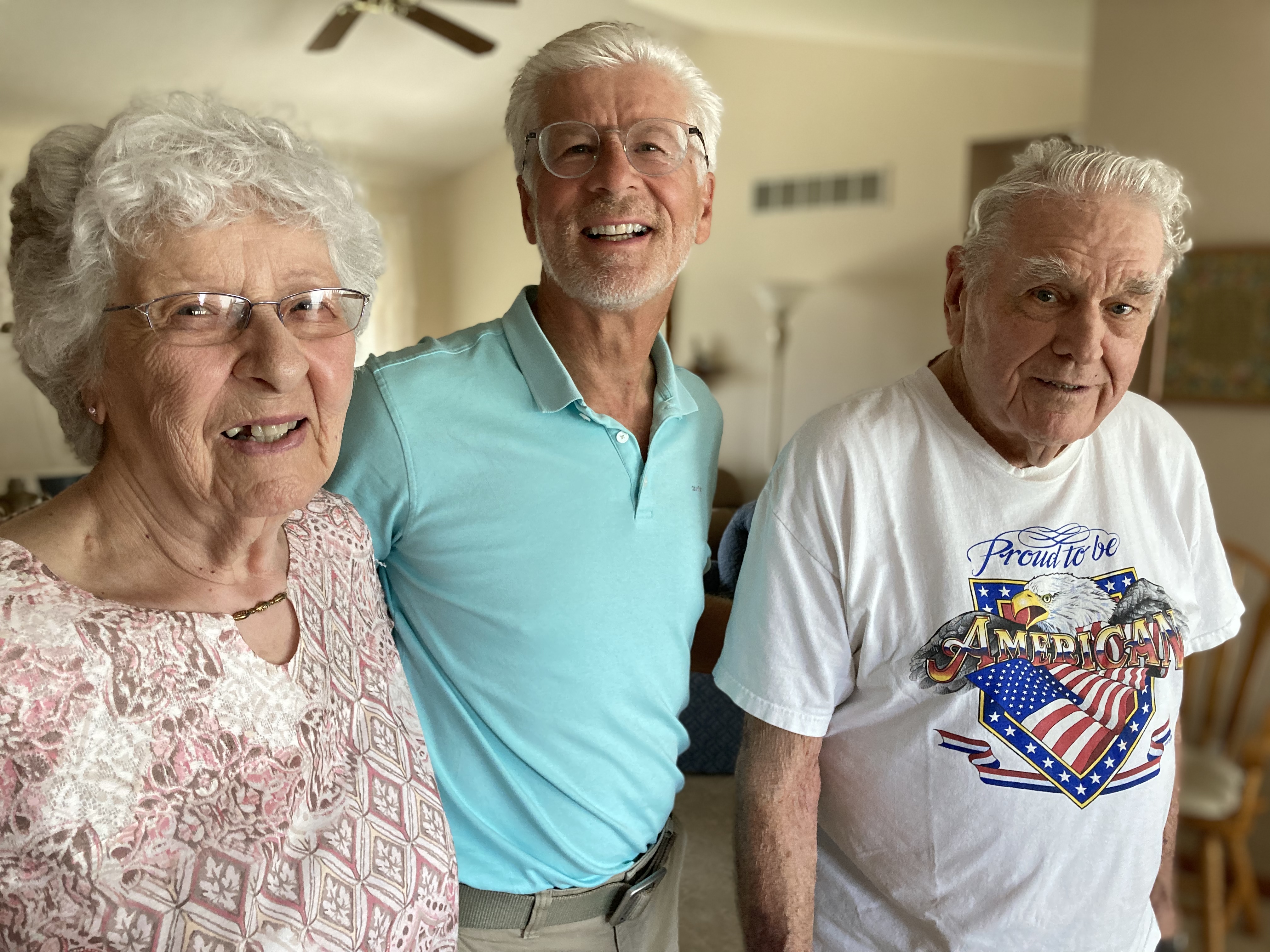
Me in the middle, with Janet and Bill in 2021.

When my grandmother died in 1979, I drove my young wife and one-month old son from our home in Nashville, TN to the funeral in Wisconsin. Grandma was young enough to have a large funeral, just 72 years old. My age.

Of course, in Rio, WI, population 788, funerals were as big a social event as Friday night football at the field in Fireman’s Park. I didn’t play football. I ran cross country instead, which I convinced myself was harder.

But I was at the football games, either running the sideline keeping stats, or in the stands playing “CHARGE” on my trombone.

After grandma’s funeral service at Redeemer Lutheran, one of six churches in town – equal to the number of bars – everyone gathered in the church basement for a lunch prepared by women of the church. Because the meal was free, and there wasn’t much else happening in town that day, the room was crowded.

My wife was most concerned with the one-month old son not accustomed to the noise and crowd and whose only real concern was keeping his tummy full and his diaper dry. So, he started fussing and wailing and that’s not the sound you want to hear piercing the din of chattery family members chowing down on store bought dinner rolls filled with a slice of ham and a slab of butter, potato salad and red Jell-O with marshmallows.

Suddenly, from across the entire fellowship hall, packed hip to hip at the folding tables, my aunt Janet yelled, “Give that boy some titty!”

Now, in another context other than a rural Wisconsin farming community, that comment might have seemed out of place, even impolite. Certainly it caused all the blood in my wife’s body to flush to her toes and then recongregate in her face, making her flush a brighter red than the Rio High School Vikings mascot. But, it also gave her the freedom to excuse herself, find a quiet Sunday School classroom, and take care of our son’s immediate need.

Aunt Janet died this week, at age 91. She was my mother’s last surviving sibling and mom preceded her in death by 29 years. They were two of eight siblings, prompting my grandpa McFarlane to say he had “Two and a half-dozen children.” When grandma McFarlane died, petty sibling grievances broke familial bonds and later on, as one sibling after another died, obituaries did not list all surviving family members, as if they never existed.

But Aunt Janet was always a friend, in part due to the loquacious character of her husband, Bill, a former police officer and much longer a seed corn salesman who knew every farmer and what they needed most. Bill preceded her in death by three years.

I confess Janet’s was the first bare breast I ever saw, as I stood wide-eyed at age five while she fed her first born son, Mark, a man who grew up to be a Presbyterian pastor, nurtured as he was on the milk of human kindness. He could preach from I Peter 2, “Like newborn babies, crave pure spiritual milk, so that by it you may grow up in your salvation.”

Janet and Bill had five children and 10 grandchildren and money never flowed like water over Niagara. Janet always put her hand to the wheel to find additional resources, driving school bus for more than two decades and making wedding cakes for lucky brides and grooms.

She looked at driving bus as ministry, taking the opportunity to offer a bright, encouraging word to children with dour faces, lifting heavy, reluctant feet up the step on the way to school.

She was certain of opinion and ready with advice.

When Janet learned my cousin Allen smoked, she asked if he would rather kiss a girl or an ashtray. Allen, sarcastically defending his nasty habit, told me he responded “Ashtray.” He’s since grown beyond that – both in girls and habit.

 Janet and Bill built a house on a hill overlooking that of her mother Eva and she was diligent in looking after her mother to the end. Eva –my grandmother on my mother’s side – expressed concern that bad weather would limit the size of her funeral. She was mentally comparing her eventual celebration to the big crowd that showed up for her husband’s sendoff. In her mind, her funeral would suffer by comparison and somehow that would reflect negatively on her life.

Though such comparison is a false equivalency, if every person whose life Janet affected positively were to attend her funeral, ushers will need to bring in extra chairs.

Two Ways To Do It

I grew up working with and for my Norwegian bachelor farmer uncle Donnie, who made a living milking 19 cows on 80 sandy acres in southern Wisconsin. As a kid I tried to impress him with my strength by carrying 40 pound buckets of milk to the cooling tank when I didn’t weigh much more than twice that. I struggled to make it look easy, but he knew it took all I had.

I get to practice what i learned while young at White Horse Farm in Pennsylvania, where my son’s family lives.

In the ‘60s corn had to be cultivated to keep the weeds down before “poison ready” genetically modified seed became the norm. So I’d sit on the tractor with Don as he drove the little plows through two rows at a time to dig out the weeds. If he hit a stone or lost concentration and the cultivator dug out some corn, I’d hop off, stick it back into the ground, and run to catch up.

Building or repairing barbed wire fence, learning how to drive tractor and truck, milk a cow and slop a pig, being rewarded with a chocolate milk and donut at the Midget Kitchen on Hwy. 16 all were part of my kinetic education – along with learning how to understand the punchline of coarse jokes.

Once I reached about age 13 my services were much in demand by local farmers who needed help detasseling corn, baling hay, picking stones or cleaning out stalls and stables. I was a tall, thin kid who was young Sheldon in the classroom and who saw Arnold Schwarzenegger in the mirror.

Our local farmers were basically one-man-and-a-son operations, and I replaced the boy who had grown and gone to the city. To make hay while the sun shined, we cut the alfalfa, let it dry for three days and hoped for no rain. Then we raked it into windrows, scooped it up and compacted it into 40-50 pound bales with a tractor pulling a baler pulling a wagon with a kid on the wagon stacking the bales.

Most generally it was me and the farmer – baling, loading, unloading onto an elevator and stacking in the barn. There were two kinds of farmers when it came to engaging my services on a hot summer day. One I’ll call Uncle Donnie’s way, on account of it’s about my Uncle Donnie. The other I could call “the efficient way,” on account of it’s the opposite of my Uncle Donnie.

When Uncle Don picked me up in the morning, we’d get to the farm and have to gas up the tractor, grease the baler and put in baling twine, hook the baler to the tractor, connect the power takeoff shaft and move the elevator into position to carry the bales up into the hay mow. It wasn’t unusual for us to have round up a wagon or two that a neighbor farmer had borrowed.

All the while I’m looking at all that hay, laying expectantly in windrows in the field, itching to get out there and get started, knowing it was going to be a long day. And it was threatening to rain.

Farmers committed to “the efficient way” and to getting all the work out of me they could, completed all the preliminaries before I got there. The baler was greased and hooked to the tractor, which was gassed and ready. The elevator was in place, all the necessary wagons were lined up, and mother had lunch in the oven.

We got twice as much done in half the time. And there are few things as satisfying as looking over a freshly harvested field, seeing it cut and clean and all the hay is in the barn before the rain comes.

That, and the fact that the more efficient farmers tended to pay $1.25 an hour, rather than $1.00.

Readiness makes the difference. Many of you work with non-profit organizations. Respect the time of your volunteers. Don’t let them show up on a work day or at a fund raising event and have to stand around and twiddle their thumbs. If they are volunteer tutors, have a student already selected and matched.

Then, let it rain.

Carting away your history

Strangers carted away my friend’s history yesterday, piece by piece.

An auctioneer’s singsong cajoling held Dave’s life up for examination and bid. Chains, tractors, implements, house furniture, fuel tanks, rakes and hoes all appraised unemotionally for their “value” by area farmers hoping to find a deal, make a steal.

Dave’s farm, eight curvy, hilly miles from any main road, looked like a Ford dealership, as 120 trucks – at least 100 of them Ford F150s, 250s and 350s – parked nose first along the edge of the cornfield like piglets nursing. Amish neighbors in their round straw hats parked their buggies in the yard, and tied their horses to a shade tree. An early morning deluge left the grounds muddy but didn’t discourage potential buyers from picking at the accumulated instruments of Dave’s farming life.

Dave is in the second year of an ALS diagnosis and at age 72 he’d decided to sell the farm where he’d lived 46 years, raising his three children in a Trumanesque environment in rural Pennsylvania.

He is slowly losing muscle strength everywhere but in his smile.

When major items like his John Deere tractors didn’t sell for what he’d hoped, he shrugged and said, “Let’em go.” Trying to sell them on the open market later, hoping for a more equitable price, was just too much trouble to contemplate.

Dave and his dad built the house atop the hill, where his wife huddled now with a long-time neighbor to avoid seeing four decades of her life picked over, devalued and carted away. The house wasn’t quite finished in time for their first child to come home to it from the hospital. But it was finished two weeks later and she’s lived there ever since.

Dave decided to sell the house, barns and 45 acres on which he’d lived his entire adult life so that Debbie wouldn’t have to…later. Once decided, his second son, Mark, drove him through the rural neighborhood to pass out flyers announcing the sale. They left fliers with neighbors who Mark knew did not have the means as potential buyers, but he eventually realized he was driving his father around on a farewell tour.

“He just wanted to say goodbye to the neighbors he’d known for 45 years,” Mark said. When Mark realized that, he settled in and enjoyed the ritual.

The man who’d purchased the farm was present at the auction. He’d bought it for his daughter and son-in-law as a place to raise their children, in rural Pennsylvania, giving them the benefit of idyllic life in rolling hills, among Amish farmers, an area where church and school are the gravitational centers of community life.

Dave’s adult children and their spouses were present and helping. Grandchildren roamed through the barns for the last time, daringly climbing steep ladders to where hay once was stacked high, making sure that mom and dad saw their accomplishment. Dave’s sons recounted adventures with tractors, camping in the woods, trapping ground hogs and shooting that would make their survival a mystery.

This was their home being carted away on the backs of trucks and trailers. They weren’t sad – yet. The hard decision had already been made – to sell the farm and auction off the equipment. This was just the physical manifestation of their decision.

But, when the last cabinet was pushed into the back of a minivan; and the last tractor was loaded onto a flatbed; when the camper the grandkids slept in the night before rolled away behind a pickup, the somber reality settled over the property like an early morning fog settles into valleys.

I hugged each goodbye, Dave’s arms limp at his sides, and thanked them for including me in their family. Through thick and thin, good times or bad, through the struggles inevitably ahead, he’s my brother and the auction was another milestone toward “next.”

One is the loneliest number

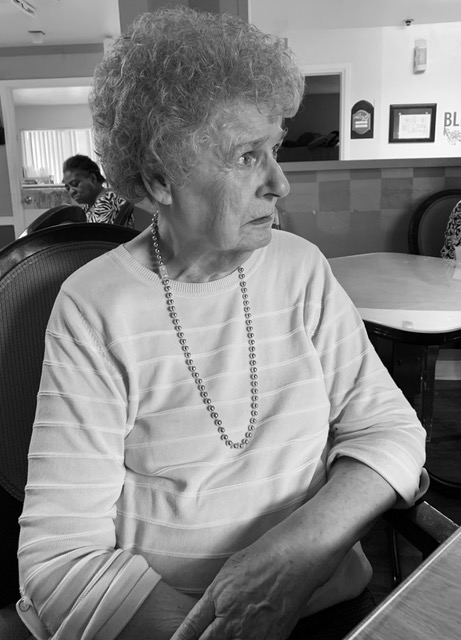
My mother-in-law, during last days in nursing care.

In August 1971 anonymous government functionaries conducted a lottery to determine the order in which 19-year-old boys would be drafted into the Army, thousands of them eventually to die in the politicians’ war in Viet Nam.

They drew my birthday first. No. 1. It was the only thing I’ve ever “won” except a case of beer at the Rio Fireman’s Picnic, and the hand of my wife. I was too young to claim the beer, and my wife was almost too young to marry.

From that day on, the musical hit “One” by Three Dog Night became the soundtrack of my life as I went off to college, hoping to get a semester in before I received my draft notice. It’s resounding assertion that “One is the loneliest number that you’ll ever do,” pounded time after time out of my reel-to-reel tape player, putting to music the angst of a life on hold.

“One is the loneliest number that you’ll ever do…

“It’s just no good anymore since you went away

“Now I spend my time just making rhymes of yesterday.”

Then the resounding, pounding refrain:

“One is the loneliest number

“One is the loneliest number

“One is the loneliest number that you’ll ever do.”

Every time that song surfaced on the radio or in sequence on my Three Dog Night album, I sank emotionally. No. 1 in the lottery. Draft certain. One is the loneliest number. The saddest experience.

Thoughts of “one” and being alone jumped at me recently while I stood in line for a table at southeastern America’s food oasis, Cracker Barrel. It hit me when the hostess asked the lady ahead of me, “How many?” and she responded, “One.” The loneliest number.

A sudden sadness for her and others being alone hit me like a gut punch through a curtain of memory.

One is the loneliest number that you’ll ever do.  And it’s a growing trend in America. We’re in an epidemic of loneliness. It’s not just aging widows and widowers. It’s younger people isolated by screens who possess no ability to communicate with real, live people.

Lacking meaningful, human to human connection can increase the risk for premature death to levels comparable to smoking 15 cigarettes a day, according to an advisory from U.S. Surgeon General Vivek Murthy.

We once called on a young man who visited our church to encourage him to become involved. He said he walks into his apartment on Friday night after work and doesn’t leave it until Monday morning. Week after week. Crawling out to visit the single adult class we led was a major effort.

The prevalence of single-person households is unprecedented historically,  rising from seven million to 38 million since 1960. 

I don’t equate “being alone” with loneliness or depression, but community involvement and social interaction is the leading indicator for health in senior adults. Of course many single adults lead vigorous, joyful, involved lives and God bless them.

It’s just that as I approach my 48th wedding anniversary I know the deep satisfaction life with a loving partner brings. I think of the shared joys, sorrows and triumphs of raising our three children, and of their loving spouses and our seven grandchildren. I would wish that common good for anyone.

Beyond that, what are the implications for a society in which so many of its members live as single, unaffiliated, isolated souls? Think – as I’m sure they are – of long term health, housing, community, end of life?

And yet, one out of four of today’s 50-year-olds will have been single their whole lives. Never married, never partnered.

Social isolation is associated with a higher risk of dementia and other serious health problems in older adults — while having positive social relationships can help people live longer, healthier lives.

In other parts of the world, nearly four in ten older adults live with extended family, an arrangement that mitigates aloneness. But older adults in the U.S. rarely live with family. 

Our culture almost demands we go it alone, that we not “need” anyone or anything. Yet that is not the preferred condition of most single adults I know.

And when the person ahead of me is asked, “How many?” her “One,” sounds like the saddest experience she’ll ever do.

“I never thought about it”

Much of the remodeling and landscape work on my son’s renovation of a 200-year-old house and barn in Pennsylvania is being done by Amish. Their work is exemplary, consistent and dependable.

Amish settled in southeastern Pennsylvania in the 1720s, leaving behind in Europe the persecution of their “strange” and separatist beliefs. Amish emphasize humility, family, community and separation from the non-Amish world, which includes a reluctance to adopt modern conveniences such as cars and electricity.

The Pennsylvania Amish community in Lancaster County is the largest in the United States, numbering about 30,000, double its size of 20 years ago. They’re distinctive for their simple dress, beards, bonnets and horse drawn buggies.

We wanted to give visiting relatives an authentic Amish experience, without being “ugly Americans” who gawk or get our legs caught in tourist traps that exploit this set apart people. So, who better to ask for advice than Aaron, a white bearded, retired farmer now working for his son’s landscaping company on our project.

To my delight, Aaron suggested simply that if we wanted to experience Amish life in Lancaster County, “Come to my farm. I’ll show you around.” We made a date two weeks hence.

I texted a couple days before the appointment and was concerned that I didn’t hear back. But on a beautiful fall afternoon we pulled into his manicured yard and Aaron and Barbie, his wife of 40 years, appeared immediately. Since they hadn’t heard from me, they wondered if we were coming.

I mentioned the text I sent earlier. Then we both laughed. Their telephone is in a building separate from the house, to be used for business purposes only, and of course, is not mobile.

We took seats in their recently constructed house, modern and perfect in every way except that there are no electrical outlets, nor lamps, nor counter appliances, nor overhead lights. Designed to let in lots of sunlight, a propane tank on wheels with a filament bulb on a tall rod provided light when darkness falls.

A propane powered refrigerator graced the kitchen. While electricity is considered a convenience too worldly, workarounds with generators for power are apparent in the barns. Rules and restrictions governing humility and simplicity vary by area bishop.

We asked Aaron why farm implements roll on bare steel wheels, with no rubber tires. He said it’s a bishop’s rule to keep people from going fast.

Daily life is guided by simplicity and a pace slow enough to appreciate the smell of freshly turned earth or cut grass or a grandson’s grasp of your leg as you walk the fields together. No doubt outsiders romanticize these things about Amish life, but the truth is starker. Anyone dependent on modern conveniences woven so completely and unconsciously into daily life that we don’t even realize our dependence, would find it very difficult to shed them in favor of a slower, harder, more deliberate life.

For that reason, Aaron said, they do not encourage people not born into the Amish community to “convert” to their faith and culture.

As a young sharecropper, my grandfather walked behind a mule pulling a plow. But when he gained access to a tractor, he embraced the innovation and convenience wholeheartedly. Amish farmers are content with their mules. Whether tractors, telephones, automobiles or microwave ovens, they recognize that innovations do not necessarily contribute to a better, fuller, deeper life.

Sitting together in a comfortable living room, a Bible and reading glasses atop a small table by their chairs, we asked this 62-year-old couple if they were granted permission to embrace any single modern convenience – the kind of utility they see every day as they live among “outsiders” – what might it be?

Silence.

After a while I suggested to Barbie that I thought she might say “electricity.” She smiled meekly and said, “I considered that.” When pressed for his answer, Aaron said, “I’ve never thought about it.”

Whoa.

Aaron farmed 50 acres with mules, raised eight children, six of whom have 33 children, raises dogs and tobacco for extra income, gave the farm to a son and now works another son’s landscaping business, is a stalwart in church and community, and he’s never thought about what mechanical, transportation, electrical, communication tool available to others he might like for himself?

All the while he lives among outsiders who think camping out overnight to be first in line for a new phone model is logical and that instant gratification is too slow. We’re bombarded by constant messages that we will be happier if we grasp, strive and reach for the next purchase, entertainment, or experience that will somehow endow us with the satisfaction Aaron has just by living a simple life in a caring community of like-minded folks.

“Content” is the only word to describe a man whose lifestyle barricades him against the onslaught of television and social media, who has never thought about embracing modern conveniences. He is content and committed to a way of life that is set apart, not conforming to the world. Romans 12:2 He evidently thinks about such things no more than a fish considers water.

Few modern Christians are consciously set apart from the world. Our most significant symbol – the cross – has been so co-opted and adulterated that it no longer retains significance as a Christian symbol.

Maybe that’s why we admire the simple, quiet, slow – contented – pace of Amish life.

Before I met Aaron, I’d never thought about it.