Two Ways To Do It

I grew up working with and for my Norwegian bachelor farmer uncle Donnie, who made a living milking 19 cows on 80 sandy acres in southern Wisconsin. As a kid I tried to impress him with my strength by carrying 40 pound buckets of milk to the cooling tank when I didn’t weigh much more than twice that. I struggled to make it look easy, but he knew it took all I had.
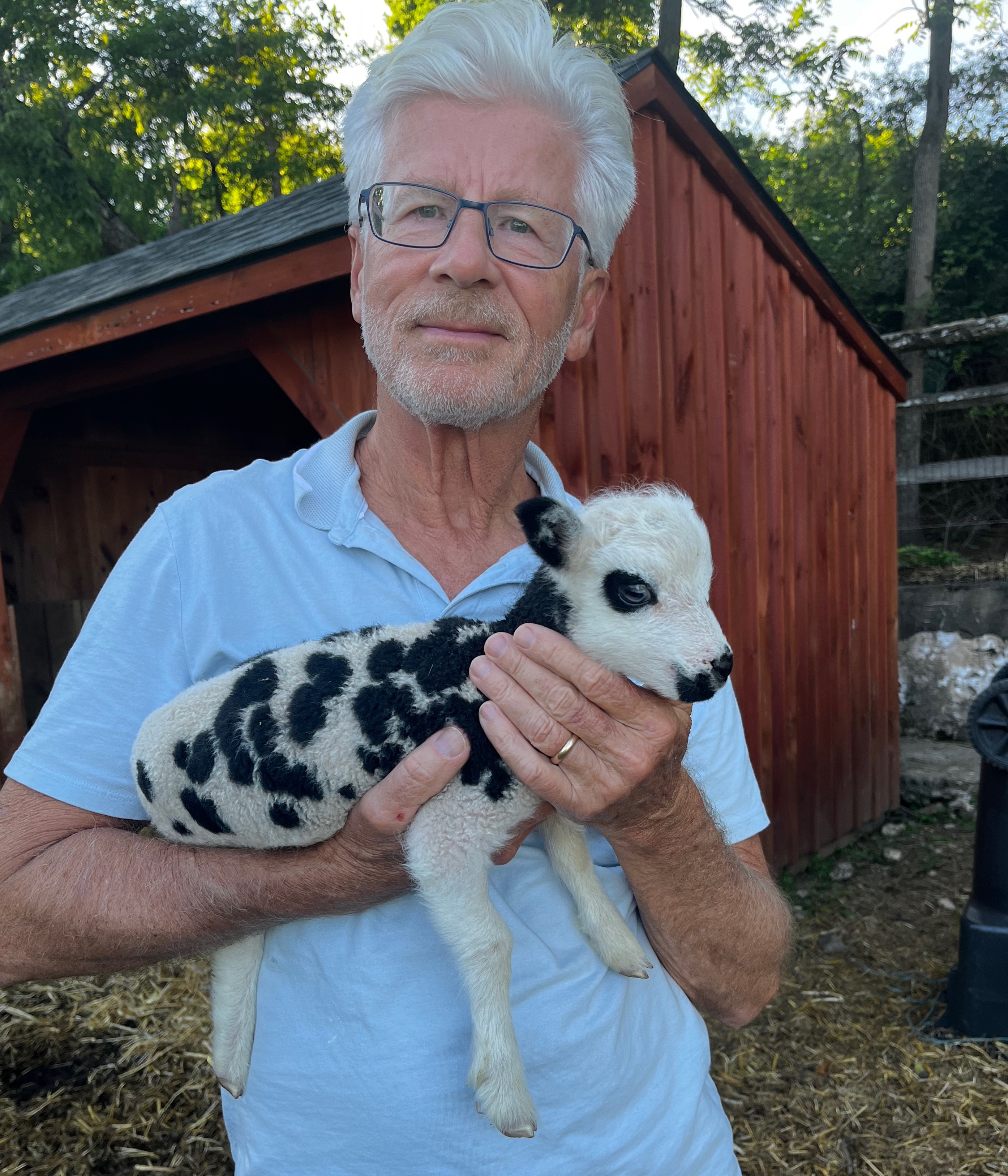
I get to practice what i learned while young at White Horse Farm in Pennsylvania, where my son’s family lives.

In the ‘60s corn had to be cultivated to keep the weeds down before “poison ready” genetically modified seed became the norm. So I’d sit on the tractor with Don as he drove the little plows through two rows at a time to dig out the weeds. If he hit a stone or lost concentration and the cultivator dug out some corn, I’d hop off, stick it back into the ground, and run to catch up.

Building or repairing barbed wire fence, learning how to drive tractor and truck, milk a cow and slop a pig, being rewarded with a chocolate milk and donut at the Midget Kitchen on Hwy. 16 all were part of my kinetic education – along with learning how to understand the punchline of coarse jokes.

Once I reached about age 13 my services were much in demand by local farmers who needed help detasseling corn, baling hay, picking stones or cleaning out stalls and stables. I was a tall, thin kid who was young Sheldon in the classroom and who saw Arnold Schwarzenegger in the mirror.

Our local farmers were basically one-man-and-a-son operations, and I replaced the boy who had grown and gone to the city. To make hay while the sun shined, we cut the alfalfa, let it dry for three days and hoped for no rain. Then we raked it into windrows, scooped it up and compacted it into 40-50 pound bales with a tractor pulling a baler pulling a wagon with a kid on the wagon stacking the bales.

Most generally it was me and the farmer – baling, loading, unloading onto an elevator and stacking in the barn. There were two kinds of farmers when it came to engaging my services on a hot summer day. One I’ll call Uncle Donnie’s way, on account of it’s about my Uncle Donnie. The other I could call “the efficient way,” on account of it’s the opposite of my Uncle Donnie.

When Uncle Don picked me up in the morning, we’d get to the farm and have to gas up the tractor, grease the baler and put in baling twine, hook the baler to the tractor, connect the power takeoff shaft and move the elevator into position to carry the bales up into the hay mow. It wasn’t unusual for us to have round up a wagon or two that a neighbor farmer had borrowed.

All the while I’m looking at all that hay, laying expectantly in windrows in the field, itching to get out there and get started, knowing it was going to be a long day. And it was threatening to rain.

Farmers committed to “the efficient way” and to getting all the work out of me they could, completed all the preliminaries before I got there. The baler was greased and hooked to the tractor, which was gassed and ready. The elevator was in place, all the necessary wagons were lined up, and mother had lunch in the oven.

We got twice as much done in half the time. And there are few things as satisfying as looking over a freshly harvested field, seeing it cut and clean and all the hay is in the barn before the rain comes.

That, and the fact that the more efficient farmers tended to pay $1.25 an hour, rather than $1.00.

Readiness makes the difference. Many of you work with non-profit organizations. Respect the time of your volunteers. Don’t let them show up on a work day or at a fund raising event and have to stand around and twiddle their thumbs. If they are volunteer tutors, have a student already selected and matched.

Then, let it rain.
Carting away your history

Strangers carted away my friend’s history yesterday, piece by piece.

An auctioneer’s singsong cajoling held Dave’s life up for examination and bid. Chains, tractors, implements, house furniture, fuel tanks, rakes and hoes all appraised unemotionally for their “value” by area farmers hoping to find a deal, make a steal.

Dave’s farm, eight curvy, hilly miles from any main road, looked like a Ford dealership, as 120 trucks – at least 100 of them Ford F150s, 250s and 350s – parked nose first along the edge of the cornfield like piglets nursing. Amish neighbors in their round straw hats parked their buggies in the yard, and tied their horses to a shade tree. An early morning deluge left the grounds muddy but didn’t discourage potential buyers from picking at the accumulated instruments of Dave’s farming life.

Dave is in the second year of an ALS diagnosis and at age 72 he’d decided to sell the farm where he’d lived 46 years, raising his three children in a Trumanesque environment in rural Pennsylvania.

He is slowly losing muscle strength everywhere but in his smile.

When major items like his John Deere tractors didn’t sell for what he’d hoped, he shrugged and said, “Let’em go.” Trying to sell them on the open market later, hoping for a more equitable price, was just too much trouble to contemplate.

Dave and his dad built the house atop the hill, where his wife huddled now with a long-time neighbor to avoid seeing four decades of her life picked over, devalued and carted away. The house wasn’t quite finished in time for their first child to come home to it from the hospital. But it was finished two weeks later and she’s lived there ever since.

Dave decided to sell the house, barns and 45 acres on which he’d lived his entire adult life so that Debbie wouldn’t have to…later. Once decided, his second son, Mark, drove him through the rural neighborhood to pass out flyers announcing the sale. They left fliers with neighbors who Mark knew did not have the means as potential buyers, but he eventually realized he was driving his father around on a farewell tour.

“He just wanted to say goodbye to the neighbors he’d known for 45 years,” Mark said. When Mark realized that, he settled in and enjoyed the ritual.

The man who’d purchased the farm was present at the auction. He’d bought it for his daughter and son-in-law as a place to raise their children, in rural Pennsylvania, giving them the benefit of idyllic life in rolling hills, among Amish farmers, an area where church and school are the gravitational centers of community life.

Dave’s adult children and their spouses were present and helping. Grandchildren roamed through the barns for the last time, daringly climbing steep ladders to where hay once was stacked high, making sure that mom and dad saw their accomplishment. Dave’s sons recounted adventures with tractors, camping in the woods, trapping ground hogs and shooting that would make their survival a mystery.

This was their home being carted away on the backs of trucks and trailers. They weren’t sad – yet. The hard decision had already been made – to sell the farm and auction off the equipment. This was just the physical manifestation of their decision.

But, when the last cabinet was pushed into the back of a minivan; and the last tractor was loaded onto a flatbed; when the camper the grandkids slept in the night before rolled away behind a pickup, the somber reality settled over the property like an early morning fog settles into valleys.

I hugged each goodbye, Dave’s arms limp at his sides, and thanked them for including me in their family. Through thick and thin, good times or bad, through the struggles inevitably ahead, he’s my brother and the auction was another milestone toward “next.”

Living the John Deere Dream

I wake up each morning plotting my day around any task that will involve the tractor. 

I’m staying for extended periods on my son’s gentleman farm in Pennsylvania, the buildings and 20 acres of what was once a 500-acre dairy farm. All the homes that line Grubbs Mill Road sit on large lots carved out of this farm, which is more than two centuries old.

I try to order my day around tasks that will require me to use the tractor!

While staying in a cottage on the property – a cozy, one bedroom stone building converted some time ago from the dairy’s business office – I wake either to the rooster’s crowing, the goats’ mewling in the pasture just on the other side of my west facing patio doors, or workmen’s trucks pulling in to work on renovating the main house, built in 1811. 

Each day starts with a plethora of small jobs that challenge my brazen hubris that believes man can prevail against nature. 

The property has pastures to mow, fence lines to maintain, yards, flower beds and a garden to tend. House renovations leave rocks, tree limbs and shrubbery around the yard that need to go on the burn pile. Hurricane Ida piled debris along the stream and in the upper pasture; logs lay on the ground to saw and split. There is equipment to maintain and in the midst of it all, four grandkids to ferry to school and various activities. 

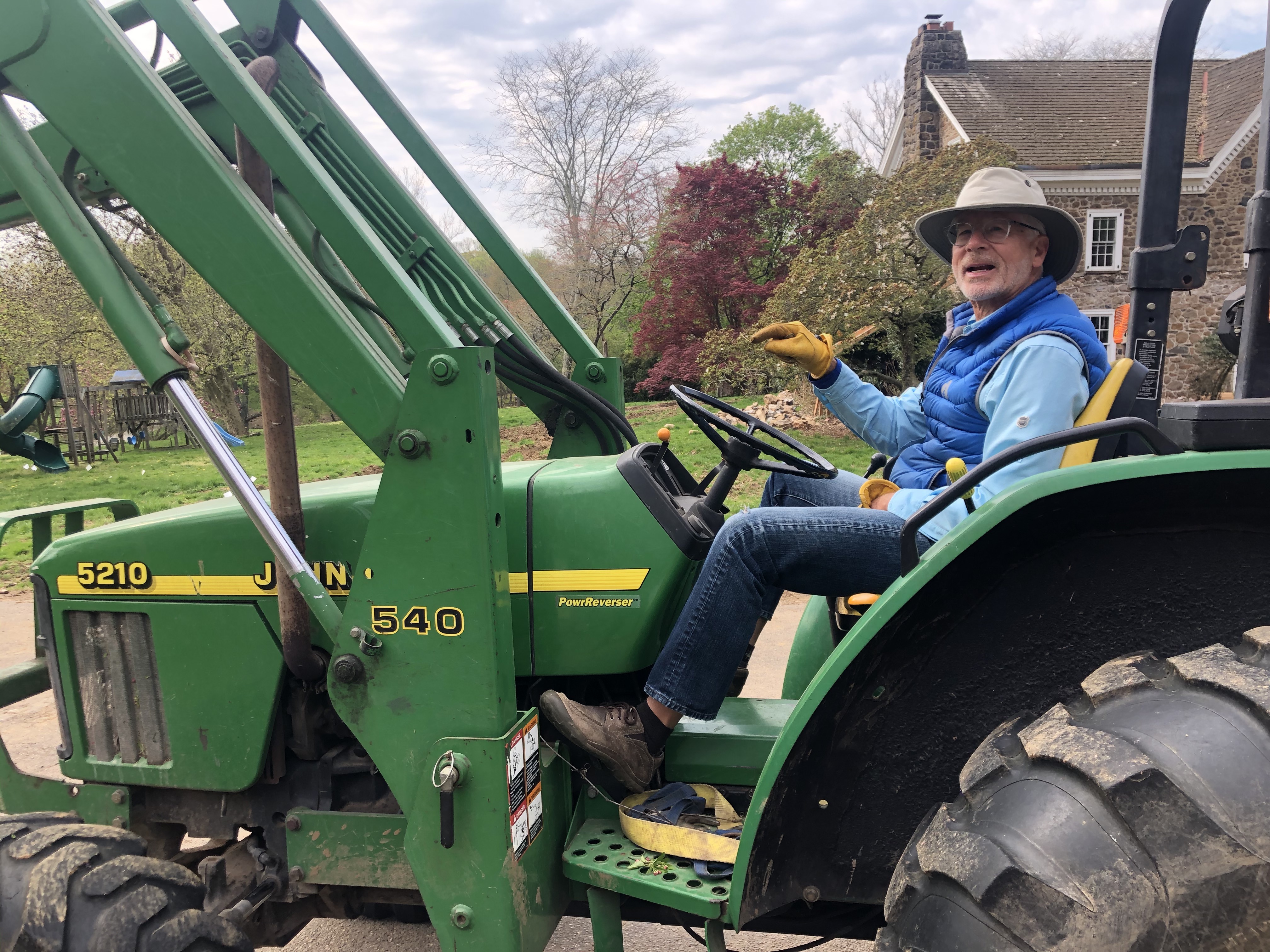
I love to drive the John Deere 5210 diesel tractor with front end loader. It takes me back to the farms on and around where I grew. The tractor on our 80 acres was a little Ford Ferguson. It must have been 25 years old when we got it. It didn’t have brakes then, and we never did get them fixed.

My Norwegian bachelor uncle Don milked 19 cows on his dairy farm and was always looking for help from his nephews. By age 11 I was driving his John Deere B that started by hand cranking a fly wheel, and his Allis-Chalmers and Farmall H tractors. I cut hay and pulled a baler, behind which Don loaded the bales. For four summers after I turned 16 I drove pea combines and sweet corn pickers for the local canning company.

Tractors rumble with power and when you sit atop one, with enough horses at your fingertips to pull a loaded wagon, or scoop up a load of rock, that power ripples through your nerves to give you the sense that you, too, are powerful. 

The Ford Ferguson I grew up with made up with a big heart what it lacked in muscle. 

Our fields laid fallow for several years, taking advantage of the government’s soil bank program, through which it “rented” farm land to keep it out of production – to artificially prop up commodity prices. Because our area was at the leading edge of a glacier eons ago, we were the unfortunate beneficiaries when it melted of all the rocks and stones it had scraped off the surface on its way south.

The annual freeze and thaw cycle pushed those stones to the surface and a regular spring job for farm kids in my area was “picking stones.” We had to get them off the fields to keep them from breaking plant and harvest equipment. 

Some of those stones were boulders as big as our little tractor. Their backs broke the ground like a blue whale about to surface. I’d dig around the boulder, wrap it with a chain and hook it to the tractor which would grunt and belch, straining to pull it out of the ground where we could pry it onto a “stone boat” – a sled of planks – and carry it off to a big hole in the woods.

Our little tractor pulled so hard its front wheels would rise off the ground. To keep the front end grounded and give us better traction, dad had me sit on the tractor’s hood, holding onto the radiator cap. My puny 130 pounds didn’t do much to keep the front wheels on the ground, but it was a fun ride. 

The workhorse John Deere on my son’s farm is a much more substantial tractor. But I had a similar “can’t keep the wheels on the ground” issue with it, this time with the rear wheels. I was using the bucket to try to lift a fence post out of the ground. 

When placed years ago, the post was seated in cement. Succeeding years saw tree roots grow around it. When I tied a strap to the post and pulled up on it with the bucket, I was shocked to feel myself sliding left to right in the air, my rear wheels airborne. It was a very insecure feeling, no matter how fleeting. I quickly lowered the bucket and my rear wheels returned to terra firma. From then, until the post finally broke off, my airborne rides were under conscious control.

My son’s family has been on White Horse Farm only a year. Seven-year-old Juliette describes them as the “White Horse Farmily.” Moving there from a big suburban house that bordered their school was intentional to give the kids a broader understanding of the life cycle, to give them meaningful tasks and thus the satisfaction of achievement, and to learn responsibility in a context where neglect may mean death of an animal.

Like John Denver, life on the farm “is kinda laid back” and that could be frustrating if finished product is the goal. The younger children, ages five and seven, come bright eyed, eager to learn and to help. But, their “help” sometimes prolongs the task and I cringe when dueling pitchforks threaten to knock out a tooth while getting new straw for the chickens.

I’ve learned though, that the most important thing is not the finish. As my son reassured me, working with the kids is not about efficiency, it’s about process. And we’re in the process of growing up, growing together, learning and living in an intergenerational context. 

And tomorrow I get to hook up the brush hog and cut the pasture. With the tractor.