Are you as good as dead?

While collecting shellfish in Australia, Eric Nerhus was bitten almost in half and swallowed by a 10-foot shark.

Swimming 25 feet below the surface, Nerhus, 41, was grabbed over his head by the shark, which took half of Nerhus’ body into his mouth. He was as good as dead.

Thinking quickly, he reached up and poked the shark’s eyes with the chisel he used to collect abalone.  The shark open its mouth and Nehus wriggled out.

Nerhus estimates he spent two minutes inside the shark’s mouth and said his chest was protected from the shark’s sharp teeth by the lead-lined vest used to weight him down as he scoured the ocean floor. He swam to the surface in a cloud of his own blood, where his son helped him into the boat and rushed him to a hospital.

The 2010 movie “127 Hours” featured the dramatic story of Aron Ralston whose arm was pinned to a rock wall by a suddenly shifting boulder while he hiked Utah’s Blue John Canyon.

No matter what he tried to dislodge his arm, he was trapped. After four days his water ran out and he drank his urine. On the sixth day, Ralston realized he was as good as dead.

Then the 27-year-old mountain climber did what he’d always known he had to do, but could not bring himself to do when he thought there was an option. Using his own body weight for leverage, he broke both the bones in his forearm. Then, with his pocketknife Ralston cut off his arm below the elbow and applied a tourniquet. He then rappelled 60 feet to the canyon floor and started walking.

He walked seven miles before encountering two tourists who called for a rescue helicopter.  

What’s the point?

Neither Eric Nerhus nor Aron Ralston are dead. At that point in their lives when there was no prospect for more life – when they were as good as dead – they found a way.

Ever thought you were “as good as dead?”  Or wished you were?

  • In the midst of company chaos, your boss approaches you with a grim face;
  • A truck in the approaching lane veers into yours;
  • You discover your father’s debilitating illness is hereditary;
  • At a conference in his office, your docor leans forward and says, “I’m sorry.”
  • Your job loss has led to anxiety, depression and a mortgage foreclosure;
  • You face an impossible financial burden to make good for a child’s accident, illness or bad mistake;
  • A dark secret you’ve carried is suddenly revealed.

Jesus’ friend Lazarus was not only as good as dead. He WAS dead. Then Jesus exercised his power of life over death and he raised Lazarus, demonstrating to us though we be as good as dead, we still possess the life option.

The same is true for a host of other biblical characters. Young David could have killed King Saul (I Sam. 24) when Saul was relieving himself in a cave and David crept in behind him and cut off a piece of his robe. Saul was as good as dead and didn’t even know it.

Joseph had a coat of many colors (Genesis 37), and was his father’s favorite, when his jealous brothers threw him into a cistern to die. He was as good as dead.  

Shadrach Meshach and Abednego were thrown into the fiery furnace; Daniel was tossed to the lions; Jonah was swallowed by the great fish; the adulterous woman dragged for stoning by an angry mob.

Why did God rescue them? Because God had a higher purpose for their lives and something in that near death experience equipped them for that purpose like nothing else could!

Your faith isn’t feeble in the face of life threatening odds. It’s most flaccid when you operate only in the realm of your own abilities, when you’re deluded enough to think you can “do it yourself.”

My favorite traditional hymn is “A Mighty Fortress is Our God.” Verse two says, “Did we in our own strength confide, our striving would be losing.”

Remember, when your dreams and promises appear to be as good as dead – yet they breathe. Aron Ralston wandered out of the dessert after cutting off his own arm. Eric Nerhus fishes again. Childless Abraham, whose body the Bible says was as good as dead, became the father of a nation.

Senior adult groups have many adorable names. One of my favorites is the ADY – Ain’t Dead Yet – Club. Circumstances may conspire to make you feel you’re as good as dead, but guess what.

You Ain’t Dead Yet.
‘Nothing lasts like it used to’

I once took it as irrefutable truth that “Nothing lasts like it used to.”

For the most part, I agreed that manufacturers were “building in obsolescence” so you’ll have to replace that refrigerator you’ve had for 25 years with a new one you can expect to last only 10 at best.

It’s easier and cheaper to replace appliances than it is to repair them. Good for the manufacturers, bad for service repairmen.

Credit that brief functional life to plastic parts. While it may take 10,000 years to decay in the landfill, plastic in the essential workings of everyday products seem to decay in 10 months. Plastic is so pervasive that we don’t even realize how many items that once were made were made with metal or wood and were strong enough to become heirlooms are now made with plastic and won’t get your kid through kindergarten.

To start a list of all things plastic would require more capacity than my computer has. You may be reading this through lenses held to your nose with plastic frames. You bring home groceries in plastic bags, or get fast food through your car window in plastic containers. Plastic is often useful but nothing plastic can be expected to last long enough for your child to use it as an adult.

Yet, I’m still using an electric grinder my dad used to sharpen the ax he handed me to split firewood. A brass lawn sprinkler I finally sprung for has outlasted a dozen plastic sprinklers.

So yes, I agreed for the most part that “Nothing is built to last” anymore. But then I thought of shoelaces.

Remember when you had to replace shoelaces? When you had to keep extras on hand because they always broke just when you were hurriedly tying a knot to catch the bus for school? Or when you’re trying to get your gym shoes on for phys ed?

And weren’t the only shoelaces available in the catch-all drawer never the color or length you needed? Lots of white laces in the draw when you needed black and vice versa. Don’t even talk to me about brown.

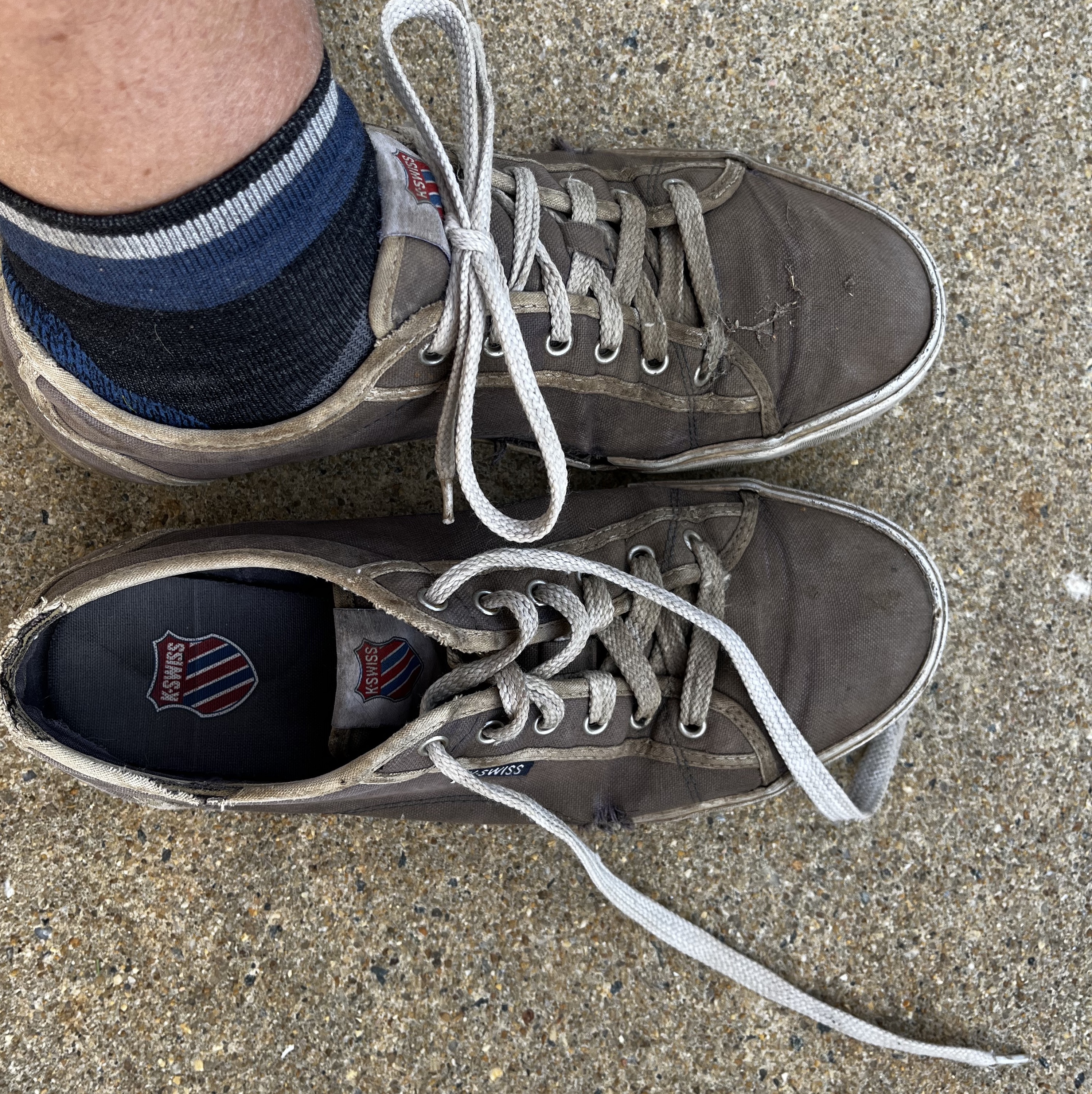
Now the laces in my shoes, from court shoes, to hiking boots to dress shoes outlast the shoes themselves. My sole was falling off my 35-year old Vasque Sundowner hiking boots, but the laces are unfrayed. How DO they do that?

And cars.

Car buffs wax nostalgic about the autos of our youth, but our love affair with those massive, ungainly hunks of American steel was more about style than quality or agility. They burned gas like the sun burns hydrogen.

I became a writer because I couldn’t fix cars. All my buddies, it seemed, knew how to adjust a carburetor, or set the gap on a spark plug, or adjust the timing belt. I knew where the gas went. And I could change a tire.

But, what future awaited in my rural Wisconsin community if I knew nothing about cars and didn’t have a farm to inherit? Cars are another thing better today than a generation ago. Even Car and Driver magazine says, “Cars these days are made to last much longer than those produced even a few decades ago.” Reason being, “car parts are now constructed to withstand more wear than in the past.”

New cars are basically computers on wheels. Electronic eyes can keep a safe distance between you and the car ahead; can keep your vehicle centered in the lane; go 5,000-7000 miles between oil changes; are just getting warmed up at 100,000 miles on the odometer.

Of course, people are driving more today. Commutes of 45 minutes each way are common and longer distances are not unheard of. But no one had 100,000 miles on a car when I was a kid. A guy would hesitate to buy a used car with half that mileage.

 And then there is the elastic that holds up my socks, and keeps my boxer briefs from falling off my hips. My socks never stayed up when I was a kid, and the elastic waistband in my underwear didn’t last many rounds through the wringer washer before they collapsed in their effort to stay aloft.

Today the elastic in my socks could cut off my circulation and that in my waistband could be a tourniquet for an elephant’s mangled leg.

So, it’s not true that nothing is as good or as long lasting as it once was. And if you argue about it, I’m going to throw my Walkman at you and tie you to the broken fridge in my garage.

What Color is Your Duck?

I was not a self-assured little kid. I lived in the country and wasn’t particularly athletic, didn’t know my way around the terminology of machinery as it seemed my friends did. I was reticent in a crowd of my peers. But I was an early, voracious reader and I felt confident in the classroom.

white duck on grass field

Photo by Christian Bowen on Unsplash

At least until Mrs. Roberts assigned a coloring project that I blew.

Louise Roberts was my first grade teacher. She was lovely, kind and patient. But my most vivid memory of my nine months with her (not the same nine months as each of her sons experienced) is the zero she gave me on a coloring assignment.

I’m quite certain it was she who delivered my first academic trauma. First grade seems right for that kind of project. I doubt it was second grade, because Mrs. McGowan never would have given me a zero.

Mrs. McGowan lived in the county seat of Portage, 14 miles and a half century from my little school in Rio, and possessed a sense of savoir faire. She loved her students enough to invite a select few one at a time to her house in Portage overnight to give them a taste of “city life.” Portage had 10,000 people, to Rio’s 788.

I was one of the lucky chosen for an evening in Portage with Mrs. McGowan and her husband, a local official. She made dinner, then they drove me around the city, and introduced me to city hall and the jail. Come to think of it, maybe she was trying to “scare me straight.” Anyway, she was sweet enough that she would have given me a second chance, not a zero that haunts me 64 years later.

Mrs. Roberts’ assignment simply was to color the animals pictured on the white sheet of paper she distributed. I forget what all the animals were, but the ducks… oh, the ducks.

What color are ducks? In all of my six years of limited exposure to Disney and storybooks in which ducks floated in ponds near where Snow White lay waiting for the kiss that would bring her back to life, or beneath the tower that held Rapunzel, the ducks were white. Pure, innocent, naïve images floating blissfully about the main story characters to remind us that even when things appear to be going smoothly, we need to paddle like crazy.

The ducks I was to color were presented to me on a sheet of white paper. So, very logically, I colored the other animals and left the ducks alone. White ducks on white paper. That’s the color of ducks.

When I got the assignment back with a big ZERO on it, I had the temerity to ask Mrs. Roberts why. She said I didn’t do the assignment because I didn’t color the ducks.  “But ducks are white,” I said, a nascent lawyer arguing for the defense.

“You should at least have colored the bills and feet,” she said. I could see her point, but how about a second chance? Maybe they were albino ducks.

Fortunately, I recovered from that initial academic setback and grew up avoiding drugs, thievery, rock and roll and mayhem.

Thank you Mrs. McGowan.

Sometimes you bite even when you know there’s a hook

Pardon me for a moment, while I pull the hook out of my cheek. Ahhh, there. 

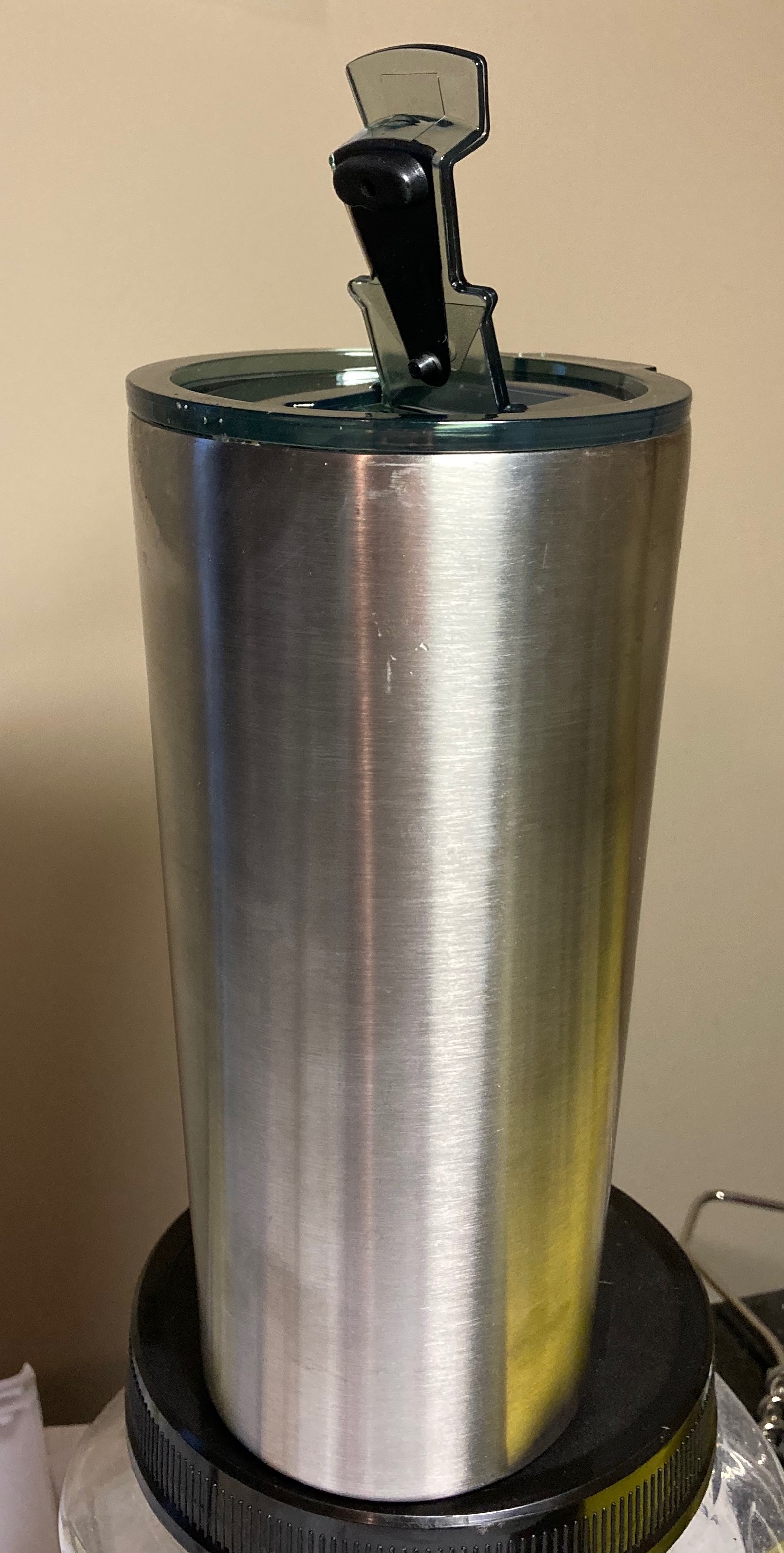
The tractor had no good place to store my cold drink cup and I forgot about it sitting on the floorboard while I brush hogged the pasture last week. Suddenly I heard a clunk behind me that rang an octave lower than the screech of hitting a stone hidden in the thick, tangled mass of long grass. And, it was an octave higher than when I ran the mower over a concealed limb deposited in the same tangle by the floods of Hurricane Ida. 

I looked back quickly to see a gray metal mass skittering across the mowed grass, having been kicked out by one or more of the nine blades spinning beneath the mower deck. My cup. Drat. 

My wife has for the past year been making what she calls fauxbucha – a homemade kombucha…which for her is a vinegar, cayenne, honey and ginger drink that does wonders for our digestive systems and cures a host of ailments: among them constipation, fungus, the national debt and likely the heartbreak of psoriasis.

I drink at least one glass of it a day – over ice from my cold drink cup – which is now a mangled tangle of cheap Chinese metal laying in the field. 

I’m prone to make myself suffer the consequences of my stupidity, so I wasn’t going to rush out and replace the cup. But Sue Ellen knew I wouldn’t be as faithful in consuming her magic elixir if I didn’t have a cup to take with me. So, the hunt. 

We drove to the Walmarts, where she had purchased the original doomed chalice. But, we could not find an exact Walmart brand replacement. Instead, there was a similar Coleman cup for twice the price, or, a Walmart brand cup with a different lid.

Cup, with the important lid.

You might not think the lid makes much of a difference. But, the patriarch of our family is prone to spills and the cup I lost had a magnetic, snap closure over the opening where the drink came out. This one just had a hole. It cost less than the original, but…the lid had just a hole. A juggle or jostle would splatter the drink over my jeans, or Sunday-go-to-meetin’ shirt.

I wasn’t about to get it. Not gonna do it. Wouldn’t be prudent.

About to give up, Sue Ellen spotted a display of snap close lids…made specifically for the cup I wanted – the very lid the original cup had featured. Now sold separately, for just $2.74. In what world would a product’s favored feature be removed and then offered as an option at additional expense? Oh, yeah, in the American marketing world. 

I knew I was had. I felt like a fish eying a dangling worm, knowing a hook lurked inside, but too hungry to care. I resented my hunger. I resented the marketing ploy to put undesirable lids on the cup and then charge extra for the lid I wanted. 

But, I mentally added the $6.94 for the cup with the unacceptable lid, and the $2.74 for the lid that would make the cup acceptable, and found the $9.68 total still to be six dollars less than any other option and I bit the hook. 

Who knew fauxbucha would sting on an open wound?

March of the Memories

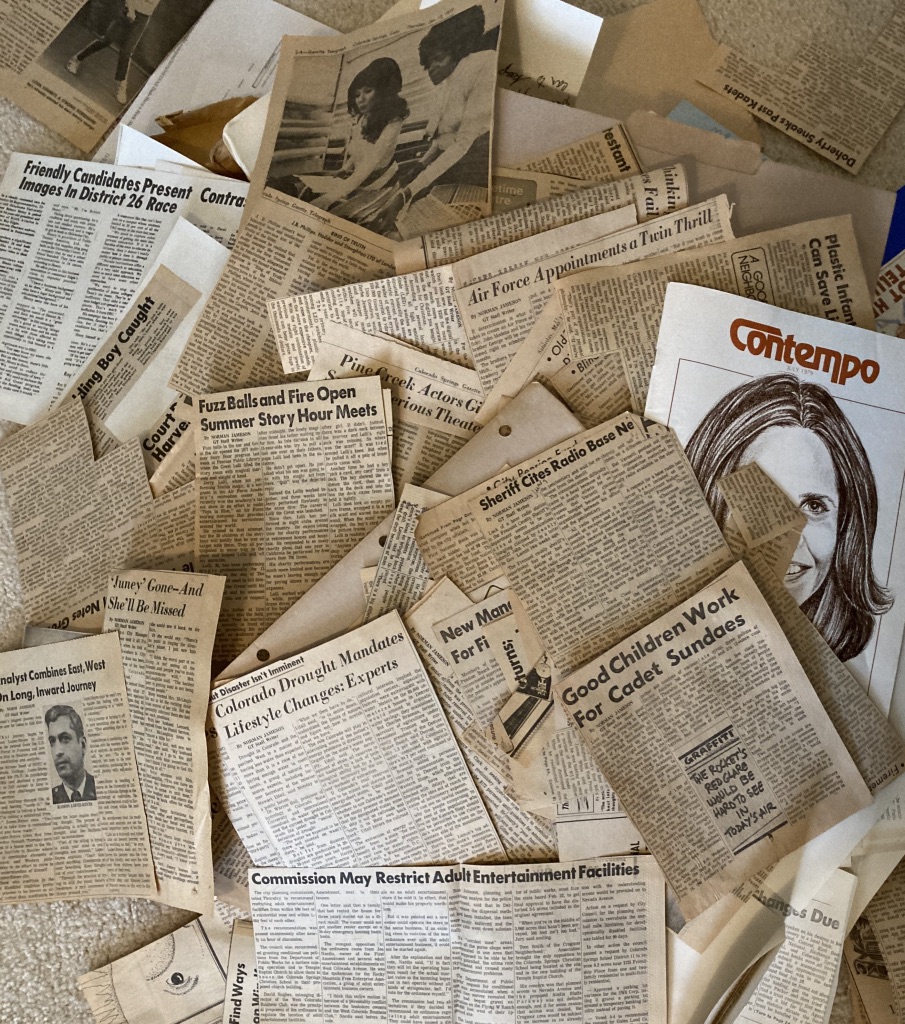
One of the joys of examining the four boxes of clippings and slides I’ve carted through eight states since I started writing for newspapers and magazines in 1971 is the memories prompted by each. The bride of my youth has been after me for years to sort them out – an urging in which she redefines “sort” as “throw.”

In feigned sincerity, I’ve maintained I’m saving those clippings, notes, magazines, reporter’s notebooks and photos and slides as source material for my biographer. Now, realizing I’ve lived a nominal existence as driftwood in pursuit of a dry bank, I am fully confident, with no regrets, to know that no writer will be examining my life as subject matter for a biography. 

With the perspective of time, I realize the yellowed, crinkly clippings of old articles that were so vitally important to me for decades – so important that I carted them from house to house, move by move, state by state – are really no more significant than the cardboard boxes that hold them. 

And yet, each story I pull strikes chords, pinging my memory with the characters that marched through my life: their intrigue, character, flaws, political maneuverings under the cover of religion, the revelations. Each of them and all of this was so vitally important – then.

“The next story” consumed my daily work life. Some were as mundane as an 11-year-old girl boxer fighting the boys,  or a man’s toy train hobby, or the announcement of program personalities for the next national convention.

Other stories still give me a twinge of pleasure when I recount the events and the people involved: the man who wrestled his single engine plane from a fatal collision with earth just seconds before certain death; Baptists returning from negotiations with the Iranian Ayatollah Khomeini;  death row interviews; Christian disaster response. 

Writers – at least those who save their clippings – enjoy the enviable blessing of leaving a trail through our personal history that we can follow back to the beginnings. Like Hansel and Gretel,  our words are the cookie crumbs that prompt the memories that lead us home. They bring back the people, moments, smells, sights, and energy of the moment when we recorded them. 

The flying carpet of my memory whisks me back in time. A letter from Ronnie thanking my mission team for a life changing weekend; a congratulatory letter from Wisconsin Congressman Bob Kastenmeier for being valedictorian of my high school class ; my serviceman’s life insurance policy so President Nixon would know where to send the benefit in case the war he kept alive meant my death; my first Leave and Earnings Statement as a grunt in this man’s Army – $189, paid in cash, with which to go wild. 

I found the record of the first check I ever wrote: for $1,005 to Luther College  for my half of my first semester’s tuition, room and board. I also had a receipt for “drugs” from the Luther College health service…for 93 cents. Must have been for half an aspirin. 

I seemed to have a preoccupation with death and love, according to the poems in my journal and English papers. My freshman English theme on Virgil’s Aeneid, about “too much love” earned a note in red from my enchanting, young professor Dagney Boebal. She thrilled my besotted soul when she wrote, “An interesting and original paper.” Although she gave me an A minus…for spelling. 

There was a $4.35 receipt for oil and filter change, bearing my dad’s “preferred customer” imprint, since he managed the Farmer’s Union Co-Op  where I made the purchase. It’s not the nostalgic yearning for low prices that gives me pause. It’s seeing dad’s imprint on the receipt. He died three years ago.

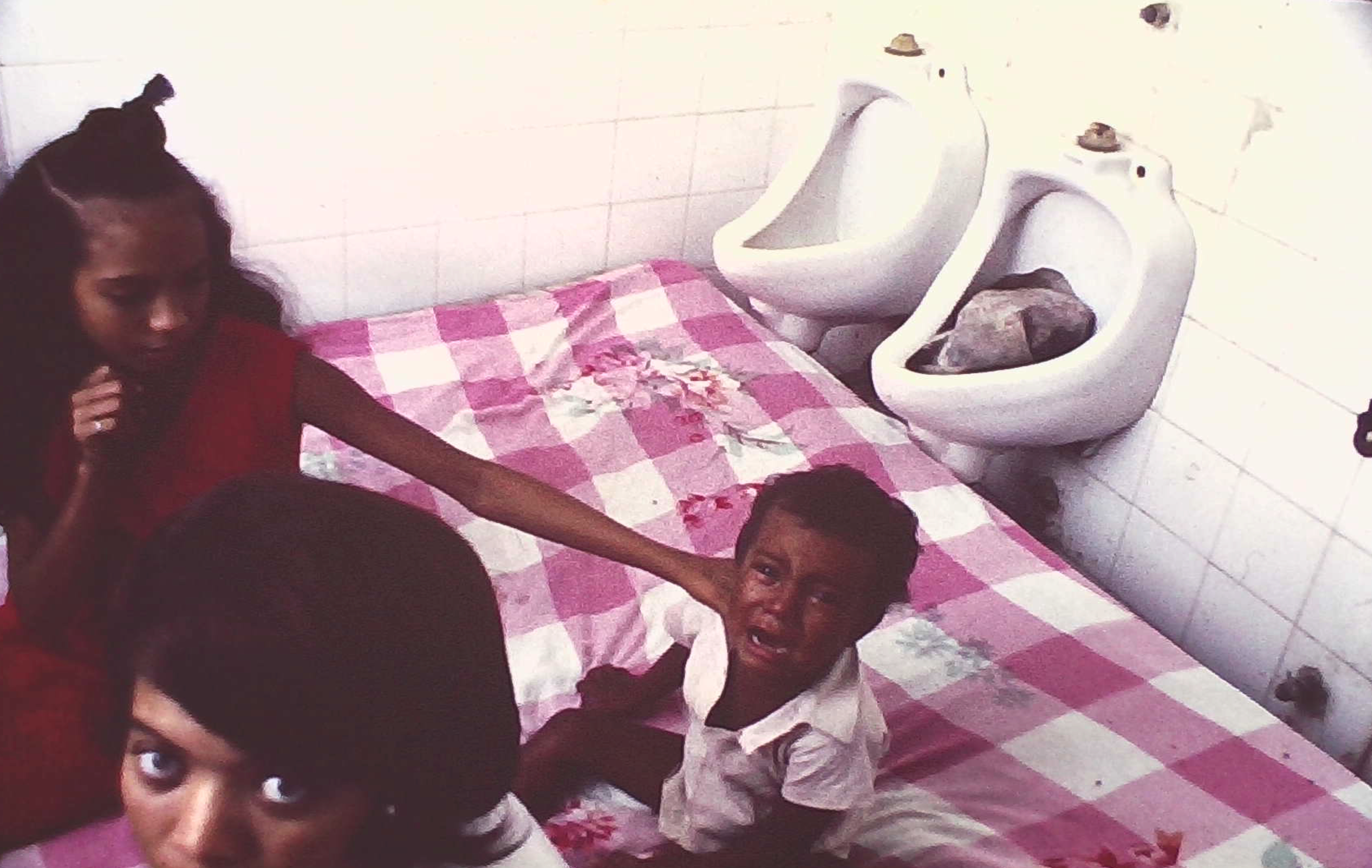
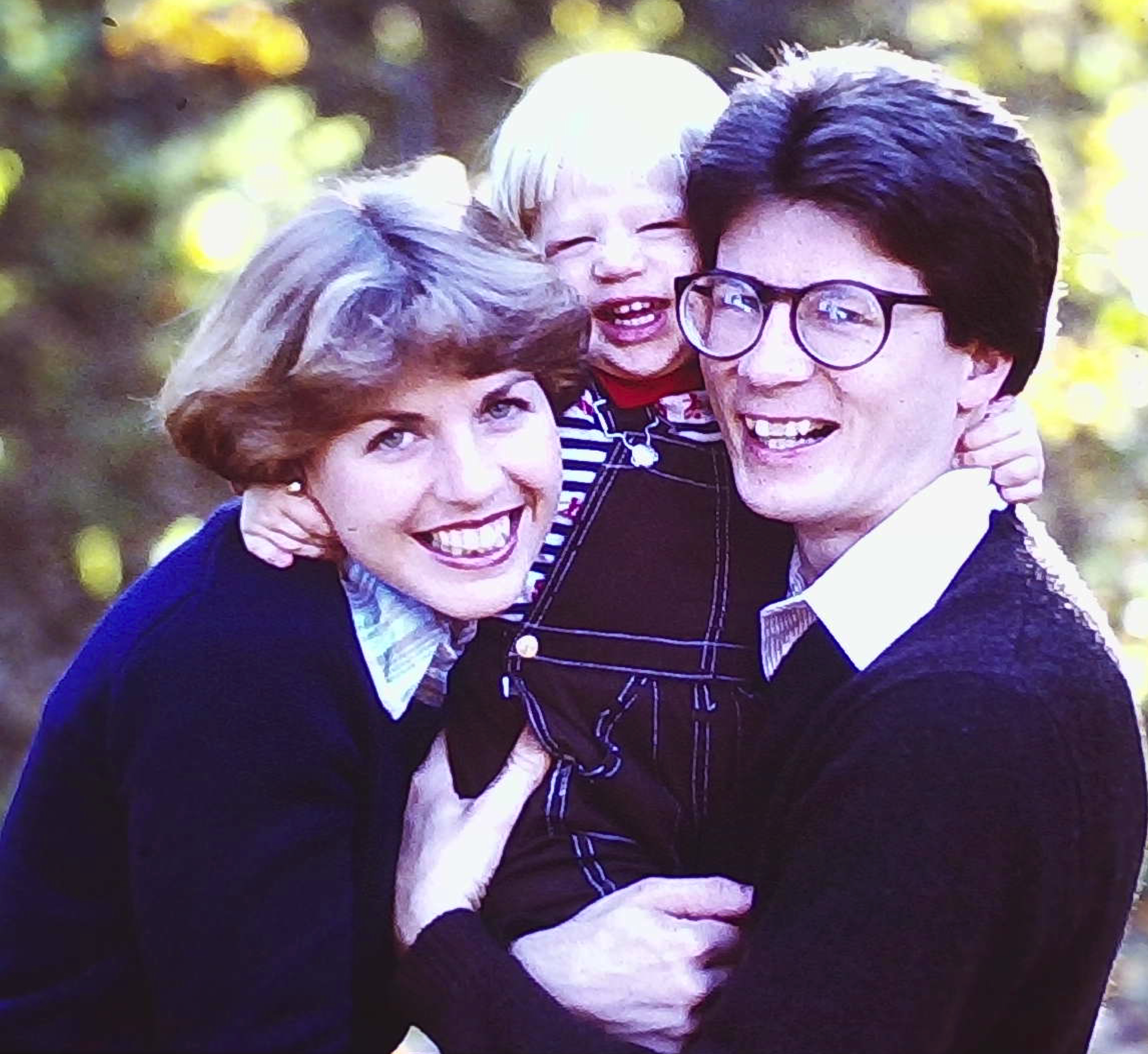
I reduced four boxes of memories to one, and then tackled the slides. Oh my. They’d spilled out of their little boxes and jumbled 40 years of slides into one big gumbo. I’d reach into that mangle for a handful and hold the 2×2 inch transparencies to a reading light with no chronological reference to time and space. 

First, I’d see a Christmas picture with my kids’ grandparents, followed by disaster relief in the Caribbean, to Paris in 1983 to Petra in Jordan and ancient ruins in Israel, to children jumping dirt mounds on their bikes in Oklahoma. It’s disconcerting to go from an engagement picture to a 40th wedding anniversary shot in a minute.

It was dizzying. And delightful. 

I pulled fewer than one in 20 slides to scan into my computer. It will take me days. I’ll have Sue Ellen leave food and drink by my door. When I emerge, I may well feel it like Rip Van Winkle, who fell asleep for 20 years and missed the American Revolution. 

We may be in the midst of another revolution. I’ll participate when I get through these slides.

You thought THAT was scary?

A friend posted a Facebook question recently asking for the scariest movie we remember watching as a kid. Nearly instantly, I recalled the horrific, blood curdling, heart racing, bone chilling scene in which a ferocious whale chased a young boy frantically rowing a makeshift raft through tidal waves of terror in … Pinocchio. 

Pinocchio. Compared to the horrible horror movies kids watch today, Pinocchio’s terror temperature is akin to watching the struggle of male penguins sitting on an egg. 

To the same question, my wife recalled the flying monkeys in The Wizard of Oz,  and I agreed those monkeys kept me awake the night I first saw it, too. Then, since my mind was attuned to the subject, I recalled the ape figure on the airplane wing in Twilight Zone. 

In that episode, a man returning home from a stint in the mental hospital looked out his airplane window to see what appeared to be an ape trying to tear metal sheets off the wing. That episode, “Nightmare at 20,000 feet” is listed on at least one website as The Twilight Zone’s scariest episode in its five-year run.  

William Shatner played the mental patient, well before his Star Trek fame. And the climactic moment, after he failed to convince anyone else that what he saw was real, came when he steeled himself to take one more look, to verify others’ doubts. He took a deep breath, pulled back the curtain quickly, and there was the beast, his face pressed firmly to the glass. 

I lived upstairs in an old farmhouse at the time. Each night after I kissed mom goodnight I’d climb the stairs to my room. In the dim light of a single bulb I’d pull down my shades over my south and west facing windows. The night I saw that episode, it took every ounce of courage in me to walk to my windows and pull down the shades. 

Pinocchio is a kid’s movie. Wizard of Oz is for the whole family. I had no idea it was already 20 years old when I first saw it, being produced in 1939. When those monkeys took to the air to find Dorothy and when the hour glass was draining its last grains of sand, my heart was racing, my pulse pounding. 

Pinocchio, Oz, and even The Twilight Zone were basically benign. I cannot imagine how young people watch the horror shows being produced today. Nor can I fathom how parents let them. I’m not a fan of the genre, I admit. I see nothing entertaining, redemptive, encouraging, instructive or beneficial to exposing children to things that will make them unable to sleep at night. 

We made that mistake with what I thought was a suspenseful movie – not classified as “horror” – when my daughter was young. We took everyone to see Jurassic Park, the box office smash of 1993 . Erin was not quite 12, plenty old enough to separate fiction from reality, we thought. Yet, she slept at the foot of our bed for a week afterwards, afraid because the velociraptors HAD figured out how to open a doorknob!

Horror movies may be your thing. I just don’t get it. There’s enough scary things going on every day in real life to keep me awake at night. I mean, just think…what if Donald Trump were to get a second term?

I need younger friends

It’s a vital part of “church” to be involved with people beyond Sunday morning. When the outside activities of the Bible study group my wife and I were involved with seemed awfully tame, we started a class that targeted a younger demographic – those 55-65 years old. 

Our activities would take us beyond local restaurants and dinner theater. We “youngsters” hiked at Hanging Rock State Park, rode bikes down the Virginia Creeper Trail and canoed the New River

One Sunday morning a sweet couple visited our class. When Sue Ellen noted the ages indicated on their visitor card, she called the church office and suggested John and Mary might find the older class more suitable. She was told no, they specifically asked for our class. 

We weren’t going to shut the door on anyone, even though they were the age of many of our parents. And what a wonderful addition they were to our class. Ironically, Mary, who had a teaching doctorate with a specialty in English as a Second Language, had recently worked in Colorado for a man who was a young boy in the same church where Sue Ellen and I were members years ago. 

When we learned that John and Mary’s ministry careers were primarily among students, we understood why they wanted to be in our class, among people a generation younger. They’d always worked and lived among young people and we were a touch stone to that earlier era. Being around younger people made them feel younger. 

They could not physically do everything we did, but if they attended a game night they gave it everything they had.

And goodness, their insights from a life in Christian service at home and abroad enriched us all. When they moved to Tennessee recently to be closer to their son we showered them with a surprise and rousing send-off with class members and friends holding signs and singing hymns. 

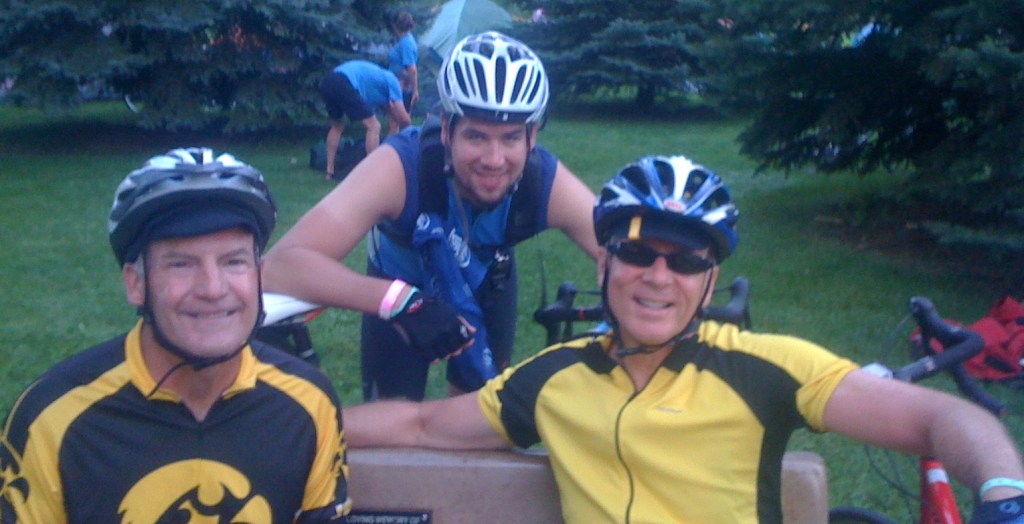
I’m at the point in life where some of my friends are turning…old. My army buddy Steve turned 70 today. When I rode with him last summer in Omaha he took another spill on his skinny tired road bike. He’d only recently healed up from a previous spill that broke some ribs and bruised him ugly. 

At his wife Linda’s insistence, Steve recently purchased a hybrid bike as his main ride. Now, Steve is a guy who hikes, skis, swims in the ocean and likes to ride his road bike long distances. He’s on no medicines and gets synapse collapse in his brain when he sees the number 70 pop up in relation to his age.  

This hybrid bike has fatter tires, a smoother ride and more stable (read: forgiving) handling. But, in his mind, it’s like he traded a Mustang convertible for daddy’s Buick. 

“I’ve never felt so bad about a purchase in my life,” he said, when I called him to wish him happy birthday. “I felt like it was the first step toward turning in my car keys because the kids don’t think I’m safe to drive anymore.”

After a shared laugh he said, “I felt it was like going to the vet to get fixed.”

Of course, he made sure Linda felt his pain. But 44 years of marriage has coated her sympathy nerve with a layer of Teflon, which is to say she wasn’t hearing it. 

He confessed that after an initial “getting acquainted ride” he likes the bike a lot. He even says it just might be nimble enough to use for RAGBRAI next year, in riding across his home state of Iowa. 

Between John and Mary and Steve the lesson for me is clear: I need younger friends. 

Didn’t you used to be somebody?

The entry alcove to our house features glass panels on either side of the solid wood door. It’s a nice touch that enables me to see who is at the door before opening it. The panels also provide a tall, narrow view to my neighborhood and at least twice a day I find myself standing by them, peering out. 

I say “find myself” because I didn’t really intend to go over there like some watcher in the woods. The world outside the glass just drew me. I watch nature’s cycles on the maple tree, from buds, to leaves, to color to bare again. 

Sometimes I see people out there: kids waiting for the school bus, adults getting into cars on their way to work, someone putting a card or letter or bill payment into the mailbox and flipping up the red arm that reminds the mailman not to pass by this box. Often there is a dog walker with a small, warm bag dangling from his hand as if he had just discovered a treasure to which only his dog could have led him.

Mustard’s mug, retired at the local diner, along with his brother Marv’s — my dad — and everyone else whose funerals meant they no longer needed the mugs.

My uncle Donnie – Mustard, to those who knew him from youth – was a Norwegian bachelor farmer right out of Garrison Keillor’s tales from Lake Wobegon. He scratched a living from the sandy loam of southern Wisconsin where he raised corn, alfalfa and oats to feed the 19 head of dairy cows whose milk fed him. 

He didn’t always trust God and nature to do their jobs after he’d worked so hard to prepare the soil for planting. He’d give God a few days to breathe life into the corn seed and then, if he saw no green shoots, he’d nervously walk down to the field, look for the little arched rows of dirt left by the planter, and scratch away the soil just to reassure himself.

Maybe the planter wasn’t working. It put the seeds directly into the ground so you didn’t really see them being distributed, unlike a grass spreader that sprays seed so you know it’s going where it needs to be. Maybe this year the seed was bad. It’s never been bad before, always come up before. But this year, maybe the seed is bad. 

And it’s been dry. Has the seed dried up before a good rain could come germinate it? Or, it’s been really wet. Maybe the seed has drowned. Donnie would scratch at the earth until he found the seed and reassure himself it had gone into the ground and was just fine. From then on, he had to trust. And God never let him down.  

When I stand at my window I feel like Uncle Donnie checking out the field, making sure everything is as it ought to be. I spotted a service man walking around the neighbor’s yard once when no one was home, and I called the neighbor at work to tell him about it. It was OK. He had an appointment and the neighbor was late. 

This morning, on my birthday, I looked out the window and wondered if I would be there to look out the same window in 20 years. If so, I’d be the age of my dad when he died. How would my life be different in 20 years? That’s not a long time. 

I’m reminded of the cartoon my wife and I, both fitness advocates, posted for years on the refrigerator. A couple, about our age, were exercise walking and one said to the other, “What do you say? Two more years and we’ll let ourselves go?”

I don’t intend to let myself go, but stuff happens. I consider myself exceptionally healthy because at age 67 I eat well, take no medicine and can still ride my bike 100 miles in a day. Then I remember I’ve had two emergency surgeries and a broken neck and cracked skull. My mom died of cancer and my dad had a heart attack and bad kidneys. 

I’m also old enough to appreciate my father’s wisdom. When he was finally retirement age I was in the thick of raising my teenage children and spare time was more rare than spare change. I told dad he must appreciate the way days surely linger for him now that he’s older, with fewer responsibilities. 

Instead, he told me, “The older I get, the faster time goes.” I didn’t believe it then. I do now. 

Someone speculated that time goes faster as we get older because each unit of time is a smaller portion of our life than it was when we were young. That last month before Christmas for a five-year-old is a huge, slow moving portion of his entire life. He’s only had 60 months. A month to wait for a 60-year-old is but a blink. He’s had 720 of them. 

I think of my older friends whose social calendar revolves around doctor visits. It’s their excuse to get out and it’s a time when someone important is looking for them, expecting them, preparing to receive them. 

And I think of my friend Cliff who had a very significant career in church ministry and administration across several states. Visiting him at age 92 in the sad, shared room of his nursing home after his wife died, he looked around at his narrow bed, the few pictures taped to his wall, the closet with just a few items hanging there, and said, “I used to be somebody.” 

We assured him his life mattered, that it had counted for good in the lives of his children and in the many he touched through his work and devotion. 

I think of that this morning, standing at my window, staring out at the corn rows of my neighborhood, and wonder if in a few years my friends and neighbors will look at this house, scratch their heads and try to remember the somebody who used to live there.

The wisdom of Bill

I was facing a big life decision recently so I went again to talk with my friend Bill. He’s the strong, silent type and a great listener but when he speaks, his voice always slices like a knife of insight through the goop clouding my thinking.

Bill’s place is very comfortable; shady with a great view of nature from where he rests – woodlands, pastures and now a large stand of loblolly pines that one day will be harvested. I laugh with him to think that when those trees are cut, people that have been driving by them for a generation are going to gripe and complain that the forest was cut down in pursuit of the almighty dollar.

They won’t remember the trees were planted 20 years earlier specifically as a cash crop to benefit the work of Baptist Children’s Homes of North Carolina, where Bill grew up, and lived and worked most of his career.

I can hear him chuckling and shaking his big ol’ head, rubbing the bald pate once forested with hair. The more time I’ve spent with Bill the more I realize he’s always understood people at a level much deeper than his easy-going nature typically revealed. He’s not snowed by the self-important preening of others who gathered around his table, even when it looks on the surface like he takes their words at face value.

I tell Bill how much I appreciate him, how he and his wife, Louise, took us in and showed us the ropes when I started working where he worked. I was a generation younger, in a higher “position” on the organizational chart and from another part of the country. None of that mattered, only that we respected each other, each worked hard and we all loved our children.

Bill doesn’t say much, but I know he cares. But, I digress.

I told Bill about the decision I faced. Comfort is cool; change is hard. His expression was stone cold, waiting for me to continue. The more I told him, the more I heard myself talking it through, the more it became clear which direction I should take.

I just chuckled. He’s always like that now, waiting for me to talk it through between us, without saying anything, knowing that eventually I’ll make the right decision.

With that out of the way, I tell him I know that he and Louise are enjoying their time back together again after several years apart, due to circumstances beyond their control. I catch him up on the kids, and sense his pride in them, as he’s proud of every kid who grew up at Baptist Children’s Homes, also due to circumstances beyond their control.

Bill acts as if he has all the time in the world, and I’m reluctant to leave him, but…life goes on. I thank Bill for his time and wisdom, rise to my feet, brush the fallen oak leaves from his headstone, and close the gate to God’s Acre behind me.

Thanks again, Bill. You’re always there for me.

It makes even a stoic cry

I handle bad news relatively well. My exuberance over good things isn’t excessive – unless of course, you’re talking about the winning shot hit by my child or grandchild. Those who know me might call me stoic.

But, sometimes, I find belly laugh humor in the simplest things like word play and irony. And then, out of the blue, an item will reach out from a page or conversation, or television commercial with such poignancy it strikes every raw nerve in me and makes me blubber like a baby denied its lolly. Such as, a McDonald’s commercial around Olympics time, showing a dad teaching a little girl to swim, then showing that same dad cheering on his grown daughter in the Olympic pool.

The tear trigger probably depends on an aggregation of what I’ve been doing and reading and experiencing and all the right elements coalesce to strike an emotional nerve. It happened today at lunch.

Reading in the September Reader’s Digest about teachers who changed lives, I came upon a story reprinted from 1991 about a sweet natured, but very talkative boy named Mark Eklund and his teacher who was struggling to get across a tough math concept to her junior high class. When students wouldn’t settle down, she had them write on a sheet of paper every class member’s name. Then, they were to write the nicest thing they could think of about that student – for every student – and pass the list back to her.

On Monday, she distributed their classmates’ comments to each student and heard them murmuring as they read what others said about them: “I didn’t know others liked me so much,” or “I never knew that I meant anything to anyone.”

The boy grew up, as boys do, and one day the teacher’s father said, “The Eklunds called last night.” She immediately recalled the talkative bright, polite boy and asked how he is.

“Mark was killed in Vietnam,” the father said. “The funeral is tomorrow and his parents would like it if you could attend.”

At this point, I had to pause reading because all the pain, disgust, frustration and rage I generally keep tamped down relating to America’s gross, blind, selfish, lying, cruel relationship with Vietnam burbled to the top and leaked out my eyes.

Resuming the story, teacher Helen Mrosla stood at the coffin when a pallbearer asked her if she was Mark’s math teacher. When she nodded, he said, “Mark talked about you a lot.”

After the funeral Mark’s mother pulled a piece of paper out of the wallet that was on Mark when he was killed. “I knew without looking that the papers were the ones on which I had listed all the good things each of Mark’s classmates had said about him,” Mrosla wrote.

One by one, each of Mark’s classmates from that year showed their former and favorite teacher the paper she had returned to them, folded and creased from many readings. When she finally sat down and cried, it was both in appreciation for finally knowing what that little gesture had meant to so many so long ago, and in frustration and anguish over Mark’s totally unnecessary death.

And I cried reading it, for the utterly wasted life of Mark Eklund and the other 58,208 American soldiers who died there, and the 2 million others on both sides. Youcan say these “lives”weren’t wastedbecause these men and women accomplished other things with their lives, made babies,influenced siblings and friends, bought carsto keep the wheels of American industry turning. But their lives were wasted because the war was a hopeless exercise in political overreach that never had a chance to achieve its stated purpose.

And what made my tears well up and wash down my faceand my guts clenchwasrememberingthat the politicians who prolonged the war KNEW it. They knew it for years. President Johnson couldn’t withdraw troops or he’d lose the election in 1964; Nixon sabotaged peace talks in 1968 so he could beat Hubert Humphrey.

According to a story by Bob Fitrakis in Common Dreams, Henry Kissinger, then Johnson’s adviser on Vietnam peace talks, secretly alerted Nixon’s staff that a truce was imminent.

Nixon calculated that peace in Vietnam just prior to the election would put Johnson’s VP Humphrey in the White House, instead of him. Revelations from President Nixon’s papers showed that he dispatched Anna Chennault, his liaison to the South Vietnam government, to convince the South Vietnamese to back away from the peace talks, promising a better deal when he was elected president.

Chennault was successful. South Vietnamese’s corrupt leadership backed away from the peace talks and we spent another 20,000-plus American lives and 100,000 wounded in the next five years. And in 1973, Kissinger won the Nobel Peace Prize for negotiating the same settlement he helped sabotage in 1968.

And I weep.

I weep to think of the promises, shenanigans, falsehoods and power of the military industrial complex that keeps America engaged in conflicts around the world. We are the most war mongering nation on earth. In the 243 years of our history, we’ve only been at peace for 21 years. We’ve been at war for 93 percent of our history.

It’s so common we don’t even think about it, unless you’re a parent, child or spouse of a soldier deployed.

When dealing with other nations who we perceive to be acting in a way contrary to our best interests, we rattle our sabers and say “every option is on the table,” meaning that we’re not above or beyond engaging our belts of military might to spank you into submission.

Depending on which source you quote, the U.S. spends more on its military than the next 7-12 nations combined. Yes, that includes Russia and China.

In the incredibly illuminating HBO special Chernobyl, radiation was so high that no machinery could operate to clear debris.Radiation killed operating systems within moments. So, the Russians used “bio-bots” and shovels. Yes, bio-bots – humans who were not told of the danger into which they were thrusting themselves.

Despite all the pseudo patriotic jibberish slobbering from elected officials, they see our soldiers as bio-bots. Don’t like Saddam Hussein? Make up a justification to send our bio-bots to Iraq and take him out. But don’t touch Saudi Arabia, the hot house from which 9/11 was hatched, because they buy billions of dollars in weapons.

We know that no matter when we leave Afghanistan, things will return to the tribal antagonisms and violence that have been a way of life there for centuries. The “peace” our bio-bots enforce is temporary and fragile and will never be permanent. The administration knows it but hey, there’s always another election around the corner.

We treat the sale of weapons as if they were tractors, or computers or cars. Just another manufacturing product, when in fact, weapons produced in the U.S. supply antagonists in conflicts raging around the world. Our bio-bots are being shot at by guns made in the good old U.S. of A.

“Quite frankly,” says Danny Sjursen, US Army strategist and historian, in a story in The Big Think, “Selling arms is one of the last American industries that’s left. It’s one of the last things the United States does well, that we’re still No. 1 at — No. 1 at dealing arms in the world.”

Military gets big increases in the budget while education and innovation get slashed. The biggest “welfare queens” are corporations that make billions and pay no taxes. We’re lobotomized by daily news’ fascination with sexploits, celebrity and kittens. And somehow a prominent pastor in Dallas says the president would have biblical backing to launch a nuclear war.

Dear God, on what planet am I living? Hand me a handkerchief.