Two Ways To Do It

I grew up working with and for my Norwegian bachelor farmer uncle Donnie, who made a living milking 19 cows on 80 sandy acres in southern Wisconsin. As a kid I tried to impress him with my strength by carrying 40 pound buckets of milk to the cooling tank when I didn’t weigh much more than twice that. I struggled to make it look easy, but he knew it took all I had.

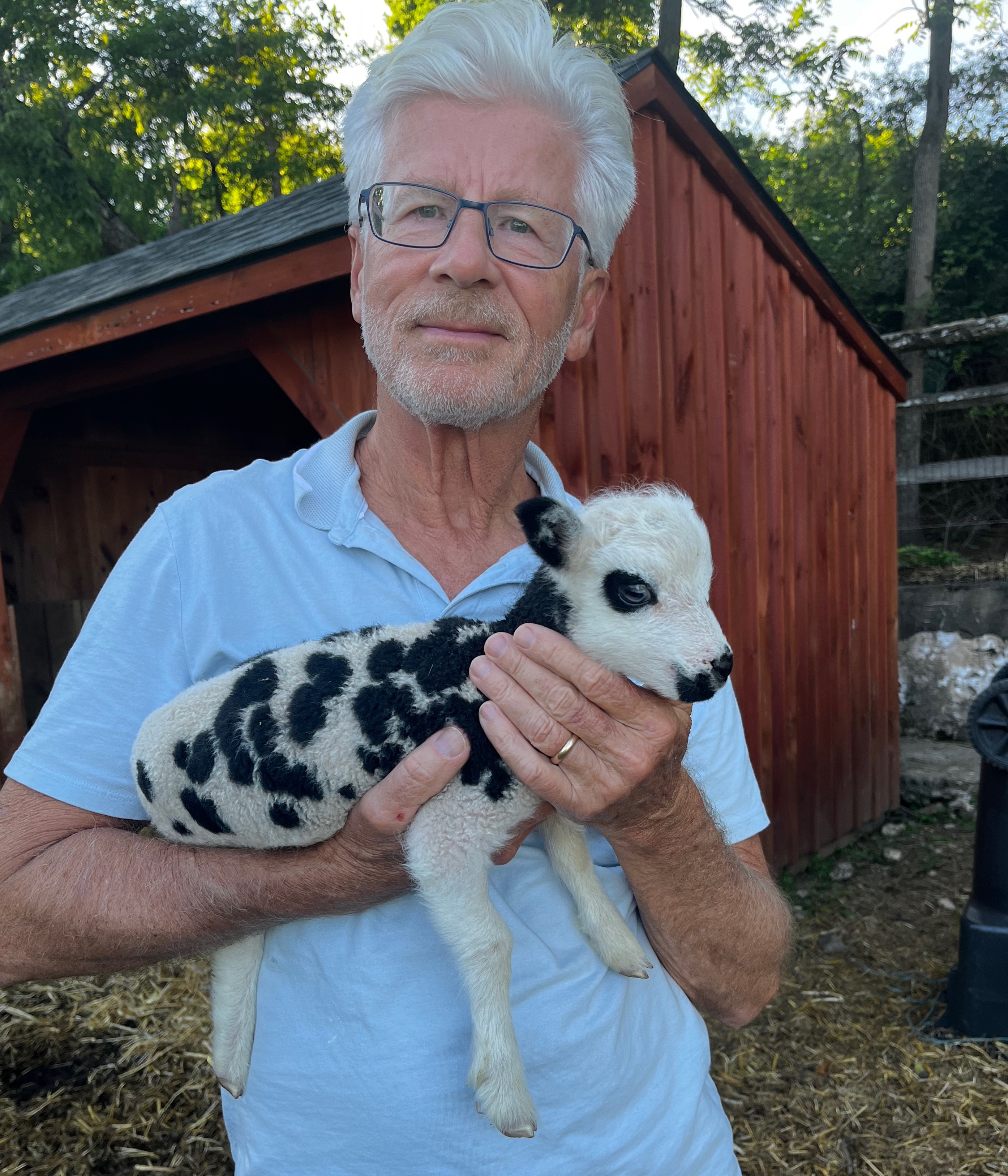
I get to practice what i learned while young at White Horse Farm in Pennsylvania, where my son’s family lives.

In the ‘60s corn had to be cultivated to keep the weeds down before “poison ready” genetically modified seed became the norm. So I’d sit on the tractor with Don as he drove the little plows through two rows at a time to dig out the weeds. If he hit a stone or lost concentration and the cultivator dug out some corn, I’d hop off, stick it back into the ground, and run to catch up.

Building or repairing barbed wire fence, learning how to drive tractor and truck, milk a cow and slop a pig, being rewarded with a chocolate milk and donut at the Midget Kitchen on Hwy. 16 all were part of my kinetic education – along with learning how to understand the punchline of coarse jokes.

Once I reached about age 13 my services were much in demand by local farmers who needed help detasseling corn, baling hay, picking stones or cleaning out stalls and stables. I was a tall, thin kid who was young Sheldon in the classroom and who saw Arnold Schwarzenegger in the mirror.

Our local farmers were basically one-man-and-a-son operations, and I replaced the boy who had grown and gone to the city. To make hay while the sun shined, we cut the alfalfa, let it dry for three days and hoped for no rain. Then we raked it into windrows, scooped it up and compacted it into 40-50 pound bales with a tractor pulling a baler pulling a wagon with a kid on the wagon stacking the bales.

Most generally it was me and the farmer – baling, loading, unloading onto an elevator and stacking in the barn. There were two kinds of farmers when it came to engaging my services on a hot summer day. One I’ll call Uncle Donnie’s way, on account of it’s about my Uncle Donnie. The other I could call “the efficient way,” on account of it’s the opposite of my Uncle Donnie.

When Uncle Don picked me up in the morning, we’d get to the farm and have to gas up the tractor, grease the baler and put in baling twine, hook the baler to the tractor, connect the power takeoff shaft and move the elevator into position to carry the bales up into the hay mow. It wasn’t unusual for us to have round up a wagon or two that a neighbor farmer had borrowed.

All the while I’m looking at all that hay, laying expectantly in windrows in the field, itching to get out there and get started, knowing it was going to be a long day. And it was threatening to rain.

Farmers committed to “the efficient way” and to getting all the work out of me they could, completed all the preliminaries before I got there. The baler was greased and hooked to the tractor, which was gassed and ready. The elevator was in place, all the necessary wagons were lined up, and mother had lunch in the oven.

We got twice as much done in half the time. And there are few things as satisfying as looking over a freshly harvested field, seeing it cut and clean and all the hay is in the barn before the rain comes.

That, and the fact that the more efficient farmers tended to pay $1.25 an hour, rather than $1.00.

Readiness makes the difference. Many of you work with non-profit organizations. Respect the time of your volunteers. Don’t let them show up on a work day or at a fund raising event and have to stand around and twiddle their thumbs. If they are volunteer tutors, have a student already selected and matched.

Then, let it rain.

Carting away your history

Strangers carted away my friend’s history yesterday, piece by piece.

An auctioneer’s singsong cajoling held Dave’s life up for examination and bid. Chains, tractors, implements, house furniture, fuel tanks, rakes and hoes all appraised unemotionally for their “value” by area farmers hoping to find a deal, make a steal.

Dave’s farm, eight curvy, hilly miles from any main road, looked like a Ford dealership, as 120 trucks – at least 100 of them Ford F150s, 250s and 350s – parked nose first along the edge of the cornfield like piglets nursing. Amish neighbors in their round straw hats parked their buggies in the yard, and tied their horses to a shade tree. An early morning deluge left the grounds muddy but didn’t discourage potential buyers from picking at the accumulated instruments of Dave’s farming life.

Dave is in the second year of an ALS diagnosis and at age 72 he’d decided to sell the farm where he’d lived 46 years, raising his three children in a Trumanesque environment in rural Pennsylvania.

He is slowly losing muscle strength everywhere but in his smile.

When major items like his John Deere tractors didn’t sell for what he’d hoped, he shrugged and said, “Let’em go.” Trying to sell them on the open market later, hoping for a more equitable price, was just too much trouble to contemplate.

Dave and his dad built the house atop the hill, where his wife huddled now with a long-time neighbor to avoid seeing four decades of her life picked over, devalued and carted away. The house wasn’t quite finished in time for their first child to come home to it from the hospital. But it was finished two weeks later and she’s lived there ever since.

Dave decided to sell the house, barns and 45 acres on which he’d lived his entire adult life so that Debbie wouldn’t have to…later. Once decided, his second son, Mark, drove him through the rural neighborhood to pass out flyers announcing the sale. They left fliers with neighbors who Mark knew did not have the means as potential buyers, but he eventually realized he was driving his father around on a farewell tour.

“He just wanted to say goodbye to the neighbors he’d known for 45 years,” Mark said. When Mark realized that, he settled in and enjoyed the ritual.

The man who’d purchased the farm was present at the auction. He’d bought it for his daughter and son-in-law as a place to raise their children, in rural Pennsylvania, giving them the benefit of idyllic life in rolling hills, among Amish farmers, an area where church and school are the gravitational centers of community life.

Dave’s adult children and their spouses were present and helping. Grandchildren roamed through the barns for the last time, daringly climbing steep ladders to where hay once was stacked high, making sure that mom and dad saw their accomplishment. Dave’s sons recounted adventures with tractors, camping in the woods, trapping ground hogs and shooting that would make their survival a mystery.

This was their home being carted away on the backs of trucks and trailers. They weren’t sad – yet. The hard decision had already been made – to sell the farm and auction off the equipment. This was just the physical manifestation of their decision.

But, when the last cabinet was pushed into the back of a minivan; and the last tractor was loaded onto a flatbed; when the camper the grandkids slept in the night before rolled away behind a pickup, the somber reality settled over the property like an early morning fog settles into valleys.

I hugged each goodbye, Dave’s arms limp at his sides, and thanked them for including me in their family. Through thick and thin, good times or bad, through the struggles inevitably ahead, he’s my brother and the auction was another milestone toward “next.”

“I never thought about it”

Much of the remodeling and landscape work on my son’s renovation of a 200-year-old house and barn in Pennsylvania is being done by Amish. Their work is exemplary, consistent and dependable.

Amish settled in southeastern Pennsylvania in the 1720s, leaving behind in Europe the persecution of their “strange” and separatist beliefs. Amish emphasize humility, family, community and separation from the non-Amish world, which includes a reluctance to adopt modern conveniences such as cars and electricity.

The Pennsylvania Amish community in Lancaster County is the largest in the United States, numbering about 30,000, double its size of 20 years ago. They’re distinctive for their simple dress, beards, bonnets and horse drawn buggies.

We wanted to give visiting relatives an authentic Amish experience, without being “ugly Americans” who gawk or get our legs caught in tourist traps that exploit this set apart people. So, who better to ask for advice than Aaron, a white bearded, retired farmer now working for his son’s landscaping company on our project.

To my delight, Aaron suggested simply that if we wanted to experience Amish life in Lancaster County, “Come to my farm. I’ll show you around.” We made a date two weeks hence.

I texted a couple days before the appointment and was concerned that I didn’t hear back. But on a beautiful fall afternoon we pulled into his manicured yard and Aaron and Barbie, his wife of 40 years, appeared immediately. Since they hadn’t heard from me, they wondered if we were coming.

I mentioned the text I sent earlier. Then we both laughed. Their telephone is in a building separate from the house, to be used for business purposes only, and of course, is not mobile.

We took seats in their recently constructed house, modern and perfect in every way except that there are no electrical outlets, nor lamps, nor counter appliances, nor overhead lights. Designed to let in lots of sunlight, a propane tank on wheels with a filament bulb on a tall rod provided light when darkness falls.

A propane powered refrigerator graced the kitchen. While electricity is considered a convenience too worldly, workarounds with generators for power are apparent in the barns. Rules and restrictions governing humility and simplicity vary by area bishop.

We asked Aaron why farm implements roll on bare steel wheels, with no rubber tires. He said it’s a bishop’s rule to keep people from going fast.

Daily life is guided by simplicity and a pace slow enough to appreciate the smell of freshly turned earth or cut grass or a grandson’s grasp of your leg as you walk the fields together. No doubt outsiders romanticize these things about Amish life, but the truth is starker. Anyone dependent on modern conveniences woven so completely and unconsciously into daily life that we don’t even realize our dependence, would find it very difficult to shed them in favor of a slower, harder, more deliberate life.

For that reason, Aaron said, they do not encourage people not born into the Amish community to “convert” to their faith and culture.

As a young sharecropper, my grandfather walked behind a mule pulling a plow. But when he gained access to a tractor, he embraced the innovation and convenience wholeheartedly. Amish farmers are content with their mules. Whether tractors, telephones, automobiles or microwave ovens, they recognize that innovations do not necessarily contribute to a better, fuller, deeper life.

Sitting together in a comfortable living room, a Bible and reading glasses atop a small table by their chairs, we asked this 62-year-old couple if they were granted permission to embrace any single modern convenience – the kind of utility they see every day as they live among “outsiders” – what might it be?

Silence.

After a while I suggested to Barbie that I thought she might say “electricity.” She smiled meekly and said, “I considered that.” When pressed for his answer, Aaron said, “I’ve never thought about it.”

Whoa.

Aaron farmed 50 acres with mules, raised eight children, six of whom have 33 children, raises dogs and tobacco for extra income, gave the farm to a son and now works another son’s landscaping business, is a stalwart in church and community, and he’s never thought about what mechanical, transportation, electrical, communication tool available to others he might like for himself?

All the while he lives among outsiders who think camping out overnight to be first in line for a new phone model is logical and that instant gratification is too slow. We’re bombarded by constant messages that we will be happier if we grasp, strive and reach for the next purchase, entertainment, or experience that will somehow endow us with the satisfaction Aaron has just by living a simple life in a caring community of like-minded folks.

“Content” is the only word to describe a man whose lifestyle barricades him against the onslaught of television and social media, who has never thought about embracing modern conveniences. He is content and committed to a way of life that is set apart, not conforming to the world. Romans 12:2 He evidently thinks about such things no more than a fish considers water.

Few modern Christians are consciously set apart from the world. Our most significant symbol – the cross – has been so co-opted and adulterated that it no longer retains significance as a Christian symbol.

Maybe that’s why we admire the simple, quiet, slow – contented – pace of Amish life.

Before I met Aaron, I’d never thought about it.

What Color is Your Duck?

I was not a self-assured little kid. I lived in the country and wasn’t particularly athletic, didn’t know my way around the terminology of machinery as it seemed my friends did. I was reticent in a crowd of my peers. But I was an early, voracious reader and I felt confident in the classroom.

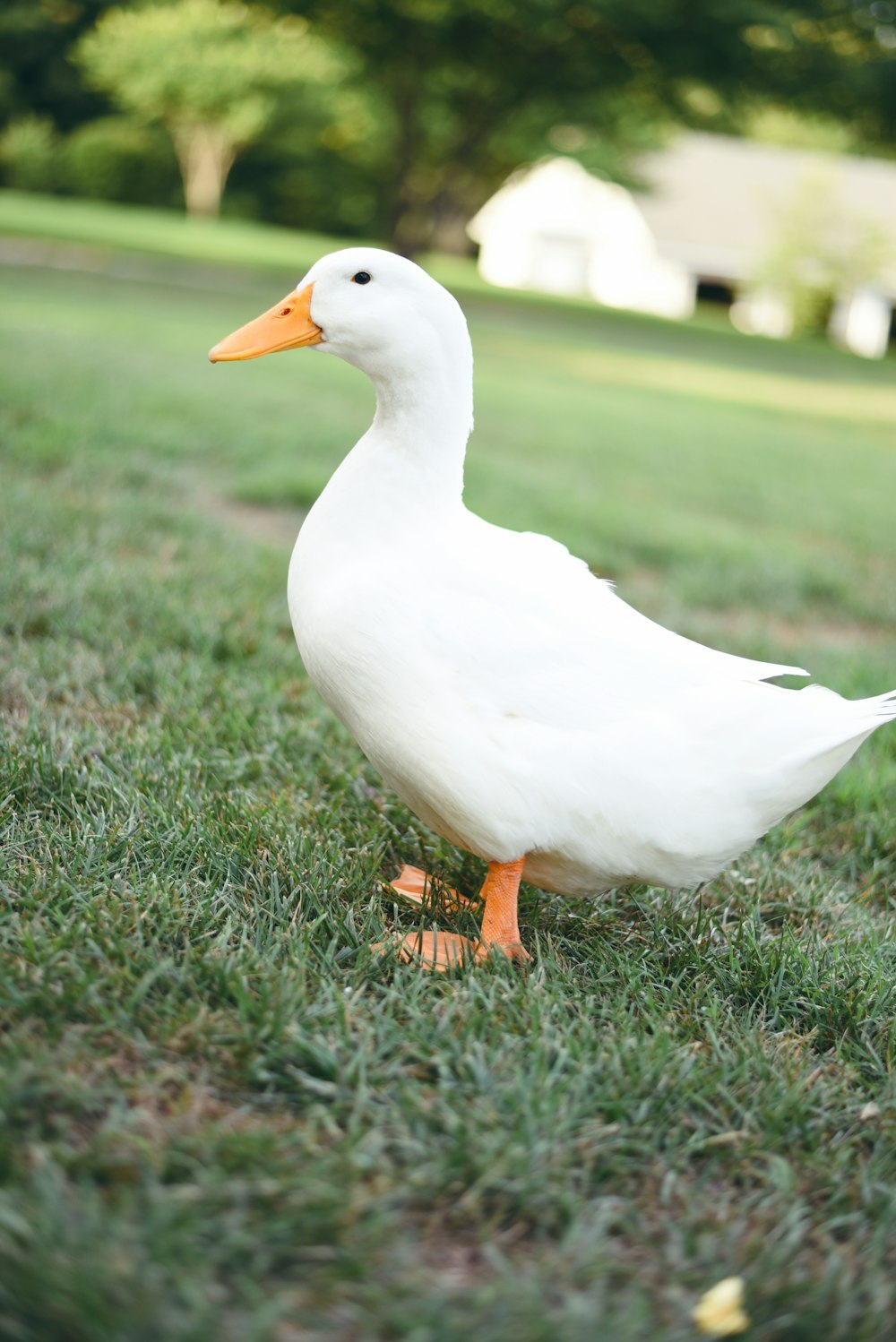
white duck on grass field

Photo by Christian Bowen on Unsplash

At least until Mrs. Roberts assigned a coloring project that I blew.

Louise Roberts was my first grade teacher. She was lovely, kind and patient. But my most vivid memory of my nine months with her (not the same nine months as each of her sons experienced) is the zero she gave me on a coloring assignment.

I’m quite certain it was she who delivered my first academic trauma. First grade seems right for that kind of project. I doubt it was second grade, because Mrs. McGowan never would have given me a zero.

Mrs. McGowan lived in the county seat of Portage, 14 miles and a half century from my little school in Rio, and possessed a sense of savoir faire. She loved her students enough to invite a select few one at a time to her house in Portage overnight to give them a taste of “city life.” Portage had 10,000 people, to Rio’s 788.

I was one of the lucky chosen for an evening in Portage with Mrs. McGowan and her husband, a local official. She made dinner, then they drove me around the city, and introduced me to city hall and the jail. Come to think of it, maybe she was trying to “scare me straight.” Anyway, she was sweet enough that she would have given me a second chance, not a zero that haunts me 64 years later.

Mrs. Roberts’ assignment simply was to color the animals pictured on the white sheet of paper she distributed. I forget what all the animals were, but the ducks… oh, the ducks.

What color are ducks? In all of my six years of limited exposure to Disney and storybooks in which ducks floated in ponds near where Snow White lay waiting for the kiss that would bring her back to life, or beneath the tower that held Rapunzel, the ducks were white. Pure, innocent, naïve images floating blissfully about the main story characters to remind us that even when things appear to be going smoothly, we need to paddle like crazy.

The ducks I was to color were presented to me on a sheet of white paper. So, very logically, I colored the other animals and left the ducks alone. White ducks on white paper. That’s the color of ducks.

When I got the assignment back with a big ZERO on it, I had the temerity to ask Mrs. Roberts why. She said I didn’t do the assignment because I didn’t color the ducks.  “But ducks are white,” I said, a nascent lawyer arguing for the defense.

“You should at least have colored the bills and feet,” she said. I could see her point, but how about a second chance? Maybe they were albino ducks.

Fortunately, I recovered from that initial academic setback and grew up avoiding drugs, thievery, rock and roll and mayhem.

Thank you Mrs. McGowan.

We all find security in the coop we choose

We raise some chickens on the hobby farm in Pennsylvania where we spend time with our oldest son’s family. We got them when they were too old to be called chicks and too young to be called hens. They were teenagers at poultry puberty, eating and sleeping but not producing a darn thing.

After foxes, hawks and weasels decimated our first two flocks that ran free in a half-acre pasture, we started over with this new batch from a farm that raises chicks to this level of maturity before they start laying eggs. So, they’ve navigated their brief lives in the narrow confines of a large, dark shed.

From that shed they were pulled, dropped into a big box to transport home, and then set in a coop to protect them while acclimating to new digs. And we built a small run to provide some level of protection from predators that was more than the ungirdled range of grassland occupied by their unfortunate predecessors.

When it came time after a few days to let the young birds out of the coop the strangest thing happened – or didn’t happen. They were reluctant to leave the confines of that shelter.

I thought once I opened the door they would burst out into the brave new world of open space, green grass, bug buffet and blue sky because they’d been confined to dark, confined environs their whole lives.

Instead, I realized that it is precisely because they’ve been confined in dark spaces their whole lives that wide open spaces terrified them. It took long minutes for the first curious, brave beak to break beyond the coop threshold, and hours for a chicken body to follow that beak out the door, into the pasture.

Joined slowly, tentatively, cautiously by others, they hovered in the shadow of the coop for more long minutes, barely moving a body length into what to them must have been a vast, horizonless universe of undulating grassy waves.

When I consulted on a fund raising campaign for a Boy Scout campground I was surprised to learn that boys from the inner city were terrified by the animal and insect noises reverberating through the dark night outside their tents. These boys – familiar with gun fire, street racing, domestic violence and the cacophony of inner city life – shivered and huddled in their tents, sleepless at the sound of crickets and owls in the night.

A beautiful actress I interviewed in Houston, living with a physically abusive partner, told me it’s less frightening to hear him coming up the steps, knowing he’s going to hit her, than it is to considering fleeing with her child to the uncertain world beyond their apartment door.

We are anchored to our security, the blankets under which we find comfort and assurance, even if those blankets hinder us from moving past comfort into adventure and discovery.

Michael Easter wrote about it in his book “The Comfort Crisis.” For a month he eschewed the electronic conveniences and digital distractions of his life while camping and hunting in Alaska, enduring – then appreciating – hunger, boredom and uncertainty, the very things we work so hard to avoid.

He said challenging yourself to embrace a hardship and work through it, rather than avoiding it, will help you grow.

Being alone in nature actually will help you connect with yourself and help you feel less lonely.

And, he suggests consciously ditching unnecessary conveniences that make you lazy and, ultimately, unhappy. Rather than heading for the fridge at the first tingle of hunger, skip the snack, embrace the hunger and the next time you eat an actual meal you’ll appreciate it all the more. And be healthier for it.

The first sermon I ever preached was entitled “Comfort Kills” and I implored the congregation in Shawnee, OK to step outside their comfort zone to engage those persons who were not just like us.

Be brave, I said. Don’t be…chicken.

Beautiful killer

This morning I saw the most beautiful fox ever. Larger than typical, with bright red fur, tail long and bushy, not matted by thorns. It looked fresh from a spa: fluffed, puffed, tufted, shampooed and blow dried. Eyes intense, intelligent, confident and controlled. Lithe, nimbly athletic, light of foot like a dancer. 

And I wanted to kill it.

Coming back from her sunrise walk, my wife heard the terrorized shrieking of chickens in the open range pasture just behind the cottage where we stay on my son’s property. She stepped quickly to the pasture where she saw a fox with a chicken in its jaws. When she shouted and clapped, the fox sprinted away. The chicken didn’t.

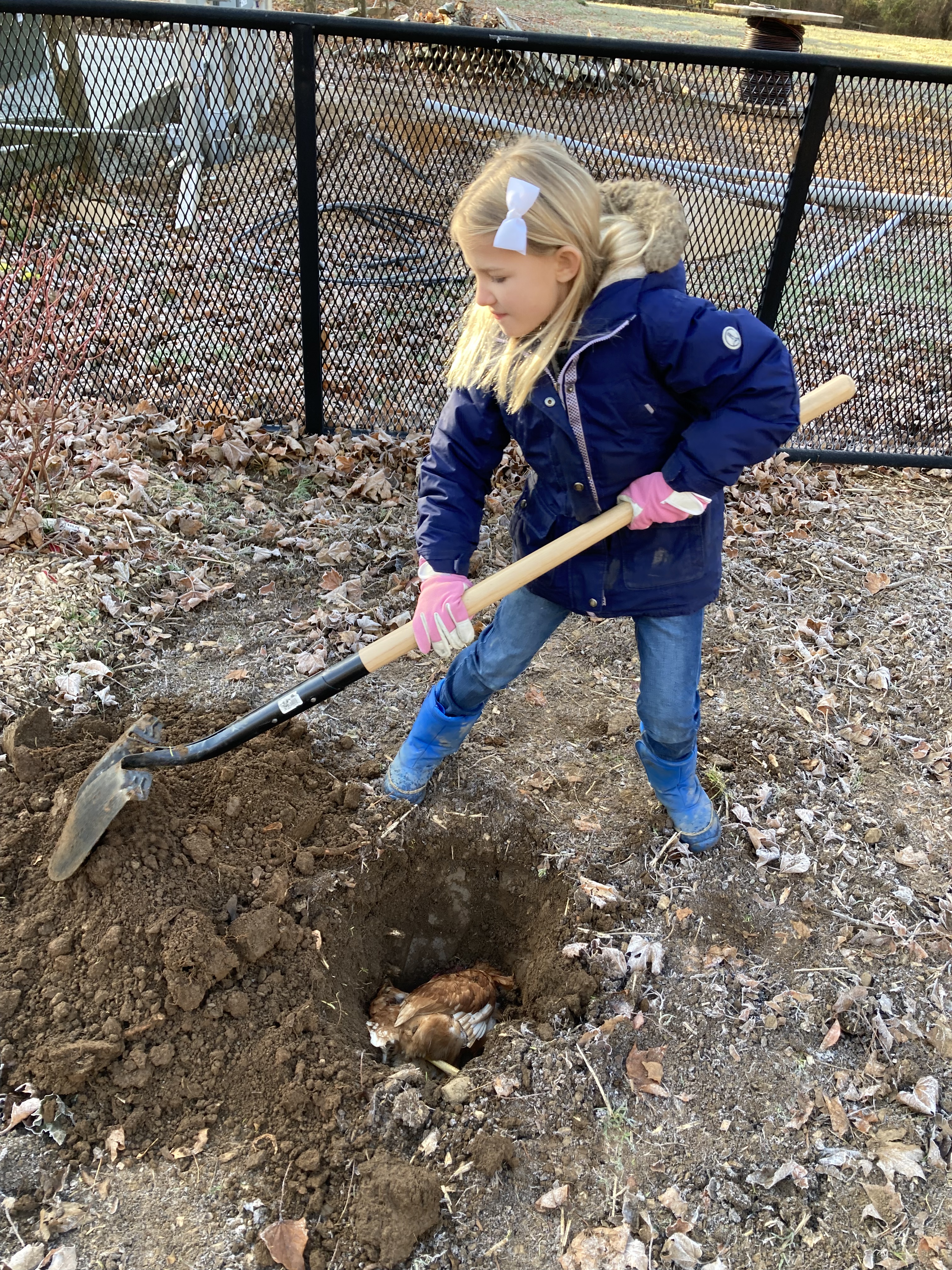
Granddaughter helped to bury the first two victims of the carnage.

As Sue Ellen told me what happened, she asked what to do with the carcass. “Make nuggets” seemed an inappropriate suggestion. 

Before we could fully get our minds around what had just happened, we heard the terrified squawking again. I rushed to the door and this time I saw the fox…with another chicken in its mouth. I threw open the door and for an instant was shocked silent by the fox’s beauty.   

But my anger at its audacity quickly overcame my admiration and I stepped out the door and shouted. It understood my threat and I was pleased to see it run away, leaping the fence as if the rails were a padded obstacle in tumbling class.

I grabbed my shotgun and followed the fox’s trail, knowing it would never show its head to me while I stumbled and tripped through its habitat. I felt better somehow, though, knowing I was “doing” something, at least dropping some “man scent” around so the fox would know who it was messin’ with.

The second chicken was still breathing, its legs twitching, eyes registering a resigned acceptance of fate. I dispatched it, then tossed it into the garden while I went to get a shovel. 

My seven-year-old granddaughter watched wide eyed the entire proceedings, dressed in the “farmer girl” overalls we’d given her for an early Christmas present the day before. 

Uncowed, she helped me dig a hole, her sudden awareness of the life cycle presenting her a sad, but not devastating new insight. 

The life cycle as presented on a National Geographic special sees the fastest lion chasing down the slowest antelope, and it all seems natural and normal, almost pristine, except for the dust. Eating a hamburger never makes me think of the feed lot on which the donor was raised. 

Yet, somehow, because we fed and cared for these chickens, tucked them in at night and gave them special treats from our vegetable shavings, it became a personal insult. 

Yes, they’re free range and hawks circle constantly overhead. Yes, the fox has to eat and yes, the prey/predator cycle is natural. But, the fox invaded my space with impunity, looking at me as if I was an inconvenient interruption at his meal, like a waiter who informed him he had an urgent phone call and he had to leave the cordon bleu to cool.

It was a sad morning, but only a prelude. 

Worse, we came home after dark that night and I went out to check on the chickens, to make sure they had put themselves up in the coop, where safety lay behind a closed door. I looked inside and there was not a single chicken in the coop. 

With a sickening dread, I cast my light over the field and the beam fell on multiple carcasses, each with the head and neck gone. The goats huddled in their own shed, witness to the horror. I followed my flashlight beam around the pasture, accounting for all the chickens but one. 

I found her in the far corner, shaken and shivering. She didn’t protest a bit when I picked her up and put her in the coop, behind closed doors. I don’t know what killed the chickens and I don’t know how this one survived.

We named her Lucky.


Living the John Deere Dream

I wake up each morning plotting my day around any task that will involve the tractor. 

I’m staying for extended periods on my son’s gentleman farm in Pennsylvania, the buildings and 20 acres of what was once a 500-acre dairy farm. All the homes that line Grubbs Mill Road sit on large lots carved out of this farm, which is more than two centuries old.

I try to order my day around tasks that will require me to use the tractor!

While staying in a cottage on the property – a cozy, one bedroom stone building converted some time ago from the dairy’s business office – I wake either to the rooster’s crowing, the goats’ mewling in the pasture just on the other side of my west facing patio doors, or workmen’s trucks pulling in to work on renovating the main house, built in 1811. 

Each day starts with a plethora of small jobs that challenge my brazen hubris that believes man can prevail against nature. 

The property has pastures to mow, fence lines to maintain, yards, flower beds and a garden to tend. House renovations leave rocks, tree limbs and shrubbery around the yard that need to go on the burn pile. Hurricane Ida piled debris along the stream and in the upper pasture; logs lay on the ground to saw and split. There is equipment to maintain and in the midst of it all, four grandkids to ferry to school and various activities. 

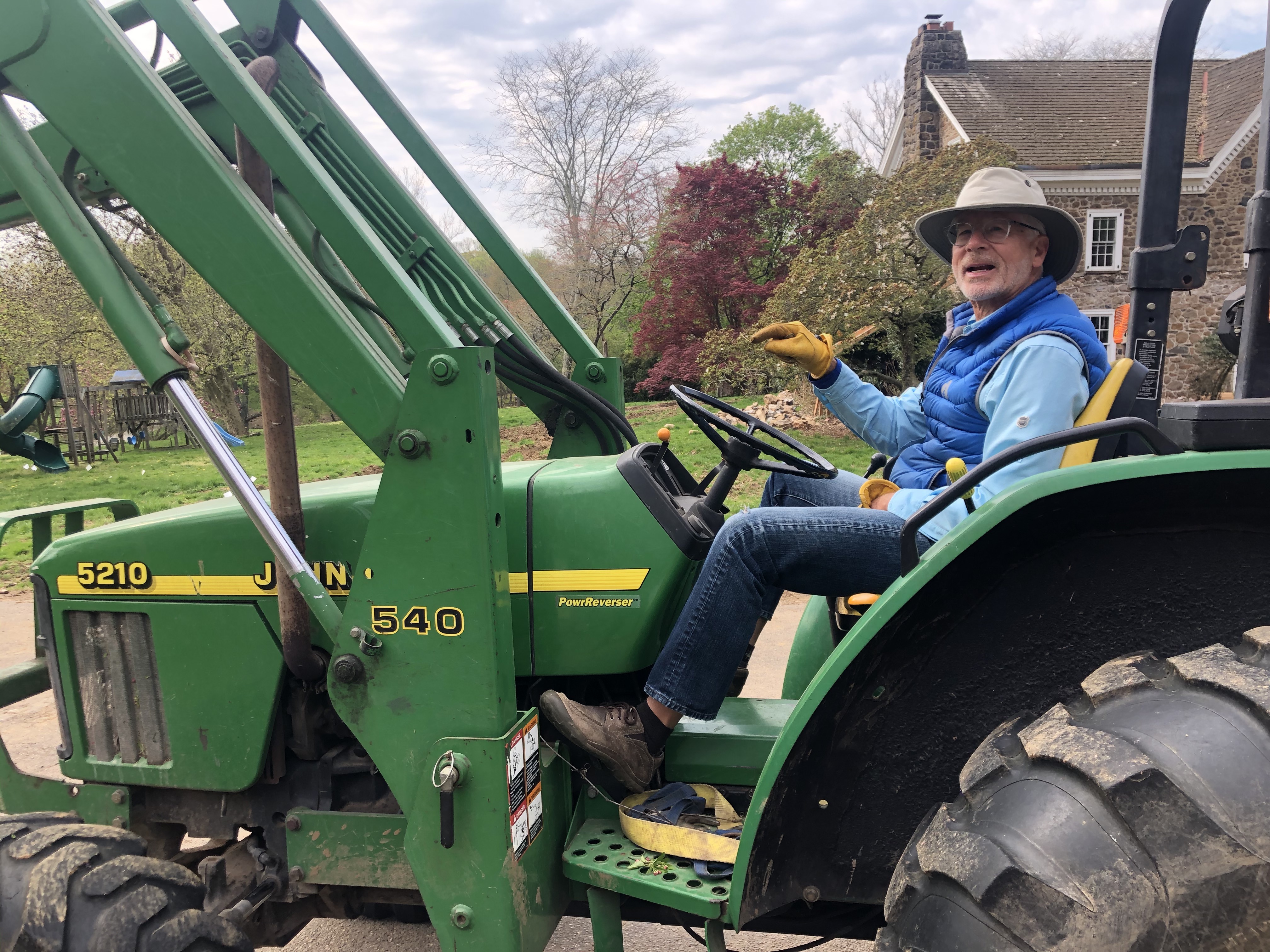
I love to drive the John Deere 5210 diesel tractor with front end loader. It takes me back to the farms on and around where I grew. The tractor on our 80 acres was a little Ford Ferguson. It must have been 25 years old when we got it. It didn’t have brakes then, and we never did get them fixed.

My Norwegian bachelor uncle Don milked 19 cows on his dairy farm and was always looking for help from his nephews. By age 11 I was driving his John Deere B that started by hand cranking a fly wheel, and his Allis-Chalmers and Farmall H tractors. I cut hay and pulled a baler, behind which Don loaded the bales. For four summers after I turned 16 I drove pea combines and sweet corn pickers for the local canning company.

Tractors rumble with power and when you sit atop one, with enough horses at your fingertips to pull a loaded wagon, or scoop up a load of rock, that power ripples through your nerves to give you the sense that you, too, are powerful. 

The Ford Ferguson I grew up with made up with a big heart what it lacked in muscle. 

Our fields laid fallow for several years, taking advantage of the government’s soil bank program, through which it “rented” farm land to keep it out of production – to artificially prop up commodity prices. Because our area was at the leading edge of a glacier eons ago, we were the unfortunate beneficiaries when it melted of all the rocks and stones it had scraped off the surface on its way south.

The annual freeze and thaw cycle pushed those stones to the surface and a regular spring job for farm kids in my area was “picking stones.” We had to get them off the fields to keep them from breaking plant and harvest equipment. 

Some of those stones were boulders as big as our little tractor. Their backs broke the ground like a blue whale about to surface. I’d dig around the boulder, wrap it with a chain and hook it to the tractor which would grunt and belch, straining to pull it out of the ground where we could pry it onto a “stone boat” – a sled of planks – and carry it off to a big hole in the woods.

Our little tractor pulled so hard its front wheels would rise off the ground. To keep the front end grounded and give us better traction, dad had me sit on the tractor’s hood, holding onto the radiator cap. My puny 130 pounds didn’t do much to keep the front wheels on the ground, but it was a fun ride. 

The workhorse John Deere on my son’s farm is a much more substantial tractor. But I had a similar “can’t keep the wheels on the ground” issue with it, this time with the rear wheels. I was using the bucket to try to lift a fence post out of the ground. 

When placed years ago, the post was seated in cement. Succeeding years saw tree roots grow around it. When I tied a strap to the post and pulled up on it with the bucket, I was shocked to feel myself sliding left to right in the air, my rear wheels airborne. It was a very insecure feeling, no matter how fleeting. I quickly lowered the bucket and my rear wheels returned to terra firma. From then, until the post finally broke off, my airborne rides were under conscious control.

My son’s family has been on White Horse Farm only a year. Seven-year-old Juliette describes them as the “White Horse Farmily.” Moving there from a big suburban house that bordered their school was intentional to give the kids a broader understanding of the life cycle, to give them meaningful tasks and thus the satisfaction of achievement, and to learn responsibility in a context where neglect may mean death of an animal.

Like John Denver, life on the farm “is kinda laid back” and that could be frustrating if finished product is the goal. The younger children, ages five and seven, come bright eyed, eager to learn and to help. But, their “help” sometimes prolongs the task and I cringe when dueling pitchforks threaten to knock out a tooth while getting new straw for the chickens.

I’ve learned though, that the most important thing is not the finish. As my son reassured me, working with the kids is not about efficiency, it’s about process. And we’re in the process of growing up, growing together, learning and living in an intergenerational context. 

And tomorrow I get to hook up the brush hog and cut the pasture. With the tractor. 

Sometimes you bite even when you know there’s a hook

Pardon me for a moment, while I pull the hook out of my cheek. Ahhh, there. 

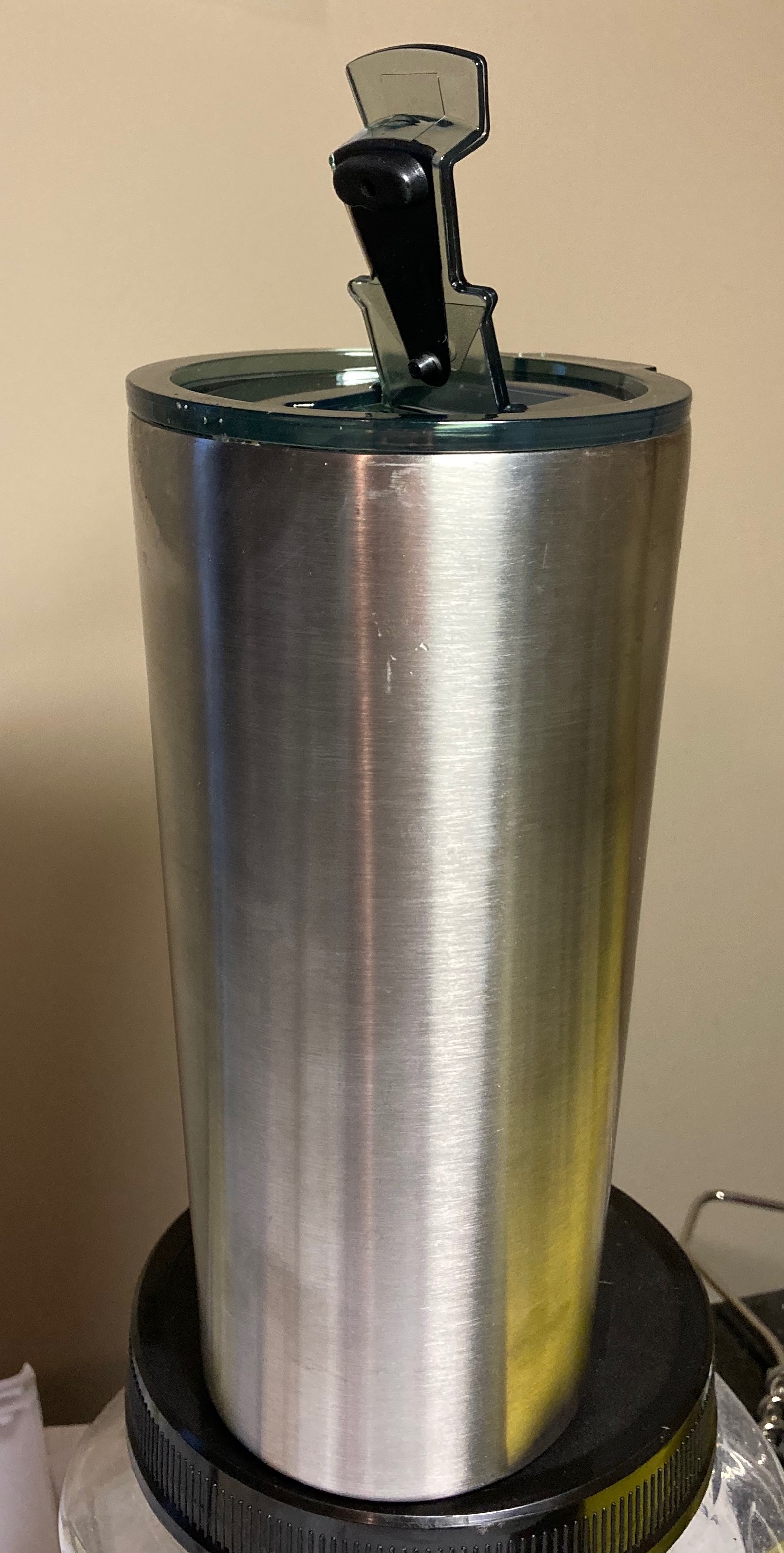
The tractor had no good place to store my cold drink cup and I forgot about it sitting on the floorboard while I brush hogged the pasture last week. Suddenly I heard a clunk behind me that rang an octave lower than the screech of hitting a stone hidden in the thick, tangled mass of long grass. And, it was an octave higher than when I ran the mower over a concealed limb deposited in the same tangle by the floods of Hurricane Ida. 

I looked back quickly to see a gray metal mass skittering across the mowed grass, having been kicked out by one or more of the nine blades spinning beneath the mower deck. My cup. Drat. 

My wife has for the past year been making what she calls fauxbucha – a homemade kombucha…which for her is a vinegar, cayenne, honey and ginger drink that does wonders for our digestive systems and cures a host of ailments: among them constipation, fungus, the national debt and likely the heartbreak of psoriasis.

I drink at least one glass of it a day – over ice from my cold drink cup – which is now a mangled tangle of cheap Chinese metal laying in the field. 

I’m prone to make myself suffer the consequences of my stupidity, so I wasn’t going to rush out and replace the cup. But Sue Ellen knew I wouldn’t be as faithful in consuming her magic elixir if I didn’t have a cup to take with me. So, the hunt. 

We drove to the Walmarts, where she had purchased the original doomed chalice. But, we could not find an exact Walmart brand replacement. Instead, there was a similar Coleman cup for twice the price, or, a Walmart brand cup with a different lid.

Cup, with the important lid.

You might not think the lid makes much of a difference. But, the patriarch of our family is prone to spills and the cup I lost had a magnetic, snap closure over the opening where the drink came out. This one just had a hole. It cost less than the original, but…the lid had just a hole. A juggle or jostle would splatter the drink over my jeans, or Sunday-go-to-meetin’ shirt.

I wasn’t about to get it. Not gonna do it. Wouldn’t be prudent.

About to give up, Sue Ellen spotted a display of snap close lids…made specifically for the cup I wanted – the very lid the original cup had featured. Now sold separately, for just $2.74. In what world would a product’s favored feature be removed and then offered as an option at additional expense? Oh, yeah, in the American marketing world. 

I knew I was had. I felt like a fish eying a dangling worm, knowing a hook lurked inside, but too hungry to care. I resented my hunger. I resented the marketing ploy to put undesirable lids on the cup and then charge extra for the lid I wanted. 

But, I mentally added the $6.94 for the cup with the unacceptable lid, and the $2.74 for the lid that would make the cup acceptable, and found the $9.68 total still to be six dollars less than any other option and I bit the hook. 

Who knew fauxbucha would sting on an open wound?