The wisdom of Bill

I was facing a big life decision recently so I went again to talk with my friend Bill. He’s the strong, silent type and a great listener but when he speaks, his voice always slices like a knife of insight through the goop clouding my thinking.

Bill’s place is very comfortable; shady with a great view of nature from where he rests – woodlands, pastures and now a large stand of loblolly pines that one day will be harvested. I laugh with him to think that when those trees are cut, people that have been driving by them for a generation are going to gripe and complain that the forest was cut down in pursuit of the almighty dollar.

They won’t remember the trees were planted 20 years earlier specifically as a cash crop to benefit the work of Baptist Children’s Homes of North Carolina, where Bill grew up, and lived and worked most of his career.

I can hear him chuckling and shaking his big ol’ head, rubbing the bald pate once forested with hair. The more time I’ve spent with Bill the more I realize he’s always understood people at a level much deeper than his easy-going nature typically revealed. He’s not snowed by the self-important preening of others who gathered around his table, even when it looks on the surface like he takes their words at face value.

I tell Bill how much I appreciate him, how he and his wife, Louise, took us in and showed us the ropes when I started working where he worked. I was a generation younger, in a higher “position” on the organizational chart and from another part of the country. None of that mattered, only that we respected each other, each worked hard and we all loved our children.

Bill doesn’t say much, but I know he cares. But, I digress.

I told Bill about the decision I faced. Comfort is cool; change is hard. His expression was stone cold, waiting for me to continue. The more I told him, the more I heard myself talking it through, the more it became clear which direction I should take.

I just chuckled. He’s always like that now, waiting for me to talk it through between us, without saying anything, knowing that eventually I’ll make the right decision.

With that out of the way, I tell him I know that he and Louise are enjoying their time back together again after several years apart, due to circumstances beyond their control. I catch him up on the kids, and sense his pride in them, as he’s proud of every kid who grew up at Baptist Children’s Homes, also due to circumstances beyond their control.

Bill acts as if he has all the time in the world, and I’m reluctant to leave him, but…life goes on. I thank Bill for his time and wisdom, rise to my feet, brush the fallen oak leaves from his headstone, and close the gate to God’s Acre behind me.

Thanks again, Bill. You’re always there for me.
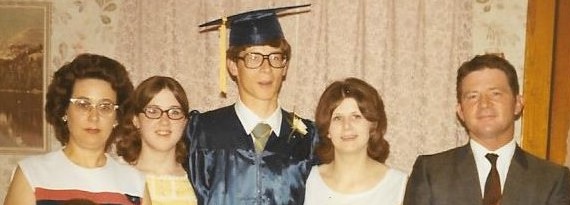
Mother’s Day 2019

HS graduation

Mom, left, at my high school graduation. Sisters Denise, and Linda, and Dad.

I know special remembrance holidays are fabrications woven to sell cards, flowers and candy. But this Mother’s Day is Sunday and something today about the beautiful weather and lunch with the mother of my children made me pause and remember my own mother, Barbara, who died at age 64 in 1996.

She was a lovely woman and a wonderful hostess, always ready for company no matter how late or how unexpected. I realize now we didn’t talk a lot, but she was always ready if I wanted to open up, not that she ever did. I never knew how ill she was until 19 days before she died.

Our night time ritual was for me to give her a kiss when I headed upstairs to bed. She was usually reading on the sofa and had a toothpick between her lips. She’d somehow make it disappear into her mouth while we exchanged a quick peck on the lips and then it would reappear.

I can still remember the night – and the look on her face – when I decided I was too old for that ritual. I had thought about it for a while and I agonized all day. Somehow, I knew what it meant. When I headed toward her, I saw her pop the toothpick into her mouth.

But, then I turned to go upstairs. Surprised, she said, “No kiss?”

“Ummm, no,” I said. She never mentioned it again but I think dad caught her eye and nodded, acknowledging silently that I’d climbed another rung on the ladder toward adulthood.

Mom was very prudish, embarrassed if anyone talked about body parts and she certainly didn’t tolerate her kids walking around in any state of dress that would not be considered “fully clothed.” On the day of my wedding she took me aside and confessed she probably ought to tell me about the birds and bees, “but you probably know more about it than I do, anyway.”

That, in its entirety, was her version of, “the talk.”

So, it was quite surprising when eight months later I brought my new bride home from Oklahoma to Wisconsin to meet the extended family. On the first night in my childhood home as a married man I found an apple on the bedside table. I picked it up, looked it over, shrugged, and put it back.

The next morning, I asked mom why she’d put an apple by the bed.

“It’s a contraceptive,” she said.

I laughed. “Was I supposed to eat it before…or after?”

“You were supposed to eat it instead,” she said.

I told that story in her eulogy. At the Lutheran Church in Rio, WI where we all grew up, population 788. My dad told me the population stayed at 788 because “every time a young lady has a baby, an older man leaves town.”

I delivered dad’s eulogy in the same room, 21 years later. It was the room where I preached the youth sermon – from the wrong pulpit, I learned later. In our divided chancel, only an ordained minister got to preach from the big, ornate pulpit that was high and lifted up. I could use that one legitimately now, if I ever get invited to preach there.

It’s the same room where I acted in Christmas plays – vying to be a speaking star, or an announcing angel and not just a silent, costumed figure filling out the scriptural cast. It was the room where I wore the costumes mom made, and later the coat and tie she picked out.

It was the room where she sat as the bride’s mom when my sister married, and as a grieving daughter-in-law when my grandparents were buried.

When I was a high school junior, I came home from a dance after the football game and woke my parents up to tell them, “I’ve committed the ultimate sin.”

They shot straight up out of bed and took a second to compose themselves before mom – who gave birth to my sister before age 18 – asked me tentatively, “Um, and what was that?”

“I asked a freshman to the homecoming dance,” I said, not understanding until later their audible expulsion of relief.

I know special holidays like Mother’s Day are made up. But, at least it’s a reminder to do or say something special to your mom at least once a year. Take advantage of it.

By the way, kids, Father’s Day is June 16.

Caught from behind

Basketball shot

We trailed the Fall River Pirates by 14 points with just six minutes left in the fourth quarter of a high school basketball game. Everybody beats this team, and we had too, earlier in the season.

Yet, we were getting creamed. Their fans were rocking. Ours were bewildered. My team finally put together a little rally to unveil a glimmer of hope. I was a starter, but not a star. I could shoot the ball, but as my coach told me, “You may not be tall, but you’re slow.”

The ball bounced off the opponent’s rim and I had a clear path to the rebound. I took it on the run and dribbled as hard and fast as I could the length of the floor toward our basket. Somehow a defender was there, between me and the basket. I should have slowed, faked left and gone right to the rim for a layup.

But, I didn’t dare slow down to make a move, because I was terrified of being caught from behind.

Our senior point guard could catch people from behind and knock the ball out of their hands and I always thought the guy who lost the ball must have been totally humiliated. Caught from behind. How awful. How embarrassing.

Instead, I dribbled right at the defender, and elevated to the apex of my 4-inch vertical, and shot the ball in his face. As any athlete can tell you, certain moments burn themselves into memory like a hot poker writing script on your belly, and you can recall them as if they happened after breakfast this morning.

I remember that shot because when I went up, the only thing I saw was a floating rim: no backboard, no bleachers, no lights, no ceiling, no defender. Just a big rim floating independently above me. I released the ball and fell down. I didn’t even know if I’d made the shot.

That moment returned to me last weekend during a mandatory quiet period at a four-day men’s retreat. The overall theme of the retreat – a “basic” event through Ransomed Heart ministries – was recovering a man’s masculine heart.

Speakers assumed every man carries with him at some level a wound inflicted by his father, a wound we must identify and forgive before we can be whole. After another thoughtful presentation, we were sent out to find a quiet spot at our expansive, wooded conference center to contemplate several questions relating to both our earthly and heavenly fathers, and our own willingness to grow into sons.

We were to consider the questions, “Where do you feel unfathered?” and “Where and how is your Father inviting you to become a son?”

“Since we are the sons of God, we must become the sons of God,” according to George McDonald.

I don’t know how those questions prompted the spirit of God to impress upon me the 48 year-old-memory of that rebound, race and shot moment, but the ultimate revelation for me is that I’ve lived my life afraid of being caught from behind.

It’s why I worked so hard, so long, at so many tasks, in so many places. It’s why I bit my tongue and choked down insights, information or contradictions I should have offered, rather than risking the opprobrium of my bosses, or peers.

It’s why I actually told W.C. Fields, my first and best boss in denominational life, that I was too busy to accept his invitation to ride with him in his glide plane on a beautiful spring afternoon. Dumb. One of my few regrets.

I had not learned to live into my position as a son of God, bold and free with a warrior spirit.

John Eldredge, author of Wild at Heart and the amazing Beautiful Outlaw, says a man’s greatest need is validation. I was too afraid someone was going to catch me from behind and expose me as insufficient, not enough, inadequate. If so, from where would come my validation?

Of course, the point is that all the validation a man or woman needs is to recognize we are children of God. No one can catch me from behind when the Father is reaching for my hand to pull me over the finish line.

I made that shot by the way. And we went on to win in double overtime.

Didn’t we just DO this?

Ornaments

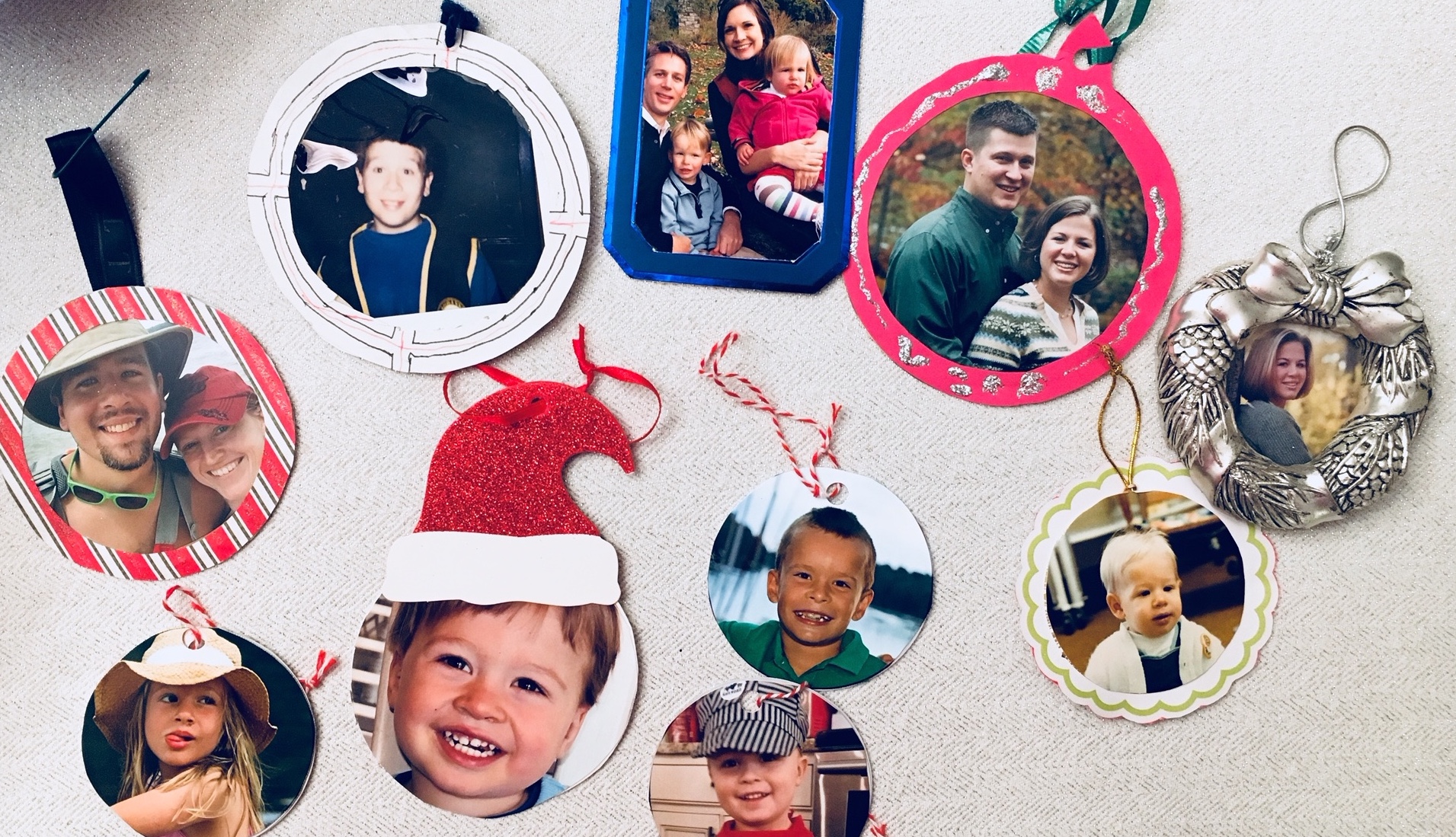
Photo ornaments trigger memories worth lingering over.

“Didn’t we just DO this?” I asked my wife rhetorically as I opened the plastic bins containing our Christmas decorations. Appropriately for the season, they’re big red bins with green covers.

I’d already hoisted the gloriously pre-lit Christmas tree and assembled its three parts to reach seven feet toward the ceiling. An old friend, now in at least its fifth season with us, it brings unalterable joy because when I insert pole A into receptacle B, the lights come on. Glory.

Married nearly 43 years, we’ve accumulated lots of ornaments for our tree. Glass, plastic, wood, hinged, felted, furred, tacky and holy, most carry special meaning because of who gifted them to us, our circumstance in life at the time and because each ignites a special memory.

Of all our special ornaments though, none are more precious than the very simplest. Prompted by a children’s project at Broadway Baptist Church in Fort Worth, Texas where we attended when I was a seminary student, we’ve made simple paper ornaments with our children’s picture on them – and now our grandchildren’s.

This night, as I sorted through the decorations, untangling hooks and surreptitiously dropping the Mickey Mouse ornament back into the bin, I reached for a nearly ragged paper ornament featuring a tow-headed 10-month old. I reached to hang it onto the tree for the 39th time and a realization of how quickly time passes washed over me like a fog rolling in on an early morning bike ride.

I’m not sentimental about things. I’m not a big historical preservationist. If there’s something in my closet you want, take it. But moments that seared themselves like a hot grill into the raw meat of our minds are precious and I’m going to keep them, and I’m going to cherish them.

I don’t know what brings certain things to mind. Circumstances, events, smells, accidents, the way sunbeams, thick enough with dust to walk on, lay a slanted beam across a field. But when that precious memory comes, when it invades your conscious self and demands that you stop whatever you’re doing and linger there awhile, do it. Don’t resent it. Don’t hasten its passing. Don’t regret the time you devoted to it when you could have been doing something “more productive.”

We hang nice ornaments, too. Colorful glass, embossed and shiny plastic, wooden figures. But it’s the simplest ornaments, made by the kids or featuring the kids, that we appreciate most. Simple, like the manger.

I’m kind of a scrooge until the last couple of weeks before Christmas. I resent the trinketized trivialization of the season. But if I will trudge through the motions riding the momentum of tradition it will hit me. That moment when I realize how much I’ve lived and what a glorious wonder each of those photo ornaments represents.

And my ice coated Scrooge heart melts and I’m awash with the blessedness of Christmas again. Merry Christmas to you, and may every happy memory be a carol in your heart.

My not good, very bad, horrible day

Last week I had a not good, very bad, horrible day.

Driving on my way to see a donor, from whom I was expecting a significant commitment, I phoned a pastor friend to catch up. We exchanged the usual professional and family information that makes men feel they are staying in rhythm with the heartbeat of their buddies. And I learned that his wife had left him. I’ve not been so shocked in a long time. They seemed to be thriving.

Fortunately, he handled the situation immediately and professionally with his church, and they demonstrated the love and commitment that he has earned there. The leadership unanimously wants him to stay.

Later, while waiting in the lobby of my donor friend, I received a phone call from the son-in-law of my high school buddy from Wisconsin who for the past several years has lived within 80 miles of me. I knew Don’s cancer was back, and he likely wouldn’t make it through the summer.

In fact, I had just checked the map to learn where his house was in relation to my meeting to see if I could run over there that day. I was still wavering between going that day, or waiting until next week when the son-in-law called. Next week would be too late, Chris said. In fact, that afternoon might be too late, as Don was leaving us today, he said in a broken voice. Could I come?

I promised him I would come as soon as I finished my meeting.

Over lunch with my donor prospect I learned his business was off by 35 percent and he would not be able to do for the foundation for which I work what he had hoped and planned to do. He’s a fine man, supportive, and encouraged me to stay in touch.

Pulling away, I called Chris from my car and said I’d be there to see Don in an hour. “Don has passed,” Chris said through his tears. I went anyway to be with the family. We shared hugs, tears, coffee and cookies and some laughs and memories.

The body that once held Don remained in the recliner, dogs in his lap. It would remain there until his son in California and daughter from Seattle arrived and said their farewells.

No matter how much time you have to prepare for a loved one’s passing, you’re never ready when that final breath rattles through the pipes and then falls silent. Don’s illness was terminal and this moment was inevitable. Just, as always, too soon.

That night my friend Steve in Omaha texted that he’d lost control when his bike hit a bump, and he’d broken six ribs and partially deflated a lung.

It was overwhelming really, this day of bad news, and I felt like a patch of dry grass in the path of the lava flowing down from Hawaii’s Kilauea volcano.

I was overwhelmed and yet strangely detached. Is it because these tragedies happened to someone else and I remained untouched? Or is it because I’m basically a stoic and consider these events – as painful as they were to those to dear to me – as merely ebbs and flows of the human experience?

Stuff happens. Nobody promised us a rose garden, yadda yadda.

I’d hate to think that absorbing the stings and arrows of those who sought my undoing in past days hardened my heart to such an extent that I had no soft spot left from which to squeeze a tear.

Or is it because the faith in God’s providence to which I cling truly is sufficient? I’ve often said during difficult periods, “These are not the times that try our faith. These are the times that prove our faith.”

Unfortunately, the opportunity for proving presents itself in trial.

Fortunately, faith is sufficient and trials prove it.

Written with Indelible Ink

I ruined my favorite shirt by failing to secure the cap on a pen I stuck in the pocket, and the ink stain was indelible. It wouldn’t come out. I couldn’t soap it, bleach it, scrub it, cut it or cover it.

Memories are like that. And the funny thing is, often it’s not the significant, dramatic, big events that wedge their way into the dendrites and axon terminals of your neurons, but little things that might have come and gone without comment or impact at the time.

My friend Tim Fields talks about that in his memoir “Indelible Ink: Adventures of a Baby Boomer.” You would like it. If you’re a baby boomer, you’ll like it a lot. He shares 16 events written in indelible ink in his memory, each of which shaped his life.

What makes a memory stick?

“Sometimes a simple comment from a parent to a child or from a teacher to a pupil can have a profound effect on someone’s life,” he writes in the foreword. “Even a smile, a frown, a wink or a raised eyebrow can dispense indelible ink. A congratulatory pat on the back or a punitive slap on the cheek can remain in a person’s psyche for life.”

I want to reemphasize the power of the right word. Little comments, angry words, insults, incautious words spoken at the wrong moment or secrets spilled worm into our memories in ways and with permanence we cannot explain or anticipate. Heartfelt, sincere positive words can just as actively attach themselves to our memories and have a much more beneficial effect.

I can point to a dozen memories, good and bad, that stick in my psyche half a century after they occurred, which at the moment seemed of no consequence. Some were throwaway comments by adults, directed toward me, or toward another adult that I overheard.

As a high school basketball player, I wasn’t tall, but I was slow. Because I could shoot the ball, I was on the starting five as a senior, but sixth man Sid was making a strong play for my spot. In the era before a shot clock, our strategy for the upcoming game against the league’s top team was to slow it down, just keep dribbling and passing out front, trying to keep the score close so a break at the end might fall in our favor.

Coach told me Sid was going to start in my place for that game because we needed his ball handling. That’s all he said. My interpretation of what he said was, “Norman, you’re a lousy ball handler.”

Consequently, when I did play in the game I was terrified of getting the ball and played poorly. Until then, as the team’s best shooter, I was all about having it in my hands.

I remember hearing my dad brag about my hard work when I split all the firewood piled in the backyard that would heat our house that winter. And my mom telling a friend that she didn’t really expect me to stick with the dreadful job of cleaning out cow stalls in the heat of summer after they had been unused and neglected for years. But I did.

I also remember Dad admonishing me for not wiping down the shower door in our one bathroom after he’d asked me to do it. When I told him I HAD done it, he pointed out a wet streak. I pointed out the rest of the shower, all dry, and said, “I wiped it down. I just missed a spot.”

When peach fuzz appeared on my cheeks, I used dad’s razor to scrape it off. After several months, he asked me if I was using his razor, because he’d noticed it not staying sharp as long. When I said, “Yes,” he asked, “Why? You don’t need to shave.”

“How would you know?” I asked him in one of the very few times I ever talked back to Dad. “I broke my glasses and held them together with white medical tape and it was two weeks before you noticed they were broken.” I saw hurt flit across his face.

I shot at some birds sitting on a telephone wire, not understanding the possible consequences of buckshot meeting wire. My grandpa Julius worked for the telephone company and it fell to him to come fix the line because the phones up and down the road weren’t working.

When he finished hours later, he came up to me and said it looked like someone shooting at birds had hit the wire. He paused, my heart hit my boots. Then he half-smiled, nodded, and went into the house to get a drink.

Of course, zillions of memories lurk in the crevices and canyons of my mind. Some can be called up instantly, others require the sharp impact like a boot to the brain when my ears snare some comment zipping randomly through time.

Whether we recall them clearly or not, the cumulative impact of comments positive and negative has a great deal of significance in shaping who we are. Remember that the next time your first reaction to a child’s silliness or clumsiness is to yell or say something hurtful.

It’s just words, but like an arrow they pierce. And like feathers from a busted pillow, you can never call them back.


I hate shopping, except for tires and mortgage

I hate buying new shoes.

My feet slip comfortably into the indentations they’ve formed in my old shoes like a nice hug. My old shoes form comfortably to my feet. Unfortunately, they also form to the ground and the ground and my toes are starting to kiss when I’m not looking.

My old shoes are comfortable, but the leather is so worn they won’t hold a shine anymore. The seams are popping, the heels are peeling and the soles have holes.

But I hate to buy new shoes because I never know about the fit. They’re stiff, but will they loosen eventually and conform to my feet? Although they’re the right size by the chart, they feel tight. Will they loosen up or do I need to go up a size?

I don’t like to buy new shirts, either. I can’t just get a “medium” because the sleeves are too short. I can get fitted shirts with a sleeve length that works, but I don’t wear “dress” shirts much anymore.

I hate to grocery shop because I don’t know where anything is. I could spend two hours in the grocery picking up half a basket full of food I need – and filling the rest with food that triggers my visual and olfactory nerves.

My wife is so efficient with her list she could make the same trip, minus the bad things I tend to toss into the cart, in 15 minutes.

The simple truth is I hate shopping period. I don’t want the fridge to empty, or my underwear to get holes in them. I don’t want to stand in front of the Red Box and try to pick out a movie that will satisfy everyone.

I don’t want to have to pick out the roses for Valentine’s Day.

But there are two things I don’t mind paying for: my mortgage, and tires.

There is something satisfying about providing my family’s cave of safety, the abode alamode, the harbor of peace and haven of labor. In many modes and varieties, it’s where we raised the kids, where we come home each night.

I help in an overflow homeless shelter and the women who sleep there wake in the morning not always certain where they’re going to spend that night…or if they’re going to have a safe, dry, warm place to lay their heads.

My home anchors me in the world. I have a place, an address. I belong. When the snow falls outside, I can watch it through the window while sipping hot chocolate. I don’t have to wade through it to find a spot under a bridge, over a grate or in a doorway for shelter.

When the kids come to see us, when the grandkids come to Nana and Papa’s house…this is where they come. When they think of us, their visual is this house, these bricks, the backyard where we throw the ball, the garden boxes at the side, the deck where Papa grills the burgers. I keep my bike in the garage here.

I slide under the covers in a bed in this place, and God willing, I’ll do the same thing tomorrow and every tomorrow I have.

This is my home and I’m glad to pay the mortgage on it.

Tires aren’t quite so romantic, but I get a warm glow when I think of how they keep me from danger. Think of it. You’re racing 70-80 miles an hour down a highway littered with debris and broken asphalt, massive trucks close enough to touch, crazy drivers weaving in an out, curves that test your grip, wet weather, even snow. What is the thin black line keeping you from careening into a ditch, wrapping yourself around a tree or flipping end over end like a stunt car driver in a Marvel flick?

Your tires.

Years ago we made an extended trip from Nashville, to Wisconsin to drop the kids off and on to Pennsylvania for a meeting. Hours on the road, high speeds, mountains and summer heat.

I pulled the car into the driveway, glad to be safely home. Unloading it, I looked at the tires…so bald the steel belts were showing. That morning I drove the car 70 miles an hour down the interstate. That afternoon I was afraid to drive it 25 miles an hour to the tire store.

Ever since that day, I’ve been very conscious of my tires, maybe even replacing them sooner than required. But the peace of mind knowing they can roll over a stone in the road, or a piece of glass or handle a rain slick curve is worth the nominal price.

Someone told me once don’t be afraid to spend money for a good bed and a good pair of shoes because you spend your whole life in one or the other.

I’m saying don’t feel bad about your house payment or rent, and keeping good “shoes” on your car. They’re good investments.

Too late to make old friends

IMG_1277

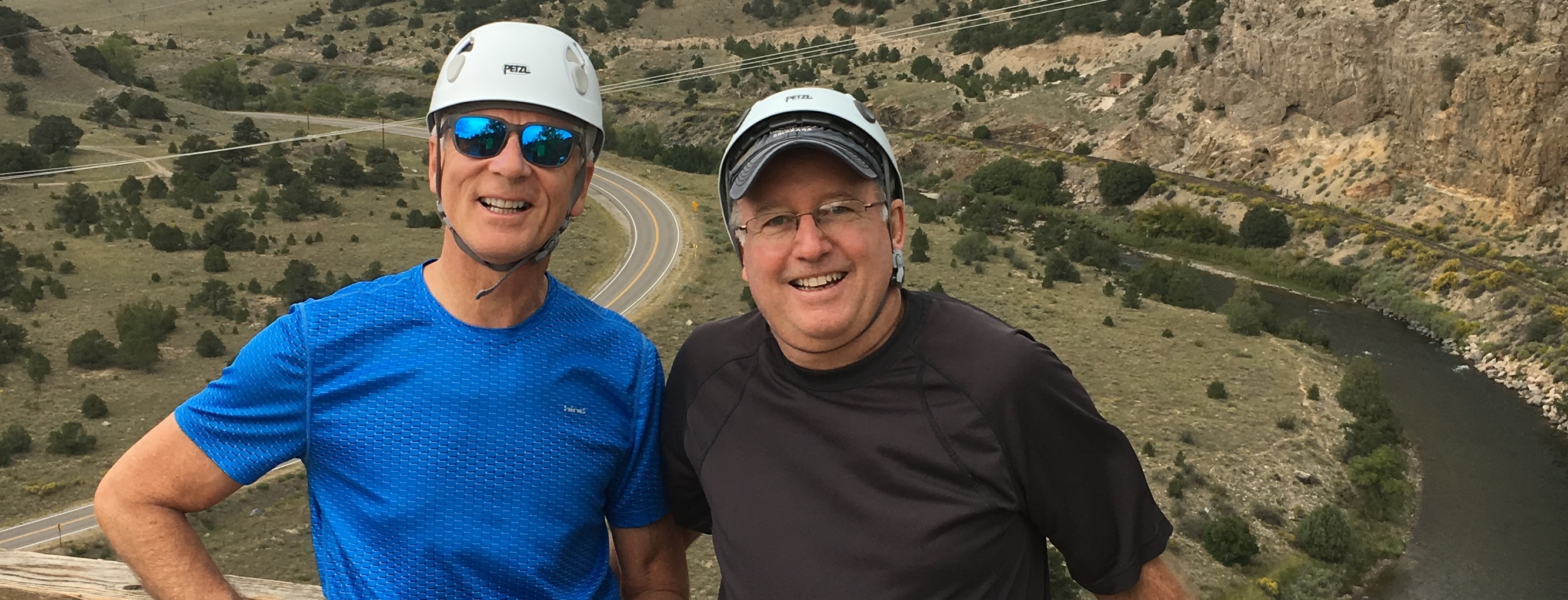
Loren, right, and me zip lining in Colorado in September.

Three of my oldest friends attended my youngest son’s wedding Nov. 4 in Nashville, Tenn.  Army buddy Steve  came from Omaha. College roomie and brother-in-law Loren came from Colorado to officiate the wedding and college friend and professional colleague David is now a North Carolina neighbor. I’ve known them since 1972, 1973 and 1974.

At the end of a long day as festivities wound down and the men hung around outside talking bold and large my oldest son noted the attendance of these three men and wondered aloud if he had a current friend who would feel close enough to him and his family to go to inconvenient lengths to attend his son’s wedding in 10 years or 20.

Bonds forged in common experience lay the groundwork for strong relationships, but they will wither without attention.

Steve and I were draftees into the Army in 1972. He had graduated from University of Iowa. I had just finished one year at Luther College. President Nixon, wisely, had eliminated the college deferment.

Steve being a bit older was great because at age 21 he could rent a car and drive us to Corpus Christi, Texas where I saw salt water for the first time. We camped on the beach and wore our Army issue boxers as swim trunks looking for all the world like gaunt porcelain survivors of shipwreck on a sunless island.

And thinking we looked like quite the macho dudes.

It was the denouement of the horrible war in Viet Nam. As draftees, Steve and I had no say in where we would be stationed after our training as medics. With other Christian friends, we debated long and hard about whether we would go to Viet Nam if so ordered. Those are conversations that tear off any veneers that keep deep friendships from forming.

Later we were in each other’s weddings, and connected when we could during his tours as a missionary. I did a story on him and Oh Be Joyful Chapel, a church he started in Crested Butte, CO. In the past decade, we rode RAGBRAI together with my son, Austin, whose wedding we were celebrating.

Loren has been my friend since Steve and I were stationed at Fort Carson, CO. We met in church and when I decided I wasn’t going to return to Luther after the army, he said, “Come to Oklahoma Baptist with me. We can room together.”

Loren instantly became a popular figure on campus, launched by expert participation in The Dating Game which was a part of freshman orientation. But in reality, his dating options were pretty limited because he had fallen for a girl back home — my future wife’s sister.

Consequently, Loren and I have been a part of the same family for four decades. But we were friends first, sharing a love for the Lord, a heart for family, appreciation for the outdoors and for relentless pursuit of laughter.

David was my hero at OBU as the all-star journalism student. We did a radio show together, and dangled our feet in the lake on a sunny spring day contemplating futures and prospects that seemed as limitless as the Oklahoma horizon.

Our career paths intersected many times in Baptist world. We both endured the machinations of denominational politicians who cloaked their motives in the Bible and we helped each other when we could. We visited in each other’s homes in various states, worked together at meetings and oversaw our kids carving pumpkins together for several years.

I was in or attended the weddings of each man, weddings that each have endured 40 years or more.

And now, here they were at my son’s wedding. And my sons not only appreciated them, but their presence gave my boys pause to consider if they have been nurturing friendships that will endure through decades.

Common experiences start friendships. Continued shared events nurture them.

Is there a buddy’s face you’d like to see; a laugh you long to hear, an experience you’d like to relive? Don’t wait for him to call.

It’s too late to make old friends.


Climb a tree

Farm winter

The uppermost pine tree provided a new perspective on a familiar world to a boy willing to take a risk and climb to the top.

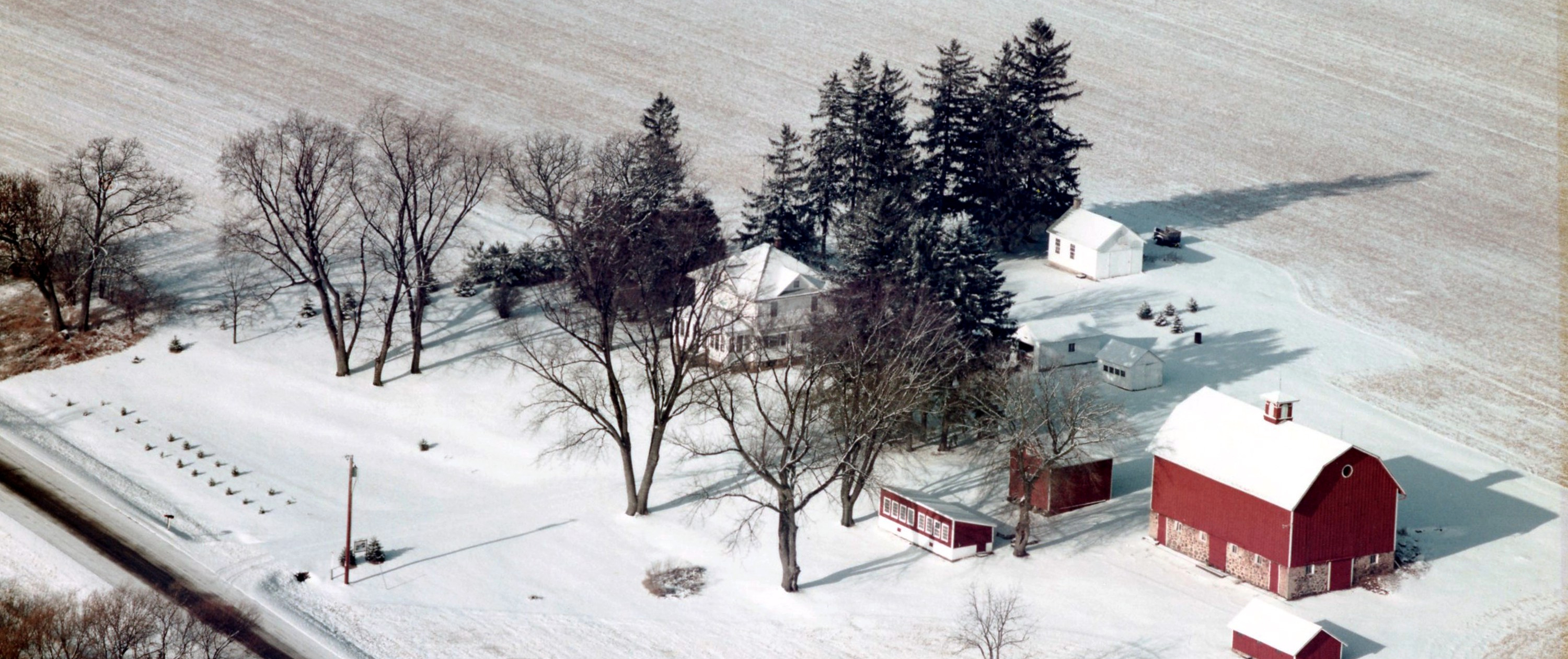
A newly enhanced, freshly framed aerial photo of the Wisconsin farm on which I grew up now adorns a bookshelf in easy view. Of course, every time I look over at it, I’m struck with an indistinct nostalgia.

Aerial photos are nothing now, with the advent of drones making common what once was a rare perspective. But this winter view of the farmhouse and out buildings where I roamed, explored, risked and discovered was unusual in the 1970s.

Entrepreneurial pilots provided such shots. They got them by leaning out windows with their cameras, and then taking the pictures to the farms they’d photographed to try and sell them to the farmer. Judging from the aerial photos I saw hanging in the kitchens of my friends, the pilot/photographers were adept at making the sale.

One of the features in the aerial photo of my home place is a row of very tall pine trees, forming a windbreak on the west side of the buildings. They were very, very tall trees when I was a kid. Now, they’re just tall.

Limbs on one of these trees grew almost like a spiral ladder, making it easy to climb. I scurried up that tree often and each ascent lifted me to a new perspective. Oh, not as dramatic as the aerial photographer provided, but still, a new look at a familiar world.

As I got older and braver, and my experiences at lower heights confirmed my ability to climb higher, I ventured onto the thinner limbs above me. These limbs were not as strong or secure. I didn’t feel supported and when the wind blew, the top part of the tree to which I clung swayed.

I wondered if it could support my weight, or if the thin trunk here would snap under me. I actually wondered sometimes if the lower branches would break my fall or even stop me from hitting the ground, or if they would break under my accelerating body mass should I plummet toward the ground.

I was nervous, yes, because I was clinging to an uncertainty. Yet the certainty learned from previous experience lay beneath me, just a step away.

Of course, mom and dad didn’t know I was climbing this high in the old pine tree. They did know I climbed it to a “safe” height. I built a tree house in it that I proudly showed them. But if they knew I was climbing so high, they would have been very nervous, and might even have forbidden me to do it. Or, they might have encouraged it.

That’s how we learn, isn’t it? By how we stretch the boundaries of what we know, of what we can be certain? By taking a risk?

It’s safe to learn to ride a bike when dad is running beside you with his hand on the seat. But you’re never actually riding a bike until he lets go.

It’s safe to learn to swim in deep water with mom’s hand under your belly. But you’re never actually swimming, until she lets go and you kick and paddle your way to the side, discovering on the way, that you no longer need to fear water.

You learn it’s safe to jump across the creek because wading at the edge taught you it’s not very deep anyway, and if you fall in, you’ll only get wet.

You learned to climb a ladder because you climbed a stepstool. You learned to pull yourself up on the monkey bars because daddy held you up at first. You take risks based on confidence achieved at a lower level.

We need to let our kids take risks.

I know, danger lurks around every corner in a parent’s mind. To let them risk climbing a tree might result in a broken arm. To risk learning to ride can result in a scraped knee.

But the alternative is a clinging, insecure child who will not venture out of sight of his parents. Translated to an insecure adult who will never reach for opportunities the next limb higher.

Let’em ride fast down the hill, jump the creek, camp in the back yard, run ahead of you on the hiking trail, attend the college out of state. You can’t protect them from every risk. You don’t want to.

Let’em climb a tree.


To catch a hero

glove

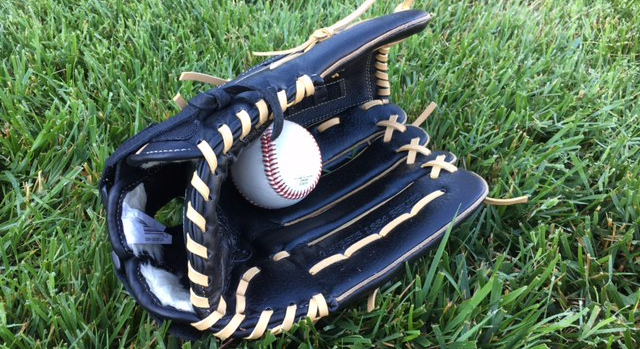
It’s just a glove, but when you’re having a catch with a child, it’s a dreamcatcher.

I spotted my first baseball glove in the old Gambles store in downtown Rio, WI (population 788) when I was a kid. You could get anything in that store, from baseball gloves to washing machines to a nut and bolt to hold the wing onto the airplane you were building to fly off the barn roof.

If they didn’t have it, you didn’t need it.

The glove listed for $4.75 and in my imagination it promised to make me field the ball like Willie Mays, hit like Harmon Killebrew or pitch like Sandy Koufax. That’s the promise I saw in that copper colored, slotted slab of leather.

I actually dreamed about that glove between the time I saw it and when I finally got it. I dreamed about flagging down impossibly distant fly balls; of tossing the glove into the air to knock down a potential home run ball before it cleared the fence; of stretching at first base to snag an errant throw and save the inning.

That glove was going to make me a hero.

When I had saved enough I grabbed the bills and all the coins off my dresser and went to town with mom. I marched into Gambles to claim my dream – I mean, my glove.

I carefully laid it onto the counter and when the proprietor rang up $4.88, my heart sank. I hadn’t accounted for the tax man in my saving. My stomach tense, heart pounding, I dug deep and when I put every single penny I had on the counter, it totaled $4.88.

Dreams come true.

I slid that glove onto my hand with the excited reverence of a woman pushing her finger into an engagement ring for the first time. Its exotic leather aroma conjured up dugouts, strikeouts, shutouts and the hero headlines sure to come my way. I couldn’t wait to find someone with whom to have a catch.

Of course, that glove and a successor found a way to get lost in the ensuing years. But I’ve got grandsons now – and a granddaughter – who always want to have a catch. On Memorial Day weekend Grayson wanted to show me how hard he could throw. No problem, I thought. He’s only 8. I don’t have a glove, but I’ll wear my leather yard gloves and catch a few.

I’m writing this with a severely bruised hand. I also own a new glove.

After the last “ouch” I could tolerate, I hauled Grayson to the sporting goods store. One minute into the store I thought I would not be getting a glove that day. The least expensive glove on the wall was $350. They went up from there.

Then Grayson found the rack for mortals and I scanned the price tags to the bottom where they stopped at $50. Ahh, I thought. “That’s the glove for me.” Its other attributes were irrelevant.

Grayson and I headed back home and had a catch. He didn’t have to hold back for fear of hurting my hands and the snap, pop and sizzle of the ball smacking the pocket was an ear worm of joy.

Fifty dollars is still a lot to pay for a baseball glove. And I’m going to take care of this glove for the precious tool it is. Because I have 17 years of having a catch with grandchildren before the current youngest is out of high school.

And I want to be their hero.

Norman and glove

My cousin Sandy saw this post and found my glove on video! Given the event, I was about in fourth grade. That’s Sandy, trying to wrest it from me…