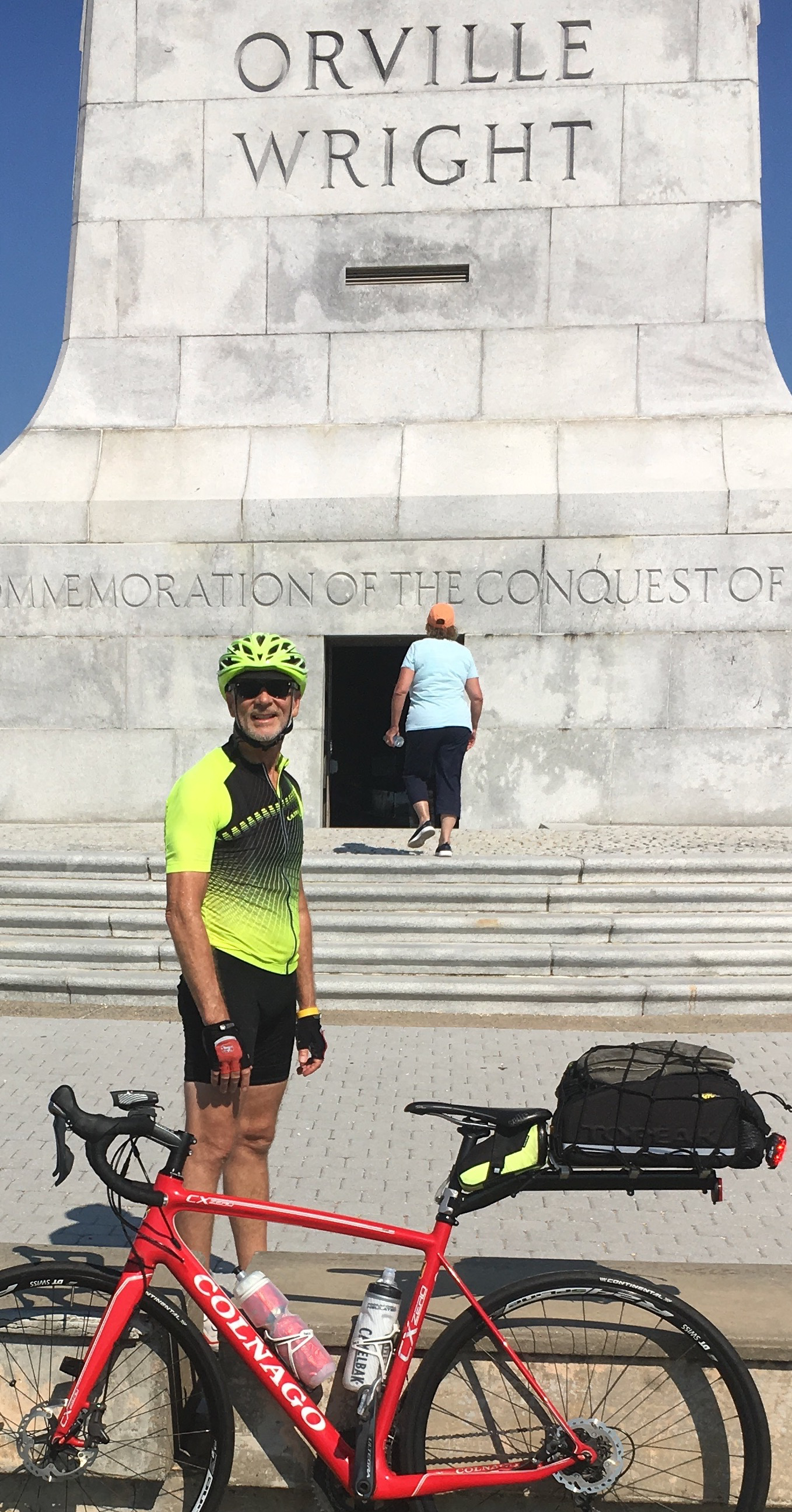
The day I turned old

I turned old on August 30, 2025. I know the day. And the hour. And the moment.

No wonder the young lady stood to offer me her seat.

For much of my life, I looked younger than my age. I was a husband, father, and owned my second house before I shaved every day.

About age 26, I was in the barber chair with my hair wet and glasses off and my wife walked in, ready to take me home when I was finished, since we managed with one car. The barber noticed that she caught my eye, and asked, “Is that your mother?”

Later we listed some furniture for sale, some of our original “we-need-something-and-this-will-do-until-we-have-money,” pieces. A college girl called, said it would be perfect for her dorm, and arranged a time to come pick it up.

When I answered the door, she looked at me and asked, “Is your mother home?”

To say I was devastated is to say the Johnstown Flood was a trickle. I was floored. It took me days to get over it. Evidently, I still haven’t.

I was a college graduate, Army veteran, working a professional job with national connections and a college girl sees me in my Saturday morning T-shirt and jeans and asks if my mother is home.

I told her my mother lives in Wisconsin, 640 miles away, but if she’s here for the furniture, I can help. And then my wife picked me up off the floor.

Eventually, the sirocco winds of life aged my face, bleached my hair to arctic blonde and added enough wrinkles that I didn’t have to say, “No, really” anymore when my age came up.

My oldest son shares some of my facial features and when I’m introduced as his father, his friends invariably say, “I could’ve guessed.” I keep hoping one day someone will mistake me for his older brother.

Which brings me to the fateful day when the harsh reality of simple observation by a stranger shattered the mistaken impression that all the mirrors in my house are broken. I walk past a mirror, see the image it reflects, and I know that grizzled face can’t be me.

And yet.

In Budapest, Hungary at the beginning of a Danube River cruise taken to celebrate the 50th anniversary of marriage to a beautiful woman I had bamboozled long enough to convince her to marry me, the curtain came down on my illusion.

I stepped onto a tram car and a young woman stood to offer me her seat.

Glass shattered. Ego crumbled. Humility fallen over my shoulders like a granite yoke.

I implored the innocent to return to her seat. Over a language barrier, my pleading eyes, exasperated face and arm motions made my intention clear. “Please. No. Take your seat. ARRGGG.”

She politely declined, and I resolutely remained standing, amid the laughter of our traveling colleagues.

The insult of reality was exacerbated the next day when on a similar tram, my wife was warned that a conductor was on board and was checking tickets. In Budapest persons over age 65 ride public transportation free.  The local was kindly warning my wife that she needed a ticket.

Sue Ellen graciously informed her that she didn’t need a ticket, because she was 70. To which the kind commuter expressed astonishment, of course.

She then looked at me, seeing I was with Sue Ellen, and I swear I heard her ask, “Is that your father?”


‘/

Are you as good as dead?

While collecting shellfish in Australia, Eric Nerhus was bitten almost in half and swallowed by a 10-foot shark.

Swimming 25 feet below the surface, Nerhus, 41, was grabbed over his head by the shark, which took half of Nerhus’ body into his mouth. He was as good as dead.

Thinking quickly, he reached up and poked the shark’s eyes with the chisel he used to collect abalone.  The shark open its mouth and Nehus wriggled out.

Nerhus estimates he spent two minutes inside the shark’s mouth and said his chest was protected from the shark’s sharp teeth by the lead-lined vest used to weight him down as he scoured the ocean floor. He swam to the surface in a cloud of his own blood, where his son helped him into the boat and rushed him to a hospital.

The 2010 movie “127 Hours” featured the dramatic story of Aron Ralston whose arm was pinned to a rock wall by a suddenly shifting boulder while he hiked Utah’s Blue John Canyon.

No matter what he tried to dislodge his arm, he was trapped. After four days his water ran out and he drank his urine. On the sixth day, Ralston realized he was as good as dead.

Then the 27-year-old mountain climber did what he’d always known he had to do, but could not bring himself to do when he thought there was an option. Using his own body weight for leverage, he broke both the bones in his forearm. Then, with his pocketknife Ralston cut off his arm below the elbow and applied a tourniquet. He then rappelled 60 feet to the canyon floor and started walking.

He walked seven miles before encountering two tourists who called for a rescue helicopter.  

What’s the point?

Neither Eric Nerhus nor Aron Ralston are dead. At that point in their lives when there was no prospect for more life – when they were as good as dead – they found a way.

Ever thought you were “as good as dead?”  Or wished you were?

  • In the midst of company chaos, your boss approaches you with a grim face;
  • A truck in the approaching lane veers into yours;
  • You discover your father’s debilitating illness is hereditary;
  • At a conference in his office, your docor leans forward and says, “I’m sorry.”
  • Your job loss has led to anxiety, depression and a mortgage foreclosure;
  • You face an impossible financial burden to make good for a child’s accident, illness or bad mistake;
  • A dark secret you’ve carried is suddenly revealed.

Jesus’ friend Lazarus was not only as good as dead. He WAS dead. Then Jesus exercised his power of life over death and he raised Lazarus, demonstrating to us though we be as good as dead, we still possess the life option.

The same is true for a host of other biblical characters. Young David could have killed King Saul (I Sam. 24) when Saul was relieving himself in a cave and David crept in behind him and cut off a piece of his robe. Saul was as good as dead and didn’t even know it.

Joseph had a coat of many colors (Genesis 37), and was his father’s favorite, when his jealous brothers threw him into a cistern to die. He was as good as dead.  

Shadrach Meshach and Abednego were thrown into the fiery furnace; Daniel was tossed to the lions; Jonah was swallowed by the great fish; the adulterous woman dragged for stoning by an angry mob.

Why did God rescue them? Because God had a higher purpose for their lives and something in that near death experience equipped them for that purpose like nothing else could!

Your faith isn’t feeble in the face of life threatening odds. It’s most flaccid when you operate only in the realm of your own abilities, when you’re deluded enough to think you can “do it yourself.”

My favorite traditional hymn is “A Mighty Fortress is Our God.” Verse two says, “Did we in our own strength confide, our striving would be losing.”

Remember, when your dreams and promises appear to be as good as dead – yet they breathe. Aron Ralston wandered out of the dessert after cutting off his own arm. Eric Nerhus fishes again. Childless Abraham, whose body the Bible says was as good as dead, became the father of a nation.

Senior adult groups have many adorable names. One of my favorites is the ADY – Ain’t Dead Yet – Club. Circumstances may conspire to make you feel you’re as good as dead, but guess what.

You Ain’t Dead Yet.

Going to need extra chairs

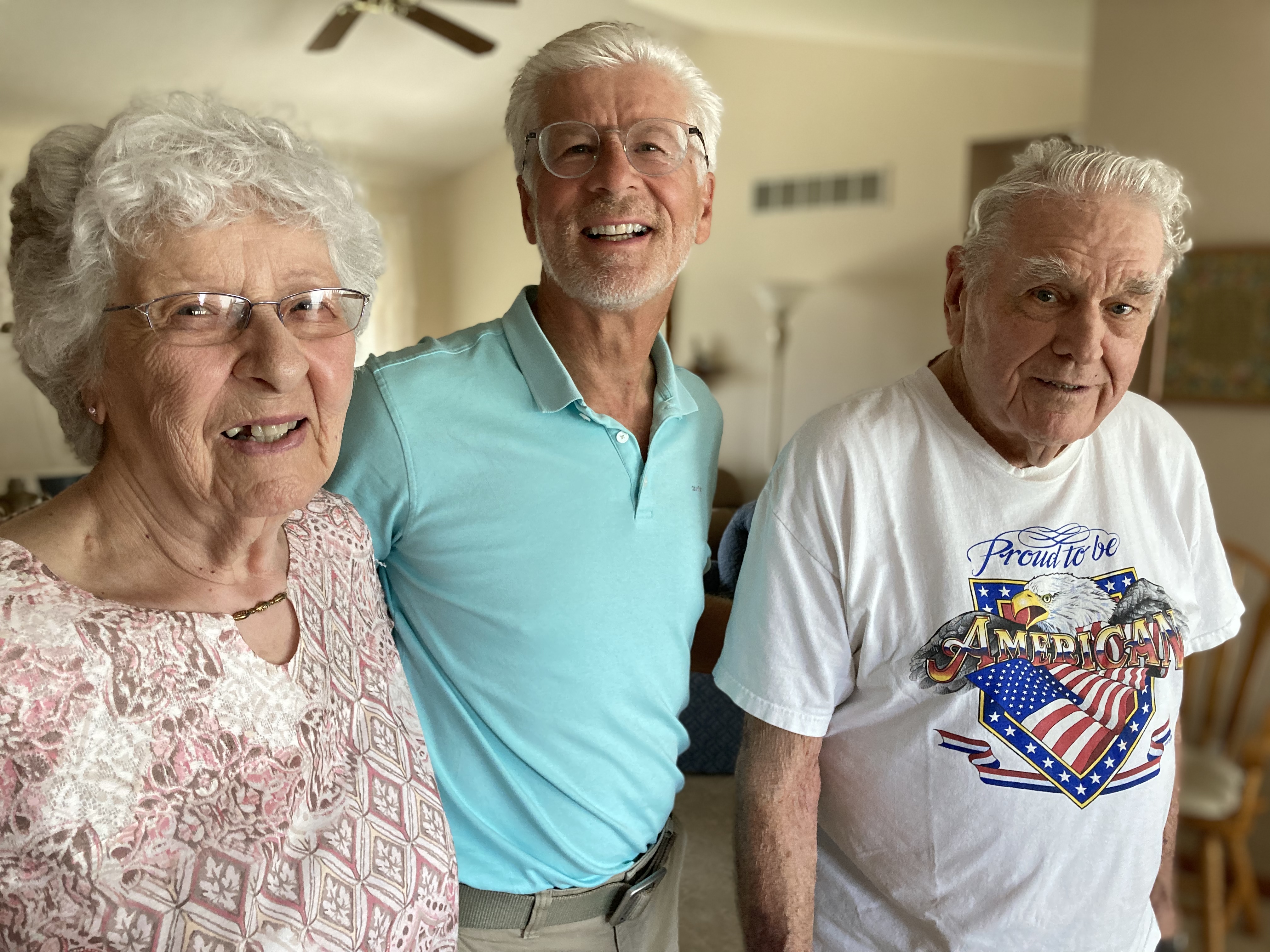
Me in the middle, with Janet and Bill in 2021.

When my grandmother died in 1979, I drove my young wife and one-month old son from our home in Nashville, TN to the funeral in Wisconsin. Grandma was young enough to have a large funeral, just 72 years old. My age.

Of course, in Rio, WI, population 788, funerals were as big a social event as Friday night football at the field in Fireman’s Park. I didn’t play football. I ran cross country instead, which I convinced myself was harder.

But I was at the football games, either running the sideline keeping stats, or in the stands playing “CHARGE” on my trombone.

After grandma’s funeral service at Redeemer Lutheran, one of six churches in town – equal to the number of bars – everyone gathered in the church basement for a lunch prepared by women of the church. Because the meal was free, and there wasn’t much else happening in town that day, the room was crowded.

My wife was most concerned with the one-month old son not accustomed to the noise and crowd and whose only real concern was keeping his tummy full and his diaper dry. So, he started fussing and wailing and that’s not the sound you want to hear piercing the din of chattery family members chowing down on store bought dinner rolls filled with a slice of ham and a slab of butter, potato salad and red Jell-O with marshmallows.

Suddenly, from across the entire fellowship hall, packed hip to hip at the folding tables, my aunt Janet yelled, “Give that boy some titty!”

Now, in another context other than a rural Wisconsin farming community, that comment might have seemed out of place, even impolite. Certainly it caused all the blood in my wife’s body to flush to her toes and then recongregate in her face, making her flush a brighter red than the Rio High School Vikings mascot. But, it also gave her the freedom to excuse herself, find a quiet Sunday School classroom, and take care of our son’s immediate need.

Aunt Janet died this week, at age 91. She was my mother’s last surviving sibling and mom preceded her in death by 29 years. They were two of eight siblings, prompting my grandpa McFarlane to say he had “Two and a half-dozen children.” When grandma McFarlane died, petty sibling grievances broke familial bonds and later on, as one sibling after another died, obituaries did not list all surviving family members, as if they never existed.

But Aunt Janet was always a friend, in part due to the loquacious character of her husband, Bill, a former police officer and much longer a seed corn salesman who knew every farmer and what they needed most. Bill preceded her in death by three years.

I confess Janet’s was the first bare breast I ever saw, as I stood wide-eyed at age five while she fed her first born son, Mark, a man who grew up to be a Presbyterian pastor, nurtured as he was on the milk of human kindness. He could preach from I Peter 2, “Like newborn babies, crave pure spiritual milk, so that by it you may grow up in your salvation.”

Janet and Bill had five children and 10 grandchildren and money never flowed like water over Niagara. Janet always put her hand to the wheel to find additional resources, driving school bus for more than two decades and making wedding cakes for lucky brides and grooms.

She looked at driving bus as ministry, taking the opportunity to offer a bright, encouraging word to children with dour faces, lifting heavy, reluctant feet up the step on the way to school.

She was certain of opinion and ready with advice.

When Janet learned my cousin Allen smoked, she asked if he would rather kiss a girl or an ashtray. Allen, sarcastically defending his nasty habit, told me he responded “Ashtray.” He’s since grown beyond that – both in girls and habit.

 Janet and Bill built a house on a hill overlooking that of her mother Eva and she was diligent in looking after her mother to the end. Eva –my grandmother on my mother’s side – expressed concern that bad weather would limit the size of her funeral. She was mentally comparing her eventual celebration to the big crowd that showed up for her husband’s sendoff. In her mind, her funeral would suffer by comparison and somehow that would reflect negatively on her life.

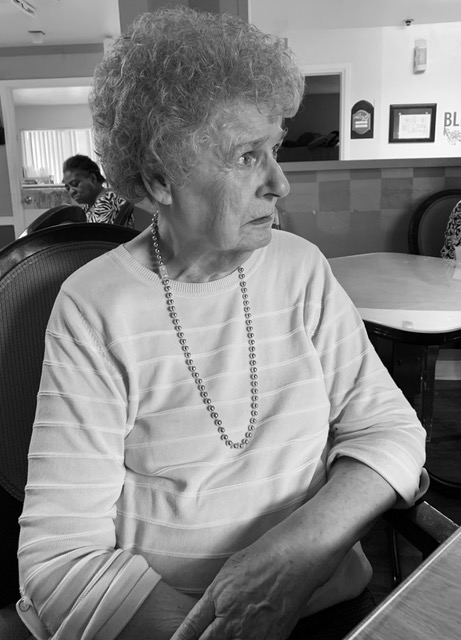
Though such comparison is a false equivalency, if every person whose life Janet affected positively were to attend her funeral, ushers will need to bring in extra chairs.

Carting away your history

Strangers carted away my friend’s history yesterday, piece by piece.

An auctioneer’s singsong cajoling held Dave’s life up for examination and bid. Chains, tractors, implements, house furniture, fuel tanks, rakes and hoes all appraised unemotionally for their “value” by area farmers hoping to find a deal, make a steal.

Dave’s farm, eight curvy, hilly miles from any main road, looked like a Ford dealership, as 120 trucks – at least 100 of them Ford F150s, 250s and 350s – parked nose first along the edge of the cornfield like piglets nursing. Amish neighbors in their round straw hats parked their buggies in the yard, and tied their horses to a shade tree. An early morning deluge left the grounds muddy but didn’t discourage potential buyers from picking at the accumulated instruments of Dave’s farming life.

Dave is in the second year of an ALS diagnosis and at age 72 he’d decided to sell the farm where he’d lived 46 years, raising his three children in a Trumanesque environment in rural Pennsylvania.

He is slowly losing muscle strength everywhere but in his smile.

When major items like his John Deere tractors didn’t sell for what he’d hoped, he shrugged and said, “Let’em go.” Trying to sell them on the open market later, hoping for a more equitable price, was just too much trouble to contemplate.

Dave and his dad built the house atop the hill, where his wife huddled now with a long-time neighbor to avoid seeing four decades of her life picked over, devalued and carted away. The house wasn’t quite finished in time for their first child to come home to it from the hospital. But it was finished two weeks later and she’s lived there ever since.

Dave decided to sell the house, barns and 45 acres on which he’d lived his entire adult life so that Debbie wouldn’t have to…later. Once decided, his second son, Mark, drove him through the rural neighborhood to pass out flyers announcing the sale. They left fliers with neighbors who Mark knew did not have the means as potential buyers, but he eventually realized he was driving his father around on a farewell tour.

“He just wanted to say goodbye to the neighbors he’d known for 45 years,” Mark said. When Mark realized that, he settled in and enjoyed the ritual.

The man who’d purchased the farm was present at the auction. He’d bought it for his daughter and son-in-law as a place to raise their children, in rural Pennsylvania, giving them the benefit of idyllic life in rolling hills, among Amish farmers, an area where church and school are the gravitational centers of community life.

Dave’s adult children and their spouses were present and helping. Grandchildren roamed through the barns for the last time, daringly climbing steep ladders to where hay once was stacked high, making sure that mom and dad saw their accomplishment. Dave’s sons recounted adventures with tractors, camping in the woods, trapping ground hogs and shooting that would make their survival a mystery.

This was their home being carted away on the backs of trucks and trailers. They weren’t sad – yet. The hard decision had already been made – to sell the farm and auction off the equipment. This was just the physical manifestation of their decision.

But, when the last cabinet was pushed into the back of a minivan; and the last tractor was loaded onto a flatbed; when the camper the grandkids slept in the night before rolled away behind a pickup, the somber reality settled over the property like an early morning fog settles into valleys.

I hugged each goodbye, Dave’s arms limp at his sides, and thanked them for including me in their family. Through thick and thin, good times or bad, through the struggles inevitably ahead, he’s my brother and the auction was another milestone toward “next.”

One is the loneliest number

My mother-in-law, during last days in nursing care.

In August 1971 anonymous government functionaries conducted a lottery to determine the order in which 19-year-old boys would be drafted into the Army, thousands of them eventually to die in the politicians’ war in Viet Nam.

They drew my birthday first. No. 1. It was the only thing I’ve ever “won” except a case of beer at the Rio Fireman’s Picnic, and the hand of my wife. I was too young to claim the beer, and my wife was almost too young to marry.

From that day on, the musical hit “One” by Three Dog Night became the soundtrack of my life as I went off to college, hoping to get a semester in before I received my draft notice. It’s resounding assertion that “One is the loneliest number that you’ll ever do,” pounded time after time out of my reel-to-reel tape player, putting to music the angst of a life on hold.

“One is the loneliest number that you’ll ever do…

“It’s just no good anymore since you went away

“Now I spend my time just making rhymes of yesterday.”

Then the resounding, pounding refrain:

“One is the loneliest number

“One is the loneliest number

“One is the loneliest number that you’ll ever do.”

Every time that song surfaced on the radio or in sequence on my Three Dog Night album, I sank emotionally. No. 1 in the lottery. Draft certain. One is the loneliest number. The saddest experience.

Thoughts of “one” and being alone jumped at me recently while I stood in line for a table at southeastern America’s food oasis, Cracker Barrel. It hit me when the hostess asked the lady ahead of me, “How many?” and she responded, “One.” The loneliest number.

A sudden sadness for her and others being alone hit me like a gut punch through a curtain of memory.

One is the loneliest number that you’ll ever do.  And it’s a growing trend in America. We’re in an epidemic of loneliness. It’s not just aging widows and widowers. It’s younger people isolated by screens who possess no ability to communicate with real, live people.

Lacking meaningful, human to human connection can increase the risk for premature death to levels comparable to smoking 15 cigarettes a day, according to an advisory from U.S. Surgeon General Vivek Murthy.

We once called on a young man who visited our church to encourage him to become involved. He said he walks into his apartment on Friday night after work and doesn’t leave it until Monday morning. Week after week. Crawling out to visit the single adult class we led was a major effort.

The prevalence of single-person households is unprecedented historically,  rising from seven million to 38 million since 1960. 

I don’t equate “being alone” with loneliness or depression, but community involvement and social interaction is the leading indicator for health in senior adults. Of course many single adults lead vigorous, joyful, involved lives and God bless them.

It’s just that as I approach my 48th wedding anniversary I know the deep satisfaction life with a loving partner brings. I think of the shared joys, sorrows and triumphs of raising our three children, and of their loving spouses and our seven grandchildren. I would wish that common good for anyone.

Beyond that, what are the implications for a society in which so many of its members live as single, unaffiliated, isolated souls? Think – as I’m sure they are – of long term health, housing, community, end of life?

And yet, one out of four of today’s 50-year-olds will have been single their whole lives. Never married, never partnered.

Social isolation is associated with a higher risk of dementia and other serious health problems in older adults — while having positive social relationships can help people live longer, healthier lives.

In other parts of the world, nearly four in ten older adults live with extended family, an arrangement that mitigates aloneness. But older adults in the U.S. rarely live with family. 

Our culture almost demands we go it alone, that we not “need” anyone or anything. Yet that is not the preferred condition of most single adults I know.

And when the person ahead of me is asked, “How many?” her “One,” sounds like the saddest experience she’ll ever do.

Don’t miss it: put those memories on PAPER

Other than seven months in our second year of marriage, my wife and I have never lived closer than 600 miles to either set of parents. I grew up in Wisconsin, she in Illinois, and then Colorado, where we met.

We were faithful to stay in touch with our parents as we moved from Oklahoma, to Colorado, to Tennessee, to Texas, back to Oklahoma and then to North Carolina. Long distance phone calls were expensive so I consistently wrote weekly letters to bridge the miles and months between visits.

Each letter recorded the previous week’s events, which at our stage of life always seemed many – certainly more fascinating, important and original to us than to our families. But mom and dad always hung on every word and my mother was good to write in return.

At first, I wrote the letters in long hand, which to today’s teens is like code. Around 1980 our office moved from an exotic, spinning ball electric typewriter to early computers. Wow. The monitor itself begged me to write as it seduced me with the string of little green letters corresponding to the keys I pressed.

By the time children started arriving computers were more common and it was easier to chronicle the many initial, unique, and unprecedented achievements of Nathan, Erin and Austin – first smile, first roll over, first word, first step. I’m sure I went into detail ad nauseum. Eventually, I realized these letters were a chronos record of my children’s lives – and mine – and I started keeping four copies of every letter.

I wrote on different computers, duplicated them on various printers, was not consistent in type face, margins or paper quality. But my intention was to keep a file of these letters for each child and present them as a bound volume for a high school graduation gift – their life in print.

The books were such a hit the kids never pressed me for that new car I never offered.

They’ve used the books to reaffirm memories, to share with spouses – and eventually their children – something of their lives growing up. The first born – trying to recall for his wife his foray into independence at about age seven – rifled through the pages to the specific time he was running away from home, pulling his wagon, when I drove into the neighborhood from work, saw him and encouraged him not to be late for dinner.

Boyfriends, girlfriends, grades, sports activities, family moves, home building, job changes, awards and disappointments all are recorded in black and white in a bound volume, a ready reference for those mystical days when a fireplace, rain, wine and melancholy need a tiny, tangible toehold to step full blown into nostalgia.

Is our self-identity anything more than an accumulation of our memories?

We’ve moved a lot so to keep things simple we never clung to things. One moving team looked around our empty attic and spartan walls and said, “Mrs. Jameson, you don’t do clutter, do you.” I struggle against the tide of my wife’s tidying to cling to pool noodles of memorabilia.

Comedian Billy Crystal, in his hilarious memoir written upon turning 65, Still Foolin’ ‘Em, believes we ought to keep mementos that take us back to happy moments. Remembering them helps us to relive them, and who doesn’t like to go back to mental images that bring a smile?

The letters I wrote to my parents were subject to time, travel, USPS sorting and handling machines, the vagaries of weather, transportation and distribution. But each was a package of joy upon arrival.

Great historical biographies have been written based solely on the written correspondence to and from the subject. I join the chorus of lament that this kind of communication no longer is in vogue. It’s a lost art; a neglected source of historical reference, of anchors to memory.

My children have asked me to write letters to their children celebrating certain occasions, passages into “adulthood,” or encouragement in their Christian lives – requests I eagerly fulfill.

Perhaps one day they’ll come across such letters in their files or boxes of childhood treasures, pause and reread them, and whisper to no one in particular, “Ahhh, Papa. I remember him.”

Picking the bones with buzzards

I walked among the buzzards at an estate sale today.

An estate sale is where a house filled with the relics of a life is picked over like road kill by vultures, tugging and pulling remnants of his memory off the skeleton and carting them off to cars.

Under marital duress, I joined the kettle of vultures who gathered well before the scheduled 9:30 a.m. viewing. Senior adults almost exclusively, none of whom needed anything being offered inside. All of us curious about what we’ll see, about how this man lived, what he’d considered important enough to collect, gather and keep through his final days.

Curious to see if anything in the house was a treasure his children didn’t know of, something we could “steal” for a few dollars and store in our own lockers for our children to offer in our future estate sale.

I chatted up other vultures, most of whom were in good humor, happy to spend a morning picking at the carcass of a deceased man none of us knew personally. We weren’t hungry, really. But if we found a morsel we’d happily chew on it.

And besides, in the cycle of nature – birth, life, death – weren’t we doing our part? Just like real vultures keep the highways clear of road kill carcasses?

I learned our guy was 95 and died after living in the house 30 years. His closets, cubbies and cupboards were filled as if he’d just stepped out for lunch, telling the house, “I’ll be right back.” But now, except for how the estate sale team had arranged and tagged everything, it stands as a cavernous crypt.

I wandered with the flock, poking, pecking and prodding. He loved Christmas music and books on history and architecture. His shirts were once expensive – but dammit, too large. The tools in his garage were well worn. His china cabinet held fine crystal too delicate for me even to want to examine.

It was the bathroom that arrested me. The sink counter was covered with personal care items that revealed an individual vanity, as would all of ours – how he cared for his teeth, his hair, his nails and skin.

Inside the tiled shower stood a collapsible walker, tight and forlorn against the wall. Available. Unused. The walker had wheels on the front two legs, so he could lift the back two legs and roll it along, dropping the back to the floor to rest or stand when he’d gotten to his destination in the house.  

The walker – alone among all the mementos of a long life – stood in mute testimony to the infirmities at the end of a long life. And it moved me from carnivore to compassion. I left silently.

Oh yeah, we got an Elizabeth Geisler basket. It was a steal.

Beautiful killer

This morning I saw the most beautiful fox ever. Larger than typical, with bright red fur, tail long and bushy, not matted by thorns. It looked fresh from a spa: fluffed, puffed, tufted, shampooed and blow dried. Eyes intense, intelligent, confident and controlled. Lithe, nimbly athletic, light of foot like a dancer. 

And I wanted to kill it.

Coming back from her sunrise walk, my wife heard the terrorized shrieking of chickens in the open range pasture just behind the cottage where we stay on my son’s property. She stepped quickly to the pasture where she saw a fox with a chicken in its jaws. When she shouted and clapped, the fox sprinted away. The chicken didn’t.

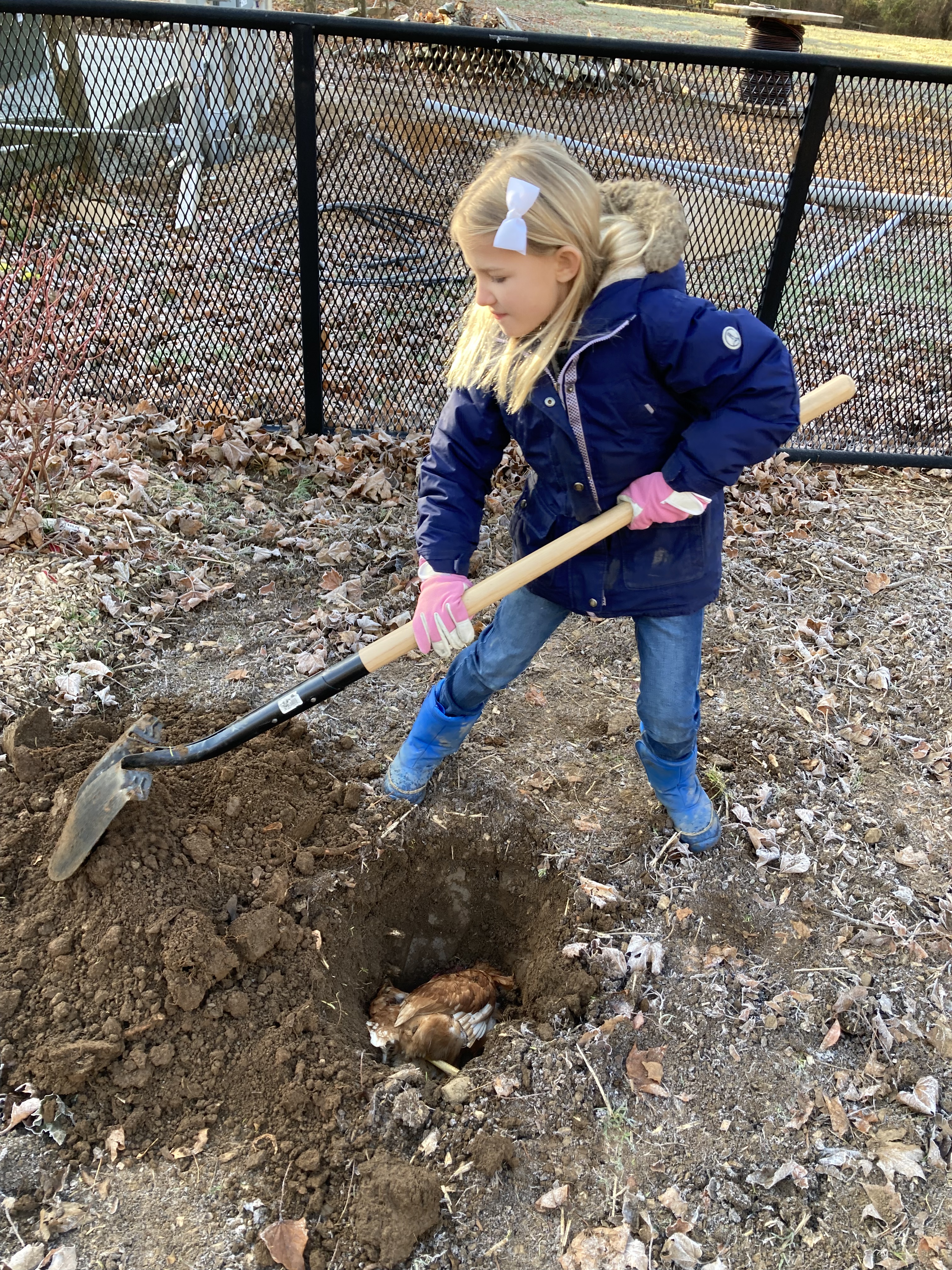
Granddaughter helped to bury the first two victims of the carnage.

As Sue Ellen told me what happened, she asked what to do with the carcass. “Make nuggets” seemed an inappropriate suggestion. 

Before we could fully get our minds around what had just happened, we heard the terrified squawking again. I rushed to the door and this time I saw the fox…with another chicken in its mouth. I threw open the door and for an instant was shocked silent by the fox’s beauty.   

But my anger at its audacity quickly overcame my admiration and I stepped out the door and shouted. It understood my threat and I was pleased to see it run away, leaping the fence as if the rails were a padded obstacle in tumbling class.

I grabbed my shotgun and followed the fox’s trail, knowing it would never show its head to me while I stumbled and tripped through its habitat. I felt better somehow, though, knowing I was “doing” something, at least dropping some “man scent” around so the fox would know who it was messin’ with.

The second chicken was still breathing, its legs twitching, eyes registering a resigned acceptance of fate. I dispatched it, then tossed it into the garden while I went to get a shovel. 

My seven-year-old granddaughter watched wide eyed the entire proceedings, dressed in the “farmer girl” overalls we’d given her for an early Christmas present the day before. 

Uncowed, she helped me dig a hole, her sudden awareness of the life cycle presenting her a sad, but not devastating new insight. 

The life cycle as presented on a National Geographic special sees the fastest lion chasing down the slowest antelope, and it all seems natural and normal, almost pristine, except for the dust. Eating a hamburger never makes me think of the feed lot on which the donor was raised. 

Yet, somehow, because we fed and cared for these chickens, tucked them in at night and gave them special treats from our vegetable shavings, it became a personal insult. 

Yes, they’re free range and hawks circle constantly overhead. Yes, the fox has to eat and yes, the prey/predator cycle is natural. But, the fox invaded my space with impunity, looking at me as if I was an inconvenient interruption at his meal, like a waiter who informed him he had an urgent phone call and he had to leave the cordon bleu to cool.

It was a sad morning, but only a prelude. 

Worse, we came home after dark that night and I went out to check on the chickens, to make sure they had put themselves up in the coop, where safety lay behind a closed door. I looked inside and there was not a single chicken in the coop. 

With a sickening dread, I cast my light over the field and the beam fell on multiple carcasses, each with the head and neck gone. The goats huddled in their own shed, witness to the horror. I followed my flashlight beam around the pasture, accounting for all the chickens but one. 

I found her in the far corner, shaken and shivering. She didn’t protest a bit when I picked her up and put her in the coop, behind closed doors. I don’t know what killed the chickens and I don’t know how this one survived.

We named her Lucky.


Moments planted yield the fruit of memories

Members of the Rio, WI high school graduating class of 1971. Not a bald head among them.

Confession up front: before my 50th high school class reunion in June I looked over my year book to reacquaint myself with the names – and cherubic faces – of those from my class who might appear. 

Having delivered our graduates’ speech as valedictorian of our 53-member class five decades earlier, I was asked to “say a few words” on this very convivial night, decades past the gateway to a dream that seemed to open to us in 1971. We’re also decades past having to color our palette of life, careers, marriages, successes or failures in hues that confirmed that we’d “made it.”

So, I talked about “making it,” and memories.

Members of our class were born in 1952 or 1953. I mentioned notable characters born in those years, including Vladimir Putin, Patrick Swayze, Liam Neeson, George Strait, Floyd Mayweather, Mr. T and Roseanne Barr, Hulk Hogan, Cyndi Lauper, Pierce Brosnan and Tim Allen.

We remember these politicians and entertainers because in our minds and in our culture, they “made it.” They are rich and famous, at the top of their respective fields. Say their names and people know who you are talking about. 

“Did we make it?” I asked. “Are we making it?” 

I was pleased to hear an immediate “Darned right,” from Jerry, our star athlete who was an all-conference football player in college and who has concluded his career in insurance, primarily among farmers in two counties.

No matter what we think “making it” means, I know we all have a different perspective on that than we did 50 years ago – or even 20 years ago. Success? Riches? Fame? Security? Family? Love? Inventions? 

My 1971 high school graduation picture. Naive, hopeful, eager.
Fifty years of sandblasted life later, mostly in Baptist communications.

Except for seven months, I’ve never lived closer than 600 miles from either my parents or my in-laws. My quest to “make it” took me from state to state. I’ve lived twice in Texas, twice in Oklahoma, twice in Colorado, in Tennessee and now North Carolina. My daughter was six when we moved to North Carolina and North Carolina was her fourth state to live in. 

I came home annually to visit – and as long as my dad lived, Rio was always “home.” For the longest time, I thought “making it” meant anything away from Rio, population 788. My dad always told me Rio’s population stayed at 788 because any time a young woman had a baby, an older man left town. 

Looking across the room I saw vibrant senior adults, many of whom never left the area, and all of whom have “made it.” They stayed, invested themselves, coached the local teams, served on the school board, nurtured the children of other families, and offered their voices of wisdom among their peers. They’ve been important to many lives. 

Reunions are the fertile soil in which the seeds of memory planted much earlier blossom and flower. We harvested those blooms at our 50th.

We remember moments, rather than days, as philosopher Cesare Pavese said. We all have memories of high school. Some we share, others are unique because none of us lived the same life. And the best part of those remembered moments are the people we shared them with.

Writer and theologian Frederick Buechner said, “When you remember me, it means that you have carried something of who I am with you, that I have left some mark of who I am on who you are. It means that you can summon me back to your mind even though countless years and miles may stand between us. It means that if we meet again, you will know me.”

And we want to be known. And remembered. Someone has said you die twice: first, when your heart stops and you’re buried. The second time you die is the last time someone says your name… whether it’s a year, a decade, or a century.

So, I named the seven members of our class who are with us no longer. They remain alive in our memories. 

Then we had fun recalling not only the names of our teachers, but some of their idiosyncrasies: the teacher/coaches who helped athletes with grades; the biology professor we called Bernard the Monk because of his curly bowl haircut and demeanor; the English teacher who the girls always felt was peeking up their skirts.  

Gas was only 33 cents a gallon at Bleigh’s service station during high school. I’d drive across town to the Farmer’s Union Co-op if it was 32 cents there. Of course, “across town” was less than a mile, with one stop sign.

Janis Joplin was singing “Me and Bobby McGee” and “The French Connection” competed with “Fiddler on the Roof” and “Dirty Harry” for your $1.50 movie admission. 

Living in the south now, I told the class every region has its rednecks, but southerners are special. You know you’re a redneck in the south when you take your dog for a walk and you both use the same tree. Or, when grandma’s wish list includes ammo. Or when you think “The Nutcracker” is something you do off the high dive.

One anomaly I noticed was that not a single person in the room was bald. According to the U.S. National Library of Medicine, male pattern baldness at some level affects more than 50 percent of all men.  It stands to reason that someone would be bereft of hair. 

Perhaps humorist Garrison Keillor’s observation of his little hometown of Lake Wobegon – the model of which easily could be Rio, WI – is right. There, “all the women are strong, all the men are good-looking, and all the children are above average.”

For all of you who are having reunions and special functions, blessings on every classmate and friend who has “made it” this far. May you have many more years to be a positive influence in your children – who always need their parents – and their children, who more desperately need the positive influence of grandparents now than ever before. 

These are the people of our lives, thrust together by time and circumstance, calling up the memories created by moments together. I’m grateful for them. 

March of the Memories

One of the joys of examining the four boxes of clippings and slides I’ve carted through eight states since I started writing for newspapers and magazines in 1971 is the memories prompted by each. The bride of my youth has been after me for years to sort them out – an urging in which she redefines “sort” as “throw.”

In feigned sincerity, I’ve maintained I’m saving those clippings, notes, magazines, reporter’s notebooks and photos and slides as source material for my biographer. Now, realizing I’ve lived a nominal existence as driftwood in pursuit of a dry bank, I am fully confident, with no regrets, to know that no writer will be examining my life as subject matter for a biography. 

With the perspective of time, I realize the yellowed, crinkly clippings of old articles that were so vitally important to me for decades – so important that I carted them from house to house, move by move, state by state – are really no more significant than the cardboard boxes that hold them. 

And yet, each story I pull strikes chords, pinging my memory with the characters that marched through my life: their intrigue, character, flaws, political maneuverings under the cover of religion, the revelations. Each of them and all of this was so vitally important – then.

“The next story” consumed my daily work life. Some were as mundane as an 11-year-old girl boxer fighting the boys,  or a man’s toy train hobby, or the announcement of program personalities for the next national convention.

Other stories still give me a twinge of pleasure when I recount the events and the people involved: the man who wrestled his single engine plane from a fatal collision with earth just seconds before certain death; Baptists returning from negotiations with the Iranian Ayatollah Khomeini;  death row interviews; Christian disaster response. 

Writers – at least those who save their clippings – enjoy the enviable blessing of leaving a trail through our personal history that we can follow back to the beginnings. Like Hansel and Gretel,  our words are the cookie crumbs that prompt the memories that lead us home. They bring back the people, moments, smells, sights, and energy of the moment when we recorded them. 

The flying carpet of my memory whisks me back in time. A letter from Ronnie thanking my mission team for a life changing weekend; a congratulatory letter from Wisconsin Congressman Bob Kastenmeier for being valedictorian of my high school class ; my serviceman’s life insurance policy so President Nixon would know where to send the benefit in case the war he kept alive meant my death; my first Leave and Earnings Statement as a grunt in this man’s Army – $189, paid in cash, with which to go wild. 

I found the record of the first check I ever wrote: for $1,005 to Luther College  for my half of my first semester’s tuition, room and board. I also had a receipt for “drugs” from the Luther College health service…for 93 cents. Must have been for half an aspirin. 

I seemed to have a preoccupation with death and love, according to the poems in my journal and English papers. My freshman English theme on Virgil’s Aeneid, about “too much love” earned a note in red from my enchanting, young professor Dagney Boebal. She thrilled my besotted soul when she wrote, “An interesting and original paper.” Although she gave me an A minus…for spelling. 

There was a $4.35 receipt for oil and filter change, bearing my dad’s “preferred customer” imprint, since he managed the Farmer’s Union Co-Op  where I made the purchase. It’s not the nostalgic yearning for low prices that gives me pause. It’s seeing dad’s imprint on the receipt. He died three years ago.

I reduced four boxes of memories to one, and then tackled the slides. Oh my. They’d spilled out of their little boxes and jumbled 40 years of slides into one big gumbo. I’d reach into that mangle for a handful and hold the 2×2 inch transparencies to a reading light with no chronological reference to time and space. 

First, I’d see a Christmas picture with my kids’ grandparents, followed by disaster relief in the Caribbean, to Paris in 1983 to Petra in Jordan and ancient ruins in Israel, to children jumping dirt mounds on their bikes in Oklahoma. It’s disconcerting to go from an engagement picture to a 40th wedding anniversary shot in a minute.

It was dizzying. And delightful. 

I pulled fewer than one in 20 slides to scan into my computer. It will take me days. I’ll have Sue Ellen leave food and drink by my door. When I emerge, I may well feel it like Rip Van Winkle, who fell asleep for 20 years and missed the American Revolution. 

We may be in the midst of another revolution. I’ll participate when I get through these slides.