Are you as good as dead?

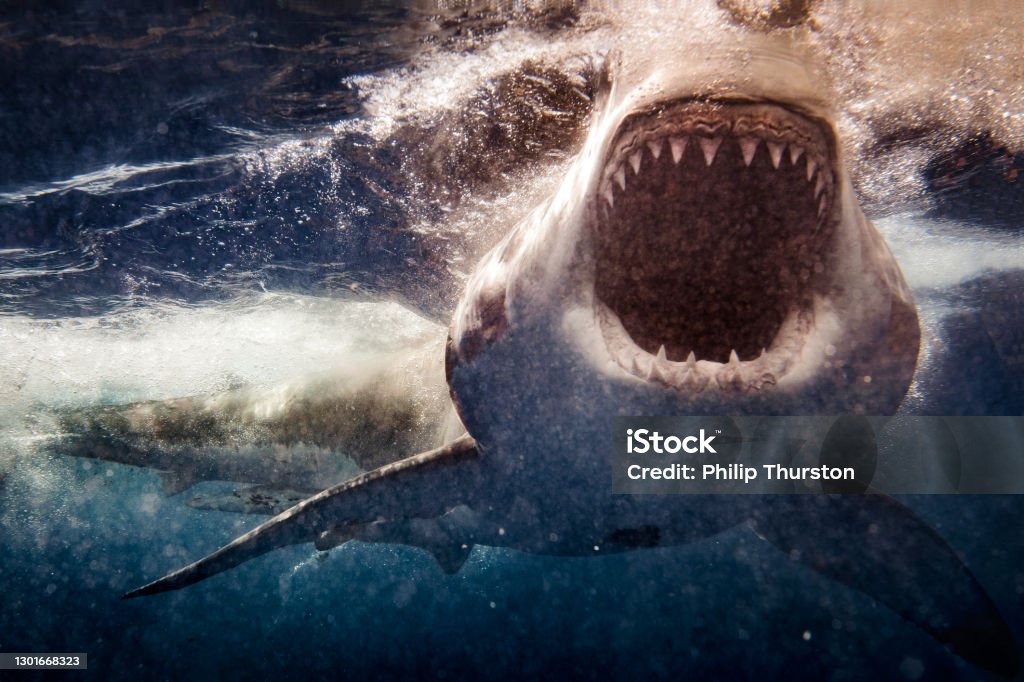
While collecting shellfish in Australia, Eric Nerhus was bitten almost in half and swallowed by a 10-foot shark.

Swimming 25 feet below the surface, Nerhus, 41, was grabbed over his head by the shark, which took half of Nerhus’ body into his mouth. He was as good as dead.

Thinking quickly, he reached up and poked the shark’s eyes with the chisel he used to collect abalone.  The shark open its mouth and Nehus wriggled out.

Nerhus estimates he spent two minutes inside the shark’s mouth and said his chest was protected from the shark’s sharp teeth by the lead-lined vest used to weight him down as he scoured the ocean floor. He swam to the surface in a cloud of his own blood, where his son helped him into the boat and rushed him to a hospital.

The 2010 movie “127 Hours” featured the dramatic story of Aron Ralston whose arm was pinned to a rock wall by a suddenly shifting boulder while he hiked Utah’s Blue John Canyon.

No matter what he tried to dislodge his arm, he was trapped. After four days his water ran out and he drank his urine. On the sixth day, Ralston realized he was as good as dead.

Then the 27-year-old mountain climber did what he’d always known he had to do, but could not bring himself to do when he thought there was an option. Using his own body weight for leverage, he broke both the bones in his forearm. Then, with his pocketknife Ralston cut off his arm below the elbow and applied a tourniquet. He then rappelled 60 feet to the canyon floor and started walking.

He walked seven miles before encountering two tourists who called for a rescue helicopter.  

What’s the point?

Neither Eric Nerhus nor Aron Ralston are dead. At that point in their lives when there was no prospect for more life – when they were as good as dead – they found a way.

Ever thought you were “as good as dead?”  Or wished you were?

  • In the midst of company chaos, your boss approaches you with a grim face;
  • A truck in the approaching lane veers into yours;
  • You discover your father’s debilitating illness is hereditary;
  • At a conference in his office, your docor leans forward and says, “I’m sorry.”
  • Your job loss has led to anxiety, depression and a mortgage foreclosure;
  • You face an impossible financial burden to make good for a child’s accident, illness or bad mistake;
  • A dark secret you’ve carried is suddenly revealed.

Jesus’ friend Lazarus was not only as good as dead. He WAS dead. Then Jesus exercised his power of life over death and he raised Lazarus, demonstrating to us though we be as good as dead, we still possess the life option.

The same is true for a host of other biblical characters. Young David could have killed King Saul (I Sam. 24) when Saul was relieving himself in a cave and David crept in behind him and cut off a piece of his robe. Saul was as good as dead and didn’t even know it.

Joseph had a coat of many colors (Genesis 37), and was his father’s favorite, when his jealous brothers threw him into a cistern to die. He was as good as dead.  

Shadrach Meshach and Abednego were thrown into the fiery furnace; Daniel was tossed to the lions; Jonah was swallowed by the great fish; the adulterous woman dragged for stoning by an angry mob.

Why did God rescue them? Because God had a higher purpose for their lives and something in that near death experience equipped them for that purpose like nothing else could!

Your faith isn’t feeble in the face of life threatening odds. It’s most flaccid when you operate only in the realm of your own abilities, when you’re deluded enough to think you can “do it yourself.”

My favorite traditional hymn is “A Mighty Fortress is Our God.” Verse two says, “Did we in our own strength confide, our striving would be losing.”

Remember, when your dreams and promises appear to be as good as dead – yet they breathe. Aron Ralston wandered out of the dessert after cutting off his own arm. Eric Nerhus fishes again. Childless Abraham, whose body the Bible says was as good as dead, became the father of a nation.

Senior adult groups have many adorable names. One of my favorites is the ADY – Ain’t Dead Yet – Club. Circumstances may conspire to make you feel you’re as good as dead, but guess what.

You Ain’t Dead Yet.

‘Nothing lasts like it used to’

I once took it as irrefutable truth that “Nothing lasts like it used to.”

For the most part, I agreed that manufacturers were “building in obsolescence” so you’ll have to replace that refrigerator you’ve had for 25 years with a new one you can expect to last only 10 at best.

It’s easier and cheaper to replace appliances than it is to repair them. Good for the manufacturers, bad for service repairmen.

Credit that brief functional life to plastic parts. While it may take 10,000 years to decay in the landfill, plastic in the essential workings of everyday products seem to decay in 10 months. Plastic is so pervasive that we don’t even realize how many items that once were made were made with metal or wood and were strong enough to become heirlooms are now made with plastic and won’t get your kid through kindergarten.

To start a list of all things plastic would require more capacity than my computer has. You may be reading this through lenses held to your nose with plastic frames. You bring home groceries in plastic bags, or get fast food through your car window in plastic containers. Plastic is often useful but nothing plastic can be expected to last long enough for your child to use it as an adult.

Yet, I’m still using an electric grinder my dad used to sharpen the ax he handed me to split firewood. A brass lawn sprinkler I finally sprung for has outlasted a dozen plastic sprinklers.

So yes, I agreed for the most part that “Nothing is built to last” anymore. But then I thought of shoelaces.

Remember when you had to replace shoelaces? When you had to keep extras on hand because they always broke just when you were hurriedly tying a knot to catch the bus for school? Or when you’re trying to get your gym shoes on for phys ed?

And weren’t the only shoelaces available in the catch-all drawer never the color or length you needed? Lots of white laces in the draw when you needed black and vice versa. Don’t even talk to me about brown.

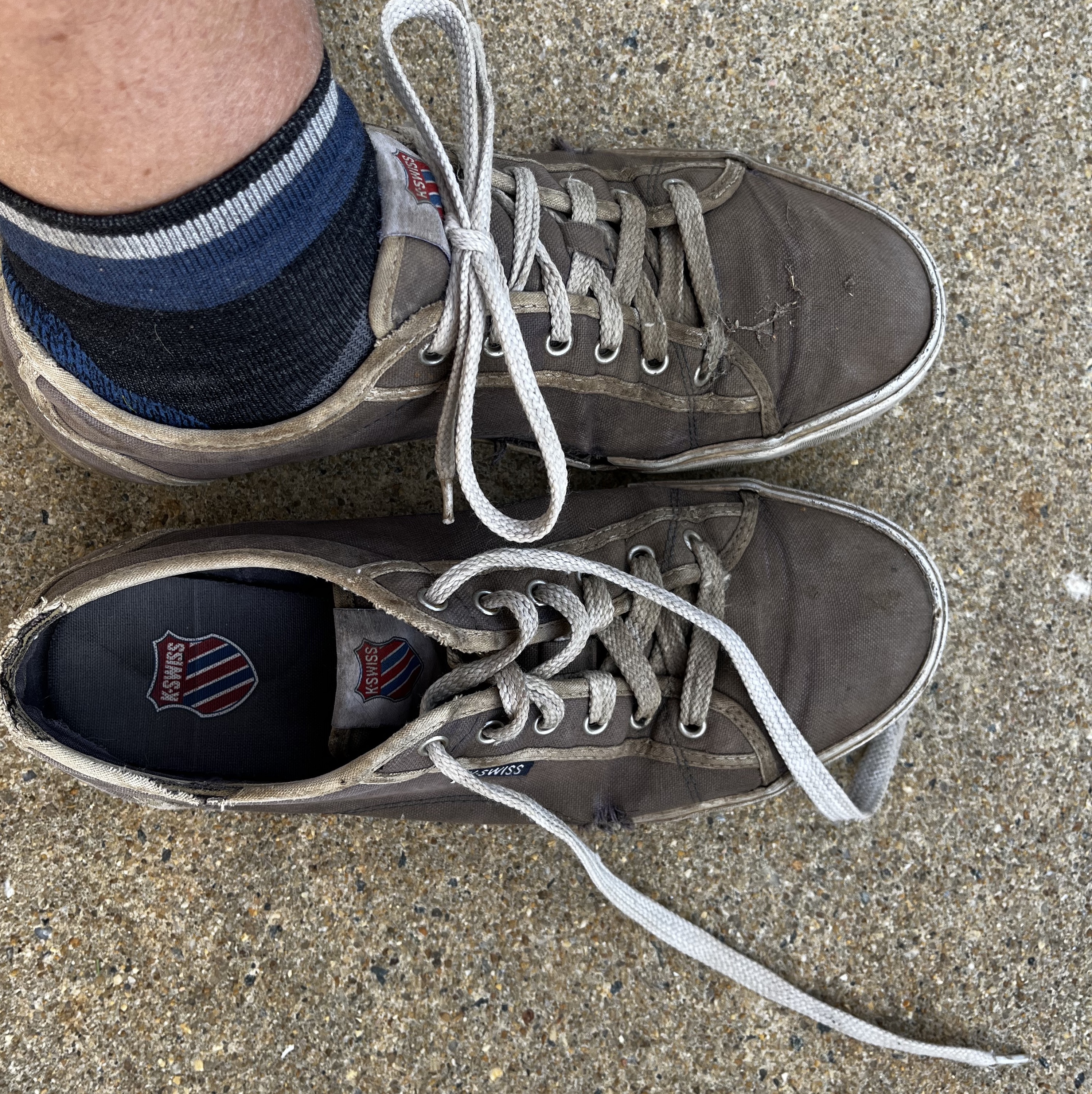
Now the laces in my shoes, from court shoes, to hiking boots to dress shoes outlast the shoes themselves. My sole was falling off my 35-year old Vasque Sundowner hiking boots, but the laces are unfrayed. How DO they do that?

And cars.

Car buffs wax nostalgic about the autos of our youth, but our love affair with those massive, ungainly hunks of American steel was more about style than quality or agility. They burned gas like the sun burns hydrogen.

I became a writer because I couldn’t fix cars. All my buddies, it seemed, knew how to adjust a carburetor, or set the gap on a spark plug, or adjust the timing belt. I knew where the gas went. And I could change a tire.

But, what future awaited in my rural Wisconsin community if I knew nothing about cars and didn’t have a farm to inherit? Cars are another thing better today than a generation ago. Even Car and Driver magazine says, “Cars these days are made to last much longer than those produced even a few decades ago.” Reason being, “car parts are now constructed to withstand more wear than in the past.”

New cars are basically computers on wheels. Electronic eyes can keep a safe distance between you and the car ahead; can keep your vehicle centered in the lane; go 5,000-7000 miles between oil changes; are just getting warmed up at 100,000 miles on the odometer.

Of course, people are driving more today. Commutes of 45 minutes each way are common and longer distances are not unheard of. But no one had 100,000 miles on a car when I was a kid. A guy would hesitate to buy a used car with half that mileage.

 And then there is the elastic that holds up my socks, and keeps my boxer briefs from falling off my hips. My socks never stayed up when I was a kid, and the elastic waistband in my underwear didn’t last many rounds through the wringer washer before they collapsed in their effort to stay aloft.

Today the elastic in my socks could cut off my circulation and that in my waistband could be a tourniquet for an elephant’s mangled leg.

So, it’s not true that nothing is as good or as long lasting as it once was. And if you argue about it, I’m going to throw my Walkman at you and tie you to the broken fridge in my garage.

One is the loneliest number

My mother-in-law, during last days in nursing care.

In August 1971 anonymous government functionaries conducted a lottery to determine the order in which 19-year-old boys would be drafted into the Army, thousands of them eventually to die in the politicians’ war in Viet Nam.

They drew my birthday first. No. 1. It was the only thing I’ve ever “won” except a case of beer at the Rio Fireman’s Picnic, and the hand of my wife. I was too young to claim the beer, and my wife was almost too young to marry.

From that day on, the musical hit “One” by Three Dog Night became the soundtrack of my life as I went off to college, hoping to get a semester in before I received my draft notice. It’s resounding assertion that “One is the loneliest number that you’ll ever do,” pounded time after time out of my reel-to-reel tape player, putting to music the angst of a life on hold.

“One is the loneliest number that you’ll ever do…

“It’s just no good anymore since you went away

“Now I spend my time just making rhymes of yesterday.”

Then the resounding, pounding refrain:

“One is the loneliest number

“One is the loneliest number

“One is the loneliest number that you’ll ever do.”

Every time that song surfaced on the radio or in sequence on my Three Dog Night album, I sank emotionally. No. 1 in the lottery. Draft certain. One is the loneliest number. The saddest experience.

Thoughts of “one” and being alone jumped at me recently while I stood in line for a table at southeastern America’s food oasis, Cracker Barrel. It hit me when the hostess asked the lady ahead of me, “How many?” and she responded, “One.” The loneliest number.

A sudden sadness for her and others being alone hit me like a gut punch through a curtain of memory.

One is the loneliest number that you’ll ever do.  And it’s a growing trend in America. We’re in an epidemic of loneliness. It’s not just aging widows and widowers. It’s younger people isolated by screens who possess no ability to communicate with real, live people.

Lacking meaningful, human to human connection can increase the risk for premature death to levels comparable to smoking 15 cigarettes a day, according to an advisory from U.S. Surgeon General Vivek Murthy.

We once called on a young man who visited our church to encourage him to become involved. He said he walks into his apartment on Friday night after work and doesn’t leave it until Monday morning. Week after week. Crawling out to visit the single adult class we led was a major effort.

The prevalence of single-person households is unprecedented historically,  rising from seven million to 38 million since 1960. 

I don’t equate “being alone” with loneliness or depression, but community involvement and social interaction is the leading indicator for health in senior adults. Of course many single adults lead vigorous, joyful, involved lives and God bless them.

It’s just that as I approach my 48th wedding anniversary I know the deep satisfaction life with a loving partner brings. I think of the shared joys, sorrows and triumphs of raising our three children, and of their loving spouses and our seven grandchildren. I would wish that common good for anyone.

Beyond that, what are the implications for a society in which so many of its members live as single, unaffiliated, isolated souls? Think – as I’m sure they are – of long term health, housing, community, end of life?

And yet, one out of four of today’s 50-year-olds will have been single their whole lives. Never married, never partnered.

Social isolation is associated with a higher risk of dementia and other serious health problems in older adults — while having positive social relationships can help people live longer, healthier lives.

In other parts of the world, nearly four in ten older adults live with extended family, an arrangement that mitigates aloneness. But older adults in the U.S. rarely live with family. 

Our culture almost demands we go it alone, that we not “need” anyone or anything. Yet that is not the preferred condition of most single adults I know.

And when the person ahead of me is asked, “How many?” her “One,” sounds like the saddest experience she’ll ever do.

What Color is Your Duck?

I was not a self-assured little kid. I lived in the country and wasn’t particularly athletic, didn’t know my way around the terminology of machinery as it seemed my friends did. I was reticent in a crowd of my peers. But I was an early, voracious reader and I felt confident in the classroom.

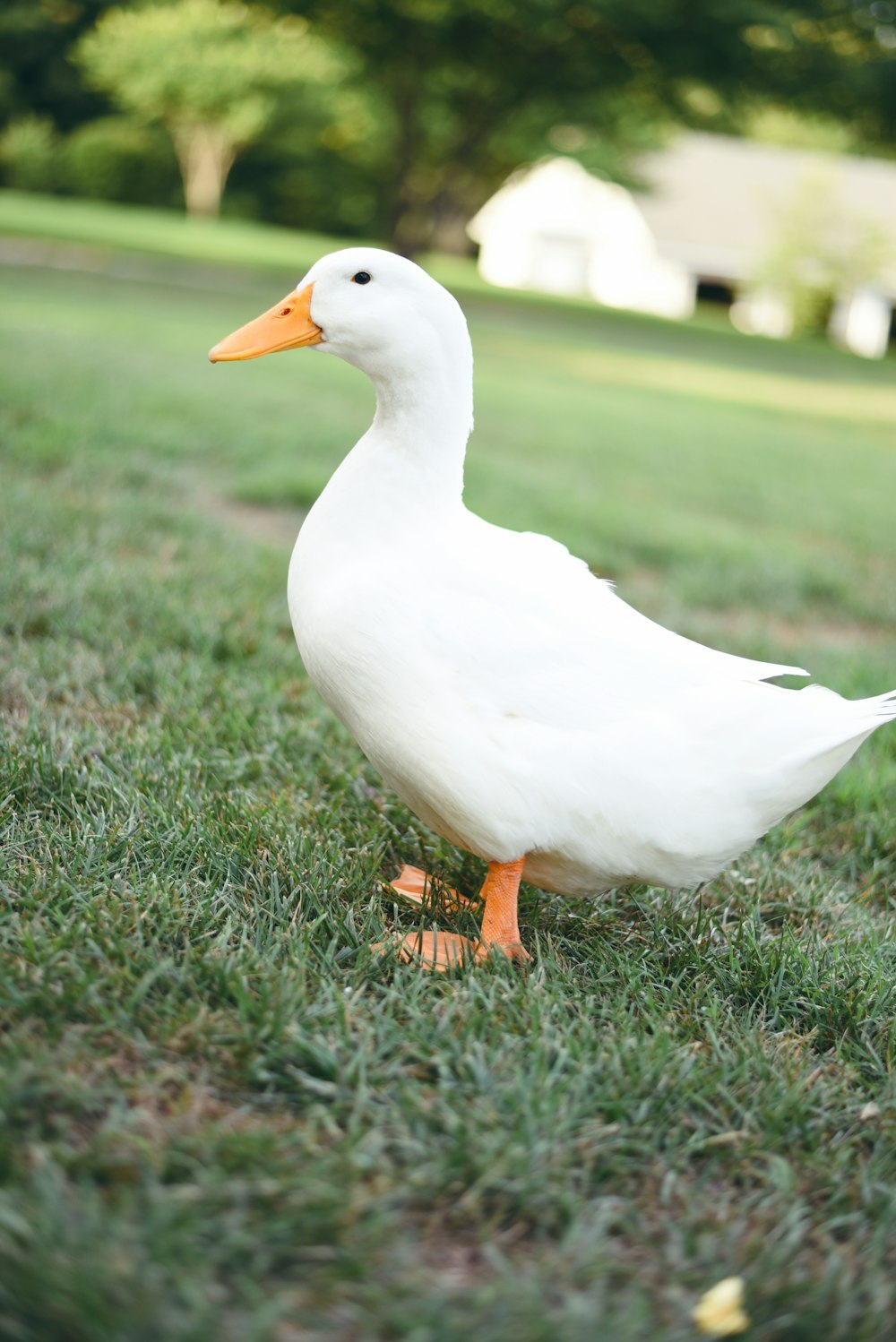
white duck on grass field

Photo by Christian Bowen on Unsplash

At least until Mrs. Roberts assigned a coloring project that I blew.

Louise Roberts was my first grade teacher. She was lovely, kind and patient. But my most vivid memory of my nine months with her (not the same nine months as each of her sons experienced) is the zero she gave me on a coloring assignment.

I’m quite certain it was she who delivered my first academic trauma. First grade seems right for that kind of project. I doubt it was second grade, because Mrs. McGowan never would have given me a zero.

Mrs. McGowan lived in the county seat of Portage, 14 miles and a half century from my little school in Rio, and possessed a sense of savoir faire. She loved her students enough to invite a select few one at a time to her house in Portage overnight to give them a taste of “city life.” Portage had 10,000 people, to Rio’s 788.

I was one of the lucky chosen for an evening in Portage with Mrs. McGowan and her husband, a local official. She made dinner, then they drove me around the city, and introduced me to city hall and the jail. Come to think of it, maybe she was trying to “scare me straight.” Anyway, she was sweet enough that she would have given me a second chance, not a zero that haunts me 64 years later.

Mrs. Roberts’ assignment simply was to color the animals pictured on the white sheet of paper she distributed. I forget what all the animals were, but the ducks… oh, the ducks.

What color are ducks? In all of my six years of limited exposure to Disney and storybooks in which ducks floated in ponds near where Snow White lay waiting for the kiss that would bring her back to life, or beneath the tower that held Rapunzel, the ducks were white. Pure, innocent, naïve images floating blissfully about the main story characters to remind us that even when things appear to be going smoothly, we need to paddle like crazy.

The ducks I was to color were presented to me on a sheet of white paper. So, very logically, I colored the other animals and left the ducks alone. White ducks on white paper. That’s the color of ducks.

When I got the assignment back with a big ZERO on it, I had the temerity to ask Mrs. Roberts why. She said I didn’t do the assignment because I didn’t color the ducks.  “But ducks are white,” I said, a nascent lawyer arguing for the defense.

“You should at least have colored the bills and feet,” she said. I could see her point, but how about a second chance? Maybe they were albino ducks.

Fortunately, I recovered from that initial academic setback and grew up avoiding drugs, thievery, rock and roll and mayhem.

Thank you Mrs. McGowan.

Picking the bones with buzzards

I walked among the buzzards at an estate sale today.

An estate sale is where a house filled with the relics of a life is picked over like road kill by vultures, tugging and pulling remnants of his memory off the skeleton and carting them off to cars.

Under marital duress, I joined the kettle of vultures who gathered well before the scheduled 9:30 a.m. viewing. Senior adults almost exclusively, none of whom needed anything being offered inside. All of us curious about what we’ll see, about how this man lived, what he’d considered important enough to collect, gather and keep through his final days.

Curious to see if anything in the house was a treasure his children didn’t know of, something we could “steal” for a few dollars and store in our own lockers for our children to offer in our future estate sale.

I chatted up other vultures, most of whom were in good humor, happy to spend a morning picking at the carcass of a deceased man none of us knew personally. We weren’t hungry, really. But if we found a morsel we’d happily chew on it.

And besides, in the cycle of nature – birth, life, death – weren’t we doing our part? Just like real vultures keep the highways clear of road kill carcasses?

I learned our guy was 95 and died after living in the house 30 years. His closets, cubbies and cupboards were filled as if he’d just stepped out for lunch, telling the house, “I’ll be right back.” But now, except for how the estate sale team had arranged and tagged everything, it stands as a cavernous crypt.

I wandered with the flock, poking, pecking and prodding. He loved Christmas music and books on history and architecture. His shirts were once expensive – but dammit, too large. The tools in his garage were well worn. His china cabinet held fine crystal too delicate for me even to want to examine.

It was the bathroom that arrested me. The sink counter was covered with personal care items that revealed an individual vanity, as would all of ours – how he cared for his teeth, his hair, his nails and skin.

Inside the tiled shower stood a collapsible walker, tight and forlorn against the wall. Available. Unused. The walker had wheels on the front two legs, so he could lift the back two legs and roll it along, dropping the back to the floor to rest or stand when he’d gotten to his destination in the house.  

The walker – alone among all the mementos of a long life – stood in mute testimony to the infirmities at the end of a long life. And it moved me from carnivore to compassion. I left silently.

Oh yeah, we got an Elizabeth Geisler basket. It was a steal.

Beautiful killer

This morning I saw the most beautiful fox ever. Larger than typical, with bright red fur, tail long and bushy, not matted by thorns. It looked fresh from a spa: fluffed, puffed, tufted, shampooed and blow dried. Eyes intense, intelligent, confident and controlled. Lithe, nimbly athletic, light of foot like a dancer. 

And I wanted to kill it.

Coming back from her sunrise walk, my wife heard the terrorized shrieking of chickens in the open range pasture just behind the cottage where we stay on my son’s property. She stepped quickly to the pasture where she saw a fox with a chicken in its jaws. When she shouted and clapped, the fox sprinted away. The chicken didn’t.

Granddaughter helped to bury the first two victims of the carnage.

As Sue Ellen told me what happened, she asked what to do with the carcass. “Make nuggets” seemed an inappropriate suggestion. 

Before we could fully get our minds around what had just happened, we heard the terrified squawking again. I rushed to the door and this time I saw the fox…with another chicken in its mouth. I threw open the door and for an instant was shocked silent by the fox’s beauty.   

But my anger at its audacity quickly overcame my admiration and I stepped out the door and shouted. It understood my threat and I was pleased to see it run away, leaping the fence as if the rails were a padded obstacle in tumbling class.

I grabbed my shotgun and followed the fox’s trail, knowing it would never show its head to me while I stumbled and tripped through its habitat. I felt better somehow, though, knowing I was “doing” something, at least dropping some “man scent” around so the fox would know who it was messin’ with.

The second chicken was still breathing, its legs twitching, eyes registering a resigned acceptance of fate. I dispatched it, then tossed it into the garden while I went to get a shovel. 

My seven-year-old granddaughter watched wide eyed the entire proceedings, dressed in the “farmer girl” overalls we’d given her for an early Christmas present the day before. 

Uncowed, she helped me dig a hole, her sudden awareness of the life cycle presenting her a sad, but not devastating new insight. 

The life cycle as presented on a National Geographic special sees the fastest lion chasing down the slowest antelope, and it all seems natural and normal, almost pristine, except for the dust. Eating a hamburger never makes me think of the feed lot on which the donor was raised. 

Yet, somehow, because we fed and cared for these chickens, tucked them in at night and gave them special treats from our vegetable shavings, it became a personal insult. 

Yes, they’re free range and hawks circle constantly overhead. Yes, the fox has to eat and yes, the prey/predator cycle is natural. But, the fox invaded my space with impunity, looking at me as if I was an inconvenient interruption at his meal, like a waiter who informed him he had an urgent phone call and he had to leave the cordon bleu to cool.

It was a sad morning, but only a prelude. 

Worse, we came home after dark that night and I went out to check on the chickens, to make sure they had put themselves up in the coop, where safety lay behind a closed door. I looked inside and there was not a single chicken in the coop. 

With a sickening dread, I cast my light over the field and the beam fell on multiple carcasses, each with the head and neck gone. The goats huddled in their own shed, witness to the horror. I followed my flashlight beam around the pasture, accounting for all the chickens but one. 

I found her in the far corner, shaken and shivering. She didn’t protest a bit when I picked her up and put her in the coop, behind closed doors. I don’t know what killed the chickens and I don’t know how this one survived.

We named her Lucky.


Sometimes you bite even when you know there’s a hook

Pardon me for a moment, while I pull the hook out of my cheek. Ahhh, there. 

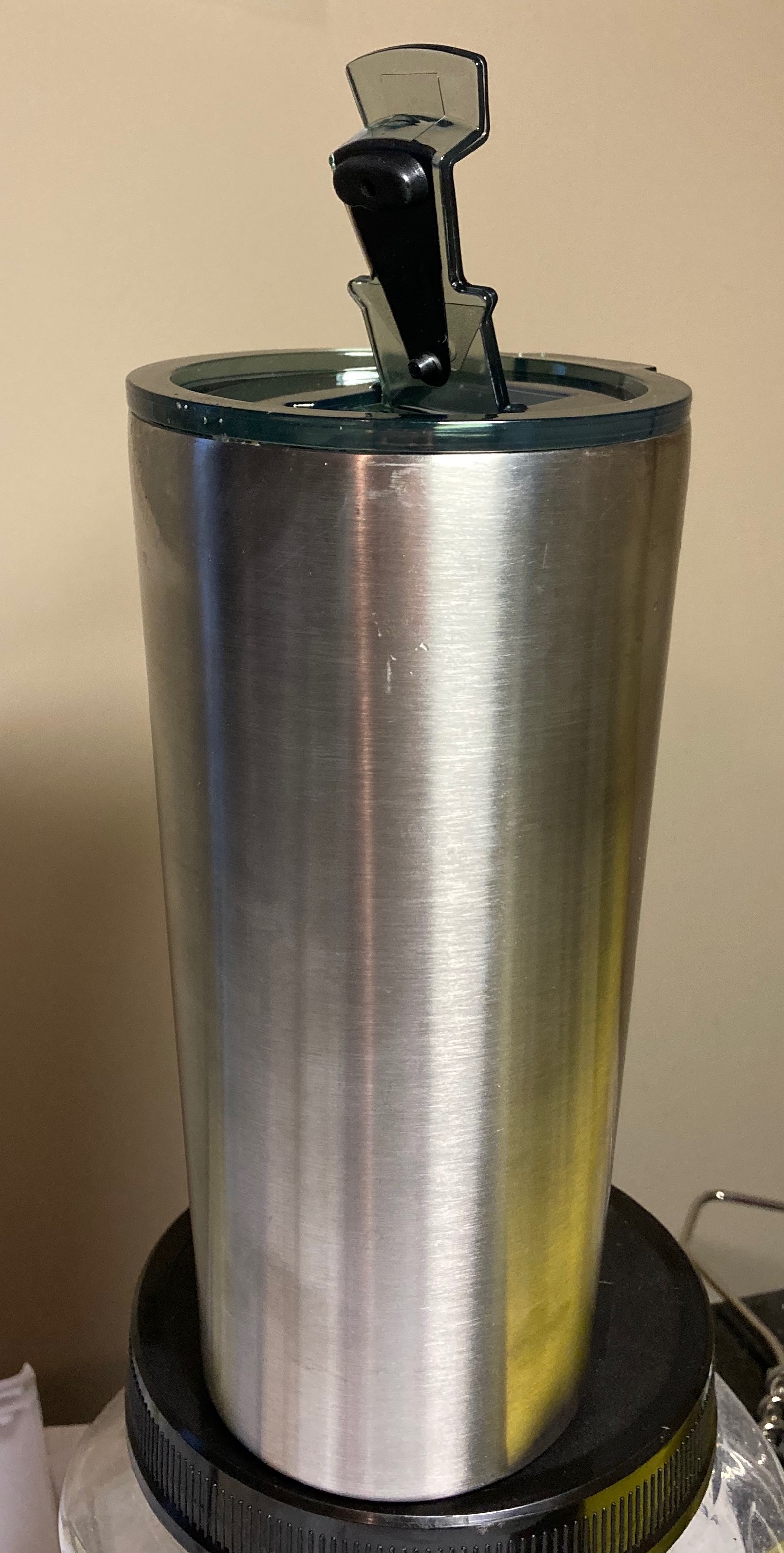
The tractor had no good place to store my cold drink cup and I forgot about it sitting on the floorboard while I brush hogged the pasture last week. Suddenly I heard a clunk behind me that rang an octave lower than the screech of hitting a stone hidden in the thick, tangled mass of long grass. And, it was an octave higher than when I ran the mower over a concealed limb deposited in the same tangle by the floods of Hurricane Ida. 

I looked back quickly to see a gray metal mass skittering across the mowed grass, having been kicked out by one or more of the nine blades spinning beneath the mower deck. My cup. Drat. 

My wife has for the past year been making what she calls fauxbucha – a homemade kombucha…which for her is a vinegar, cayenne, honey and ginger drink that does wonders for our digestive systems and cures a host of ailments: among them constipation, fungus, the national debt and likely the heartbreak of psoriasis.

I drink at least one glass of it a day – over ice from my cold drink cup – which is now a mangled tangle of cheap Chinese metal laying in the field. 

I’m prone to make myself suffer the consequences of my stupidity, so I wasn’t going to rush out and replace the cup. But Sue Ellen knew I wouldn’t be as faithful in consuming her magic elixir if I didn’t have a cup to take with me. So, the hunt. 

We drove to the Walmarts, where she had purchased the original doomed chalice. But, we could not find an exact Walmart brand replacement. Instead, there was a similar Coleman cup for twice the price, or, a Walmart brand cup with a different lid.

Cup, with the important lid.

You might not think the lid makes much of a difference. But, the patriarch of our family is prone to spills and the cup I lost had a magnetic, snap closure over the opening where the drink came out. This one just had a hole. It cost less than the original, but…the lid had just a hole. A juggle or jostle would splatter the drink over my jeans, or Sunday-go-to-meetin’ shirt.

I wasn’t about to get it. Not gonna do it. Wouldn’t be prudent.

About to give up, Sue Ellen spotted a display of snap close lids…made specifically for the cup I wanted – the very lid the original cup had featured. Now sold separately, for just $2.74. In what world would a product’s favored feature be removed and then offered as an option at additional expense? Oh, yeah, in the American marketing world. 

I knew I was had. I felt like a fish eying a dangling worm, knowing a hook lurked inside, but too hungry to care. I resented my hunger. I resented the marketing ploy to put undesirable lids on the cup and then charge extra for the lid I wanted. 

But, I mentally added the $6.94 for the cup with the unacceptable lid, and the $2.74 for the lid that would make the cup acceptable, and found the $9.68 total still to be six dollars less than any other option and I bit the hook. 

Who knew fauxbucha would sting on an open wound?

It’s going to be a Covid Thanksgiving

I just tucked my crying wife into bed. 

For months, we’ve been looking forward to seeing distant grandchildren and tonight we realized that Covid 19 restrictions will keep us from our visit.  They’re in a state with a sudden surge of cases – but aren’t we all.

We’ve watched the sad stories of isolated grandparents missing the hugs, kisses, smiles and simple touches of their grandchildren, and we’ve felt sorry for them. I’m a hugger and we’ve enjoyed that relationship with our local family. But now, “them are us.”

Our sadness is intensified beyond this failed visit by the stark realization we may not see the distant grands for months yet. If a negative Covid test is required for admission, and we are unwilling to take such a test simply to travel, what does that say about when we might see them? What does that reveal about fear? Or about the blanket of paranoia draped over America’s frail shoulders?

Covid-19 is not a hoax. It is real. A million cases a week in the U.S. and 1.4 million deaths worldwide attributed to Covid are evidence that some virus is circulating in the human population…after living for untold centuries in animal populations – or for months in a Wuhan lab. Who knows? But, the virus is not random. Like any bully, it picks on the weakest kids in the room. 

We may all feel weak and susceptible to the bully, but in fact, we are not equally vulnerable. Statistically, 90-plus percent of those “kids” getting bullied have health weaknesses upon which the bully feasts. They already are obese, old, frail and with poor immune systems. Covid is a Darwinian herald, an ax wielding assassin rampaging through the human population, spotting these weaknesses and swinging its deadly weapon with lethal results.

In America, we make ourselves vulnerable by not paying attention to our health. We are pale and pasty from too many sedentary hours, eating food whose ingredients we cannot pronounce, demanding our doctors prescribe antibiotics for even the smallest sniffle. Or, we insist that they diagnose the undetectable, psychosomatic disaster that we’re sure will take our life before morning – unless we get a prescription for the miracle drug we just saw on TV.

If we are vulnerable, it is in large part because we delegate responsibility for our health to “professionals” – depending more on the cauldron of chemistry to correct our ailments, than on our own diet and exercise. 

On a visit to The Sixth Floor Museum dedicated to the assassination of John F. Kennedy, I was struck with a curious itch while watching the newsreels of Kennedy’s 1963 arrival in Dallas. Something was different, a bit off. Examining the video, I finally saw it. Everyone in the video, from his security detail, to the airline personnel, to the police and virtually everyone in the crowds lining the parade route, was thin. You’d have to look hard to spot a person who looked like he was trying to smuggle a watermelon out of Winn-Dixie under his shirt.

The National Center for Health Statistics at the U.S. Center for Disease Control showed that 42.4 percent of U.S. adults were obese in 2018. Obesity is the petri dish in which countless illnesses multiply.

The constant advertising of Big Pharma for costly remedies (whose list of warnings exceeds its list of benefits) pounds into us the misplaced trust in chemistry over personal care. We’re deluded into thinking we don’t have to take care of ourselves because “there’s a pill for that.” 

Instead, doctors I follow advocate steps to promote a healthy immune system. Encourage gut health by eating whole and fermented foods. Roll in the grass, get fresh air and inhale the microbes in the atmosphere, play with your pet, or the neighbor’s. Stop sanitizing every surface  because you’re killing good microbes and creating an environment that keeps your babies from accruing immunity to simple illnesses.

A new Mayo Clinic study shows that infants who receive antibiotics before age two suffer long-term effects for anything from allergies to obesity because antibiotics kill good bacteria babies receive from their mothers in the vaginal birth process.  Yet, they are too routinely administered, like farmers administer antibiotics to chickens and beef to promote quick fattening.

We are a sick nation, which makes us more susceptible to Covid-19 than we should be. Our health care system is really a sick care system, because health is not profitable. Local hospitals are advertising “well visits” and warning us “not to neglect regular doctor’s appointments.” Our hospital systems’ financial health depends on a steady stream of people with real and imagined ailments, funded through a complicit insurance system that gets more impossibly expensive every year.

And yet, a hospital system for which I once worked, is bidding more than $5 BILLION to buy another hospital in the state. Tell me there is no money in non-profit health care. 

Covid-19 is opportunistic. A virus spread through the air, and by contact, it attacks the vulnerable. Cases of “healthy” people becoming ill from it are extremely rare. CDC data shows that Americans, regardless of age, are far more likely to die of something other than COVID-19. Even among those in the most heavily impacted age group (85 and older), only 9.4 percent of all deaths between February and September 2020 were due to COVID-19. 

A significant cadre of doctors not linked to the machinery of hospital systems, Big Pharma and insurance companies, warn that closing the country down, sentencing elderly to die alone, killing the dreams and livelihoods of hundreds of thousands of small business owning families, subjecting millions to unemployment, hunger, depression, increased suicide rates and general malaise, will have longer term negative health effects on the population than will the virus. 

I have dear friends in the high-risk category. They are basically not healthy, either from long-term illness or age or obesity or some combination of comorbidities onto which Covid-19 loves to latch. I care for them as they stay secluded in what they hope is a safe bubble. But, I miss them. 

And I miss my grandchildren. 

Misusing military to defend corporate Interests

Charles Frazier’s novel “Varina” imagines a long conversation with the wife of Jefferson Davis, the traitorous former senator from Mississippi and former U.S. Secretary of War, who led the disastrous rebellion against the United States in 1860 as president of an “imaginary country.”

In the book, Frazier – also author of the immensely popular “Cold Mountain” – taught me a lot about the “property rights” perspective of southerners who thought slavery the perfect melding of capital and labor to assure economic prosperity. 

Growing up in Wisconsin, we studied the Civil War in fourth grade and never thought about it again. About 1990 I mentioned that fact while interviewing for a job in Georgia. The Colonel Sanders lookalike who chaired the interview committee said, “Down heah, we call that the wawh of nawth’n aggression. And we’re still fightin’ it.”

Americans love war. We must, we’ve been at war for 93 percent of our history.  We, among all nations, are the quickest to send our youth to other nations to kill their youth. In our minds, we’re always the good guys because we are “defending freedom.” “Freedom” is a malleable term with many definitions, depending on the perch from which you observe the march of time and of nations. 

Too often, our defense of freedom is really a defense of our corporate interests, the ability of American corporations to conduct business internationally without interference from local governments. And, that flag waving, slogan shouting defense is fueled by the whispers and checks of corporations who build the machines of war into the ears and accounts of politicians who buy them.

President Trump recently chastised military leaders for prolonging wars –we’re actively involved in seven  – to boost the profits of war machinery manufacturers. He is right in the fruit, but wrong in the root. It is politicians who prolong the wars, not the military. It is presidents Kennedy, Johnson and Nixon who thwarted peace attempts in Vietnam because they felt they would not be re-elected if they cut and ran from that hopeless quagmire. It is Bush and Obama and Trump who insert, left and leave fighters all over the world.

Back to Frazier and his Varina Davis. She is telling her conversation partner about a letter from General Lee to her husband Jeff, warning against an action that “would bring down the reproach of our consciences and posterity’s judgment.”

“But then, it was too late to apply Lee’s advice more widely,” Varina said, “because we were in the middle of trying to pull apart a country to protect the wealth of slave owners.” 

 She went on to say how the war wrecked the South and cast it into poverty. 

“But not for the north,” she said. “Plenty made fortunes off the war. Give a real Yankee one little dried pea and three thimbles and he can buy groceries. Give him a boxful of cheap, shiny pocketknives and pistols to trade and he will turn it into a career. But give him a war, and he’ll make a fortune to last centuries.”

F-22 fighter jet pushed by Pentagon that the Air Force doesn’t want.

And that is why we have been at war for most of our history. There are fortunes to be made! Our military defends the oil fields of Kuwait and the shipping channels of the high seas. It props up impotent and corrupt governments such as Afghanistan and keeps shipping lanes open for our oil companies to bring their products to market. It defends against the nationalization of U.S. companies that drain resources from other nations without proper recompense.   

Our military budget of $716 billion is equal to the military budgets of at least the next 12 biggest spending nations. 

The defense department says we have 4,800 “defense sites” in at least 160 countries. The U.S. military is the nation’s largest employer, paying 2.15 million service members and 72,000 civilians who work among them.

Under the gossamer thin patina of “protecting our freedom” the U.S. muscles into the business of other countries, on behalf of business. We’re the largest seller of weapons in the world. Five of the 10 largest weapons manufacturers in the world are U.S. companies. Once a company secures a contract for a new fighter jet or aircraft carrier or tank, it is virtually guaranteed acceptance of massive cost overruns and extended years of full employment for their employees. 

Sometimes the commercial interests in weapons manufacture push the politicians on their payrolls to buy expensive tools the military doesn’t even want, such as the F-22 fighter jet at $150 million per and the F-15x fighter, at more than $100 million each.   But it means jobs – tax payer funded. And the local senator is loathe to agree to kill the product, even when the military says it no longer wants it. 

 The pipeline of retiring generals to the boards and staffs of these companies is an incestuous, bacchanalian orgy of gorging at the federal trough.  

Some of oldest monied families in the country conceived their fortunes through the sperm and egg of gunpowder and war, birthing both deadly destructive force and their vast fortunes: the gunpowder of E.I. du Pont; the plastics and chemicals like Agent Orange of the Dow family; and the no bid contracts handed to the Haliburton Company to provide services to troops in Afghanistan,  a company led by Dick Cheney until he left to run George Bush… I mean until he left to run as vice president with George Bush. 

So yes, Varina, your husband allowed himself to be drafted by his fellow southern politicians to tear the country apart to protect their wealthy supporters, and to weigh an economic theory against the blood of 750,000  citizens.

But, fortunes were made! And, as discomforting as it is to consider, politicians still use our modern military to create and protect private fortunes. 

I’m a veteran, one of America’s last draftees. I’m neither anti-military, nor un-American. Quite the opposite. I just hurt inside when anything draped in a flag is considered patriotic or anyone draped in a uniform is called a hero, when too often both are symbol and substance of corporate manipulation of our national leadership for their own ends.

I need younger friends

It’s a vital part of “church” to be involved with people beyond Sunday morning. When the outside activities of the Bible study group my wife and I were involved with seemed awfully tame, we started a class that targeted a younger demographic – those 55-65 years old. 

Our activities would take us beyond local restaurants and dinner theater. We “youngsters” hiked at Hanging Rock State Park, rode bikes down the Virginia Creeper Trail and canoed the New River

One Sunday morning a sweet couple visited our class. When Sue Ellen noted the ages indicated on their visitor card, she called the church office and suggested John and Mary might find the older class more suitable. She was told no, they specifically asked for our class. 

We weren’t going to shut the door on anyone, even though they were the age of many of our parents. And what a wonderful addition they were to our class. Ironically, Mary, who had a teaching doctorate with a specialty in English as a Second Language, had recently worked in Colorado for a man who was a young boy in the same church where Sue Ellen and I were members years ago. 

When we learned that John and Mary’s ministry careers were primarily among students, we understood why they wanted to be in our class, among people a generation younger. They’d always worked and lived among young people and we were a touch stone to that earlier era. Being around younger people made them feel younger. 

They could not physically do everything we did, but if they attended a game night they gave it everything they had.

And goodness, their insights from a life in Christian service at home and abroad enriched us all. When they moved to Tennessee recently to be closer to their son we showered them with a surprise and rousing send-off with class members and friends holding signs and singing hymns. 

I’m at the point in life where some of my friends are turning…old. My army buddy Steve turned 70 today. When I rode with him last summer in Omaha he took another spill on his skinny tired road bike. He’d only recently healed up from a previous spill that broke some ribs and bruised him ugly. 

At his wife Linda’s insistence, Steve recently purchased a hybrid bike as his main ride. Now, Steve is a guy who hikes, skis, swims in the ocean and likes to ride his road bike long distances. He’s on no medicines and gets synapse collapse in his brain when he sees the number 70 pop up in relation to his age.  

This hybrid bike has fatter tires, a smoother ride and more stable (read: forgiving) handling. But, in his mind, it’s like he traded a Mustang convertible for daddy’s Buick. 

“I’ve never felt so bad about a purchase in my life,” he said, when I called him to wish him happy birthday. “I felt like it was the first step toward turning in my car keys because the kids don’t think I’m safe to drive anymore.”

After a shared laugh he said, “I felt it was like going to the vet to get fixed.”

Of course, he made sure Linda felt his pain. But 44 years of marriage has coated her sympathy nerve with a layer of Teflon, which is to say she wasn’t hearing it. 

He confessed that after an initial “getting acquainted ride” he likes the bike a lot. He even says it just might be nimble enough to use for RAGBRAI next year, in riding across his home state of Iowa. 

Between John and Mary and Steve the lesson for me is clear: I need younger friends.