
I grew up working with and for my Norwegian bachelor farmer uncle Donnie, who made a living milking 19 cows on 80 sandy acres in southern Wisconsin. As a kid I tried to impress him with my strength by carrying 40 pound buckets of milk to the cooling tank when I didn’t weigh much more than twice that. I struggled to make it look easy, but he knew it took all I had.
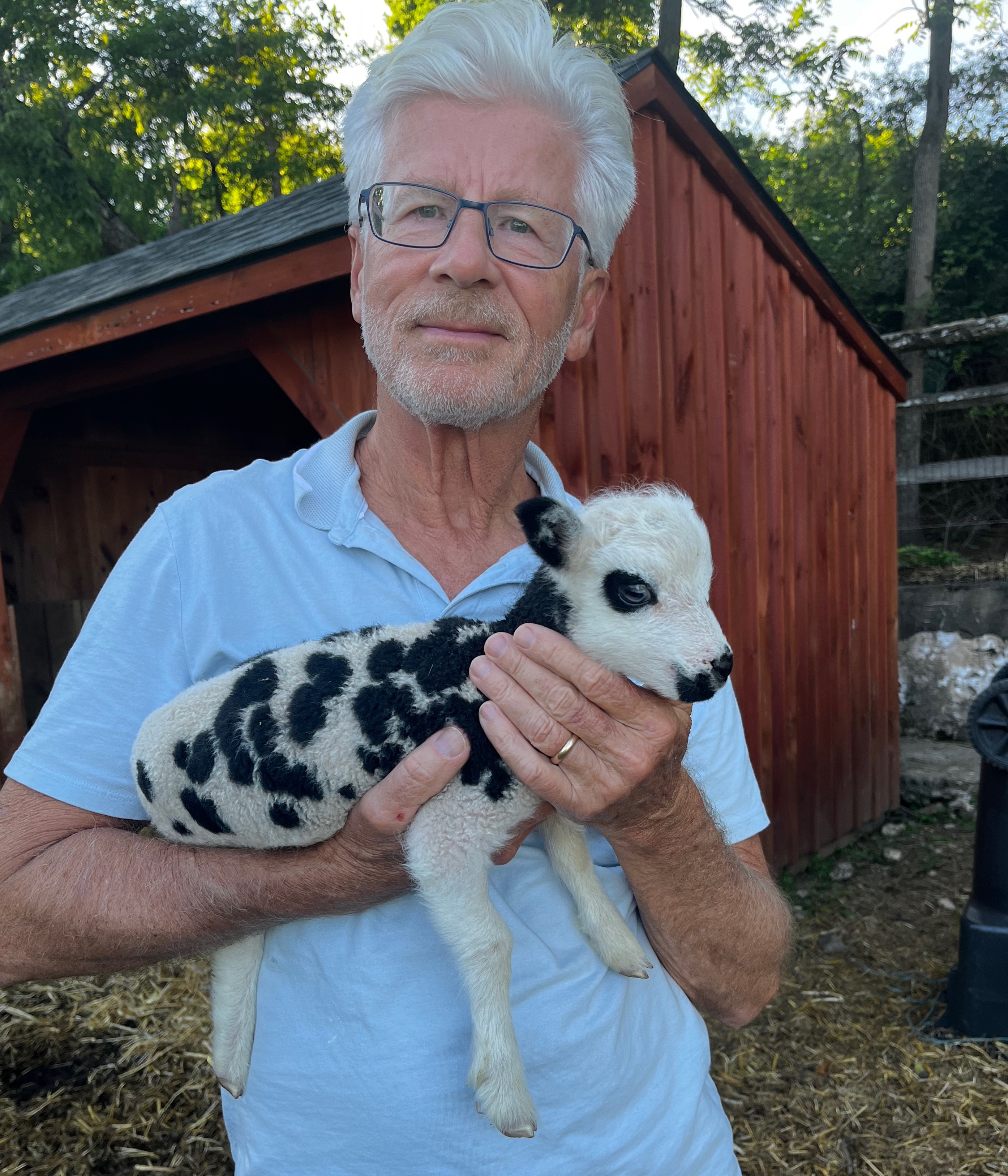
I get to practice what i learned while young at White Horse Farm in Pennsylvania, where my son’s family lives.
In the ‘60s corn had to be cultivated to keep the weeds down before “poison ready” genetically modified seed became the norm. So I’d sit on the tractor with Don as he drove the little plows through two rows at a time to dig out the weeds. If he hit a stone or lost concentration and the cultivator dug out some corn, I’d hop off, stick it back into the ground, and run to catch up.
Building or repairing barbed wire fence, learning how to drive tractor and truck, milk a cow and slop a pig, being rewarded with a chocolate milk and donut at the Midget Kitchen on Hwy. 16 all were part of my kinetic education – along with learning how to understand the punchline of coarse jokes.
Once I reached about age 13 my services were much in demand by local farmers who needed help detasseling corn, baling hay, picking stones or cleaning out stalls and stables. I was a tall, thin kid who was young Sheldon in the classroom and who saw Arnold Schwarzenegger in the mirror.
Our local farmers were basically one-man-and-a-son operations, and I replaced the boy who had grown and gone to the city. To make hay while the sun shined, we cut the alfalfa, let it dry for three days and hoped for no rain. Then we raked it into windrows, scooped it up and compacted it into 40-50 pound bales with a tractor pulling a baler pulling a wagon with a kid on the wagon stacking the bales.
Most generally it was me and the farmer – baling, loading, unloading onto an elevator and stacking in the barn. There were two kinds of farmers when it came to engaging my services on a hot summer day. One I’ll call Uncle Donnie’s way, on account of it’s about my Uncle Donnie. The other I could call “the efficient way,” on account of it’s the opposite of my Uncle Donnie.
When Uncle Don picked me up in the morning, we’d get to the farm and have to gas up the tractor, grease the baler and put in baling twine, hook the baler to the tractor, connect the power takeoff shaft and move the elevator into position to carry the bales up into the hay mow. It wasn’t unusual for us to have round up a wagon or two that a neighbor farmer had borrowed.
All the while I’m looking at all that hay, laying expectantly in windrows in the field, itching to get out there and get started, knowing it was going to be a long day. And it was threatening to rain.
Farmers committed to “the efficient way” and to getting all the work out of me they could, completed all the preliminaries before I got there. The baler was greased and hooked to the tractor, which was gassed and ready. The elevator was in place, all the necessary wagons were lined up, and mother had lunch in the oven.
We got twice as much done in half the time. And there are few things as satisfying as looking over a freshly harvested field, seeing it cut and clean and all the hay is in the barn before the rain comes.
That, and the fact that the more efficient farmers tended to pay $1.25 an hour, rather than $1.00.
Readiness makes the difference. Many of you work with non-profit organizations. Respect the time of your volunteers. Don’t let them show up on a work day or at a fund raising event and have to stand around and twiddle their thumbs. If they are volunteer tutors, have a student already selected and matched.
Then, let it rain.





 We enjoyed an orchestra at church Sunday, to accompany our choir and lift our spirits with the resounding crescendo that instruments provide. I noticed that orchestra members get involved with the music at different levels.
 wordsanddeeds.me

