Going to need extra chairs

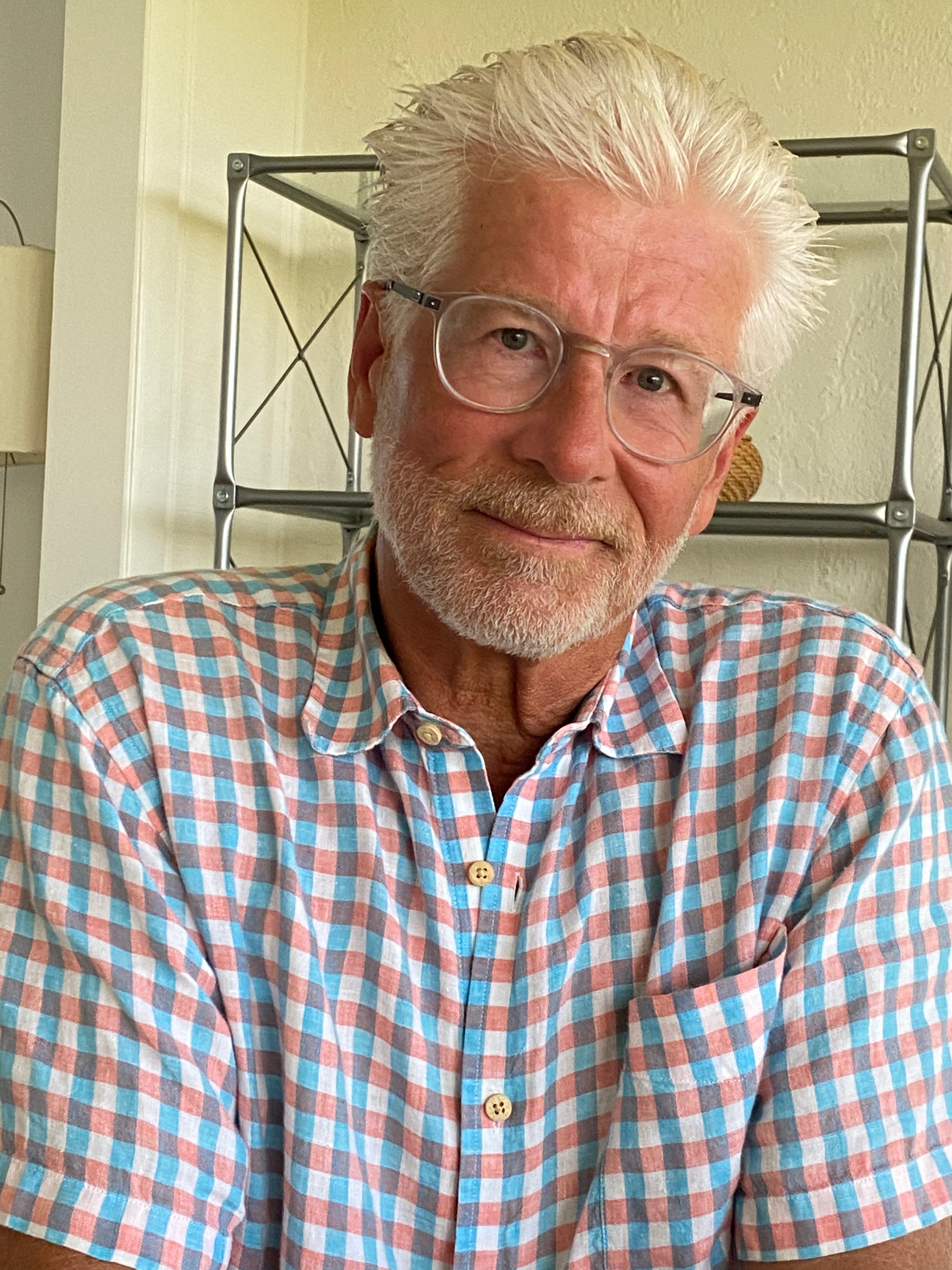
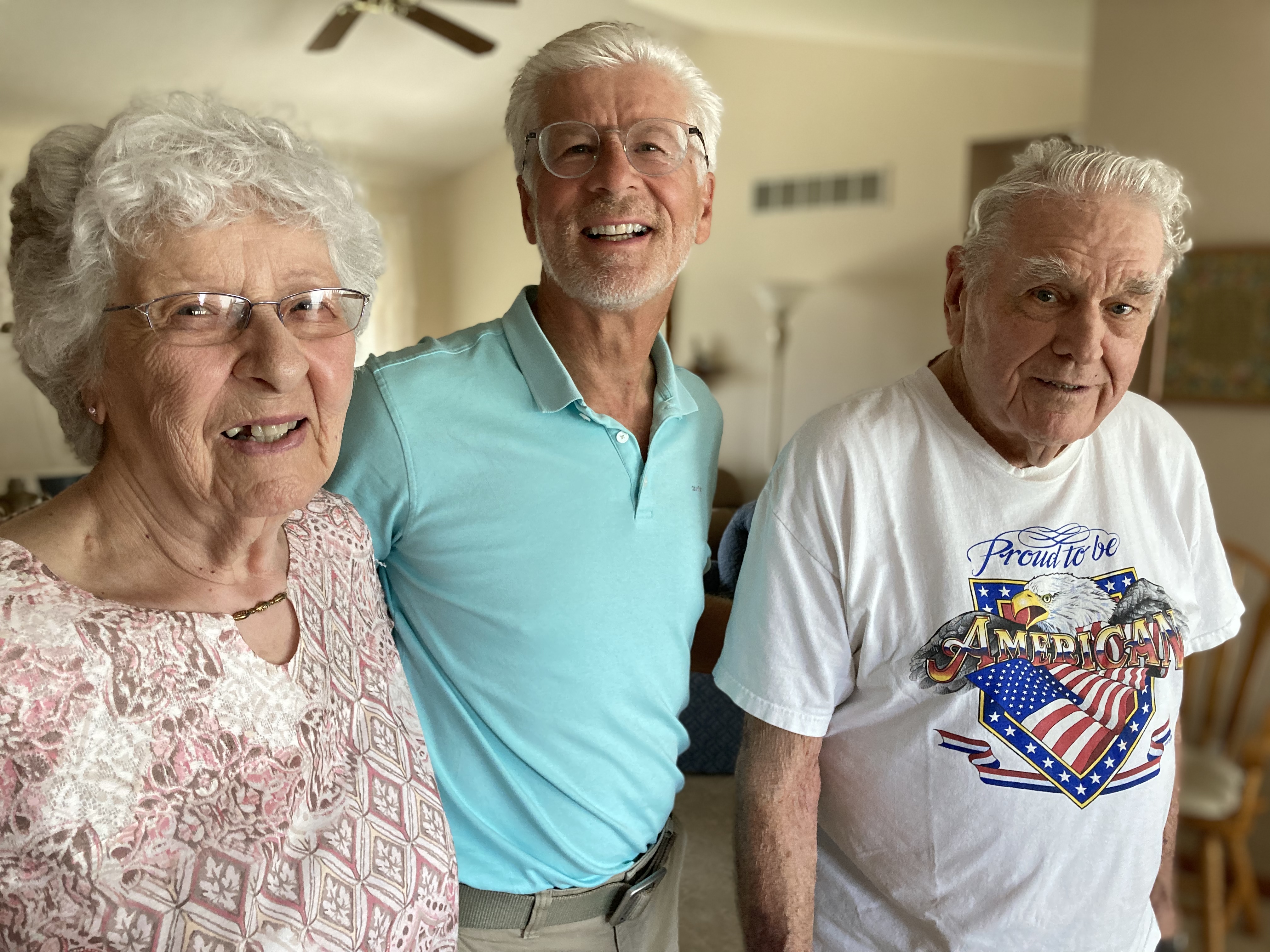
Me in the middle, with Janet and Bill in 2021.

When my grandmother died in 1979, I drove my young wife and one-month old son from our home in Nashville, TN to the funeral in Wisconsin. Grandma was young enough to have a large funeral, just 72 years old. My age.

Of course, in Rio, WI, population 788, funerals were as big a social event as Friday night football at the field in Fireman’s Park. I didn’t play football. I ran cross country instead, which I convinced myself was harder.

But I was at the football games, either running the sideline keeping stats, or in the stands playing “CHARGE” on my trombone.

After grandma’s funeral service at Redeemer Lutheran, one of six churches in town – equal to the number of bars – everyone gathered in the church basement for a lunch prepared by women of the church. Because the meal was free, and there wasn’t much else happening in town that day, the room was crowded.

My wife was most concerned with the one-month old son not accustomed to the noise and crowd and whose only real concern was keeping his tummy full and his diaper dry. So, he started fussing and wailing and that’s not the sound you want to hear piercing the din of chattery family members chowing down on store bought dinner rolls filled with a slice of ham and a slab of butter, potato salad and red Jell-O with marshmallows.

Suddenly, from across the entire fellowship hall, packed hip to hip at the folding tables, my aunt Janet yelled, “Give that boy some titty!”

Now, in another context other than a rural Wisconsin farming community, that comment might have seemed out of place, even impolite. Certainly it caused all the blood in my wife’s body to flush to her toes and then recongregate in her face, making her flush a brighter red than the Rio High School Vikings mascot. But, it also gave her the freedom to excuse herself, find a quiet Sunday School classroom, and take care of our son’s immediate need.

Aunt Janet died this week, at age 91. She was my mother’s last surviving sibling and mom preceded her in death by 29 years. They were two of eight siblings, prompting my grandpa McFarlane to say he had “Two and a half-dozen children.” When grandma McFarlane died, petty sibling grievances broke familial bonds and later on, as one sibling after another died, obituaries did not list all surviving family members, as if they never existed.

But Aunt Janet was always a friend, in part due to the loquacious character of her husband, Bill, a former police officer and much longer a seed corn salesman who knew every farmer and what they needed most. Bill preceded her in death by three years.

I confess Janet’s was the first bare breast I ever saw, as I stood wide-eyed at age five while she fed her first born son, Mark, a man who grew up to be a Presbyterian pastor, nurtured as he was on the milk of human kindness. He could preach from I Peter 2, “Like newborn babies, crave pure spiritual milk, so that by it you may grow up in your salvation.”

Janet and Bill had five children and 10 grandchildren and money never flowed like water over Niagara. Janet always put her hand to the wheel to find additional resources, driving school bus for more than two decades and making wedding cakes for lucky brides and grooms.

She looked at driving bus as ministry, taking the opportunity to offer a bright, encouraging word to children with dour faces, lifting heavy, reluctant feet up the step on the way to school.

She was certain of opinion and ready with advice.

When Janet learned my cousin Allen smoked, she asked if he would rather kiss a girl or an ashtray. Allen, sarcastically defending his nasty habit, told me he responded “Ashtray.” He’s since grown beyond that – both in girls and habit.

 Janet and Bill built a house on a hill overlooking that of her mother Eva and she was diligent in looking after her mother to the end. Eva –my grandmother on my mother’s side – expressed concern that bad weather would limit the size of her funeral. She was mentally comparing her eventual celebration to the big crowd that showed up for her husband’s sendoff. In her mind, her funeral would suffer by comparison and somehow that would reflect negatively on her life.

Though such comparison is a false equivalency, if every person whose life Janet affected positively were to attend her funeral, ushers will need to bring in extra chairs.
Carting away your history

Strangers carted away my friend’s history yesterday, piece by piece.

An auctioneer’s singsong cajoling held Dave’s life up for examination and bid. Chains, tractors, implements, house furniture, fuel tanks, rakes and hoes all appraised unemotionally for their “value” by area farmers hoping to find a deal, make a steal.

Dave’s farm, eight curvy, hilly miles from any main road, looked like a Ford dealership, as 120 trucks – at least 100 of them Ford F150s, 250s and 350s – parked nose first along the edge of the cornfield like piglets nursing. Amish neighbors in their round straw hats parked their buggies in the yard, and tied their horses to a shade tree. An early morning deluge left the grounds muddy but didn’t discourage potential buyers from picking at the accumulated instruments of Dave’s farming life.

Dave is in the second year of an ALS diagnosis and at age 72 he’d decided to sell the farm where he’d lived 46 years, raising his three children in a Trumanesque environment in rural Pennsylvania.

He is slowly losing muscle strength everywhere but in his smile.

When major items like his John Deere tractors didn’t sell for what he’d hoped, he shrugged and said, “Let’em go.” Trying to sell them on the open market later, hoping for a more equitable price, was just too much trouble to contemplate.

Dave and his dad built the house atop the hill, where his wife huddled now with a long-time neighbor to avoid seeing four decades of her life picked over, devalued and carted away. The house wasn’t quite finished in time for their first child to come home to it from the hospital. But it was finished two weeks later and she’s lived there ever since.

Dave decided to sell the house, barns and 45 acres on which he’d lived his entire adult life so that Debbie wouldn’t have to…later. Once decided, his second son, Mark, drove him through the rural neighborhood to pass out flyers announcing the sale. They left fliers with neighbors who Mark knew did not have the means as potential buyers, but he eventually realized he was driving his father around on a farewell tour.

“He just wanted to say goodbye to the neighbors he’d known for 45 years,” Mark said. When Mark realized that, he settled in and enjoyed the ritual.

The man who’d purchased the farm was present at the auction. He’d bought it for his daughter and son-in-law as a place to raise their children, in rural Pennsylvania, giving them the benefit of idyllic life in rolling hills, among Amish farmers, an area where church and school are the gravitational centers of community life.

Dave’s adult children and their spouses were present and helping. Grandchildren roamed through the barns for the last time, daringly climbing steep ladders to where hay once was stacked high, making sure that mom and dad saw their accomplishment. Dave’s sons recounted adventures with tractors, camping in the woods, trapping ground hogs and shooting that would make their survival a mystery.

This was their home being carted away on the backs of trucks and trailers. They weren’t sad – yet. The hard decision had already been made – to sell the farm and auction off the equipment. This was just the physical manifestation of their decision.

But, when the last cabinet was pushed into the back of a minivan; and the last tractor was loaded onto a flatbed; when the camper the grandkids slept in the night before rolled away behind a pickup, the somber reality settled over the property like an early morning fog settles into valleys.

I hugged each goodbye, Dave’s arms limp at his sides, and thanked them for including me in their family. Through thick and thin, good times or bad, through the struggles inevitably ahead, he’s my brother and the auction was another milestone toward “next.”

What Color is Your Duck?

I was not a self-assured little kid. I lived in the country and wasn’t particularly athletic, didn’t know my way around the terminology of machinery as it seemed my friends did. I was reticent in a crowd of my peers. But I was an early, voracious reader and I felt confident in the classroom.

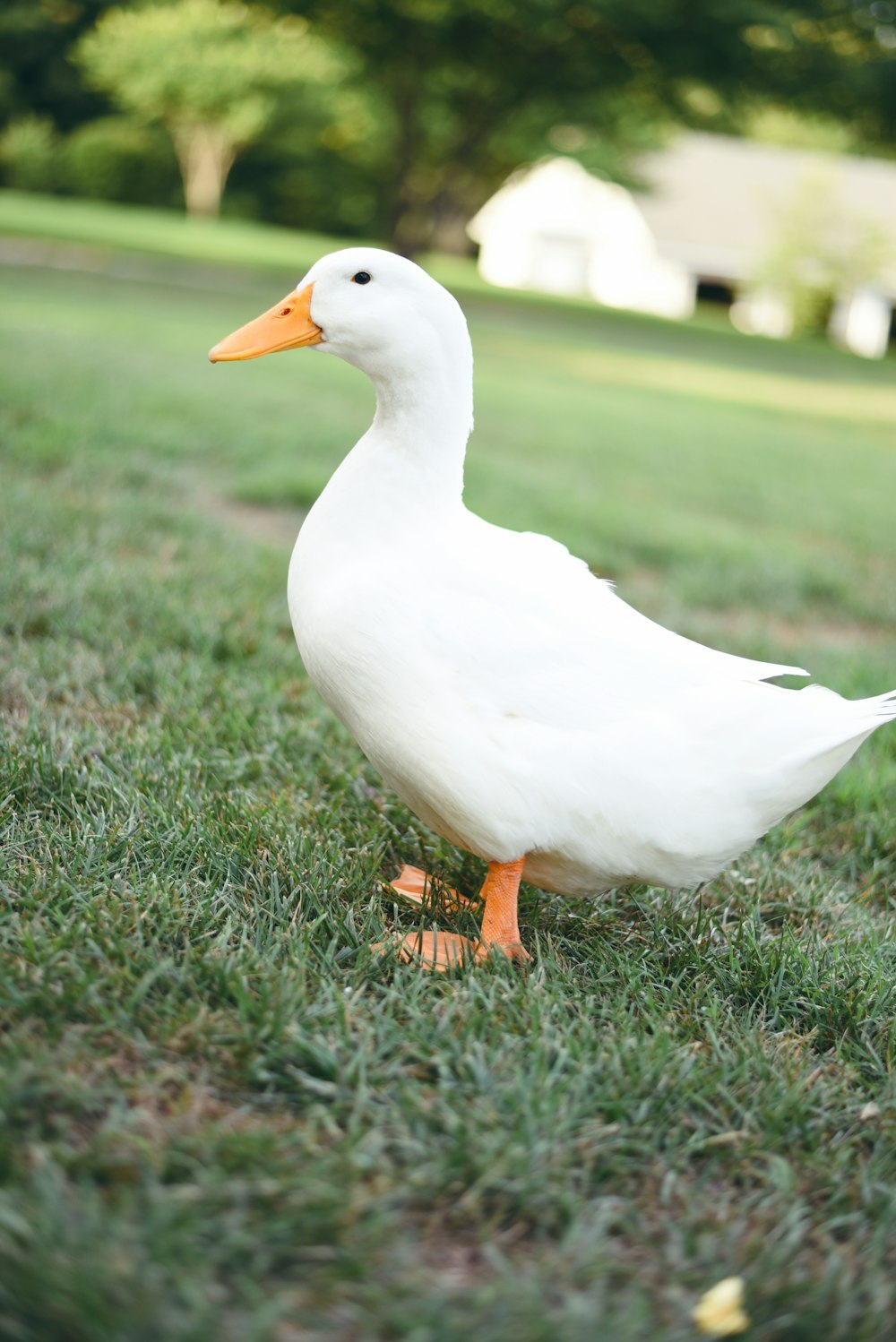
white duck on grass field

Photo by Christian Bowen on Unsplash

At least until Mrs. Roberts assigned a coloring project that I blew.

Louise Roberts was my first grade teacher. She was lovely, kind and patient. But my most vivid memory of my nine months with her (not the same nine months as each of her sons experienced) is the zero she gave me on a coloring assignment.

I’m quite certain it was she who delivered my first academic trauma. First grade seems right for that kind of project. I doubt it was second grade, because Mrs. McGowan never would have given me a zero.

Mrs. McGowan lived in the county seat of Portage, 14 miles and a half century from my little school in Rio, and possessed a sense of savoir faire. She loved her students enough to invite a select few one at a time to her house in Portage overnight to give them a taste of “city life.” Portage had 10,000 people, to Rio’s 788.

I was one of the lucky chosen for an evening in Portage with Mrs. McGowan and her husband, a local official. She made dinner, then they drove me around the city, and introduced me to city hall and the jail. Come to think of it, maybe she was trying to “scare me straight.” Anyway, she was sweet enough that she would have given me a second chance, not a zero that haunts me 64 years later.

Mrs. Roberts’ assignment simply was to color the animals pictured on the white sheet of paper she distributed. I forget what all the animals were, but the ducks… oh, the ducks.

What color are ducks? In all of my six years of limited exposure to Disney and storybooks in which ducks floated in ponds near where Snow White lay waiting for the kiss that would bring her back to life, or beneath the tower that held Rapunzel, the ducks were white. Pure, innocent, naïve images floating blissfully about the main story characters to remind us that even when things appear to be going smoothly, we need to paddle like crazy.

The ducks I was to color were presented to me on a sheet of white paper. So, very logically, I colored the other animals and left the ducks alone. White ducks on white paper. That’s the color of ducks.

When I got the assignment back with a big ZERO on it, I had the temerity to ask Mrs. Roberts why. She said I didn’t do the assignment because I didn’t color the ducks.  “But ducks are white,” I said, a nascent lawyer arguing for the defense.

“You should at least have colored the bills and feet,” she said. I could see her point, but how about a second chance? Maybe they were albino ducks.

Fortunately, I recovered from that initial academic setback and grew up avoiding drugs, thievery, rock and roll and mayhem.

Thank you Mrs. McGowan.

Don’t miss it: put those memories on PAPER

Other than seven months in our second year of marriage, my wife and I have never lived closer than 600 miles to either set of parents. I grew up in Wisconsin, she in Illinois, and then Colorado, where we met.

We were faithful to stay in touch with our parents as we moved from Oklahoma, to Colorado, to Tennessee, to Texas, back to Oklahoma and then to North Carolina. Long distance phone calls were expensive so I consistently wrote weekly letters to bridge the miles and months between visits.

Each letter recorded the previous week’s events, which at our stage of life always seemed many – certainly more fascinating, important and original to us than to our families. But mom and dad always hung on every word and my mother was good to write in return.

At first, I wrote the letters in long hand, which to today’s teens is like code. Around 1980 our office moved from an exotic, spinning ball electric typewriter to early computers. Wow. The monitor itself begged me to write as it seduced me with the string of little green letters corresponding to the keys I pressed.

By the time children started arriving computers were more common and it was easier to chronicle the many initial, unique, and unprecedented achievements of Nathan, Erin and Austin – first smile, first roll over, first word, first step. I’m sure I went into detail ad nauseum. Eventually, I realized these letters were a chronos record of my children’s lives – and mine – and I started keeping four copies of every letter.

I wrote on different computers, duplicated them on various printers, was not consistent in type face, margins or paper quality. But my intention was to keep a file of these letters for each child and present them as a bound volume for a high school graduation gift – their life in print.

The books were such a hit the kids never pressed me for that new car I never offered.

They’ve used the books to reaffirm memories, to share with spouses – and eventually their children – something of their lives growing up. The first born – trying to recall for his wife his foray into independence at about age seven – rifled through the pages to the specific time he was running away from home, pulling his wagon, when I drove into the neighborhood from work, saw him and encouraged him not to be late for dinner.

Boyfriends, girlfriends, grades, sports activities, family moves, home building, job changes, awards and disappointments all are recorded in black and white in a bound volume, a ready reference for those mystical days when a fireplace, rain, wine and melancholy need a tiny, tangible toehold to step full blown into nostalgia.

Is our self-identity anything more than an accumulation of our memories?

We’ve moved a lot so to keep things simple we never clung to things. One moving team looked around our empty attic and spartan walls and said, “Mrs. Jameson, you don’t do clutter, do you.” I struggle against the tide of my wife’s tidying to cling to pool noodles of memorabilia.

Comedian Billy Crystal, in his hilarious memoir written upon turning 65, Still Foolin’ ‘Em, believes we ought to keep mementos that take us back to happy moments. Remembering them helps us to relive them, and who doesn’t like to go back to mental images that bring a smile?

The letters I wrote to my parents were subject to time, travel, USPS sorting and handling machines, the vagaries of weather, transportation and distribution. But each was a package of joy upon arrival.

Great historical biographies have been written based solely on the written correspondence to and from the subject. I join the chorus of lament that this kind of communication no longer is in vogue. It’s a lost art; a neglected source of historical reference, of anchors to memory.

My children have asked me to write letters to their children celebrating certain occasions, passages into “adulthood,” or encouragement in their Christian lives – requests I eagerly fulfill.

Perhaps one day they’ll come across such letters in their files or boxes of childhood treasures, pause and reread them, and whisper to no one in particular, “Ahhh, Papa. I remember him.”

Picking the bones with buzzards

I walked among the buzzards at an estate sale today.

An estate sale is where a house filled with the relics of a life is picked over like road kill by vultures, tugging and pulling remnants of his memory off the skeleton and carting them off to cars.

Under marital duress, I joined the kettle of vultures who gathered well before the scheduled 9:30 a.m. viewing. Senior adults almost exclusively, none of whom needed anything being offered inside. All of us curious about what we’ll see, about how this man lived, what he’d considered important enough to collect, gather and keep through his final days.

Curious to see if anything in the house was a treasure his children didn’t know of, something we could “steal” for a few dollars and store in our own lockers for our children to offer in our future estate sale.

I chatted up other vultures, most of whom were in good humor, happy to spend a morning picking at the carcass of a deceased man none of us knew personally. We weren’t hungry, really. But if we found a morsel we’d happily chew on it.

And besides, in the cycle of nature – birth, life, death – weren’t we doing our part? Just like real vultures keep the highways clear of road kill carcasses?

I learned our guy was 95 and died after living in the house 30 years. His closets, cubbies and cupboards were filled as if he’d just stepped out for lunch, telling the house, “I’ll be right back.” But now, except for how the estate sale team had arranged and tagged everything, it stands as a cavernous crypt.

I wandered with the flock, poking, pecking and prodding. He loved Christmas music and books on history and architecture. His shirts were once expensive – but dammit, too large. The tools in his garage were well worn. His china cabinet held fine crystal too delicate for me even to want to examine.

It was the bathroom that arrested me. The sink counter was covered with personal care items that revealed an individual vanity, as would all of ours – how he cared for his teeth, his hair, his nails and skin.

Inside the tiled shower stood a collapsible walker, tight and forlorn against the wall. Available. Unused. The walker had wheels on the front two legs, so he could lift the back two legs and roll it along, dropping the back to the floor to rest or stand when he’d gotten to his destination in the house.  

The walker – alone among all the mementos of a long life – stood in mute testimony to the infirmities at the end of a long life. And it moved me from carnivore to compassion. I left silently.

Oh yeah, we got an Elizabeth Geisler basket. It was a steal.

Beautiful killer

This morning I saw the most beautiful fox ever. Larger than typical, with bright red fur, tail long and bushy, not matted by thorns. It looked fresh from a spa: fluffed, puffed, tufted, shampooed and blow dried. Eyes intense, intelligent, confident and controlled. Lithe, nimbly athletic, light of foot like a dancer. 

And I wanted to kill it.

Coming back from her sunrise walk, my wife heard the terrorized shrieking of chickens in the open range pasture just behind the cottage where we stay on my son’s property. She stepped quickly to the pasture where she saw a fox with a chicken in its jaws. When she shouted and clapped, the fox sprinted away. The chicken didn’t.

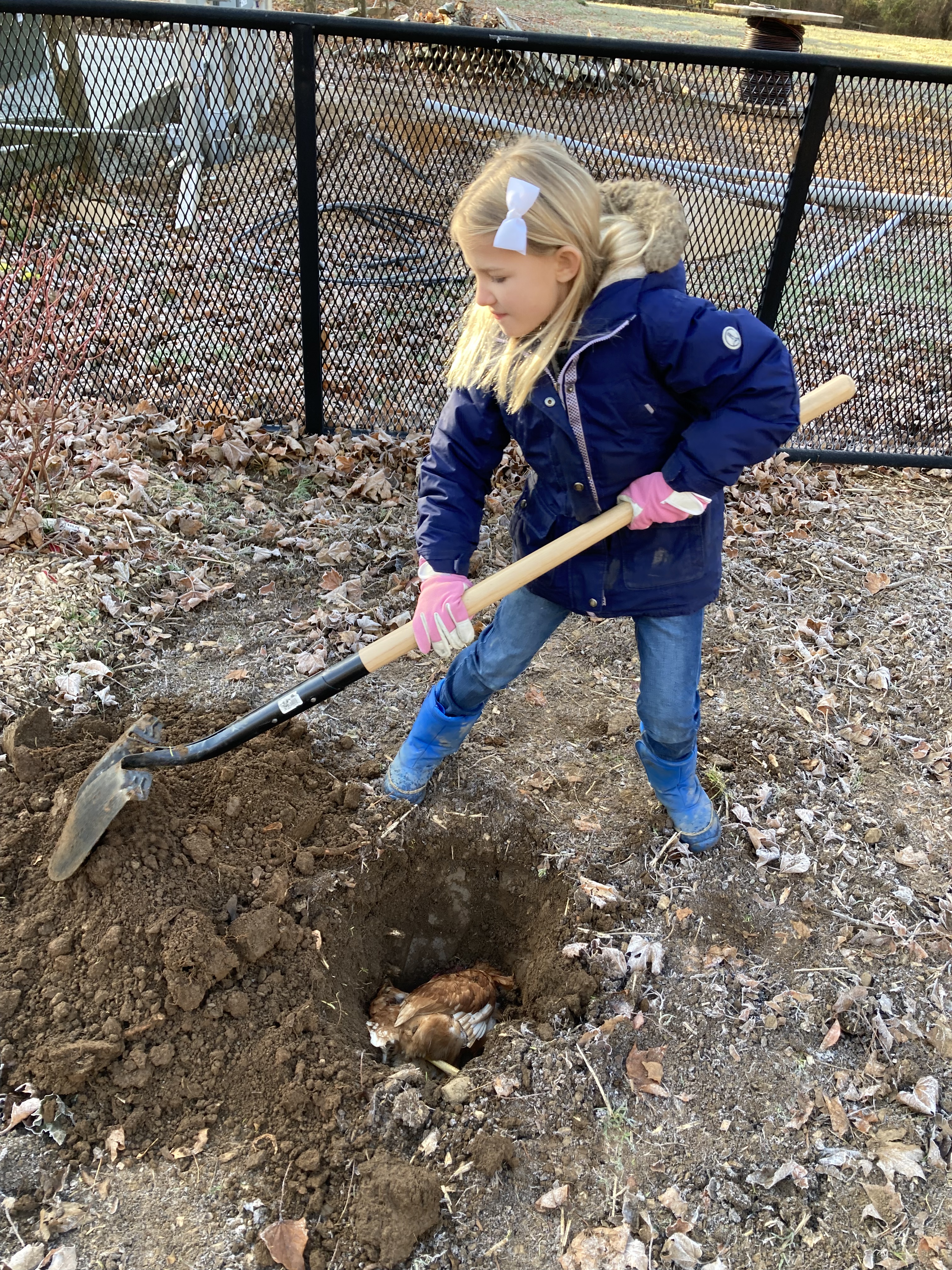
Granddaughter helped to bury the first two victims of the carnage.

As Sue Ellen told me what happened, she asked what to do with the carcass. “Make nuggets” seemed an inappropriate suggestion. 

Before we could fully get our minds around what had just happened, we heard the terrified squawking again. I rushed to the door and this time I saw the fox…with another chicken in its mouth. I threw open the door and for an instant was shocked silent by the fox’s beauty.   

But my anger at its audacity quickly overcame my admiration and I stepped out the door and shouted. It understood my threat and I was pleased to see it run away, leaping the fence as if the rails were a padded obstacle in tumbling class.

I grabbed my shotgun and followed the fox’s trail, knowing it would never show its head to me while I stumbled and tripped through its habitat. I felt better somehow, though, knowing I was “doing” something, at least dropping some “man scent” around so the fox would know who it was messin’ with.

The second chicken was still breathing, its legs twitching, eyes registering a resigned acceptance of fate. I dispatched it, then tossed it into the garden while I went to get a shovel. 

My seven-year-old granddaughter watched wide eyed the entire proceedings, dressed in the “farmer girl” overalls we’d given her for an early Christmas present the day before. 

Uncowed, she helped me dig a hole, her sudden awareness of the life cycle presenting her a sad, but not devastating new insight. 

The life cycle as presented on a National Geographic special sees the fastest lion chasing down the slowest antelope, and it all seems natural and normal, almost pristine, except for the dust. Eating a hamburger never makes me think of the feed lot on which the donor was raised. 

Yet, somehow, because we fed and cared for these chickens, tucked them in at night and gave them special treats from our vegetable shavings, it became a personal insult. 

Yes, they’re free range and hawks circle constantly overhead. Yes, the fox has to eat and yes, the prey/predator cycle is natural. But, the fox invaded my space with impunity, looking at me as if I was an inconvenient interruption at his meal, like a waiter who informed him he had an urgent phone call and he had to leave the cordon bleu to cool.

It was a sad morning, but only a prelude. 

Worse, we came home after dark that night and I went out to check on the chickens, to make sure they had put themselves up in the coop, where safety lay behind a closed door. I looked inside and there was not a single chicken in the coop. 

With a sickening dread, I cast my light over the field and the beam fell on multiple carcasses, each with the head and neck gone. The goats huddled in their own shed, witness to the horror. I followed my flashlight beam around the pasture, accounting for all the chickens but one. 

I found her in the far corner, shaken and shivering. She didn’t protest a bit when I picked her up and put her in the coop, behind closed doors. I don’t know what killed the chickens and I don’t know how this one survived.

We named her Lucky.


Living the John Deere Dream

I wake up each morning plotting my day around any task that will involve the tractor. 

I’m staying for extended periods on my son’s gentleman farm in Pennsylvania, the buildings and 20 acres of what was once a 500-acre dairy farm. All the homes that line Grubbs Mill Road sit on large lots carved out of this farm, which is more than two centuries old.

I try to order my day around tasks that will require me to use the tractor!

While staying in a cottage on the property – a cozy, one bedroom stone building converted some time ago from the dairy’s business office – I wake either to the rooster’s crowing, the goats’ mewling in the pasture just on the other side of my west facing patio doors, or workmen’s trucks pulling in to work on renovating the main house, built in 1811. 

Each day starts with a plethora of small jobs that challenge my brazen hubris that believes man can prevail against nature. 

The property has pastures to mow, fence lines to maintain, yards, flower beds and a garden to tend. House renovations leave rocks, tree limbs and shrubbery around the yard that need to go on the burn pile. Hurricane Ida piled debris along the stream and in the upper pasture; logs lay on the ground to saw and split. There is equipment to maintain and in the midst of it all, four grandkids to ferry to school and various activities. 

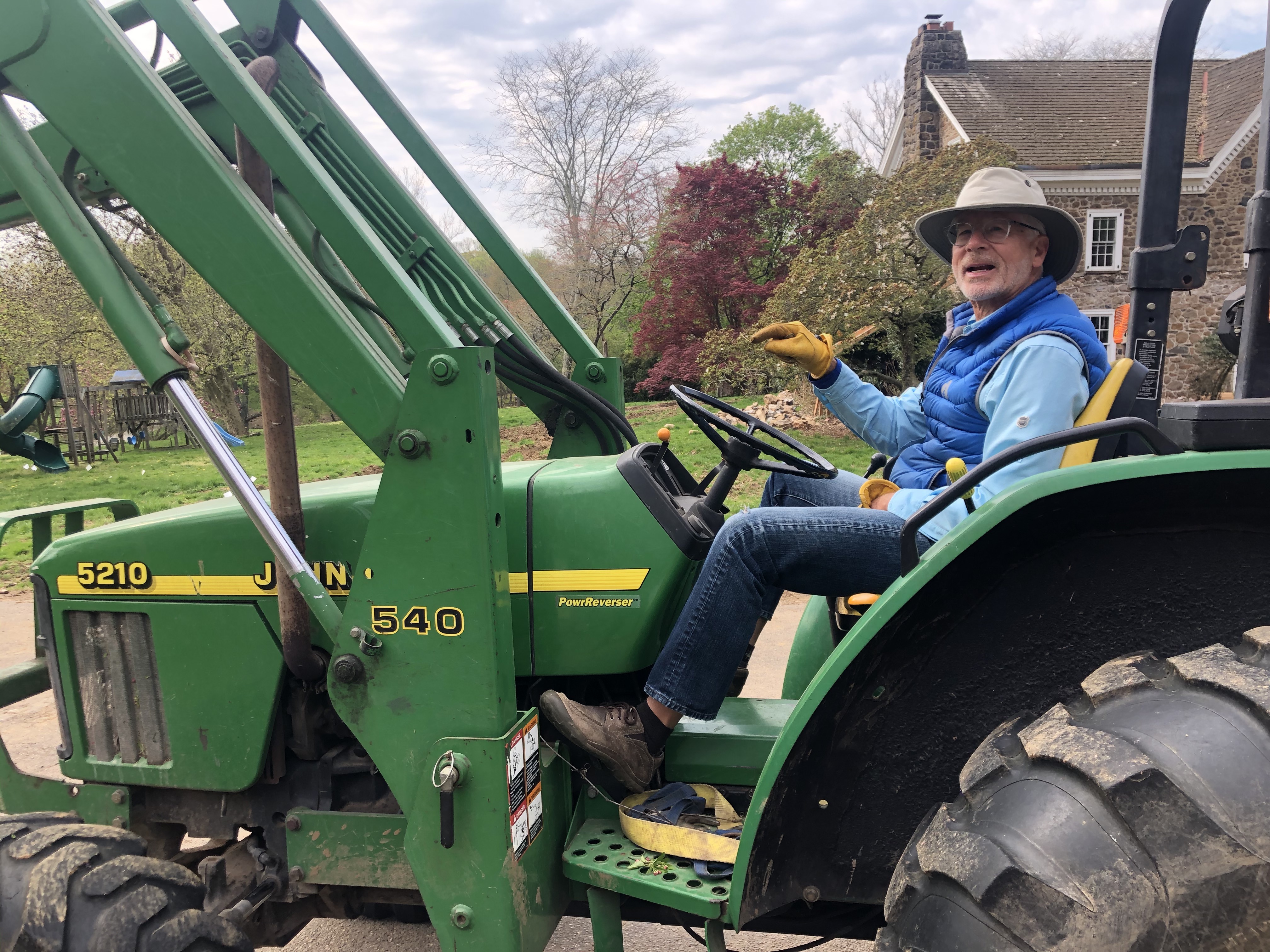
I love to drive the John Deere 5210 diesel tractor with front end loader. It takes me back to the farms on and around where I grew. The tractor on our 80 acres was a little Ford Ferguson. It must have been 25 years old when we got it. It didn’t have brakes then, and we never did get them fixed.

My Norwegian bachelor uncle Don milked 19 cows on his dairy farm and was always looking for help from his nephews. By age 11 I was driving his John Deere B that started by hand cranking a fly wheel, and his Allis-Chalmers and Farmall H tractors. I cut hay and pulled a baler, behind which Don loaded the bales. For four summers after I turned 16 I drove pea combines and sweet corn pickers for the local canning company.

Tractors rumble with power and when you sit atop one, with enough horses at your fingertips to pull a loaded wagon, or scoop up a load of rock, that power ripples through your nerves to give you the sense that you, too, are powerful. 

The Ford Ferguson I grew up with made up with a big heart what it lacked in muscle. 

Our fields laid fallow for several years, taking advantage of the government’s soil bank program, through which it “rented” farm land to keep it out of production – to artificially prop up commodity prices. Because our area was at the leading edge of a glacier eons ago, we were the unfortunate beneficiaries when it melted of all the rocks and stones it had scraped off the surface on its way south.

The annual freeze and thaw cycle pushed those stones to the surface and a regular spring job for farm kids in my area was “picking stones.” We had to get them off the fields to keep them from breaking plant and harvest equipment. 

Some of those stones were boulders as big as our little tractor. Their backs broke the ground like a blue whale about to surface. I’d dig around the boulder, wrap it with a chain and hook it to the tractor which would grunt and belch, straining to pull it out of the ground where we could pry it onto a “stone boat” – a sled of planks – and carry it off to a big hole in the woods.

Our little tractor pulled so hard its front wheels would rise off the ground. To keep the front end grounded and give us better traction, dad had me sit on the tractor’s hood, holding onto the radiator cap. My puny 130 pounds didn’t do much to keep the front wheels on the ground, but it was a fun ride. 

The workhorse John Deere on my son’s farm is a much more substantial tractor. But I had a similar “can’t keep the wheels on the ground” issue with it, this time with the rear wheels. I was using the bucket to try to lift a fence post out of the ground. 

When placed years ago, the post was seated in cement. Succeeding years saw tree roots grow around it. When I tied a strap to the post and pulled up on it with the bucket, I was shocked to feel myself sliding left to right in the air, my rear wheels airborne. It was a very insecure feeling, no matter how fleeting. I quickly lowered the bucket and my rear wheels returned to terra firma. From then, until the post finally broke off, my airborne rides were under conscious control.

My son’s family has been on White Horse Farm only a year. Seven-year-old Juliette describes them as the “White Horse Farmily.” Moving there from a big suburban house that bordered their school was intentional to give the kids a broader understanding of the life cycle, to give them meaningful tasks and thus the satisfaction of achievement, and to learn responsibility in a context where neglect may mean death of an animal.

Like John Denver, life on the farm “is kinda laid back” and that could be frustrating if finished product is the goal. The younger children, ages five and seven, come bright eyed, eager to learn and to help. But, their “help” sometimes prolongs the task and I cringe when dueling pitchforks threaten to knock out a tooth while getting new straw for the chickens.

I’ve learned though, that the most important thing is not the finish. As my son reassured me, working with the kids is not about efficiency, it’s about process. And we’re in the process of growing up, growing together, learning and living in an intergenerational context. 

And tomorrow I get to hook up the brush hog and cut the pasture. With the tractor. 

Re-entry after a week of RAGBRAI

It probably started when I forgot to flush. 

Then, my wife looked baffled when I drank a beer at 10 a.m. She was downright befuddled when, at 11 a.m., I ate a piece of blueberry pie, and asked at noon if she had any apple pie in the house. 

When I wanted a big, juicy, fried pork chop to eat while standing under a shade tree, she was bewildered, but she finally blew up when I went for ice cream at 1 p.m.

“You’re not on RAGBRAI anymore!” she declared. 

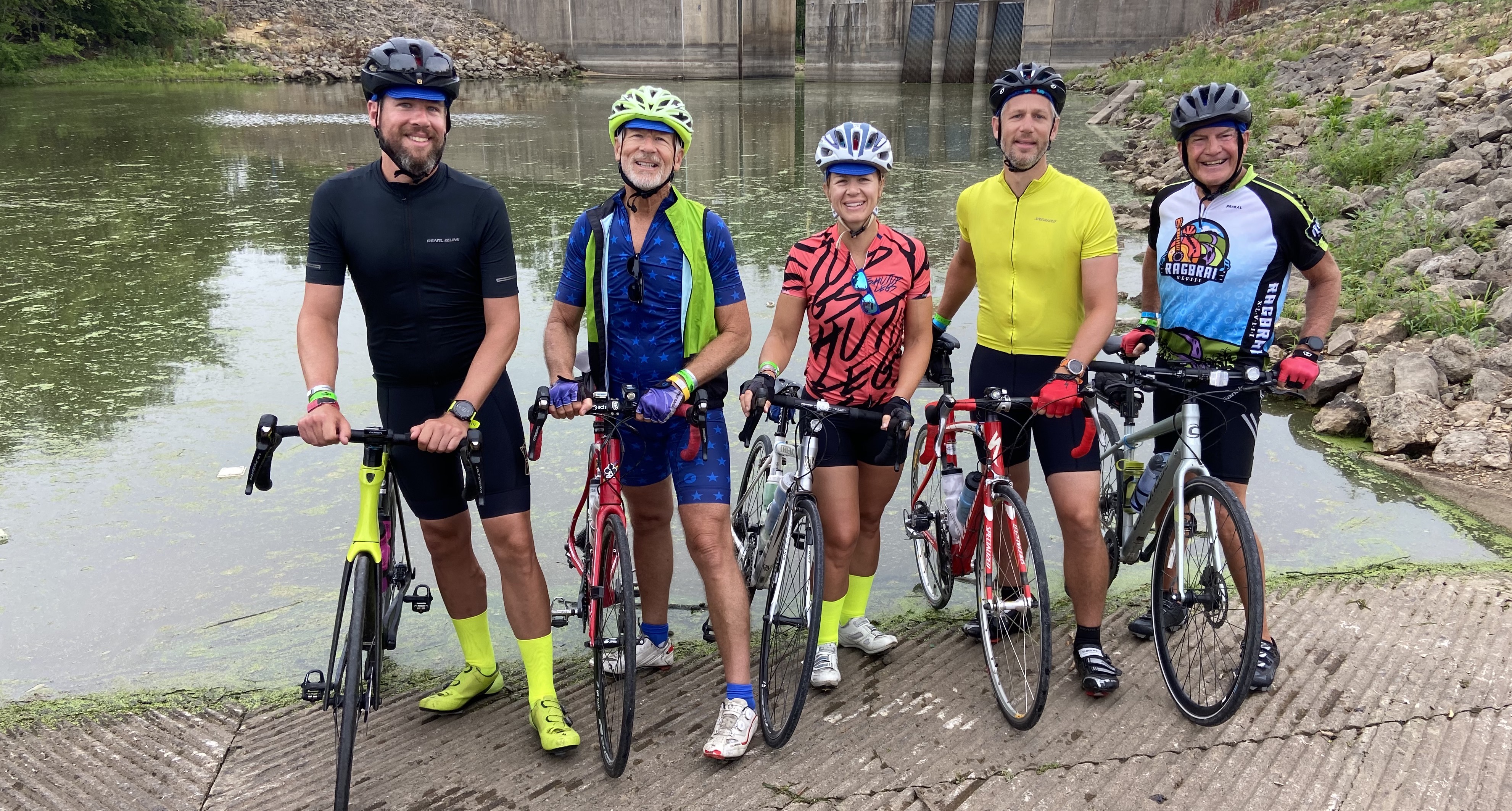
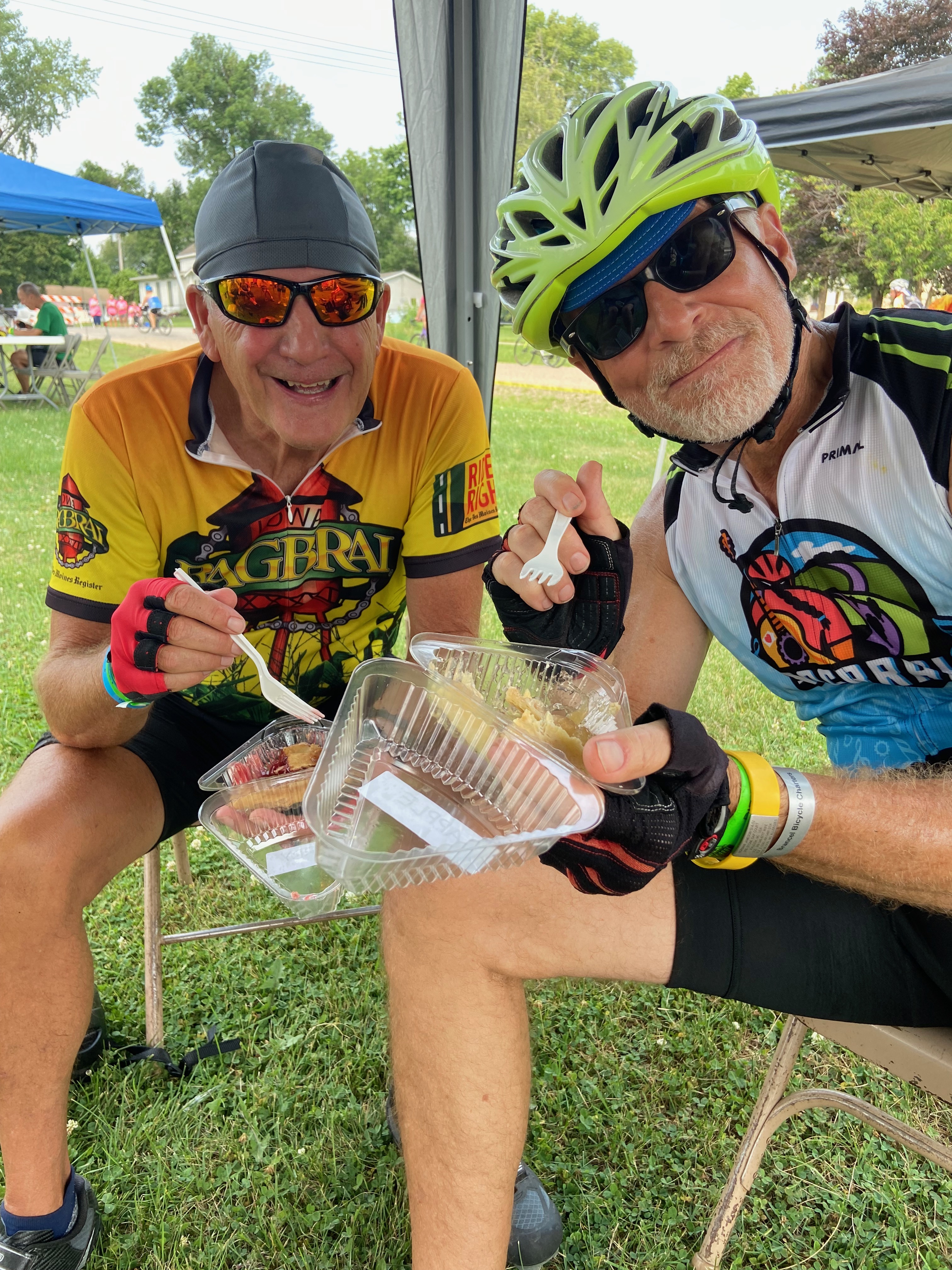
It’s true. Spending a week on my bike with my three adult children and my best buddy from the Army – and 10,000 of our closest friends – riding across Iowa in the oldest, longest and largest group ride in the world does recalibrate my sense of propriety.

Seven days of riding over 470 miles ends with a tire dip in the Mississippi River in Clinton, IA.

I mean, who flushes after using a kybo? (Kybo is the RAGBRAI term for a porta-john, coined by Australians, or, as the acronym that Boy Scouts appropriated for it, Keep Your Bowels Open)

And, a beer by 10 a.m. is appropriate because by then we’ve ridden 40-50 miles and the temperature already is 90 degrees with humidity approaching sauna level.

Pie? Pie makes the world go around, and provides the dietary fruit necessary to make kybo visits regular. It seems every church on the route has conscripted their resident grandmothers to make pies to raise money for roofs, mission trips or video equipment. 

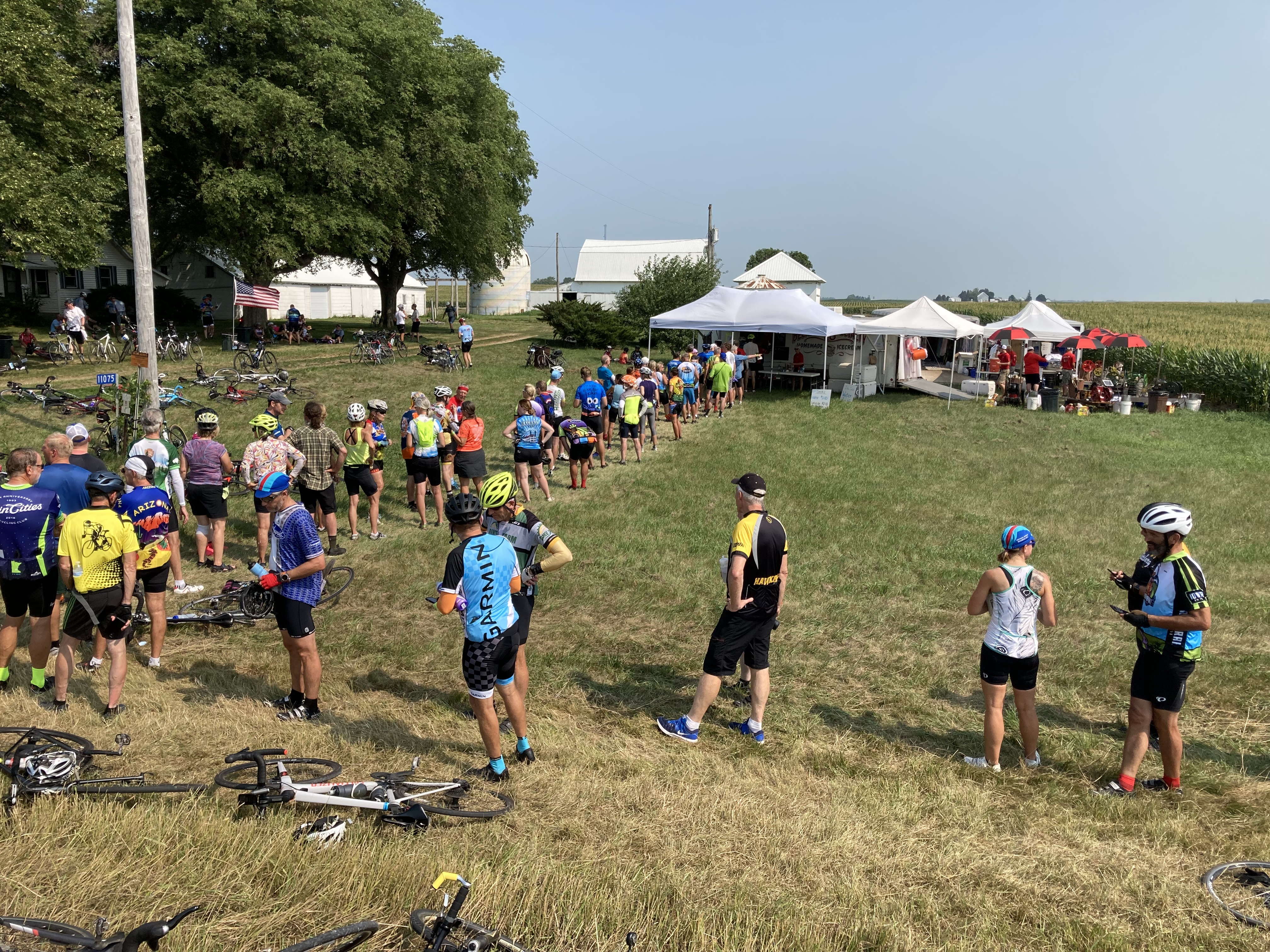
Mr. Pork Chop is one of several food vendors that position themselves each day at a distance from the start appropriate for their particular specialty. You could always find Farm Kids in time for breakfast, and Beekman’s homemade ice cream was near enough to the day’s finish to justify a satisfying stop. 

This was my fourth RAGBRAI and first since 2013. What made it special for me was riding it with my kids, who live in three different states, and my Army buddy, who lives in Nebraska. We covered nearly 500 miles in seven days, starting at the Missouri River in Le Mars on the west side, and riding a serpentine route east to Clinton, where we dipped our tires in the Mississippi River

Beekman’s Speciality ice cream was always a popular afternoon stop.

Iowa possesses its own beauty. The relentless corn fields roll endlessly to either side of us, their golden tassels wafting in the breeze like small waves in open ocean. They also provide handy a kybo experience for those who can’t make it to the next town, given the likelihood of a long waiting line. Just be sure to go at least four rows deep. 

When my daughter yelled, “Keep going, Dad,” another rider at the rest stop sprayed his mouthful of pickle juice all over the grass. Some guys need to go deeper than others. 

Each night thousands of RAGBRAI riders pitched their tents in villages with populations dwarfed by our swarm. It seems every town had railroad tracks on which ran trains whose engineers enjoyed sounding the piercing whistle way too much.  

A couple of nights featured local infantile knuckle draggers screaming past the campgrounds, blowing air horns and shouting some nonsense about what idiots we were and what nasty things we supposedly did to our mothers. But the joke was on them. The trains already made sure we weren’t sleeping, anyway.

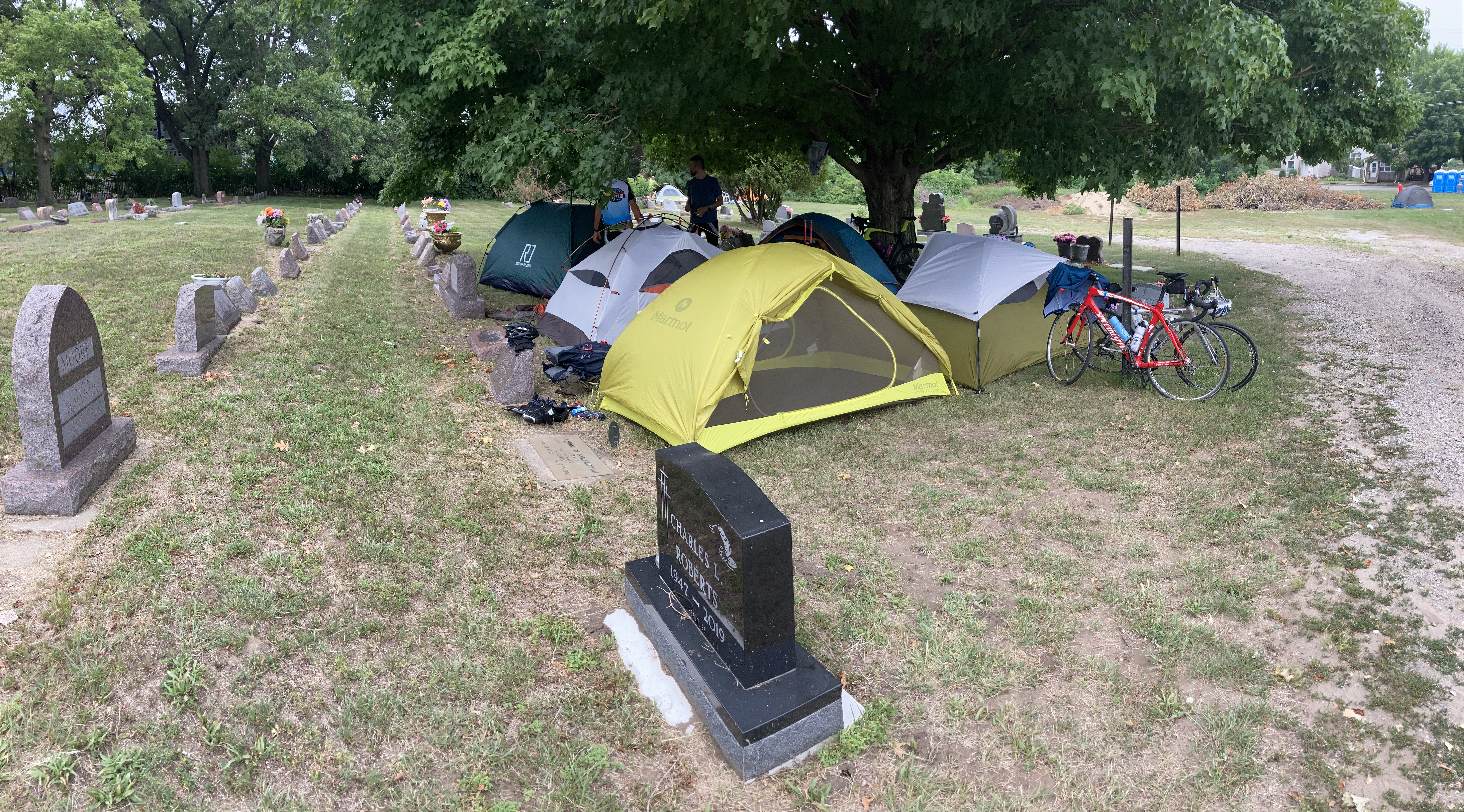
The week was exceptionally hot, in the high 90s every day until the last. One day our campsite was in an open field, just across a gravel drive from a graveyard where a big shade tree held open its arms.

Our little clan erected five tents beneath that tree, in close proximity to graves. The practical temperature in the sun was 106 degrees and it was more like 90 under the shade. We were grateful, and heard no complaints from our immediate neighbors. 

The lone shade in Waterloo turned out to be off limits.

But, someone who didn’t like us there protested to someone they deemed to have authority and that someone asked us kindly to move. We refused. When he asked if we’d prefer to get the police involved, we said, “OK.”

Slinking five minutes later into our shade, while the complainers sat in their car 10 feet away with the air conditioner running, the young policeman obviously hated to hold the conversation we forced him to have. We bantered cordially back and forth about rules, property,trespass, and lease agreements, neither of us convinced of the other’s position.

He pulled out what he thought was his ace in the hole when he asked, “How would you like it if it was YOUR mother or grandmother here and you were camping at their gravesite?”Simultaneously, all five of us said, “They would LOVE it.”

Ultimately, we decided a night in jail – even in an air-conditioned cell – wasn’t worth the hassle, so we moved our tents across the drive, 20 feet. We needed to get cool, so we decided to hitch a ride to an air-conditioned restaurant in Waterloo. After several quizzical looks by drivers who wondered how in the world we thought FIVE people could catch a ride, one lady in a big red pickup stopped. She had just come from the same cemetery where she was visiting with and praying for her recently departed husband, and she was curious about what the hundreds of people and tents were doing there.

When we said we were riding through Iowa and were staying there that night, she said, “Hallelujah, David will have some company tonight.”

It’s all about perspective, isn’t it?

As great a time as I had with my kids and buddy, riding 70 miles a day through several small towns, each of which threw us a party, the highlight came the last day as we navigated the rolling hills approaching Clinton. My team, The Jameson Jockeys, was riding close together and I punched it on a long downhill, tucking in and rolling past my oldest son.

Eastern Iowa on sixth day of riding.

He later told me he saw “an old guy” riding past him down that hill, which was his first surprise. But then he thought, “That guy has a bike like dad’s.” Then he realized, “It IS dad.” And my ride, day and week were made.

This is just the tip of what a week of RAGBRAI is like, not to mention the miles and smiles, temporary friends and cornfields that never end, the heavy heat and rough streets. There is no way to explain it, even to a long-suffering spouse who is doing her best to help me through re-entry into normal life. 

But, she did put her foot down when I programmed the white noise sound track in our bedroom to be a train whistle. 

Moments planted yield the fruit of memories

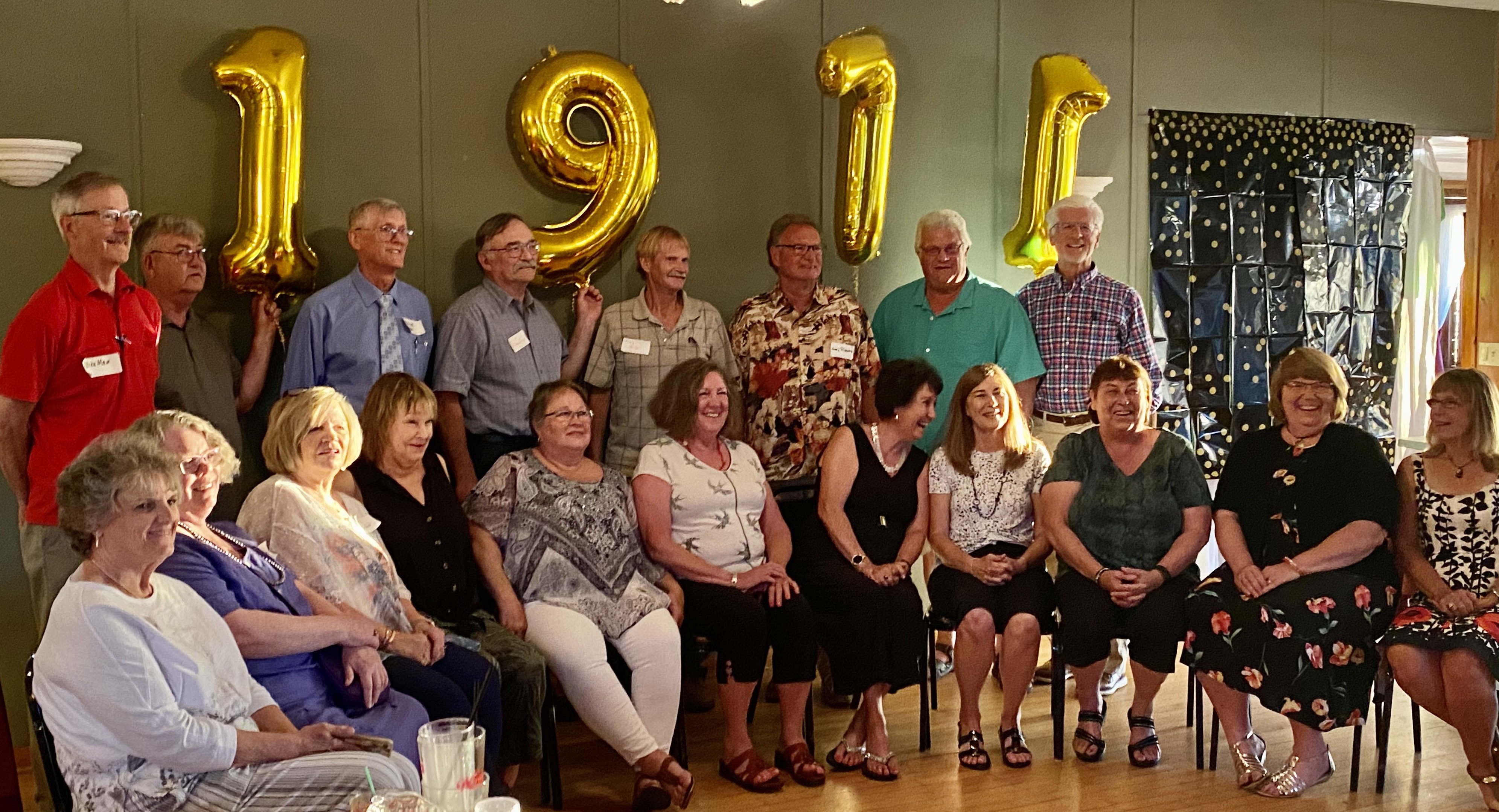
Members of the Rio, WI high school graduating class of 1971. Not a bald head among them.

Confession up front: before my 50th high school class reunion in June I looked over my year book to reacquaint myself with the names – and cherubic faces – of those from my class who might appear. 

Having delivered our graduates’ speech as valedictorian of our 53-member class five decades earlier, I was asked to “say a few words” on this very convivial night, decades past the gateway to a dream that seemed to open to us in 1971. We’re also decades past having to color our palette of life, careers, marriages, successes or failures in hues that confirmed that we’d “made it.”

So, I talked about “making it,” and memories.

Members of our class were born in 1952 or 1953. I mentioned notable characters born in those years, including Vladimir Putin, Patrick Swayze, Liam Neeson, George Strait, Floyd Mayweather, Mr. T and Roseanne Barr, Hulk Hogan, Cyndi Lauper, Pierce Brosnan and Tim Allen.

We remember these politicians and entertainers because in our minds and in our culture, they “made it.” They are rich and famous, at the top of their respective fields. Say their names and people know who you are talking about. 

“Did we make it?” I asked. “Are we making it?” 

I was pleased to hear an immediate “Darned right,” from Jerry, our star athlete who was an all-conference football player in college and who has concluded his career in insurance, primarily among farmers in two counties.

No matter what we think “making it” means, I know we all have a different perspective on that than we did 50 years ago – or even 20 years ago. Success? Riches? Fame? Security? Family? Love? Inventions? 

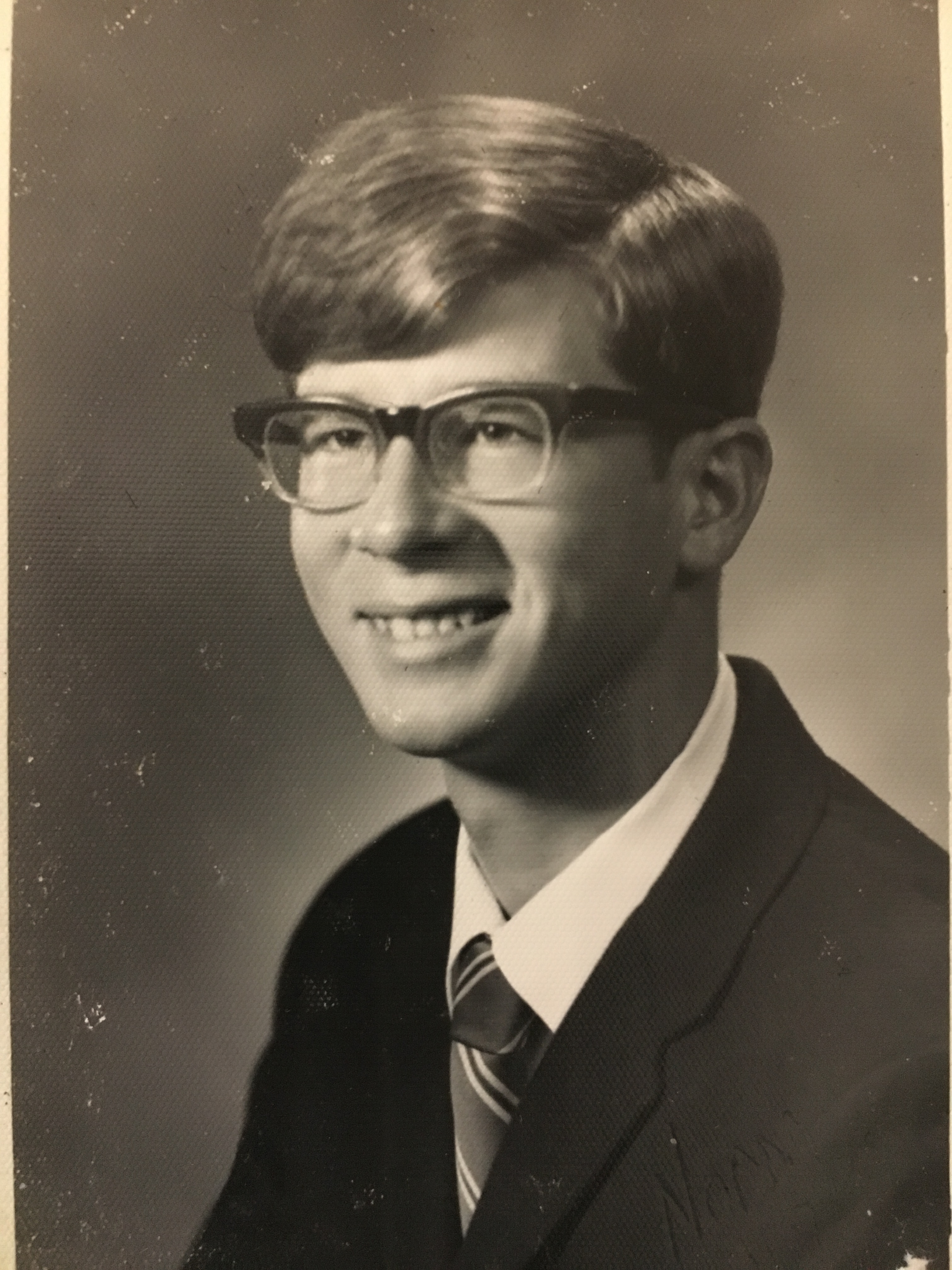
My 1971 high school graduation picture. Naive, hopeful, eager.
Fifty years of sandblasted life later, mostly in Baptist communications.

Except for seven months, I’ve never lived closer than 600 miles from either my parents or my in-laws. My quest to “make it” took me from state to state. I’ve lived twice in Texas, twice in Oklahoma, twice in Colorado, in Tennessee and now North Carolina. My daughter was six when we moved to North Carolina and North Carolina was her fourth state to live in. 

I came home annually to visit – and as long as my dad lived, Rio was always “home.” For the longest time, I thought “making it” meant anything away from Rio, population 788. My dad always told me Rio’s population stayed at 788 because any time a young woman had a baby, an older man left town. 

Looking across the room I saw vibrant senior adults, many of whom never left the area, and all of whom have “made it.” They stayed, invested themselves, coached the local teams, served on the school board, nurtured the children of other families, and offered their voices of wisdom among their peers. They’ve been important to many lives. 

Reunions are the fertile soil in which the seeds of memory planted much earlier blossom and flower. We harvested those blooms at our 50th.

We remember moments, rather than days, as philosopher Cesare Pavese said. We all have memories of high school. Some we share, others are unique because none of us lived the same life. And the best part of those remembered moments are the people we shared them with.

Writer and theologian Frederick Buechner said, “When you remember me, it means that you have carried something of who I am with you, that I have left some mark of who I am on who you are. It means that you can summon me back to your mind even though countless years and miles may stand between us. It means that if we meet again, you will know me.”

And we want to be known. And remembered. Someone has said you die twice: first, when your heart stops and you’re buried. The second time you die is the last time someone says your name… whether it’s a year, a decade, or a century.

So, I named the seven members of our class who are with us no longer. They remain alive in our memories. 

Then we had fun recalling not only the names of our teachers, but some of their idiosyncrasies: the teacher/coaches who helped athletes with grades; the biology professor we called Bernard the Monk because of his curly bowl haircut and demeanor; the English teacher who the girls always felt was peeking up their skirts.  

Gas was only 33 cents a gallon at Bleigh’s service station during high school. I’d drive across town to the Farmer’s Union Co-op if it was 32 cents there. Of course, “across town” was less than a mile, with one stop sign.

Janis Joplin was singing “Me and Bobby McGee” and “The French Connection” competed with “Fiddler on the Roof” and “Dirty Harry” for your $1.50 movie admission. 

Living in the south now, I told the class every region has its rednecks, but southerners are special. You know you’re a redneck in the south when you take your dog for a walk and you both use the same tree. Or, when grandma’s wish list includes ammo. Or when you think “The Nutcracker” is something you do off the high dive.

One anomaly I noticed was that not a single person in the room was bald. According to the U.S. National Library of Medicine, male pattern baldness at some level affects more than 50 percent of all men.  It stands to reason that someone would be bereft of hair. 

Perhaps humorist Garrison Keillor’s observation of his little hometown of Lake Wobegon – the model of which easily could be Rio, WI – is right. There, “all the women are strong, all the men are good-looking, and all the children are above average.”

For all of you who are having reunions and special functions, blessings on every classmate and friend who has “made it” this far. May you have many more years to be a positive influence in your children – who always need their parents – and their children, who more desperately need the positive influence of grandparents now than ever before. 

These are the people of our lives, thrust together by time and circumstance, calling up the memories created by moments together. I’m grateful for them. 

How much does that cost?

My grandkids are of the age where they want to know the cost of everything.“How much did you pay for that, Papa?”They’re making a few bucks and are probably calculating subconsciously how many weeds they’d have to pull to earn enough to buy whatever “that” is. 

If we go out to eat, they scan the menu for cost – not that they buy low to save me some money, but they like to know how much Papa is willing to pay to feed them!

“Can I have sprinkles, and whipped cream, and two scoops?” says the clan when not considering the cost of their ice cream treat!

My youngest local grandchild, CJ, suggested this week that I could buy two Tesla automobiles. “My parents say they could afford one, and you have more money than they do, so you could buy two.”

CJ and his siblings are in a stage where they want at least one of everything they see. Whether it’s a car, truck, gun, bicycle, house, shoes, computer, camera, watch, lawn mower or the crumbs from a chocolate chip cookie left on the counter, they declare “I want that.”

To their great credit, their parents, Erin and Benji, don’t fend off the wish whines by saying, “We can’t afford it.” That’s the handy, but shallow, phrase I employed when my kids leaned over the same deep well of wishing.

The truth is, then as now, we could afford some of the shiny baubles the kids see and agitate for, but we’re not going to buy them for a variety of reasons. Primarily, we know the sparkling object that captures their attention today will be fish wrap tomorrow. They don’t need it. It’s not a priority, even if we could afford it. It’s not healthy, or good for you. 

I used “We can’t afford it” because it was simple, and even a kid can understand it. It quickly ended most begging and whining. But, I realize now, it also ended rational discussion about needs versus wants, cost versus value. And, it left the impression on their young minds that we were poor. 

But Erin, a school teacher, and Benji, a fireman, don’t blow off their kids’ accumulation fantasies like that. For some things, they agree and say, “That would be nice, but it’s not in the budget now.” 

Or, “We could afford to get that, but it’s not a priority. We have other things that are more important.” They know that today’s “gotta have it now” item will have a new identity tomorrow.

I remember when I learned my dad made the astounding figure of $250 a week. It was the mid-1960s and I was with him after hours at the local Farmer’s Union Cooperative, where he managed the store. Trying to comprehend the magnitude of that dramatic weekly windfall made me wonder why I always felt we lived marginally. 

“That’s $50 a DAY,” I exclaimed. “What in the world do you do with all that money?”  

While I remember that moment clearly, I also remember it as a rare instance in which dad appeared upset. He didn’t yell, but his jaw was set as he realized for the first time I had no clue about money and the cost of living.

Rather than explain in detail why $250 a week, with four kids at home, really wasn’t that much money, he mumbled something about my failure to understand currently, “But you’ll learn.”

With seven grandchildren – like the computer network in the Terminator movie – becoming “self-aware,” I’m having plenty of opportunity to rationalize just how much to share about the cost of things, how much to help them fund their own little projects, how easy or hard to make it on them to achieve their goals of saving for “this” or “that.”

Ultimately though, my primary role is not to help them understand the cost of things, but to support their parents in guiding them to understand their value. Some things that carry a great cost, have little value. Some things available for small cost have great value. 

All future is uncertain and I don’t “worry” about what it holds. I know that any child who learns the value of things will have no problem in bearing their cost.