Can a consultant help your stewardship efforts?

‘It was different because it was better’

It takes more than a tithing sermon from Malachi 3:10 to create an effective annual stewardship campaign in your church.

The question is, if you’re going to do more – if you’re going to approach your annual giving emphasis like a real campaign – can you do it by yourself?

Let’s assume your goal is to do more than prod your members to meet a budget. You want to teach stewardship and lead them to grow in the spiritual discipline of generosity.

That requires more than a single sermon and an all church mailing of pledge cards.

An effective effort requires a major time commitment to plan calendar, enlist volunteers, establish committees, design materials, produce mailings, conduct meetings and prepare appropriate sermons. And, the pastor and staff are expected to do all of this while keeping all their other ministry plates spinning.

Is it wise to engage the help of a professional consultant if you want your annual stewardship effort to be more than, well, more than an annual stewardship effort?

Two pastors of churches that recently conducted highly successful annual stewardship campaigns utilizing a resource development consultant confessed that they could not do it all.

Davis Chappell, pastor of the 8,000-member Brentwood United Methodist Church near Nashville, TN realized he had “so many wheels turning” in his second year at the megachurch that “I really needed someone I could count on who could help us.”

“As a pastor, you say you can do that in addition to your other duties, but you cut corners,” Chappell said. “The more you have someone who can take some of that off you the more successful you’re going to be.”

Chappell led the church’s annual giving campaign the previous year himself and saw growth. “We could do it ourselves,” he said. “But we’re stronger when we have a consultant who comes in to help.”

Bruce Cochran, pastor of 250-member First Baptist Church of Seymour, IN says the professional help they received increased their effectiveness, developed leaders, freed them for regular pastoral duties and resulted in significant financial gains to support church ministries.

Cochran said the difference in conducting their campaign internally as they have done, or in using a consultant “was polish, professionalism, efficiency and comprehensiveness.”

“It was different because it was better,” Cochran said. “It was communicated better, participation was better, and it was not just the pastor standing up and saying we should do this.”

First Baptist’s priority was to return to the place where it could again devote 20 percent of its income to missions – an historical standard the church had to back away from during the recession. Results were so positive the church is again giving to missions at that generous level.

The Brentwood church also gives missions high priority and dovetailed one of its satellite churches into its annual campaign effort with professional help.

Chappell said his church did not emphasize a financial goal or the need to fund a budget. “We pointed out that the stronger our generosity the deeper our outreach,” Chappell said.

The result was a growth in commitments of “roughly 340” new giving units and an $800,000 increase in committed gifts. “That is “really significant” for us, he said.

The satellite church, which was conducting its campaign at the same time, saw an increase of 65 percent – or $100,000 – which was “enormous.”

Chappell encourages pastors to address stewardship as a spiritual discipline. Besides, he said, “everybody’s talking about money” and the conversation is better directed from the pulpit than in the parking lot.

“The only thing worse than a church that always talks about money is one that never talks about money,” he said. “I’ve never known a person who accidently tithed. Discipleship is not an accident, it’s an intention.”

What about a capital campaign?

Although churches are more likely to go it alone in an annual stewardship event, what about a capital campaign for a big project? Such a campaign typically raises significant funds from members over a three-year period to accomplish something very significant that annual budgeting simply cannot do.

Look, no consultant brings money with him or her. All the money committed during a campaign will come from the members themselves, who catch the vision God is casting for their church. “We can do it ourselves,” members may say. “We are a generous church and hiring a consultant shows a lack of faith in our people.”

Consider a couple of responses to that.

First, wisdom and experience matters, and those who provide it come with a cost.

Second, no matter which member is assigned the task of coordinating a capital campaign, responsibility ultimately falls to the pastor. Always. Now consider all of the tasks that already consume your pastor. Do you fully appreciate the hours spent in ministry, sermon prep, administration, counseling, mentoring staff, community involvement, visitation, prayer and teaching? Do you want to add another plate to those he is spinning? Another straw to the burden?

Third, although I don’t have statistics, anecdotal evidence is rampant that a pastor spends all of his or her political chips when leading a campaign. The necessity to cajole volunteers and to hold them accountable, to plan, set up and conduct meetings, to train committees, monitor budgets and materials, combined with the ongoing additional work with architects and builders simply is overwhelming. When the campaign is done, they are burned out and used up, with no political capital remaining. Too often their last official act as pastor is to lead the building’s dedication.

Help in choosing a consultant

The idea of choosing counsel to help you teach stewardship and generosity in the context of an annual campaign is a fairly new concept. “Teaching” is an added element from most capital campaigns and choosing counsel with ministerial experience and a deep appreciation for the ministries of the Church is very helpful.

The right professional counsel will offer insight, technical assistance and production services typically too time consuming for most congregations to duplicate on their own.

Make your expectations clear. The right counsel will operate in the background and will always shine the light on staff, but his/her enthusiasm and energy will infuse your staff with hope and anticipation.

Be “up front” about your church statistics and whether or not you have any issues, or skeletons, that should be addressed upfront to increase your chances for success.

Remember, your first conversation with a prospective counsel carries no obligation for either party. Consider that a consultant is coming to you at his or her own expense, so it is incumbent upon you not to host a parade of prospective consultants just to hear what they have to say. If you connect with a consultant and decide to engage his or her services, cancel any later interviews scheduled with others.

Write a clear letter of agreement or contract that details the areas of responsibility for the consultant and the client. The letter of agreement should also detail the financial arrangements, the period of the partnership, and how it can be terminated at anytime by the client.

Chemistry is important when you make your selection. And, when you have decided, work to develop trust. When you trust, and incorporate him or her into your staff and church functions, you will increase the sense of family and everyone will operate more effectively.

Your consultant can bring a sense of urgency to your effort, gently driving actions and results.

He or she also can bring a sense of confidence to church leaders. They’ve done this before. Trust them.

Call or write me and I will be glad to help you work through any questions you have about the process, with no obligation.

Soon

(From 1987 to 1999 I wrote a monthly column in the publication of Baptist Children’s Homes of North Carolina, where I was director of communications, called In a Word. This piece is reprinted from a 1997 column, written while my oldest son was getting ready to leave for college)

Shuffling down the hallway in the early morning, the glistening blue of Nathan’s freshly polished truck in the driveway arrested my sight through the window.

The little truck represents a promise I made to the kids that if they ever earned a full college scholarship, I would get them a vehicle to drive to school. Nathan did his part, and will be playing basketball for UNC Greensboro this fall.

I stood with my arms across my chest, watching the rising sun lay dappled ribbons of light across the pickup, and I pondered sadly the thin week that stood between that moment and Nathan’s departure to write a new chapter in our family’s life.

That evening my wife and I visited a young couple who were still doey-eyed and dopey over their eight-day-old baby. We toured their new house, admired the baby’s room, and talked of the tremendous emotional highs and lows that lay ahead of them through their daughter’s growing years.

It’s a brief journey, I said, from the hospital to college. Nathan’s leaving has taught me the shortest measurable unit of time is the moment between the delivery room cry, and the dorm room good-bye.

Why didn’t someone warn me about that when Nathan constantly wanted me to throw a ball, ride bike, shoot baskets, play with Legos, and read, read, read to him? Or when he fussed with his siblings on long drives? Or when he consumed the month’s grocery allowance in a week?

I confess to lunacy, actually having hoped some trying moments would pass quickly. I thought “how long?” when I cringed with him in the bathroom, trying to peel a gauze pad from the back of his 7-year-old thigh. He’d hit a bump, got tossed from his seat and his knobby bike tire rubbed off a 4-inch diameter of skin, two layers deep.

Like a fool, I put gauze over the open, oozing circle. Two days later we had to soak him in the shower to peel off the pad. I still hear his screams.

“When will you have it, dad?”

“Soon,” I said.

When he entered the Optimist oratorical contest I promised to help him edit his speech. Caught up in other work, he pestered me about when I could help him.

“Soon,” I said.

As he grew, and the family grew and my job grew, but the hours of my day stayed forever stuck on 24, “soon” seemed a reasonable answer to his requests. When could I help him memorize his play lines? When could I show him how to change the oil in the car? When could I take him practice driving? When could I talk to his teacher about math? When could I teach him a hook shot? When could I help him paint a 3-point line around his basket in the driveway?

Soon.

I don’t worry as much as their mom when the kids are out with friends. But now, watching the blue hue lighten with the rising sun, I remember once waiting through the interminable minutes for the clock to lift its heavy arms to curfew hour. With a shudder I feel the terror that grips a parent when the appointed hour arrives, but the child does not. Tingling ears measure the speed of every passing car, listening for one to slow, hoping the next one is his.

Yawning and stretching, my wife came out of our room, looked at the clock, and asked when I expected Nathan to be home from his early workout.

Soon.

Today she looks at his empty place at the table, walks past his room devoid of trophies, pictures and inspirational posters, marvels as the pantry shelves stay full like the widow’s oil lamp after Elijah’s promise, and pats the washing machine at rest. She cries, and asks when I think Nathan might come home for a visit.

I put my arm around her, look out the window where his truck used to sit, and say, “Soon.”


There are no old windows in Mainz

During a special anniversary trip to Europe this spring, we visited the ancient German town of Mainz. As with all excursions from our riverboat, we connected with a local guide glad to share his encyclopedic knowledge.

As he led us to the Mainz Cathedral, we entered to admire this gorgeous, active and functioning worship center on which construction started in the year 975. For those of you scoring at home that makes the cathedral 1,041 years old.

It stood during the Crusades. In fact, Holy Roman Emperor Frederick Barbarossa officially announced his support of the Third Crusade from this cathedral in 1188.

Surely the building buzzed with the excitement of Columbus’ discovery of a new world, and it was 500 years old at the Reformation started by Martin Luther.

Just saying that reminds me of how I laughed when President Reagan hosted an international economic summit in 1983 in what was continually referred to as “historic Williamsburg” Virginia. Some of the European attendees worked in office buildings older than Williamsburg.

Moments like these, embraced by walls that hold the secrets of 1,000 years, make travel an extraordinary experience.

We visited the Johannes Gutenberg Museum, honoring the Mainz native who invented moveable type, and viewed some of the most valuable and historically important books in the world.

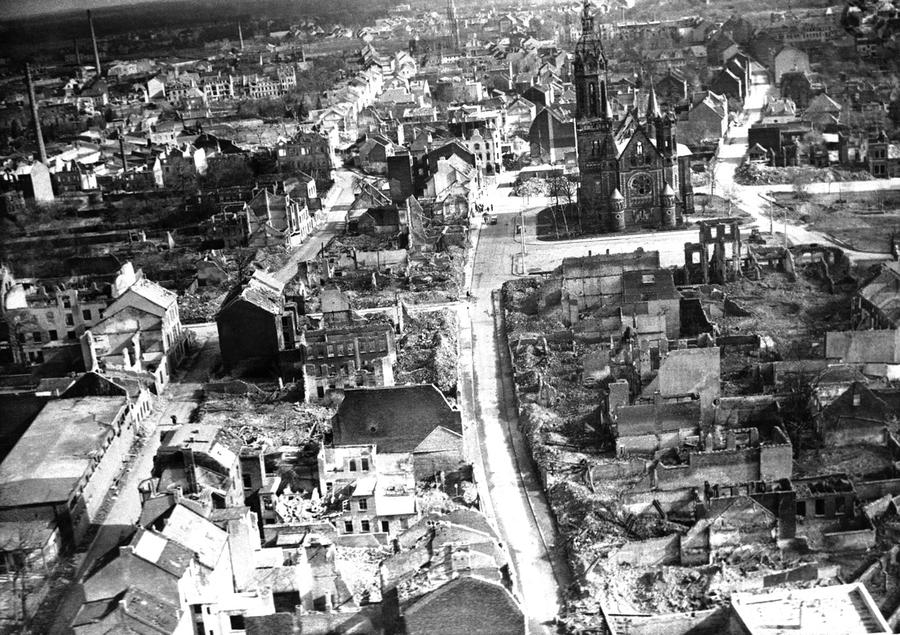
But Mainz is more than the cathedral, museums and history. During WWII it was an industrial center producing war material for Germany. Because of that, allied bombers tried to turn it to dust.

The war ended for Mainz in March 1945 when the Third US Army occupied it without a fight. Eighty percent of Mainz had been destroyed.

Consequently, as our guide said, “There are no old windows in Mainz.”

That line stuck with me ever since.

Our guides in Germany talked about the war in matter-of-fact tones. They didn’t apologize, justify or defend Germany’s aggression that plummeted the world into war. Simply, “when the war was over” the industrious residents of Mainz understood their city was blown apart. Few elements remained of its life, identify and character.

Everything fragile was gone. There are no old windows in Mainz.

They understood that rebuilding their city was a chance to start over. And starting over meant deciding what to keep, what to restore, what rubble to haul away, what remnant to patch.

They knew that the part of their history created long before there was clearly a Germany or a France was the core of their identity. It was to be the magnet for visitors – like me – to come and marvel at the majesty of the ancient. Their restoration of center city reflects Mainz as it was long before German aggression rained destruction on it.

Today Mainz is a modern economy, centered on tourism and industry once again. It thrives because people are attracted to its core.

No one wants his or her life to be blown apart. But sometimes, exterior circumstances, decisions made by others, mistakes and bad choices of your own cause everything that’s fragile in your life to shatter.

When the majority of everything you’ve known has been blown to dust, but yet you live, you rebuild. Those elements of your life that were fragile are gone, and only the core remains. Is your core strong enough to become the base upon which to rebuild?

Is there a cathedral at the center of your life that stands tall and strong in whatever chaos rains around it? Or have you spent too much time installing glass windows, and putting on display fragile things that will not stand when bombs fall?

Identify your core before the wars which will come. Strengthen it. And when the dust settles, you’ll be standing, still.

Building for the past

During our 40th wedding anniversary trip to Europe this spring, my wife and I visited the underground bunker being restored by enthusiasts at Schoenenbourg, France.  This impressive fortification is one element in the defensive Maginot Line built after World War I to keep Germany from invading France ever again.

Named for French Minister of Defense Andre Maginot, the line was a 450-mile long series of bunkers, barriers, artillery casemates and passive impediments along the border between the two nations. The Schoenenbourg bunker is one of the few remaining vestiges of the earnest effort.

It housed more than 600 soldiers who lived 100 feet underground in a virtual city equipped to support them for months. Food, supplies and munitions moved through the mile long system on a rail network. Telephone communications connected outside spotters to inside decision makers. Redundant air pumps and filters kept the atmosphere belowground inhabitable.

There were 45 such bunkers in the line to provide live resistance to a potential invasion, along with 352 casemates and more passive barriers such as angled concrete pillars.

The Maginot Line represented a massive commitment by France even as it struggled to recover from devastating WWI. But the perceived threat of a restive Germany and centuries of cross border infiltrations and alliances merited the investment.

The problem was, the Maginot Line was built to defend against a past threat. It was built to stop infantry, open-air troop carriers and thin-skinned battle tanks of WWI experience.

When Germany invaded France in May 1940, they flew over the Maginot Line, rolled around the end of the line through Belgium and through a break in the line through the Ardennes, which Maginot deemed too impenetrable to require fortification. Germans blew past passive defenses with their fast and powerful Panzer tanks. In seven weeks they were in Paris and the French government had surrendered.

French intentions were right. Their execution was good. But they built to defend against issues and fears of the past without accounting for future threats that would be significantly different.

This is not an uncommon situation.

In current times, the music industry built a line against pirated CDs while online music distribution flew over the defense.

American automakers defended themselves against each other’s paltry products, while higher quality cars invaded from overseas.

Furniture factory owners in North Carolina defended themselves against unions and lower profits by clinging to antiquated production methods, while Chinese manufacturers built efficient new factories from scratch.

Are you crouching behind a Maginot Line at work, clinging to former processes, staffing and equipment, while competitors punch through your product line with better tools and innovation?

Is your church trying to defend itself from the perceived threat of its surrounding culture while young people who easily learn to navigate the culture are finding your bunker increasingly irrelevant?

Those who build to defend against a past threat will be overwhelmed easily by the real challenges of the future.

Rainy walk proves journey is key

Rainy weather washed out our plans to ride bikes on the greenway. So my 7-year-old grandson Grayson and I rolled pennies, of all things.

Sue Ellen and I had months of loose coins that we’d started rolling the day before, but we weren’t going to do the pennies. We were going to just run them through the bank’s counter and pay the confiscatory fee by which they charged us to count money we were going to put into an account in their bank.

We’d sacrifice the 8-10 percentage tariff for the pennies, which weren’t worth the effort, but not for the big coins.

But, with us scrambling for entertainment on a rainy day we decided to roll pennies. Anything you can do with a little boy that gives him a sense of accomplishment is a good thing. So efficient were we, that we ran out of coin wrappers.

That necessitated a trip to the Dollar Tree a mile and a half away to get some more. I hated to drive the car that short distance, and the roads were too wet to safely ride our bikes. But the misty rainfall was not too furious to keep us from walking.

After assuring me that he could do the round trip, Grayson and I took off for an adventure, him in an old cap of mine, and a raincoat that dwarfed him.

We observed three power company trucks driving through the neighborhood as we walked, and remembered how the lights had flickered at our house, but hadn’t gone out. Odd.

We chatted as we walked, noting the quiet swimming pool on a rainy day, revisiting my recent bike wreck when he had gone for help, talked safety rules about walking on the road, teased about “chasing girls” in a few years that made him turn red.

I realized he didn’t think he’d have to wait that long. On the return trip, I made sure to inform him girls have cooties.

We talked about how a hill looks much higher and steeper from the top of a previous hill, but seems to level out as you walk it. So don’t be discouraged, keep moving forward.

He sounded the “how much further” refrain after the first mile, but by then we were in the shopping district and I could point out the traffic light we needed to reach. Alas, when we got there, the store was dark.

Employees sitting in front said they had no power and could not let us in the store. I moaned. A long walk for “nothing.”

Disappointed that we couldn’t accomplish our goal, and knowing how fragile a 7- year-old’s countenance can be, we started the long walk back home empty handed. We noticed, however, that on the other side of the street lights still blazed – including at a donut shop.

I suggested a detour and took the opportunity for more teaching about power lines, grids and transformers and how one side of the street can have electricity, while the other side remains in the dark.

I also shouldered my grandfatherly responsibility to illustrate the distinct taste advantages of an apple fritter over a chocolate covered cake donut.

Just when it looked like our adventure was a strike out, a hot and tired grandson with a chocolate smear on his face said, “We’ve got to do this again, papa.”

Grayson reminded me that time is our most precious currency and when you invest it on the journey your destination is irrelevant.


Learning terror on the highways

Self-driving cars are racing into our future. They supposedly will cut fuel consumption, extend our suburbs yet decrease commute times, cut the number of cars on the road by more than half, ultimately make our roads safer and cure the heartbreak of psoriasis.

Scientists theorize that a car with a dozen or more computerized “eyes” that are constantly alert and instantly responsive will be safer than a car with a human driver with just two eyes whose response times vary because of distractions like sleep deprivation, cell phones, music, mirror checking and messy sandwiches.

In the meantime, we humans are going to have to continue to navigate our crowded, crumbling roads and teach our offspring to drive safely upon them as well. It’s an important, and potentially terrifying lesson.

In fact, I remember just how terrifying it can be.

The 1979 movie “Alien” was the most terrifying cinema I’ve ever watched. I was sure the monster was in the cat and I urged Sigourney Weaver to leave it behind as she abandoned her space ship, but she went back for it!

I didn’t know until the final credits rolled that the movie was over. I relaxed for the first time in two hours and my stomach was sore three days from the tension.

But I didn’t know terror.

I’ve been trapped in a July hailstorm above timberline on Pikes Peak with the trail disappearing beneath ice and darkness approaching. We couldn’t have survived a night on the mountain me and three buddies braved the storm, climbing, exhausted, to the top.

But I didn’t know terror.

When I was sideswiped on a rain slick interstate by an 18-wheeler on a cold dark night, I still didn’t know terror.

I’ve taken the subway from New Jersey into Manhattan at midnight, heeding a native’s warning to sit as far front and as near the conductor as possible. I perched on the scarred plastic bench holding my country mice eyes unseeing, straight ahead. I pled silently for a cloak of invisibility to drape over me and to cover the neon sign I knew flashed above my head saying “Easy Mark.”

But terror remained only a textbook definition, a movie subject, an Edgar Allen Poe concoction. I only thought I knew terror, like a boy thinks he knows love.

Then, I took my 15-year-old daughter driving for the first time. And I discovered terror.

I grew up on a farm, driving tractors and trucks in the field from age 11. I learned the levers and pedals that made things go in slow-moving vehicles, in wide open spaces.

I had no idea until that first driving lesson how narrow are the roads or how close to the roads are mail boxes, or how sharp are the curves and how abruptly the pavement drops at the shoulder, or how wide are oncoming vehicles.

In the very first moments, after Erin adjusted the seat, mirrors, seatbelt, radio, sunglasses and hair, and figured out which pedal was go and which was stop, she almost took out one of those mailboxes. Fortunately, the ditch we rolled into on the other side kept the box safe.

It’s a helpless feeling, to be sitting on the rider’s side, with no brake and no steering wheel when all manner of disaster careens at you. I pushed a size 10 footprint into the floorboard when Erin didn’t seem to turn the wheel enough to accommodate the slow rolling curves. Unlike a 3-D movie simulation, these terrors really can jump off the screen like a Velociraptor to bite off your head.

I told Erin to ignore the cars on her bumper, and not to fear the ones coming toward her seeming to take up the whole road. When they get closer, you’ll see the road really is wide enough for both of us, I assured her. And the bridges only seem too narrow. And 30 miles per hour is fast enough!

You cannot imagine how dizzyingly fast 40 mph seems to a dad when his first time driver is behind the wheel.

To her credit, Erin finished the one-hour session with a new appreciation of how difficult and mind bending it is to drive well – a task that looks so easy when observing an experienced driver. She made a lot of progress and our next session was much easier. (I won’t go into the part about trying to teach her how to drive a stick shift.)

And importantly, I was reminded that the best way to overcome the terrors that lurk “out there” – under the bed, around the corner, in the operating room, on the next calendar page, when the phone rings, when your wife says “we need to talk” – is to face them. Get in the car with them and stare them in the eye while racing down the open highway.

Of course, it’s better to have a brake pedal on your side when you do.


Don’t Blink

At the doctor’s office this morning I looked down to fill in the remaining blanks on the form at the receptionist’s desk. It was my first visit so, of course, they wanted to confirm my willingness to sacrifice my first born if necessary to pay their bill.

The office computer had auto-filled some of the information and I just needed to fill in the rest. Staring up at me in simple black text over the white paper form were the identifying factors that would enable them to track me down should I limp out of there with their charges unredressed.

One simple number struck and confused me: 63. I thought at first it was “Question No. 63,” but it was on the first page and the form wasn’t that long. Then I thought it might be a part of my address, or something to do with the third of June. Of course, all of that flashed through my mind in a second before I realized the number represented my calendar age – the number of years since I emerged large and in charge from my mother’s womb.

I would have shaken my head except it’s still wobbly atop my neck from my bike accident, the reason I was at the doctor’s for a follow-up.

Seeing that number reminded me of when I was being transferred from one emergency room to a more capable trauma center three weeks earlier. The medic riding in the back of the ambulance with me called ahead to the trauma center, alerting them that he was about to arrive with a “63 year-old-male, with head injuries.”

“Poor sucker,” I thought. As best I could, since I was strapped to a neck board, I craned my eyes to look round the ambulance because I thought I was the only one riding to Winston-Salem. Turns out I was alone. Then I realized he was talking about me.

Sixty-three? When did I get to be sixty-three? Except for the momentary and exceptional fact of a fractured skull and several vertebrae, I felt 40. Sixty-three was my dad. Sixty-three was grandpa when I was a kid. Sixty-three was plaid pants and knee socks in gray walking shoes, and dinner at 4:30 for the discount.

Sixty-three was not me.

During the first third of my life, I always looked younger than my actual age, and it bugged me to no end. When I was 25 I was married, living in the second house that I’d owned and a college girl came to my door to look at some furniture we were selling.

I opened the door and she said, “Is your mother home?” It took my wife three weeks to re-inflate my pride.

Twenty years later I stood at the register to order a coffee and cinnamon role at Bojangles and the server repeated into the microphone, “One senior coffee and a cinnamon role.” I tried not to cry because my associate who was with me was too busy laughing.

In twenty years I went from “Is your mother home?” to being offered a senior discount.

And now the paper says I’m 63. The mirror agrees. My body nods affirmatively. My mind shouts vehement denial. Goodness, I’m embarking on new ventures infused with still developing hopes, dreams and plans. To quote Buzz Lightyear, I’m setting sail, “to infinity, and beyond!”

I turn to my wife, a wrinkle of concern still lining her forehead as we await the doctor, and ask her to verify the identify of the patient on this form.

That’s me? Age 63? How did we get here?

Don’t blink.

Healing power of the right word

I suffered a pretty awful accident May 14 while following my grandson on a mountain bike down an open, sloping field on his parents’ property.

We’d been tooling around for an hour, just enjoying a simple ride on a perfect spring day. Who needs a helmet for that? Well, Grayson wore his because he told me, “Safety first.” I should have listened.

He led me to the top of the hill, launching from his uncle’s driveway down through the field. I took a moment to soak in the sight and relish the feeling. His joy was palpable.

He was out riding with his papa, atop the freedom of his wheels and the thrill of a downhill slope. Giving myself just a moment to appreciate the scene, I took off after him, cutting a new path to the left of his line.

A lip at the edge of the field dropped several feet. I intended just to ride it down, hanging on tightly to reach the broader, softer slope. I didn’t see the hole at the bottom until it was too late. In an instant of clarity my brain registered, “This is not going to be good.”

My front wheel hit the hole and the bike stopped dead. I kept flying toward the ground like a spear and landed on my head

Grayson ran back up the hill to see if I was all right. “No, Grayson, I’m not all right. Go get Nana.” I felt like someone had hit me in the head with a 2 x 4 and that I’d lost six inches of height from having my spine compressed.

Within moments Nana pulled the Subaru into the field beside me. She sent Grayson to his uncle Bubba’s house at the top of the hill for a towel to stop the bleeding and for an additional hand to get me into the car. By this time I’d surveyed my extremities, all of which functioned, so I knew long term I would be fine. But, oh, I hurt.

Later tests would reveal fractured skull, cracked vertebrae, bruised spleen, lots of abrasions and cuts that required 10 staples to close. But for now there was just lots of activity with the other grandkids and Bubba and his wife, Sonya while we debated calling an ambulance.

In the midst of that hubbub I heard the sweet voice of 7-year-old Grayson saying, “It’s my fault. I should have told Papa about that hole.” I reached for Grayson’s leg and told him never to think that. He bears no blame.

But during the next 15 hours in two emergency rooms and calls back and forth among family, I kept hearing that Grayson was feeling responsible. That is a heavy burden for a bright, sensitive seven-year-old. It saddened me that he felt that way.

I was released early the next morning and went home with a neck brace to rest and heal. Grayson’s mom and dad, who had been out of town celebrating their 12th wedding anniversary during all the excitement, brought the kids by the house to see that Papa was OK. I knew I needed to find the right words to relieve Grayson of his self-imposed burden of blame.

His face was painfully tentative when he saw my brace, staples and stitches and he was wondering how I would react now that I was upright. In an instant I smiled big, held out my arms and loudly said, “Grayson, my rescuer! You’re the one who rescued me when you went for help! Thank you, buddy.”

In that instant his face transformed from hesitant to happy, from reluctant to rejoicing, from tentative to triumphant. He went from self-blaming to knowing he contributed to my being OK after a bad spill.

Choose your words carefully. A well-chosen word has the power to heal. A quick, harsh word has the power to destroy, to tear a hole in the cloth of confidence.

I know people who still labor under the self-image an angry parent imposed upon them 50 years ago, rather than with the reality of the bright and beautiful people they are today.   Grayson is young and aggravating sometimes because he is so intelligent and curious and he insists there is nothing he cannot do.

But from this day forth, no matter how many times I huff and puff and say, “No, Grayson, you cannot use the chainsaw,” he will know that on May 14, he rescued his papa.

Coming down County B

Pew research says 63 percent of Americans have moved from their hometowns. Some 15 percent, like me, have lived in at least four states. For most, it was to pursue economic opportunity.

If you’re among the 45 percent of movers who return home to visit a time or two each year, you know the feeling that envelops your soul as you near the place where you grew up.

It wraps me up when I turn off Wisconsin Highway 22 onto County Road B.

I’ve lived in the South since Uncle Sam crooked his finger in my direction in 1972, so coming home has always involved driving north, through the capital city of Madison. Forty years later I need my GPS to get me through town. New interchanges would divert me through strange suburbs sprouting where I once picked peas and corn as a summer canning company worker.

Billboards tout products and services that didn’t exist when I left town: computer sales and repair, wireless telephones, home health, Kia, Hyundai and Honda dealers, Mexican restaurants.

Traffic lights direct cars through intersections where cows once lumbered toward the dairy barn twice a day to make their contribution in an era when we thought, “milk does a body good.”

Driving north out of the big city toward my little hometown the change rate diminishes. I see some farmers have built new houses in corners that weren’t much good for crops anyway. There are fewer farmers, but they have bigger tractors.

They plant every inch, from ditch to ditch, mostly in corn, some soybeans. Oats, alfalfa and other food crops have been squeezed out, thanks to the insanity of subsidized ethanol production.

Fence rows are gone, to give big tractors space to turn, and in favor of raising crops to feed animals in enclosed places, rather than fencing fields for grazing.

Then I come to the top of the hill, and turn right at Rocky Run Cemetery, onto County B. The cemetery seems the same; no one has left.

A restful blanket of snow drapes over the sentinel stones.

County B needs repaving again.

It’s three rough miles down County B to the farmhouse where I grew up; where my parents lived almost 40 years. Each mile wafts the fragrance of memory through the car windows.

I see the Nelsons painted their barn; the Johnsons finally cleaned up that tangle of brush in the front yard; the Rogers’ neglected barn collapsed onto itself, its beams sticking out from the rubble like sun bleached ribs of an elephant carcass.

Hoel’s pond would be good for ice skating this year. In most years cattails eat up the space at the edges and make the ice rough. This year it’s clear.

The pond was our hockey rink. We just had to shovel off the snow. If the ice was thick enough, we could use a tractor and blade.

Driving past the home place the trees are bigger. All the buildings are smaller. Aren’t they?

The “new” owners don’t care for the place like we did. It looks seedy, like a newly retired man growing his first beard.

Dad bought it as a place to raise his family, and a place to putter when he grew old. Puttering there lost its charm with the ambulance that carried mom away.

I don’t stare at the place like I used to when dad lived there. He lives in town now, with a wife of almost 19 years. Although the old place is in the country, “in town” is just a mile further, where County B ends.

The big sledding hill behind the school building I attended for all 12 grades has been knocked down. In fact, the school has been knocked down in favor of a senior adult living center.

Houses fill the old playground. Dad lives across the street.

I drive a lot of roads to get home, but County B forever connects the child I was to the man I am.


Snowflake Tech Aids Worship

Record snowfall paralyzed the east coast during the snow event of Jan. 22-24. Churches almost universally cancelled services throughout the Atlantic states buried beneath 20 to 40 inches of snow.

While many Christians likely welcomed the “free Sunday” to sip an extra cup of coffee and stare transfixed at the Weather Channel looping footage of slipping cars, jackknifed trucks, empty grocery shelves, snow shovels in someone else’s hands and people skiing through parks, some others of us felt a small, worship shaped hole in our hearts.

I’m a church person. I like church. I like to be in church among other people who enjoy the community that common fellowship provides in our disjointed world. But wisdom prevailed over valor and we left the car in the garage.

Then George Bullard, executive director of The Columbia Partnership, a group of which I’m a ministry partner, offered to his Facebook friends the opportunity to worship together over the TCP conference call line. We conduct a national conference call 44 Thursdays a year, interviewing thought leaders who have insights that contribute to the TCP mission to “transform the Church for vital ministry.”

This line would be open Sunday, so George enlisted a couple of ministry partners and we notified friends on our social media that we would be having a 30-minute worship time over the conference call line. Simply dial in and join us.

It was spontaneous, creative, and insightful and met a need. Those friends who were camped out on Facebook that morning jumped in and we worshipped, reading scripture, talking about the beauty of creation in the blanket of white and the sound muffling nature of snow.

Our leaders were in three different states. We took prayer requests, prayed and blessed the 10 or so participants who found their way to the phone.

While many of us who want to help churches become Faith Soaring debate its effect – positive and negative – on worship and community, the fact is technology is an increasingly predominant element of daily life – for everyone. Ignore it at your peril.

In the midst of a blizzard of information and opinion here is one little snowflake of insight: don’t let the enormous capacity and complexity of “technology” put you off because you’re not current. Find the niche in which you can utilize the technology you command to build community, even if it’s just the telephone you hold in your hand.